
 Image via HBO

Published May 17, 2026, 5:26 AM EDT
Sign in to your Collider account
Television has changed drastically in the last five years. Audiences just don’t have the time for surface-level stories and filler episodes anymore. The shift obviously became especially noticeable during and after the COVID-19 pandemic, when people turned to TV for escapism. However, it also made them way more selective about what actually deserved their time. Almost every genre adapted to those changing expectations in one way or another, but thriller television absolutely thrived because of it.
Modern thrillers became more psychological, more character-driven, and willing to explore real fears, even when the stories involved supernatural, dystopian worlds, or impossible sci-fi concepts. That’s exactly why the last few years have produced some of the strongest thriller shows TV has seen in a long time, and this list includes the best of them that stand in a league of their own.
10 'The Rig' (2023–Present)
 Image via Amazon Prime Video
The Rig is hands down one of the most underrated shows of the last few years. It puts a fascinating spin on the typical isolation setup that many thrillers follow. The story traps its characters on an oil rig in the middle of the North Sea as they are completely cut off from the rest of the world. The audience follows the crew of the Kinloch Bravo, whose communication from the mainland completely shuts down after a mysterious fog surrounds them. What initially feels like a coincidental technical malfunction slowly turns into something much more horrific when scientist Rose Mason (Emily Hampshire) begins suspecting that an ancient organism has been released from the ocean floor when the crew members start behaving strangely.
The show thrives on that growing sense of paranoia, and once the audience realizes that the narrative is taking a paranormal turn, the tension goes up several notches. Every episode slowly reveals another layer of the mystery, and in doing so, the show constantly explores humanity’s relationship with nature, which makes the horror feel a little too real. Overall, The Rig is the kind of show that one just can’t stop watching thanks to its claustrophobic atmosphere and emotional complexity.
9 'Ripley' (2024)
 Image via Netflix
Andrew Scott is a treat to watch on screen, and Ripley only reaffirms that. The Netflix series, based on Patricia Highsmith’s iconic novel The Talented Mr. Ripley, follows the actor as Tom Ripley, a struggling con artist living in New York during the 1960s. His life completely changes when he is hired by wealthy businessman Herbert Greenleaf (Kenneth Lonergan) to travel to Italy and convince his son Dickie Greenleaf (Johnny Flynn) to come back home. However, once Tom inserts himself into Dickie’s luxurious lifestyle, admiration slowly turns into obsession, and the story spirals into manipulation, deception, and something much darker.
Ripley is a delicious slow burn that really focuses on Tom’s psychology and his growing obsession with Dickie. Everything he does feels calculated, and the audience is constantly wondering how far he is willing to go to protect himself. The black-and-white cinematography also gives the show a unique identity compared to most other modern thrillers and intentionally makes every location feel cold and empty. The show isn’t built around constant twists or cliffhangers, but around the fear of Tom’s carefully constructed identity collapsing any second.
8 'Black Bird' (2022)
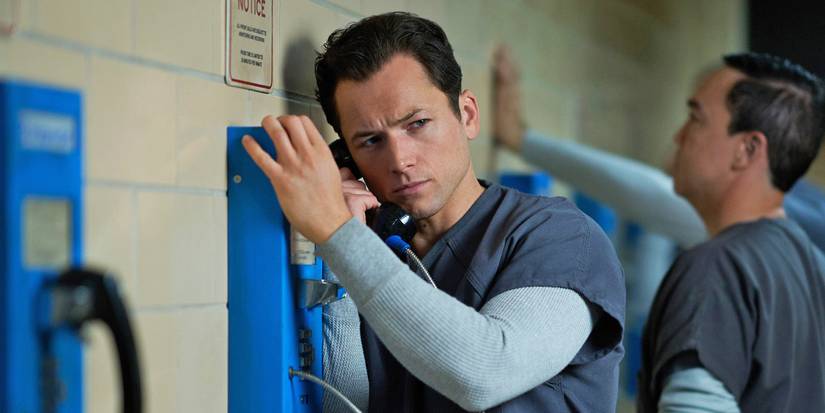 Image via Apple TV
Apple TV has been killing it with its thriller shows recently, and Black Bird is one entry that just can’t be missed. The psychologically intense story follows Jimmy Keene (Taron Egerton), a charismatic drug dealer sentenced to ten years in prison. He has the chance of a lifetime when the FBI offers to transfer him to a maximum-security prison for the criminally insane to gain the trust of suspected serial killer Larry Hall (Paul Walter Hauser) to get him to confess.
That begins a psychological chess game driven by paranoia and even exhaustion. Black Bird never glamorizes violence and keeps the focus on how this process begins to affect Jimmy. Hauser deserves all the praise, though, because he plays Larry as awkward, lonely, and emotionally fragile, all of which somehow makes him even more disturbing than one might think. The show never stops feeling terrifying because it perfects the art of conveying dread through conversations, body language, and what Larry might reveal next.
7 'Yellowjackets' (2021–Present)
 Image via Showtime
Yellowjackets is easily one of the most unhinged shows on TV right now, but that’s what makes it such a great watch. The series follows a high-school girls’ soccer team whose plane crashes deep in the Canadian wilderness in 1996, where they remain stranded for over a year. The setup begins as a straightforward survival story, but takes a dark turn as hunger, isolation, and paranoia begin tearing the group apart. The story also flashes forward 25 years later and follows the surviving women as they try to live normal lives while desperately hiding what truly happened when they were stranded.
For starters, this dual-timeline structure adds an adrenaline-fueled sense of suspense to the show. The audience knows that these characters are deeply damaged adults, which only deepens the curiosity about how they got there. The show never fully reveals whether the growing cult-like behavior among them is psychological or whether something supernatural is at play. This uncertainty is what keeps the viewers coming back for more. The best part about Yellowjackets is that it is never predictable. However, instead of utilizing hollow twists or shock value to keep the audience hooked, it builds a fascinating world and characters who are impossible to look away from.
6 'Beef' (2023–Present)
 Image via Netflix
 Beef is an extremely interesting study of the human mind and how people react to conflicts. The Netflix series begins with a simple road rage incident between struggling contractor Danny Cho (Steven Yeun) and wealthy entrepreneur Amy Lau (Ali Wong). Most people would move on after a moment like that, but Beef is built around the idea that both of these characters are already carrying so much anger and frustration that this becomes the breaking point for everything else in their lives. Their feud refuses to stop, and almost becomes addictive because it’s fascinating to see how far they can go in their quest for revenge. However, even with a premise as absurd as this, the characters in Beef feel deeply human.
They are portrayed as lonely individuals with their own share of struggles, which explains why they keep making the absolute worst decisions. Yeun and Wong’s chemistry is the heart of the show as every interaction between their characters spirals out of control. Beef strikes the perfect balance between dark humor and genuinely intense moments that reveal the characters’ deepest insecurities. Beef Season 2 thrives on the very same structure, just with a different story and brand-new characters. It’s undeniably one of Netflix’s strongest anthology series, not only for its brilliant cinematography and stellar performances, but also because of how relatable it feels.
Collider Exclusive · Sci-Fi Survival Quiz Which Sci-Fi World Would You Survive? The Matrix · Mad Max · Blade Runner · Dune · Star Wars
Five universes. Five completely different ways the future went wrong — or sideways, or up in flames. Only one of them is the world your instincts were built for. Eight questions will figure out which dystopia, galaxy, or desert wasteland you'd actually make it out of alive.
💊The Matrix
🔥Mad Max
🌧️Blade Runner
🏜️Dune
🚀Star Wars
TEST YOUR SURVIVAL →
01
You sense something is deeply wrong with the world around you. What do you do? The first instinct is often the truest one.
APull on every thread until I understand the system — then figure out how to break it. BStop asking questions and start stockpiling — food, fuel, weapons. Questions don't keep you alive. CKeep my head down, observe carefully, and trust no one until I know who's pulling the strings. DStudy the patterns. Every system has a rhythm — learn it, and you learn how to survive it. EFind the people fighting back and join them. You can't fix a broken galaxy alone.
NEXT QUESTION →
02
In a world of scarcity, what resource do you guard most fiercely? What we protect reveals what we believe survival actually requires.
AKnowledge. If you understand the system, you don't need resources — you can generate them. BFuel. Everything else — movement, power, escape — runs on it. CTrust. In a world of fakes and informants, a truly reliable ally is rarer than any commodity. DWater. And after water, information — the two things empires are truly built on. EShips and credits. The galaxy is big — you survive it by being able to move through it freely.
NEXT QUESTION →
03
What kind of threat keeps you up at night? Fear is useful data — if you're honest about what you're actually afraid of.
AThat reality itself is a lie — that everything I experience has been constructed to keep me compliant. BA raid. No warning, no mercy — just the roar of engines and then nothing left. CBeing identified. Once someone with power decides you're a problem, you're already out of time. DBeing outmanoeuvred — losing a political game I didn't even know I was playing. EThe Empire tightening its grip until there's nowhere left to run.
NEXT QUESTION →
04
How do you deal with authority you don't trust? Every dystopia has a power structure. Your approach to it determines everything.
ASubvert it from the inside — learn its rules well enough to weaponise them against it. BIgnore it and stay out of its reach. The further from any power structure, the better. CAppear to comply while doing exactly what I need to do. Visibility is the enemy. DManoeuvre within it carefully. You can't beat a system you refuse to understand. EResist openly when I have to. Some things are worth the risk of being seen.
NEXT QUESTION →
05
Which environment could you actually endure long-term? Survival isn't just tactical — it's physical, psychological, and very much about where you are.
AUnderground bunkers and server rooms — cramped, artificial, but with access to everything that matters. BOpen wasteland — brutal sun, no shelter, constant movement. At least the threat is honest. CA dense, rain-soaked city where you can disappear into the crowd and nobody asks questions. DMerciless desert — extreme heat, no water, and something enormous living beneath the sand. EThe fringe — backwater planets and busy spaceports where the Empire's attention rarely reaches.
NEXT QUESTION →
06
Who do you want in your corner when things fall apart? The company you keep is the clearest signal of who you actually are.
AA tight crew of believers who've seen behind the curtain and have nothing left to lose. BOne or two people I'd trust with my life. Any more than that and someone talks. CNobody, ideally. Alliances are liabilities. I work alone unless I have no choice. DA community bound by shared hardship and mutual survival — people who need each other to last. EA ragtag team with wildly different skills and total commitment when it counts.
NEXT QUESTION →
07
Where do you draw the line — if you draw one at all? Every survivor eventually faces a moment that tests what they're actually made of.
AI won't harm the innocent — even the ones who'd report me without hesitation. BI do what I have to to protect the people I've chosen. Everything else is negotiable. CThe line shifts depending on who's asking and what's at stake. DI draw a long-term line — nothing that compromises my people's future, even if it'd help now. ESome lines, once crossed, can't be uncrossed. I know which ones they are.
NEXT QUESTION →
08
What would actually make survival worth it? Staying alive is one thing. Having a reason to is another.
AWaking others up — dismantling the illusion so no one else has to live inside it. BFinding somewhere — or someone — worth protecting. A reason to keep moving. CAnswers. Understanding what I am, what any of this means, before time runs out. DLegacy — shaping the future in a way that outlasts me by generations. EFreedom — for myself, for others, for every world still living under someone else's boot.
REVEAL MY WORLD →
Your Fate Has Been Calculated You'd Survive In…
Your answers point to the world your instincts were built for. This is the universe your temperament, your survival instincts, and your particular brand of stubbornness were made for.
The Matrix
You took the red pill a long time ago — probably before anyone offered it to you. You're a systems thinker who can't help but notice the seams in things.
- You're drawn to understanding how the system works before figuring out how to break it.
- You'd find the Resistance, or it would find you — your instinct for spotting constructed realities is the machines' worst nightmare.
- You function best when you have access to information and the freedom to act on it.
- The Matrix built an airtight prison. You'd be the one probing the walls for the door.
Mad Max
The wasteland doesn't reward the clever or the well-connected — it rewards those who are hard to kill and harder to break. That's you.
- You don't need comfort, community, or a cause larger than the next horizon.
- You need a vehicle, a clear threat, and enough fuel to outrun it — and you're good at all three.
- You are unsentimental enough to survive that world, and decent enough — just barely — to be something more than another raider.
- In the wasteland, that distinction is everything.
Blade Runner
You'd survive here because you know how to exist in moral grey areas without losing yourself completely.
- You read people accurately, keep your circle small, and ask the questions others prefer not to answer.
- In a city where humanity is a legal designation rather than a feeling, you hold onto something that keeps you functional.
- You're not a hero. But you're not lost, either.
- In Blade Runner's world, that distinction is everything.
Dune
Arrakis is the most hostile environment in the known universe — and you are precisely the kind of person it rewards.
- Patience, discipline, and political awareness are your core strengths — and on Arrakis, they're survival tools.
- You understand that the long game matters more than any single victory.
- Others come to Dune and are consumed by it. You'd learn its logic and earn its respect.
- In time, you wouldn't just survive Arrakis — you'd begin to reshape it.
Star Wars
The galaxy far, far away is vast, loud, and in a constant state of violent political upheaval — and you wouldn't have it any other way.
- You find meaning in being part of something larger than yourself — a cause, a crew, a rebellion.
- You'd gravitate toward the Rebellion, or the fringes, or whatever pocket of the galaxy still believes the Empire's grip can be broken.
- You fight — not because you have to, but because standing aside isn't something you're capable of.
- In Star Wars, that willingness is what makes all the difference.
↻ RETAKE THE QUIZ
5 '3 Body Problem' (2024–Present)
 Image via Netflix
3 Body Problem is an ambitious thriller that adapts Liu Cixin’s Remembrance of Earth’s Past novels. The story begins during China’s Cultural Revolution, where astrophysicist Ye Wenjie (Zine Tseng/Rosalind Chao) gets involved in a secret military project searching for extraterrestrial life. In the present timeline, a group of scientist friends known as the Oxford Five begin to witness events that completely defy the laws of physics. The show then moves between mystery and science fiction as it gradually reveals what’s really at play.
The most gripping part about 3 Body Problem is how it turns abstract scientific ideas into absolute nightmare fuel. The aliens aren’t treated as spectacle, but they are given depth and complexity that adds to the emotional intensity of the story. The story begins with one woman’s trauma and expands into an exploration of civilization, faith, and technology. The scale is definitely huge here, but it never loses sight of the characters caught in the middle of it all. That balance is what keeps the story engaging even during its most science-heavy moments.
4 'The Last of Us' (2023–Present)
 Image via HBO
The Last of Us is a cultural phenomenon. The series, based on the highly successful video game franchise created by Naughty Dog, takes place a decade after a fungal infection destroys most of civilization by transforming humans into violent creatures known as the infected. The story follows Joel Miller (Pedro Pascal) as he is tasked with transporting teenager Ellie Williams (Bella Ramsey) across what is left of the United States after she is discovered to be mysteriously immune to the infection. The simple escort mission takes an emotional turn when the two are forced to depend on each other for survival and form a deep bond through their shared trauma.
The Last of Us is a traditional post-apocalyptic thriller, but it grounds everything in reality. Even the infected are inspired by the real-world Cordyceps fungus. Every community Joel and Ellie encounter has been shaped by years of fear and grief, because the show wants to explore how people emotionally survive after society collapses. Joel and Ellie’s relationship is obviously the core of the series, and the fact that death could come at them from anywhere gives the show a constant sense of tension. Underneath all the horror and destruction, though, The Last of Us is a show about love, and that makes it worth watching.
3 'Slow Horses' (2022–Present)
 Image via Apple TV
Slow Horses has truly revived spy thriller TV. It takes away all the glamor usually associated with espionage and takes a more gritty approach to it. The series, based on Mick Herron’s Slough House novels, follows a group of disgraced MI5 agents who have been restricted to miserable admin work under Jackson Lamb (Gary Oldman), a brilliant but problematic intelligence veteran who isn’t really interested in anything. However, things change when River Cartwright (Jack Lowden), an ambitious young agent, is desperate to prove he does not belong with the rejects.
From there, Slow Horses slowly pulls its dysfunctional team into kidnappings, political conspiracies, terrorist threats, and internal MI5 cover-ups that are far bigger than anything they were supposed to handle. The brilliance of the show lies in how chaotic everything feels. The crew makes mistakes and panics under pressure, but their messiness grounds the tension. Every mission feels unpredictable because the audience never trusts these characters to survive it. Slow Horses balances dark humor, character-driven drama, and genuine suspense, and proves that spy thrillers don’t need flashy gadgets and action sequences to stay gripping.
2 'Severance' (2022–Present)
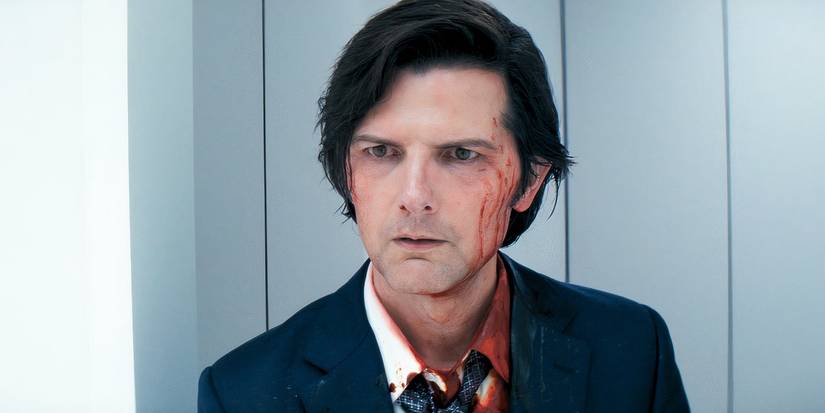 Image via Apple TV+
Severance is one of the smartest shows of all time because it takes a simple idea and pushes it to its absolute limit. The Apple TV series follows Mark Scout (Adam Scott), an employee at the mysterious biotechnology company Lumon Industries who has undergone a procedure called severance. Now, this operation surgically separates a person’s work memories from their personal ones to create two completely different identities. Mark’s innie only exists inside the office, while his outie has no idea what happens during the workday. The process is meant to be this clean solution for work-life balance, but the show slowly reveals how horrifying that concept actually is. Lumon begins feeling less like a workplace and more like a psychological prison as the story progresses.
The employees spend their days doing meaningless tasks that even they don’t understand, while also being under constant surveillance. However, things change when Helly Riggs (Britt Lower), a new severed employee, begins fighting back somehow. The brilliance of the show lies in its disturbing take on office culture with Lumon’s endless hallways, fluorescent lighting, and manipulative corporate practices. The series creates its sense of dread, not just through the narrative but also through this unsettling atmosphere. The mystery is compelling, but the show deepens it by exploring themes of grief, identity, and control. Given Severance’s brilliance, it’s no surprise that it’s one of the most talked-about thriller series of the decade.
1 'Squid Game' (2021–2025)
 Image via Netflix
Squid Game became a worldwide phenomenon almost overnight, but that’s because it told a story that resonated with just about everyone. The series follows Seong Gi-hun (Lee Jung-jae), a financially desperate chauffeur drowning in debt who is recruited into a mysterious competition alongside hundreds of other struggling people. The contestants are promised an enormous cash prize, but the catch is that losing a game results in instant death.
This twisted survival story only gets darker with each episode and turns into a brutal commentary on capitalism. Every round strips the contestants down emotionally and forces them to betray their allies and abandon morality just to see one more day. What’s worse is that these players are trapped in this system where their fight for survival is entertainment for the wealthy VIPs. Squid Game is one of Netflix’s most successful shows of all time because it explores the darkest parts of the human mind. The show is heavy on shock value, but it always serves the purpose of exposing the cruelty of the system these characters are trapped in.

Squid Game
Release Date 2021 - 2025
Network Netflix
Showrunner Hwang Dong-hyuk
Directors Hwang Dong-hyuk
-

-

Wi Ha-jun
Detective Hwang Jun-ho





 English (US) ·