
 Image via Sony Pictures Releasing
Published May 29, 2026, 11:09 PM EDT
Luc Haasbroek is a writer and videographer from Durban, South Africa. He has been writing professionally about pop culture for eight years. Luc's areas of interest are broad: he's just as passionate about psychology and history as he is about movies and TV. He's especially drawn to the places where these topics overlap.
Luc is also an avid producer of video essays and looks forward to expanding his writing career. When not writing, he can be found hiking, playing Dungeons & Dragons, hanging out with his cats, and doing deep dives on whatever topic happens to have captured his interest that week.
Sign in to your Collider account
Science fiction has always been cinema’s great imagination machine. More than perhaps any other genre, it allows filmmakers to explore humanity’s fears and hopes through worlds that do not yet exist. The last 50 years have been an especially fertile period for the genre, producing dozens of masterpieces.
The best sci-fi masterpieces cover a range of styles and tones, from terrifying visions of artificial intelligence to awe-inspiring journeys through space. These triumphs of the genre linger because they combine imagination with insight, using alien worlds and impossible technologies to say something truthful about our own reality. They have contributed to sci-fi's considerable legacy, cementing their place in the annals of history.
10 'District 9' (2009)
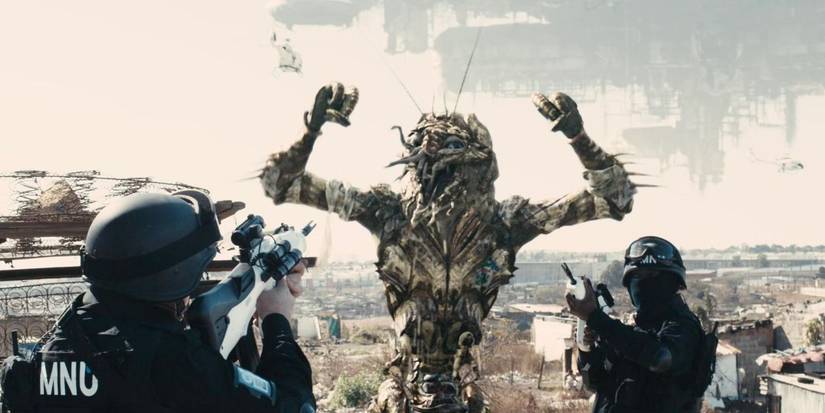 Image via Sony Pictures Releasing
"You wanted to see what happens? This is what happens!" District 9 is one of the most creative riffs on the usual alien contact formula. It switches things up by setting the story in modern-day South Africa and portraying the extraterrestrials as refugees rather than invaders. Bureaucrat Wikus van de Merwe (Sharlto Copley) is tasked with relocating the aliens, and his exposure to their biotechnology triggers a horrific transformation.
Director Neill Blomkamp skillfully and confidently builds this premise into a compelling mix of action, comedy, effects-driven sci-fi, and sharp social commentary. The documentary-style presentation adds to the realism and immersion, while Copley's charming performance keeps us invested the whole way through. All in all, on top of simply being an entertaining story, District 9 remains one of the most interesting cinematic statements on contemporary South Africa.
9 'Her' (2013)
 Image via Warner Bros. Pictures
"I’ve never loved anyone the way I love you." Her takes a concept that could easily feel gimmicky — a man falling in love with an operating system — and turns it into something deeply human. Theodore (Joaquin Phoenix), a lonely writer, forms a relationship with Samantha (voiced by Scarlett Johansson), an AI that evolves far beyond its original design. Their relationship feels real, shaped by mutual vulnerability, but shadowed by the gradual realization that they exist on different planes of experience.
The performances and storytelling here are refreshingly restrained and understated. The world is futuristic, but not distant: just close enough to feel inevitable. The themes around isolation, connection, technology, and romance are sensitive, astute, and years ahead of their time. Given recent increases in social media use, loneliness, and AI processing power, Her feels less and less speculative and more like a reflection of our own world.
8 'Interstellar' (2014)
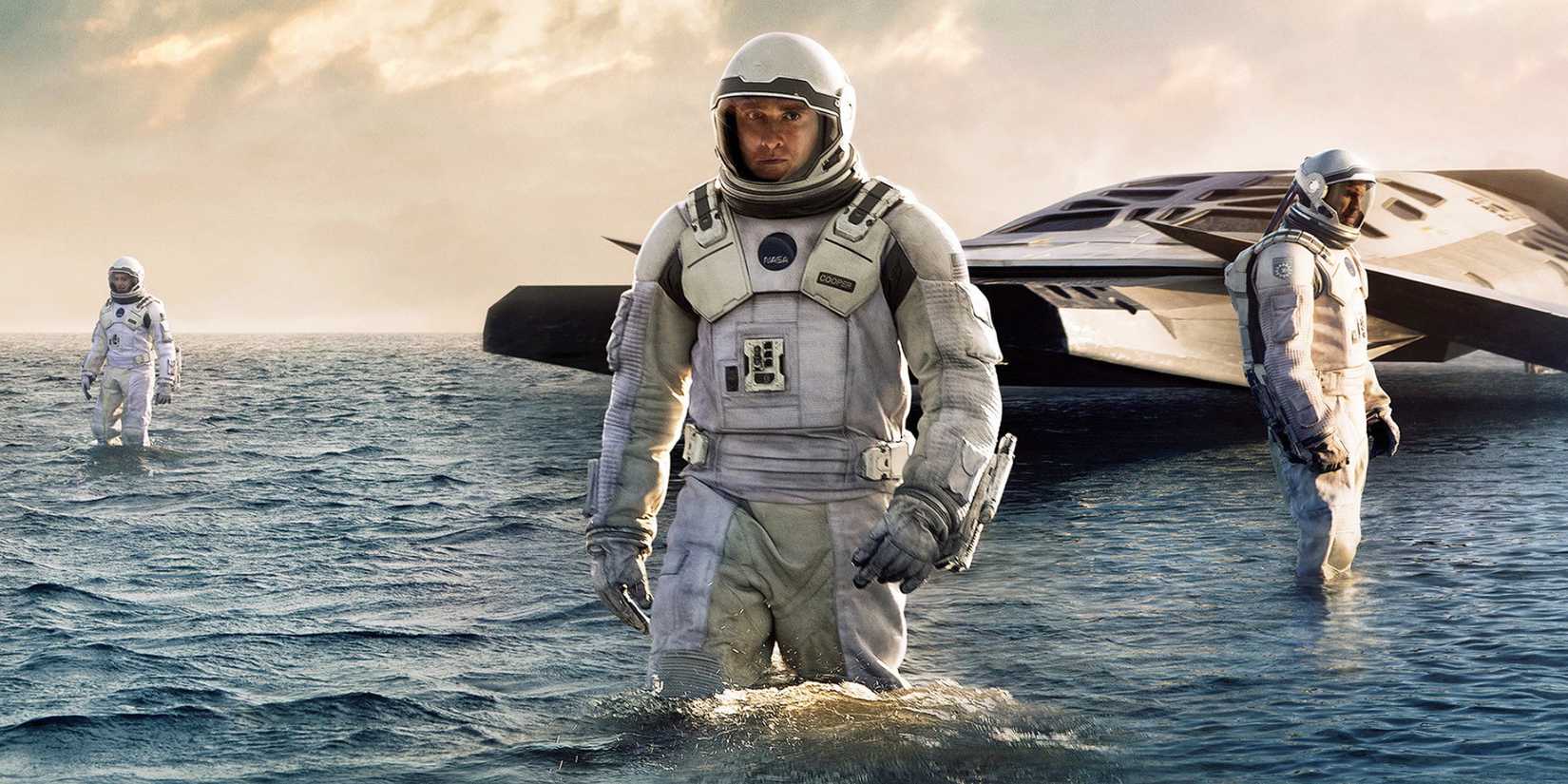 Image via Paramount Pictures
"Love is the one thing we’re capable of perceiving that transcends dimensions of time and space." Interstellar is Christopher Nolan's most ambitious sci-fi project, operating on a scale few directors could even contemplate. It's about a group of astronauts traveling through a wormhole in search of a new home for humanity, but it uses this premise as a jumping-off point to throw in all sorts of big-brain ideas, like black holes, time dilation, relativity, tesseracts, and higher dimensions, along with a deeply personal story about love and family.
It could easily have collapsed into a melodramatic mess, but Nolan and his stars have the talent to pull it off. The result is one of the most well-balanced sci-fi movies of the 21st century, hitting us with spectacular effects, gorgeous music, scientific food for thought, a tense plot, and a character-based drama.
Collider Exclusive · Sci-Fi Survival Quiz Which Sci-Fi World Would You Survive? The Matrix · Mad Max · Blade Runner · Dune · Star Wars
Five universes. Five completely different ways the future went wrong — or sideways, or up in flames. Only one of them is the world your instincts were built for. Eight questions will figure out which dystopia, galaxy, or desert wasteland you'd actually make it out of alive.
💊The Matrix
🔥Mad Max
🌧️Blade Runner
🏜️Dune
🚀Star Wars
TEST YOUR SURVIVAL →
01
You sense something is deeply wrong with the world around you. What do you do? The first instinct is often the truest one.
APull on every thread until I understand the system — then figure out how to break it. BStop asking questions and start stockpiling — food, fuel, weapons. Questions don't keep you alive. CKeep my head down, observe carefully, and trust no one until I know who's pulling the strings. DStudy the patterns. Every system has a rhythm — learn it, and you learn how to survive it. EFind the people fighting back and join them. You can't fix a broken galaxy alone.
NEXT QUESTION →
02
In a world of scarcity, what resource do you guard most fiercely? What we protect reveals what we believe survival actually requires.
AKnowledge. If you understand the system, you don't need resources — you can generate them. BFuel. Everything else — movement, power, escape — runs on it. CTrust. In a world of fakes and informants, a truly reliable ally is rarer than any commodity. DWater. And after water, information — the two things empires are truly built on. EShips and credits. The galaxy is big — you survive it by being able to move through it freely.
NEXT QUESTION →
03
What kind of threat keeps you up at night? Fear is useful data — if you're honest about what you're actually afraid of.
AThat reality itself is a lie — that everything I experience has been constructed to keep me compliant. BA raid. No warning, no mercy — just the roar of engines and then nothing left. CBeing identified. Once someone with power decides you're a problem, you're already out of time. DBeing outmanoeuvred — losing a political game I didn't even know I was playing. EThe Empire tightening its grip until there's nowhere left to run.
NEXT QUESTION →
04
How do you deal with authority you don't trust? Every dystopia has a power structure. Your approach to it determines everything.
ASubvert it from the inside — learn its rules well enough to weaponise them against it. BIgnore it and stay out of its reach. The further from any power structure, the better. CAppear to comply while doing exactly what I need to do. Visibility is the enemy. DManoeuvre within it carefully. You can't beat a system you refuse to understand. EResist openly when I have to. Some things are worth the risk of being seen.
NEXT QUESTION →
05
Which environment could you actually endure long-term? Survival isn't just tactical — it's physical, psychological, and very much about where you are.
AUnderground bunkers and server rooms — cramped, artificial, but with access to everything that matters. BOpen wasteland — brutal sun, no shelter, constant movement. At least the threat is honest. CA dense, rain-soaked city where you can disappear into the crowd and nobody asks questions. DMerciless desert — extreme heat, no water, and something enormous living beneath the sand. EThe fringe — backwater planets and busy spaceports where the Empire's attention rarely reaches.
NEXT QUESTION →
06
Who do you want in your corner when things fall apart? The company you keep is the clearest signal of who you actually are.
AA tight crew of believers who've seen behind the curtain and have nothing left to lose. BOne or two people I'd trust with my life. Any more than that and someone talks. CNobody, ideally. Alliances are liabilities. I work alone unless I have no choice. DA community bound by shared hardship and mutual survival — people who need each other to last. EA ragtag team with wildly different skills and total commitment when it counts.
NEXT QUESTION →
07
Where do you draw the line — if you draw one at all? Every survivor eventually faces a moment that tests what they're actually made of.
AI won't harm the innocent — even the ones who'd report me without hesitation. BI do what I have to to protect the people I've chosen. Everything else is negotiable. CThe line shifts depending on who's asking and what's at stake. DI draw a long-term line — nothing that compromises my people's future, even if it'd help now. ESome lines, once crossed, can't be uncrossed. I know which ones they are.
NEXT QUESTION →
08
What would actually make survival worth it? Staying alive is one thing. Having a reason to is another.
AWaking others up — dismantling the illusion so no one else has to live inside it. BFinding somewhere — or someone — worth protecting. A reason to keep moving. CAnswers. Understanding what I am, what any of this means, before time runs out. DLegacy — shaping the future in a way that outlasts me by generations. EFreedom — for myself, for others, for every world still living under someone else's boot.
REVEAL MY WORLD →
Your Fate Has Been Calculated You'd Survive In…
Your answers point to the world your instincts were built for. This is the universe your temperament, your survival instincts, and your particular brand of stubbornness were made for.
The Matrix
You took the red pill a long time ago — probably before anyone offered it to you. You're a systems thinker who can't help but notice the seams in things.
- You're drawn to understanding how the system works before figuring out how to break it.
- You'd find the Resistance, or it would find you — your instinct for spotting constructed realities is the machines' worst nightmare.
- You function best when you have access to information and the freedom to act on it.
- The Matrix built an airtight prison. You'd be the one probing the walls for the door.
Mad Max
The wasteland doesn't reward the clever or the well-connected — it rewards those who are hard to kill and harder to break. That's you.
- You don't need comfort, community, or a cause larger than the next horizon.
- You need a vehicle, a clear threat, and enough fuel to outrun it — and you're good at all three.
- You are unsentimental enough to survive that world, and decent enough — just barely — to be something more than another raider.
- In the wasteland, that distinction is everything.
Blade Runner
You'd survive here because you know how to exist in moral grey areas without losing yourself completely.
- You read people accurately, keep your circle small, and ask the questions others prefer not to answer.
- In a city where humanity is a legal designation rather than a feeling, you hold onto something that keeps you functional.
- You're not a hero. But you're not lost, either.
- In Blade Runner's world, that distinction is everything.
Dune
Arrakis is the most hostile environment in the known universe — and you are precisely the kind of person it rewards.
- Patience, discipline, and political awareness are your core strengths — and on Arrakis, they're survival tools.
- You understand that the long game matters more than any single victory.
- Others come to Dune and are consumed by it. You'd learn its logic and earn its respect.
- In time, you wouldn't just survive Arrakis — you'd begin to reshape it.
Star Wars
The galaxy far, far away is vast, loud, and in a constant state of violent political upheaval — and you wouldn't have it any other way.
- You find meaning in being part of something larger than yourself — a cause, a crew, a rebellion.
- You'd gravitate toward the Rebellion, or the fringes, or whatever pocket of the galaxy still believes the Empire's grip can be broken.
- You fight — not because you have to, but because standing aside isn't something you're capable of.
- In Star Wars, that willingness is what makes all the difference.
↻ RETAKE THE QUIZ
7 'Back to the Future' (1985)
 Image via Universal Pictures / Courtesy Everett Collection
"If you put your mind to it, you can accomplish anything." Back to the Future is perhaps the most perfectly constructed time-travel film ever made, even if it's far from scientifically accurate. Marty McFly (Michael J. Fox) is accidentally sent back to 1955, where he must ensure that his parents fall in love or risk erasing his own existence. The plot moves with effortless momentum: the stakes are clear, the rules consistent, and the pacing nearly flawless.
Indeed, the screenplay is one of the tightest ever. Tiny details echo across timelines in clever ways: the clock tower, the skateboard, the mayoral campaign, the family photograph, the Twin Pines Mall becoming Lone Pine Mall. On top of that, there's an endless supply of joyful humor, along with a steady parade of memorable performances from pretty much everyone involved, but Christopher Lloyd most of all. In short, it's a quintessentially '80s gem.
6 'Terminator 2: Judgment Day' (1991)
 Image via Tri-Star Pictures
"Hasta la vista, baby." The first Terminator is a banger, but Terminator 2: Judgment Day expanded on it in every way, turning a straightforward sci-fi thriller into something far more ambitious. The first masterstroke was the decision to bring back the old villain as an ally. This time around, a reprogrammed Terminator (Arnold Schwarzenegger) is sent back in time to protect John Connor (Edward Furlong), the future leader of the human resistance, from a more advanced machine.
Visually, the movie was groundbreaking, too. The CGI effects changed cinema permanently, particularly the liquid-metal transformations of the T-1000. Yet what makes the effects endure is that James Cameron combines them with practical effects, miniatures, stunts, and physical action. For this reason, scenes like the truck chase through the Los Angeles canals and the steel mill climax more than hold up today.
5 'The Matrix' (1999)
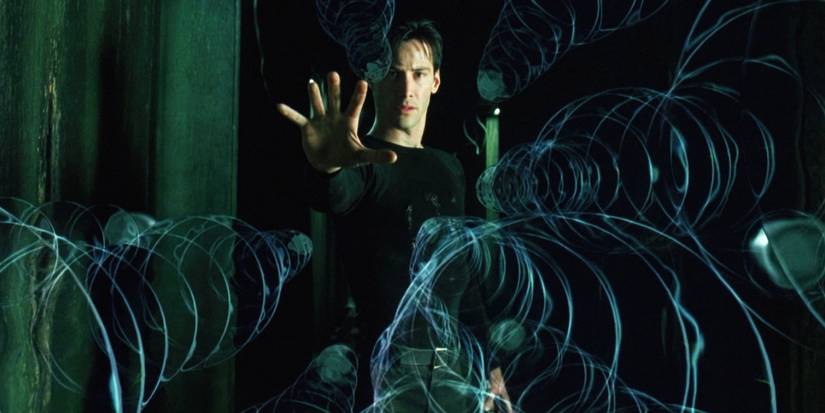 Image via Warner Bros.
"There is no spoon." The Matrix begins as a noirish mystery and expands into a butt-kicking martial arts movie, all while getting deeply philosophical and exploring cyberspace in pioneering new ways. Keanu Reeves delivers perhaps his most iconic performance as Thomas Anderson, a computer hacker known as Neo, discovers that reality itself is a simulation controlled by machines, and that humanity is unknowingly trapped within it.
The movie's structure is deceptively simple, almost archetypal: awakening, training, confrontation. But within that framework lies a dense web of ideas around free will, technology, perception, control, identity. The action sequences are iconic, redefining what was possible in cinema at the time, yet they never overshadow the compelling themes. In our world of pervasive social media and online personas and doomscrolling, they ring even more true. Very smart, effortlessly cool.
4 'Star Wars: The Empire Strikes Back' (1980)
"No… I am your father." While the first Star Wars movie blew people's minds, it was The Empire Strikes Back that really turned the franchise into a full-blown modern mythos. It gets bolder and darker, with the Rebel Alliance facing devastating losses and Luke Skywalker (Mark Hamill) confronting the true nature of his enemy. The heroes are separated, the tone darkens, and the narrative builds toward a conclusion that offers no easy resolution.
Of course, the defining presence of the film is Darth Vader. In A New Hope, Vader was already visually striking, but The Empire Strikes Back transforms him into one of cinema’s greatest villains. He is no longer merely an enforcer, instead becoming tragic, mythic, and psychologically complex. The climactic revelation, one of the most famous twists in film history, recontextualizes the entire story and elevates the saga into something truly operatic.
3 'Aliens' (1986)
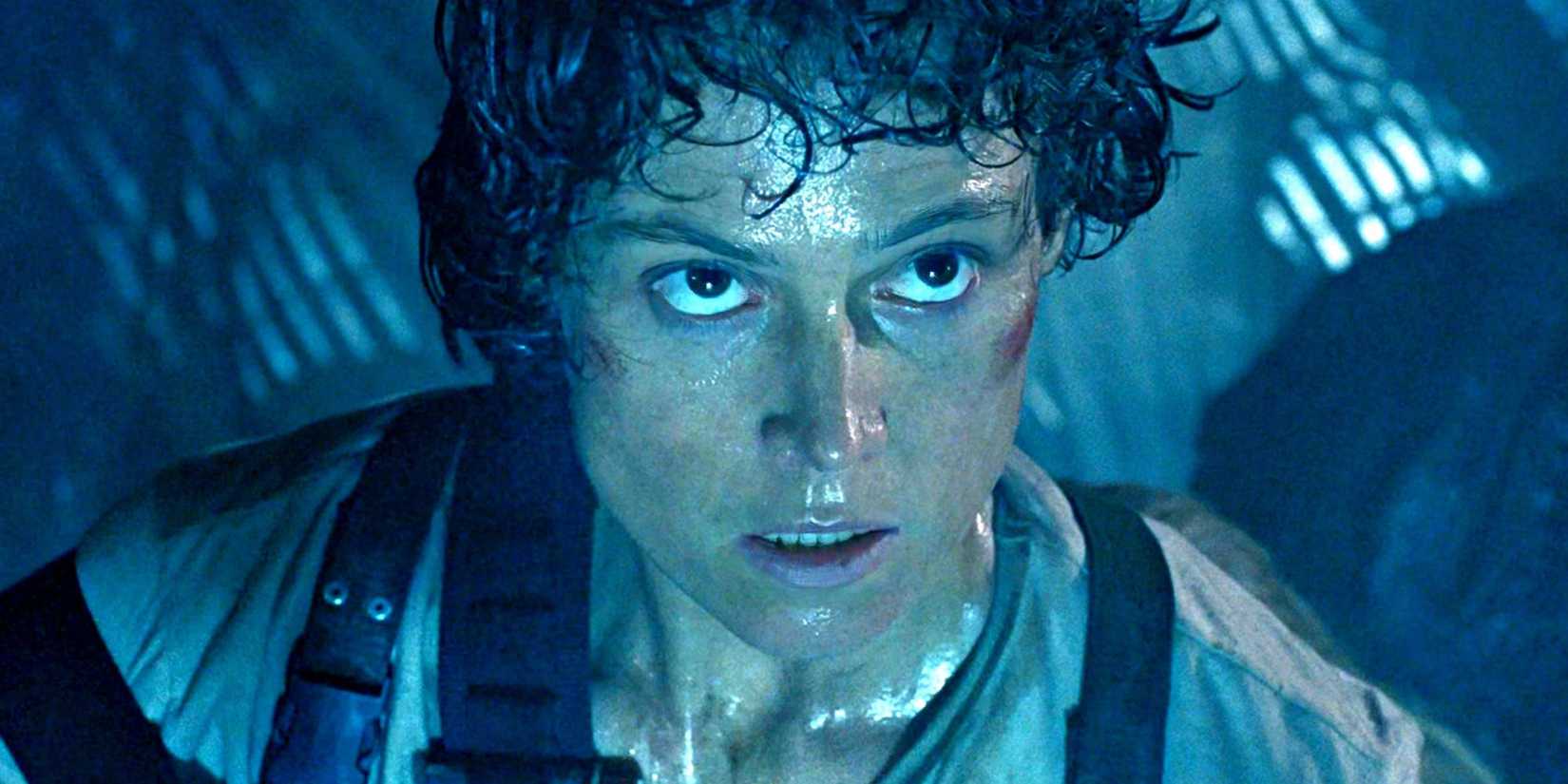 Image via 20th Century Studios
"Get away from her, you b—h!" James Cameron strikes again, this time taking Ridley Scott's sturdy horror foundation and shifting it into action territory, while retaining its core tension. Ellen Ripley (Sigourney Weaver) returns to LV-426 with a team of marines to investigate a colony that has gone silent, only to discover that the alien threat has multiplied. The characters have guns this time around, but they face not one threat but dozens, including the colossal alien queen.
This movie is just ridiculously entertaining from start to finish. The characters are colorful (including a terrific supporting performance from Bill Paxton as Bishop), the effects are killer, and the xenomorphs are explored in greater detail. Here, they're an overwhelming hive species: fast, coordinated, endless, and almost insect-like. Finally, Ripley’s relationship with Newt adds real depth to the action.
2 'Alien' (1979)
 Image via 20th Century Studios
"In space, no one can hear you scream." Possibly the pinnacle of sci-fi horror, Alien is a haunted house movie in space, boasting the most creepy and creative monster in movie history. In it, the crew of the spaceship Nostromo responds to a distress signal on a distant planet and inadvertently brings a deadly organism aboard their ship. The alien is rarely seen, its presence suggested rather than shown. This absence creates a sense of dread that permeates every scene.
Scott constructs the film with meticulous attention to atmosphere, using lighting, sound, and pacing to build tension gradually. The characters feel real, their reactions grounded. The spaceship itself also feels industrial, lived-in, and low-fi, a refreshing contrast from the slick and fantastical spacecraft you typically saw onscreen up til that point. Every element here made for a blueprint that still works today.
1 'Blade Runner' (1982)
 Image via Warner Bros.
"All those moments will be lost in time, like tears in rain." Amazing that Ridley Scott delivered not one but two of sci-fi's greatest movie masterpieces. Blade Runner may not be as viscerally compelling as Alien, but it eclipses it in terms of visual ingenuity and philosophical depth. Harrison Ford is in top form here as Rick Deckard, a blade runner tasked with hunting bioengineered beings. Yet what begins as a detective story becomes something far more introspective.
Drawing on noir influences, Blade Runner questions what it means to be human, whether memory defines identity, and whether artificial life can possess genuine emotion. The characters are unusually layered for a sci-fi flick, frequently reflecting on their decisions and confronting their own existence. Then, on the aesthetic front, the world of the movie is richly detailed, a dystopian landscape that feels both decayed and alive. Countless films since have borrowed from its style.






 English (US) ·