
 image via Walt Disney Studios Motion Pictures

Published Feb 7, 2026, 5:53 PM EST
Luc Haasbroek is a writer and videographer from Durban, South Africa. He has been writing professionally about pop culture for eight years. Luc's areas of interest are broad: he's just as passionate about psychology and history as he is about movies and TV. He's especially drawn to the places where these topics overlap.
Luc is also an avid producer of video essays and looks forward to expanding his writing career. When not writing, he can be found hiking, playing Dungeons & Dragons, hanging out with his cats, and doing deep dives on whatever topic happens to have captured his interest that week.
Sign in to your Collider account
Cinema was the defining art form of the 20th century. It grew at warp speed from a novelty to a commercial force and a powerful tool for expression. Its reach was global and its impact profound. The period between 1900 and 1999 yielded countless masterpieces across a dizzying array of styles, genres, and tones, from silent physical comedy to visually stunning sci-fi.
With this in mind, this list attempts to rank some of the most important and influential movies of the 20th century, the ones that captured imaginations and reshaped the medium forever. Some were revolutionary on arrival, others grew into their stature over decades, but all remain unshakeable cornerstones of film history with legacies that become greater and more admired with each passing year.
10 ‘Pinocchio’ (1940)
 Image via Walt Disney Studios Motion Pictures
"Always let your conscience be your guide." Pinocchio stands as one of the greatest achievements in animation, a dreamlike fable that feels both whimsical and terrifying, designed with the meticulous craftsmanship that defined early Disney. The plot is archetypal, drawing on centuries of storytelling. At its heart is the wooden puppet (Dickie Jones) who longs to become a real boy, guided by Jiminy Cricket (Cliff Edwards) and threatened by a series of nightmarish temptations: the sinister Stromboli (Charles Judels), the eerie Pleasure Island, the transformation of boys into donkeys, and the whale Monstro.
Fantasy aside, Pinocchio is a deep, challenging statement on growing up. It blends innocence with genuine moral darkness, serving up sharp warnings about the perils and pitfalls that plague every human life. It’s a film about conscience, desire, and the perilous journey toward humanity, animated with such detail that every background painting feels like a portal to a vanished artistic era. Even now, its emotional stakes and visual imagination remain unmatched.
9 ‘Pulp Fiction’ (1994)
 Image via Miramax
"Say ‘what’ again. I dare you!" After the stagnation of the '80s came the creative boom of the '90s, led in no small part by Quentin Tarantino's sophomore effort. Reservoir Dogs was kinetic and hard-hitting, but Pulp Fiction got even more ambitious and elaborate. Told through a non-linear structure, the movie weaves together hitmen, boxers, gangsters, and drifters whose lives intersect across chance, violence, and redemption. John Travolta, Samuel L. Jackson, Uma Thurman, and Bruce Willis anchor the film’s overlapping stories, but the true star is the tone: funny, brutal, irreverent, and strangely philosophical.
Through it all, Tarantino transformed pop-cultural debris into something operatic, using dialogue the way other directors use action. Every scene from the diner stickup to the adrenaline shot to the watch monologue has cemented itself in film lore. Practically every line is quotable. Then there's the self-aware aspect: Pulp Fiction is a movie built out of movie references, borrowing lines, shots, edits, and props from countless films that came before.
8 ‘Seven Samurai’ (1954)
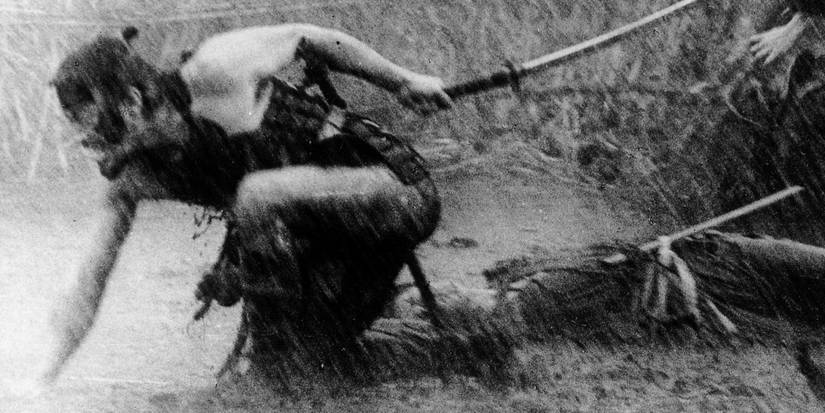 Image via Toho
"Once more, we survive." Seven Samurai remains a breathtaking fusion of action, moral struggle, and humanistic depth, the blueprint for nearly every ensemble adventure film that followed (most famously The Magnificent Seven). The story is set in 16th-century Japan, where a poor farming village hires seven ronin to defend them from bandits. What begins as a simple rescue narrative becomes a meditation on sacrifice, leadership, honor, and the cost of violence.
Here, Kurosawa’s command of movement turns battle into kinetic poetry. He crafts striking images out of wind, rain, horses, crowds, and shifting formations. The three-hour runtime feels mythic rather than long, culminating in a finale as heartbreaking as it is thrilling. On the acting front, Toshiro Mifune’s wild, unpredictable Kikuchiyo steals the film with a performance that feels electric even decades later. All in all, it's a killer action movie that also delivers with layered characters and rich, thoughtful themes.
7 ‘Lawrence of Arabia’ (1962)
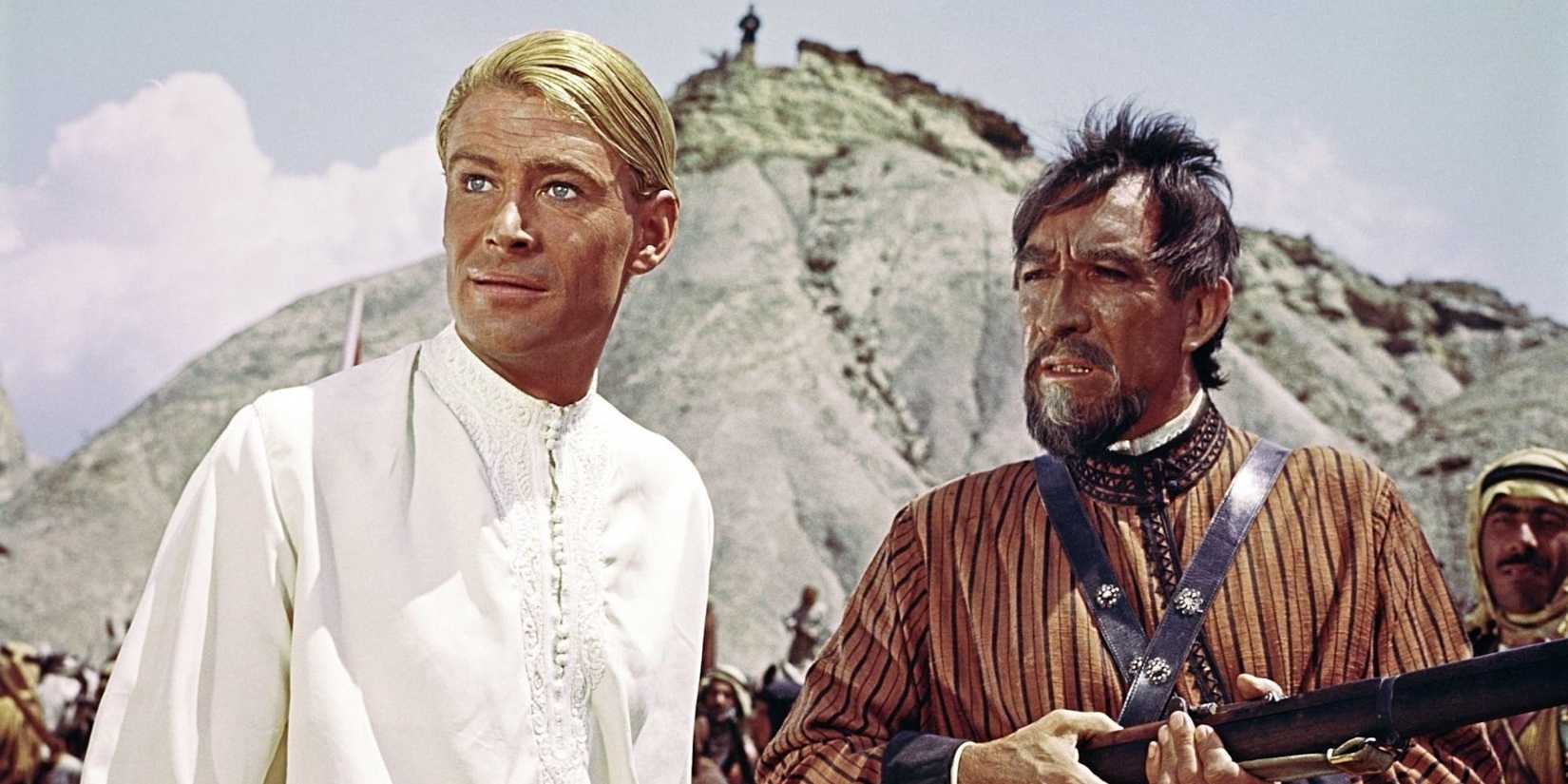 Image via Columbia Pictures
"Nothing is written." David Lean was the master of the epic, and Lawrence of Arabia was his crowning achievement, a sweeping chronicle of one man's adventures during World War I. T.E. Lawrence (played with enigmatic brilliance by Peter O’Toole) is a mythic yet tormented figure caught between cultures. He leads daring raids and unites warring Arab tribes, but is beset by inner contradictions and doubt.
While this movie is a character study, its scale is staggering: endless dunes, cavalry charges filmed in painterly wides, an audacious (now legendary) match cut, and vistas so vast they seem carved into the horizon. Through this aesthetic grandeur, Lean captures the triumph and madness of imperial ambition, how a man can reshape history but collapse under the weight of his own legend. The score by Maurice Jarre, the shimmering cinematography, and O’Toole’s ethereal presence combine to create an experience that feels at once intimate and monumental.
6 ‘The Shawshank Redemption’ (1994)
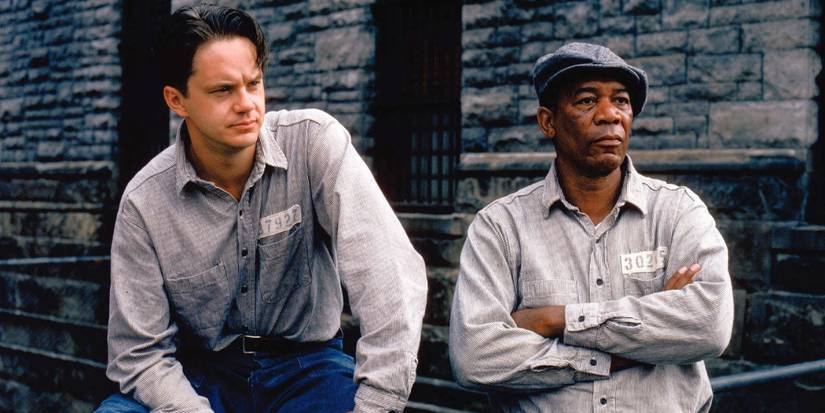 Image via Columbia Pictures
"Get busy livin’, or get busy dyin’." While Pulp Fiction was the most inventive movie of the '90s, The Shawshank Redemption might be the most profound. It's the rare film that grows larger with each passing year, evolving from a modest box-office performer into one of cinema’s most beloved human dramas. Based on Stephen King’s novella, the plot follows Andy Dufresne (Tim Robbins), a banker wrongly imprisoned for murder, and his friendship with fellow inmate Red (Morgan Freeman). The prison around them becomes a crucible of cruelty and hope: corruption, institutional violence, small acts of rebellion, and the slow, quiet rebuilding of dignity.
The Shawshank Redemption is one of cinema's best depictions of a male friendship, and one of its most enduring statements on the longing for liberation. The movie's power comes from its insistence that hope is not weakness but resistance. Robbins and Freeman convey this message through career-defining performances, and the film’s ending offers one of the all-time great emotional payoffs.
5 ‘Psycho’ (1960)
 Image via Paramount Pictures
"We all go a little mad sometimes." Psycho is more than a thriller. On release, it was a genuine cinematic rupture, a film that shattered narrative conventions and redefined horror. It stunned audiences in a way that's hard to even imagine now. The movie famously begins with Marion Crane (Janet Leigh) stealing money and fleeing town, only to stop at the Bates Motel, where she meets the shy, unsettling Norman Bates (Anthony Perkins). The infamous shower scene detonates the story halfway through, leaving the audience disoriented and terrified.
In other words, Hitchcock weaponizes expectation, turning the viewer into a participant in the film’s anxiety. Every narrative and aesthetic element is finely tuned for maximum impact. Bernard Herrmann’s strings, the voyeuristic camerawork, the casual brutality — all of it reshaped the psychology of suspense on film. Psycho also introduced the modern horror killer archetype, paving the way for countless classics to follow.
4 ‘Sunset Boulevard’ (1950)
 Image via Paramount Pictures
"All right, Mr. DeMille, I’m ready for my close-up." Sunset Boulevard is the most haunting Hollywood film ever made: a noir fable about delusion, decay, and the predatory seduction of fame. The story centers on Joe Gillis (William Holden), a struggling screenwriter who becomes entangled with Norma Desmond (Gloria Swanson), a reclusive silent-film star living in a gilded mausoleum of past glory. Their relationship forms the film's emotional core: transactional, desperate, toxic.
While the script is fantastic (including some of the most iconic quotes in movie history), the performances do most of the heavy lifting. Swanson, in particular, is volcanic, tragic, grotesque, and heartbreakingly vulnerable. Norma was a challenging, contradictory character to play, and she does an amazing job with it. By focusing on her, the film exposes Hollywood as both dream factory and soul grinder, a place where the camera never truly stops rolling. Few movies peel back the illusions of celebrity with such ruthless clarity.
3 ‘Citizen Kane’ (1941)
"Rosebud..." Citizen Kane remains one of cinema’s most astonishing debuts, a stylistic revolution disguised as a newspaper mystery. In it, journalists frantically investigate the final word of media magnate Charles Foster Kane (Orson Welles, who also produced, directed, and co-wrote the script). Through fractured flashbacks, the film reconstructs Kane’s rise and fall, revealing a man shaped by ambition, loneliness, and thwarted love.
This movie innovated on several fronts at once, pioneering new means of visual storytelling that would become universal parts of film grammar. Gregg Toland’s deep-focus cinematography, the boundary-pushing sound design, and Welles’ bold staging created a cinematic language so modern it still, in some ways, feels ahead of its time. However, Citizen Kane isn’t revered simply for its technique. It's also a piercing tragedy about a man who gained the world and lost himself, with a central message that still hits hard today.
2 ‘2001: A Space Odyssey’ (1968)
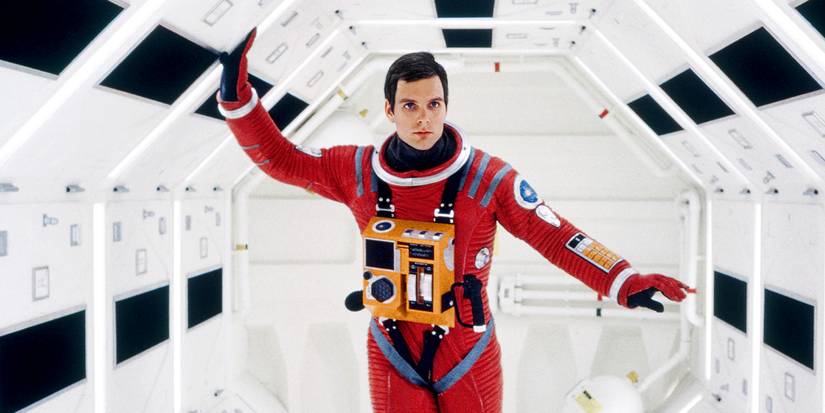 Image via Metro-Goldwyn-Mayer
"I’m sorry, Dave. I’m afraid I can’t do that." Back in 1968, 2001: A Space Odyssey represented a giant leap for cinematic sci-fi, breaking open the rich new vein of possibilities that would lead to Star Wars, Alien, and almost every other one of the genre's masterpieces. This movie's ambition is simply staggering. Kubrick blends science, metaphysics, and visual grandeur into something closer to symphonic art than straightforward narrative, starting with prehistoric apes and ending in interstellar transcendence.
The plot is fragmented into chapters: early humanity discovering tools, a mysterious monolith on the moon, a voyage aboard the spaceship Discovery One, and astronaut Dave Bowman’s (Keir Dullea) confrontation with the malfunctioning AI HAL-9000 (voiced by Douglas Rain). Douglas Trumbull’s special effects remain astonishingly convincing, all elevated by a brilliant classical score. The film then culminates in the Stargate sequence, an abstract rebirth that’s been debated for decades.
1 ‘The Godfather Part II’ (1974)
 Image via Paramount Pictures
"Keep your friends close, but your enemies closer." The Godfather Part II is arguably the pinnacle of '70s filmmaking (which means it's the pinnacle of 20th-century filmmaking, too). It's certainly the greatest sequel ever made, one that deepens, expands, and darkens the original masterpiece. The plot intercuts two narratives: Michael Corleone (Al Pacino) consolidating power as head of the family in the 1950s, and the rise of young Vito Corleone (Robert De Niro) in the early 20th century.
Pacino’s performance as Michael is devastating, convincingly charting the transformation of a reluctant leader into a cold, isolated tyrant. Opposite him, De Niro’s portrayal of Vito adds tenderness and immigrant resilience to the family’s mythology. By combining their stories, Coppola turns crime into tragedy, tracing how power corrodes the soul until nothing remains but silence and regret. The film’s final scenes (Michael alone on the lake, Michael remembering times long past) strike with Shakespearean weight. The Godfather Part II's echoes continue to reverberate through the medium.



 English (US) ·