
Gangster movies are endlessly rewatchable for a reason that goes way beyond cool suits, guns, and people getting clipped in restaurants. And the reason is — peak, brutal life lessons about what to do, what not to do, who to be, and who not to be, and how to survive. The great ones show systems of belonging alongside crime. When you rewatch a gangster movie, you are returning for the feeling of walking back into a world where every joke has a threat under it, every dinner table scene has strategy under it, and every rise is already carrying the shape of the fall.
That lets you see how sharp the writing is, and how sharp you are to return to it and be able to spot that between the lines, nods and expressions. A very small example of it is that Thomas Shelby (Cillian Murphy) scene in Peaky Blinders when Tommy is worried, and panicking as hell and he threatens Irene O’Donnel (Simone Kirby) by threatening about her son who has a steel leg, not because he wants to do that but because that’s his only leverage, and you can hear his fear in his voice. And the reason these ten movies below hold up over and over is that they all understand a slightly different version of the genre’s sickness.
10 'Donnie Brasco' (1997)
 Image via Sony Pictures Releasing
What makes Donnie Brasco so rewatchable is that it never forgets the tragedy hiding inside the procedure. On paper, it is an undercover movie. Donnie Brasco (Johnny Depp) is an FBI agent infiltrating the mob, getting close to the wrong people, and losing himself in the role. Fine. But what makes the film stick is that it treats infiltration as emotional theft. Donnie is not just gathering evidence. He is accepting trust from men whose lives are already broken by the system they serve, and the more human those men become, especially Lefty Ruggiero (Al Pacino), the uglier the whole mission starts to feel. That is why the movie gets better every time. You stop watching for the operation and start watching for the damage.
And Lefty is the heart of the whole thing. Pacino does something beautiful here by shrinking rather than inflating. Lefty is not a kingpin. He is a worn-out soldier, passed over, underpaid, still trying to preserve dignity in a life that has chewed through most of it. His bond with Donnie works because it is not fake in the emotional sense even if the premise makes it fake in every other sense. He sees a son, a protégé, maybe the last real connection he can still build in a world built to consume connection. That ache is why Donnie Brasco hits so hard on repeat.
9 'Scarface' (1983)
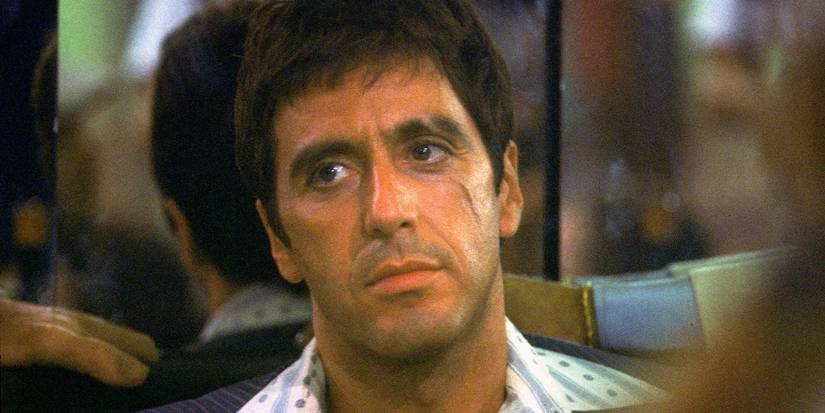 Image via Universal Studios
Scarface is so endlessly watchable because it does not just depict excess. It becomes excess. Every scene feels like Tony Montana (Al Pacino) trying to bully reality into giving him more space, more money, more women, more visibility, more control, more America. That is what makes the film so alive. It is not elegant gangsterism. It is appetite with a machine gun. And the brilliance is that Brian De Palma never asks you to mistake that appetite for greatness. Tony is magnetic, yes. He is also vulgar, paranoid, childish, self-destructive, and spiritually incapable of stopping once he gets what he wanted. That combination makes the film impossible to turn away from.
And the rewatch value comes from how clearly the movie builds Tony’s doom into his personality. People often remember the mansion, the quotable swagger, the mountain of coke, the operatic violence, all deservedly, but the deeper pleasure is in watching how every victory makes him less able to live inside victory. He cannot stabilize. He cannot share power. He cannot soften possession into love. Even his code, small and crude as it is, becomes another form of self-sabotage once the empire gets big enough. Scarface stays watchable because it is not just a rise-and-fall story but an addiction story disguised as gangster mythology.
8 'The Departed' (2006)
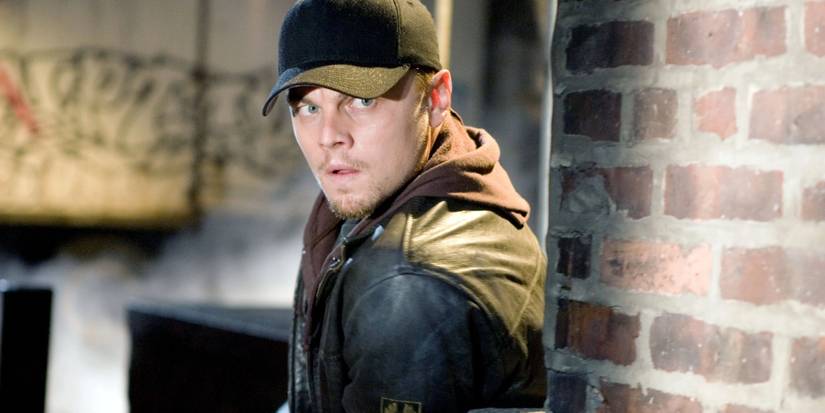 Image via Warner Bros. Pictures
The Departed has insane replay value because it runs on contamination. Billy Costigan (Leonardo DiCaprio) is being eaten alive by undercover work. Colin Sullivan (Matt Damon) is building an entire life on false competence and stolen status. Frank Costello (Jack Nicholson) is not merely a boss but a source of psychic infection, a man who has lived in corruption so long he treats everybody else’s inner life like something to graffiti on. That makes every scene feel unstable.
And what makes it so good over and over is that Martin Scorsese keeps the movie fast without sacrificing moral thickness. The phone calls, the rats-in-walls feeling, the therapy, the class anxiety, the Catholic guilt, the masculinity performed through violence and panic, all of it makes Boston feel less like a backdrop than a whole ecosystem of compromised inheritance. On rewatch, what hits even harder is how doomed everyone feels long before the first body falls. It is one of Scorsese’s funniest gangster films and one of his sickest.
7 'Casino' (1995)
 Image via Universal Pictures
What I love about Casino is how much of it feels like somebody narrating a beautiful machine while already knowing the machine is on fire. That is its whole intoxication. The details are so rich, the skim, the suits, the surveillance, the gaming-floor discipline, the balance between mob order and desert-law chaos, that the movie becomes almost hypnotic.
You can just live inside the operations. But then the deeper gangster rot keeps rising through it. Sam “Ace” Rothstein (Robert De Niro) wants control. Nicky Santoro (Joe Pesci) wants appetite. Ginger McKenna (Sharon Stone) wants escape and cannot find the version of it that is real. And Las Vegas, this gaudy dream of regulated greed, becomes the perfect place for all of them to rot in public. That is why the film keeps opening up on rewatch. The first time you take in the scale and the propulsion. Later, you start noticing how sad everybody is in completely different ways. Casino is not just a mob movie. But you don’t see that in the first watch. If it hooks you for a rewatch, it becomes a movie about capitalism, performance, addiction, and love turning transactional until nobody can tell the difference anymore.
6 'Miller’s Crossing' (1990)
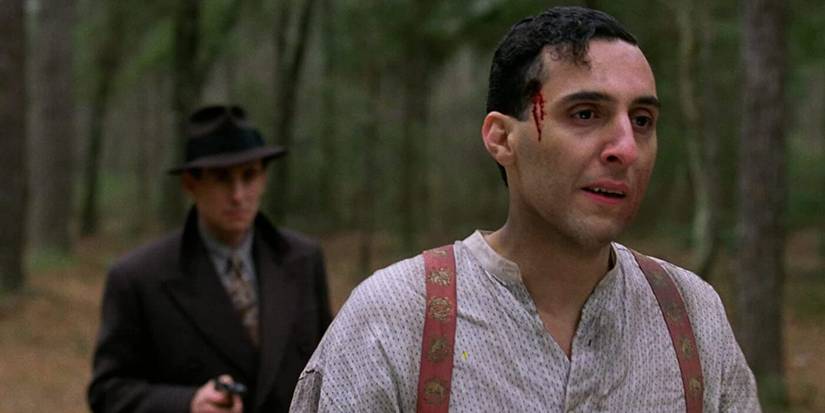 Image via 20th Century Studios
Miller’s Crossing is one of the most rewarding rewatches on the list because it almost seems to deepen by refusing to fully explain itself in the easy way. The pleasure of the film is not only in what happens, though the plotting is marvelous. It is in the texture of deception and the way the movie turns loyalty into a hall of mirrors. Tom Reagan (Gabriel Byrne) is one great gangster protagonist — he seems to move half a beat ahead of everyone else and still cannot get out of the moral mud clean. He is strategic, yes, but never above the human weakness making strategy necessary in the first place.
And that human weakness is what makes the film so haunting. Leo O’Bannon (Albert Finney) has pride. Bernie Bernbaum (John Turturro) has slipperiness elevated into survival art. Verna Bernbaum (Marcia Gay Harden) has her own gravity in the system. Caspar Gutman (Jon Polito) mistakes information for control. Everybody is angled wrong toward power, and Tom has to keep navigating through all those angles with a face that almost never tells you enough. Joel Coen and Ethan Coen make the whole thing feel like a gangster ballad written in riddles, and that is exactly why it plays so beautifully the fifth or sixth time. Every line sounds like it is hiding another line. Every favor sounds like a future wound. It is one of the smartest films here and one of the saddest.
5 'City of God' (2002)
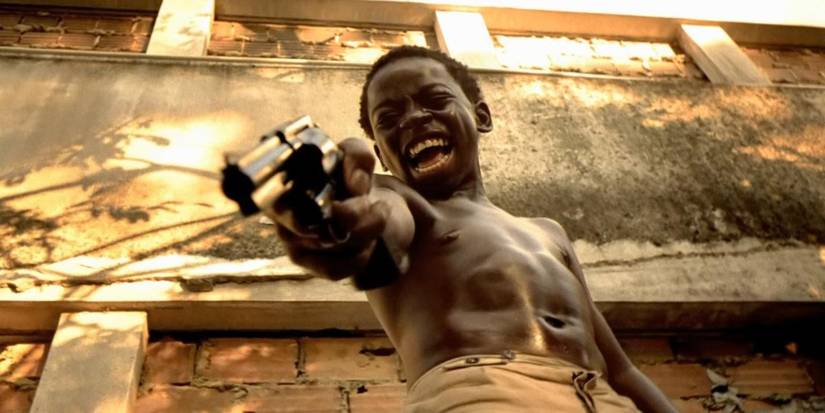 Image via Miramax Films
City of God remains one of the most electrifying gangster films ever made because it understands that criminal life can feel like a trap before it feels like a choice. The energy is everything at first, the camera, the rush, the hunger, the way the favela seems to generate boys into gangsters almost by momentum, but that energy never becomes celebration. It becomes horror through familiarity.
The film moves like youth and hits like fate. And the more times you see it, the more terrifying Li’l Zé (Leandro Firmino) becomes, not just as a monster, but as a product. He is not an alien dropped into the neighborhood. He is a boy formed by a place where violence became one of the few available languages for becoming visible. That does not excuse him. It makes him worse. It makes the whole system worse. Benny (Phellipe Haagensen) matters so much for the same reason. It’s a brilliant rewatch fuel.
4 'Once Upon a Time in America' (1984)
 Image via Warner Bros. Pictures
Once Upon a Time in America gets more overwhelming on rewatch because it is less a gangster story than a memory wound dressed as one. Sergio Leone probably wasn’t interested only in crime mechanics here. He was interested in what ambition, betrayal, longing, and time do to memory once the people inside that memory start realizing they may have built their whole identity around a past that cannot be revisited honestly. And David “Noodles” Aaronson (Robert De Niro) is such a fascinating center as a haunted witness to his own life, moving through childhood, brotherhood, lust, guilt, and regret as if all of it still exists at once inside him.
That is why the film becomes richer every time you return to it. The younger crew stuff lands harder because you know what all that hope becomes. Deborah Gelly (Elizabeth McGovern) lands harder because the film understands that desire in these worlds is often inseparable from possession and fantasy and that those fantasies can rot into something unforgivable. Max Bercovicz (James Woods) lands harder because friendship in gangster films is always one step from becoming a duel over destiny. Leone stretches time until the whole movie feels like it is drifting through smoke and self-deception.
3 'Goodfellas' (1990)
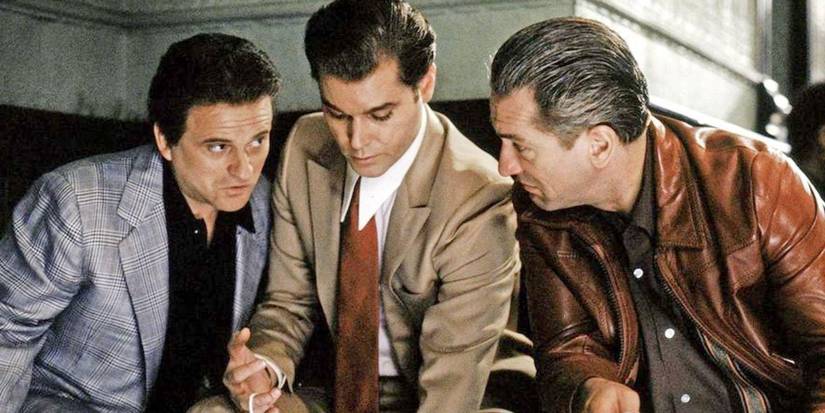 Image via Warner Bros.
Goodfellas is probably the most purely rewatchable gangster movie ever made in terms of sheer propulsion. It just goes. Henry Hill (Ray Liotta)’s voiceover, the music, the entrances, the jokes, the meals, the killings, the paranoia, the pettiness, the glamor, the collapse, it all moves with such total confidence that the film feels new every time even when you know it by heart. That is the first miracle.
The second is that the movie never loses sight of how pathetic this life actually is once the thrill starts wearing off. Henry thinks being a gangster means becoming somebody. The film keeps proving it means becoming owned. And what keeps it alive forever is how fully Scorsese understands seduction. He starts by letting you feel exactly why Henry wants it so badly. The cars. The suits. The shortcuts. The hierarchy. The sense that everybody else is on the outside of a private universe of access. Then the universe gradually reveals itself as frantic, brittle, childish, murderous, and spiritually tiny. Tommy DeVito (Joe Pesci) is one of the greatest live wires in film history for that exact reason. This film is essentially the genre at full speed and full sickness at once.
2 'The Godfather Part II' (1974)
 Image via Paramount Pictures
The Godfather Part II is one of the richest rewatches in all of cinema. It splits power into two simultaneous stories and you’re not unhooked for a second. On one side, you have young Vito Corleone (Robert De Niro) rise through old-world deprivation, neighborhood loyalty, and the gradual recognition that violence can become order if wielded with enough patience and intelligence. Michael Corleone (Al Pacino), meanwhile, sits at the center of a far larger empire and becomes lonelier, colder, and more spiritually amputated every step he takes to preserve it. That structure is the movie’s genius. It turns the idea of inherited power into a comparison between creation and corruption.
And on repeat, that comparison becomes devastating. De Niro’s Vito feels almost mythic not because he is simple, but because the film lets us see the human and historical pressures that shaped his code before that code hardened into legend. Pacino’s Michael is one of the most terrifying performances ever put on screen because he barely seems to move externally while his soul keeps sealing itself shut internally. Fredo Corleone (John Cazale) becomes sadder every time. Kay Adams (Diane Keaton) becomes clearer every time. The family-business logic becomes more monstrous every time. Part II is not just grand. It is pitiless in how fully it understands the cost of turning the family into the state and the state into the family. You see that fully on rewatches.
1 'The Godfather' (1972)
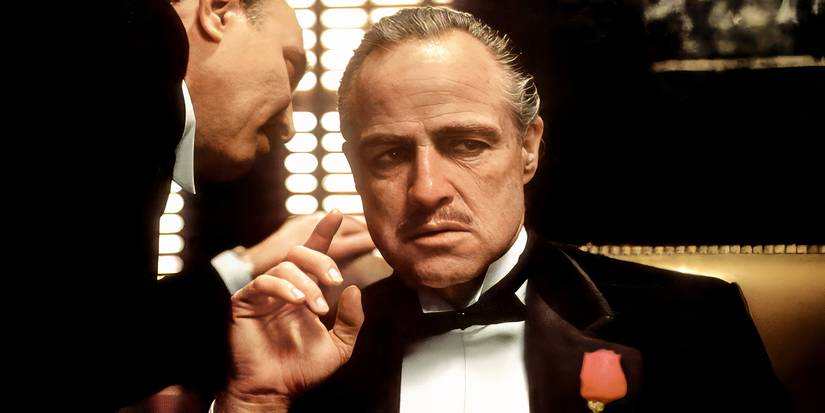 Image via Paramount Pictures
The Godfather has to be number one because it is the gangster movie that keeps feeling larger and more intimate every time you come back to it. That should not be possible, but it is. The first time, the film feels like power and ceremony, weddings, favors, men speaking softly while deciding who lives, who dies, who owes, who belongs. Then each rewatch makes you notice how much of the movie is actually about transformation through proximity. Michael Corleone (Al Pacino) takes on responsibility because others around him are too weak and stupid to do so.
Every relationship is doing real dramatic work. Vito Corleone (Marlon Brando) is not just a patriarch but a system of authority, memory, affection, intimidation, and old-world logic embodied in one man. You see more of that on each rewatch. Sonny Corleone (James Caan) is forced without shape. You realize that on rewatches too. Tom Hagen (Robert Duvall) is intelligent without blood-right. Kay Adams (Diane Keaton) is the outside world watching the door slowly close. And Michael, once he crosses the line, keeps becoming more and more what the film warned he could become. The ending sequence makes you feel how far these directors take you from the moment you started watching about three hours ago. You see Michael as an innocent young boy and you see him taking on the torch of Godfather. And it’s amazing how you find out a new thing about all of the characters on every rewatch, every single time.
Collider Exclusive · Oscar Best Picture Quiz
Which Oscar Best Picture
Is Your Perfect Movie?
Parasite · Everything Everywhere · Oppenheimer · Birdman · No Country
Five Oscar Best Picture winners. Five completely different visions of what cinema can be — and what it can do to you. One of them is the film that was made for the way your mind works. Ten questions will figure out which one.
🪜Parasite
🌀Everything Everywhere
☢️Oppenheimer
🐦Birdman
🪙No Country for Old Men
FIND YOUR FILM →
01
What kind of film experience do you actually want? The best movies don't just entertain — they leave something behind.
ASomething that pulls the rug out — that makes me think I'm watching one kind of film and then reveals I'm watching another entirely. BSomething overwhelming — funny, sad, absurd, and genuinely moving, all at once. CSomething grand and weighty — a film that makes me feel the full scale of what I'm watching. DSomething formally daring — a film that pushes what cinema can even do. ESomething lean and relentless — pure tension with no wasted frame.
NEXT QUESTION →
02
Which idea grabs you most in a film? Great films are driven by a central obsession. What's yours?
AClass, inequality, and what people are willing to do when desperation meets opportunity. BIdentity, family, and the chaos of trying to hold your life together when everything is falling apart. CGenius, moral responsibility, and the catastrophic weight of a decision you can never take back. DEgo, legacy, and the terror of becoming irrelevant while you're still alive to watch it happen. EEvil, chance, and whether moral order actually exists or if we just tell ourselves it does.
NEXT QUESTION →
03
How do you like your story told? Form is content. The way a story is shaped changes what it means.
AGenre-twisting — I want it to start in one lane and migrate into something completely different. BMaximalist and genre-blending — comedy, action, drama, sci-fi, all in one ride. CEpic and non-linear — cutting between timelines, building a mosaic of cause and consequence. DA single unbroken flow — I want to feel like I'm living it in real time, no cuts to safety. ESpare and precise — every scene doing exactly what it needs to do and nothing more.
NEXT QUESTION →
04
What makes a truly great antagonist? The opposition defines the protagonist. What kind of opposition fascinates you?
AA system — invisible, structural, and almost impossible to fight because it has no single face. BThe self — the ways we sabotage, abandon, and fail the people we love most. CHistory — the unstoppable momentum of events that no single person can stop or redirect. DThe industry — the machinery of culture that chews up talent and spits out irrelevance. EPure, implacable evil — a force so certain of itself it becomes almost philosophical.
NEXT QUESTION →
05
What do you want from a film's ending? The final note is the one that lingers. What do you want it to sound like?
AShock and inevitability — a conclusion that recontextualises everything that came before it. BEarned emotion — I want to cry, laugh, and feel genuinely hopeful, even if the world is a mess. CDevastation and grandeur — an ending that makes me sit in silence for a few minutes after. DAmbiguity — something that leaves enough open that I'm still thinking about it days later. EBleakness — an honest refusal to pretend the world is tidier than it actually is.
NEXT QUESTION →
06
Which setting pulls you in most? Where a film takes place shapes everything — mood, stakes, what's even possible.
AA gleaming modern city with a hidden underside — beauty masking rot, wealth masking desperation. BA collapsing suburban life that opens onto something infinite — the multiverse of a single ordinary person. CThe corridors of power and science at a world-historical turning point — where decisions echo for decades. DThe grimy, alive chaos of New York and Hollywood — fame as both destination and trap. EVast, indifferent landscape — desert and highway where violence arrives without warning or reason.
NEXT QUESTION →
07
What cinematic craft impresses you most? Every great film has a signature — a technical or artistic element that makes it unmistakable.
AProduction design and mise-en-scène — every frame composed to carry meaning beneath the surface. BEditing and tonal control — the ability to move between registers without losing the audience. CScore and sound design — music that becomes inseparable from the dread and awe of what you're watching. DCinematography as performance — the camera not recording events but participating in them. ESilence and restraint — what's left unsaid and unshown doing more work than any dialogue could.
NEXT QUESTION →
08
What kind of main character do you root for? The protagonist is the lens. Who you choose to follow says something about you.
ASomeone smart and resourceful who makes increasingly dangerous decisions under pressure. BSomeone overwhelmed and ordinary who turns out to be capable of something extraordinary. CA brilliant, tortured figure whose gifts and flaws are inseparable from each other. DA self-destructive artist whose ego is both their superpower and their undoing. EA quiet, principled person trying to make sense of a world that has stopped making sense.
NEXT QUESTION →
09
How do you feel about a film that takes its time? Pace is a choice. Some films sprint; others let tension accumulate slowly, deliberately.
AI love a slow build when I know the payoff is going to be seismic — patience for a devastating reveal. BGive me relentless momentum — I want to feel breathless and emotionally spent by the end. CEpic runtime doesn't scare me — if the material demands three hours, give me three hours. DI want it to feel propulsive even when nothing is technically happening — restless energy throughout. EDeliberate and unhurried — I want dread to accumulate in the spaces between the action.
NEXT QUESTION →
10
What do you want to feel walking out of the cinema? The best films leave a mark. What kind of mark do you want?
AUnsettled — like I've just seen something I can't fully explain but can't stop thinking about. BMoved and energised — like the film reminded me what actually matters and gave me something to hold onto. CHumbled — like I've been in the presence of something genuinely important and overwhelming. DExhilarated — like I've just seen cinema doing something it's never quite done before. EHaunted — like a cold, quiet dread that stays with me for days.
REVEAL MY FILM →
The Academy Has Decided Your Perfect Film Is…
Your answers have pointed to one Oscar Best Picture winner above all others. This is the film that was made for the way your mind works.
Parasite
You are drawn to films that operate on multiple levels simultaneously — that begin in one genre and quietly, brilliantly migrate into another. Bong Joon-ho's Parasite is a film about class, desire, and the architecture of inequality that manages to be darkly funny, deeply suspenseful, and genuinely shocking across a single extraordinary running time. Your instinct is for cinema that hides its true intentions until the moment it's ready to reveal them. Parasite is exactly that — a film that rewards close attention and punishes assumptions, right up to its devastating final image.
Everything Everywhere All at Once
You want it all — and this film gives you all of it. The Daniels' Everything Everywhere All at Once is one of the most maximalist films ever made: action comedy, multiverse sci-fi, family drama, existential crisis, and a genuinely earned emotional core that sneaks up on you amid the chaos. You are someone who responds to ambition, who doesn't want cinema to choose between being entertaining and being meaningful. This film refuses that choice entirely. It is overwhelming by design, and its overwhelming nature is precisely the point — because the feeling of being crushed by infinite possibility is exactly what it's about.
Oppenheimer
You are drawn to cinema on a grand scale — films that understand history not as a backdrop but as a force, and that place their characters inside that force and watch what happens. Christopher Nolan's Oppenheimer is a film about the terrifying gap between what we can do and what we should do, told with the full weight of one of the most consequential moments in human history behind it. You want your films to feel important without feeling self-important — to earn their ambition through sheer craft and the gravity of their subject. Oppenheimer does exactly that. It is enormous, complicated, and refuses easy comfort.
Birdman
You are drawn to films that foreground their own construction — that make the how of the filmmaking part of the what it's about. Alejandro González Iñárritu's Birdman, shot to appear as a single continuous take, is cinema examining itself through the cracked mirror of a fading actor's ego. You respond to formal daring, to the feeling that a film is doing something that probably shouldn't be possible. Michael Keaton's performance and Emmanuel Lubezki's restless camera create something genuinely unlike anything else — a film that is simultaneously about creativity, relevance, self-destruction, and the impossibility of ever truly knowing if your work means anything at all.
No Country for Old Men
You are drawn to cinema that trusts silence, that refuses to explain itself, and that treats dread as a form of meaning. The Coen Brothers' No Country for Old Men is a film about the arrival of a new kind of evil — implacable, arbitrary, and utterly indifferent to the moral frameworks we use to make sense of the world. It is one of the most formally controlled films ever made, and its controlled restraint is what makes it so terrifying. You want your films to haunt you, not comfort you. You are not interested in resolution if resolution would be dishonest. No Country for Old Men is honest in a way that most cinema never dares to be.
↻ RETAKE THE QUIZ
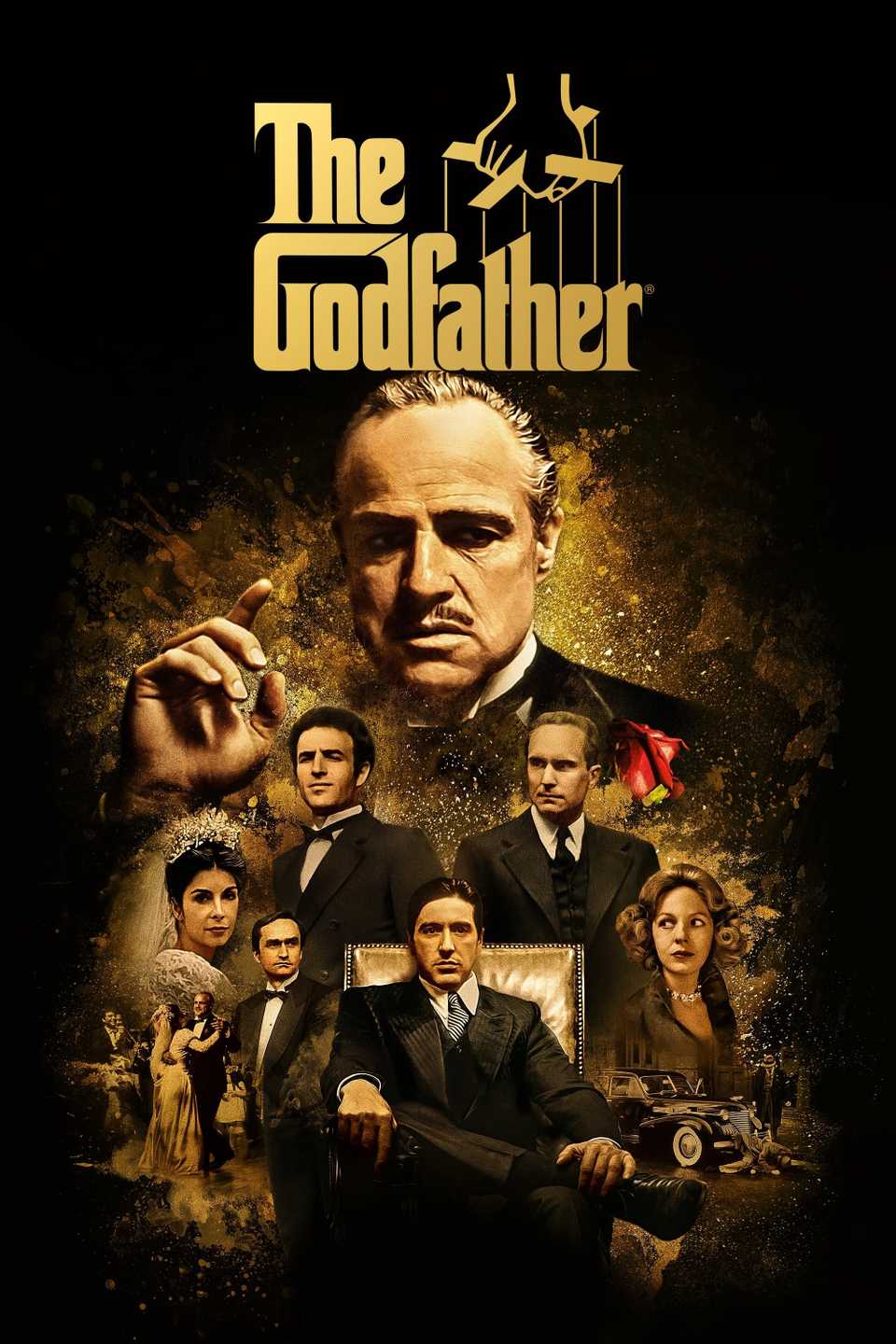
The Godfather
Release Date March 24, 1972
Runtime 175 minutes
Director Francis Ford Coppola
Writers Mario Puzo, Francis Ford Coppola
-

-

Al Pacino
Michael Corleone








 English (US) ·