
First films in trilogies have a weird burden. They are supposed to stand on their own, but they are also expected to light a fuse. They have to satisfy and haunt. They have to feel complete while still making the future feel inevitable. And the truly great ones do something even harder: they do not feel like a setup at all.
That is why this list is harder than it looks. Plenty of trilogies become great because later entries deepen or complicate what the first one started. But a great first chapter cannot coast on hindsight. It has to win you right there, in the original moment, on its own authority. It has to make you care before mythology calcifies around it. These ten films below do exactly that.
10 'Batman Begins' (2005)
 Image via Warner Bros.
I will always defend Batman Begins as the most underrated film in Christopher Nolan’s trilogy because it has to do the least flashy and most difficult work. It has to resurrect Batman after the character had drifted into pop self-parody, and it has to do it without embarrassment, without stiffness, and without mistaking dark for depth. That is not easy. This movie pulls it off because it understands that Bruce Wayne (Christian Bale) has to be rebuilt from the inside out. What I love about Batman Begins is that it takes origin-story material people thought they already knew and makes it feel psychologically useful again.
The childhood trauma is not just checked off. The fear motif is not just aesthetic garnish. The training with Ra’s al Ghul (Liam Neeson) is not there simply to show Bruce learning how to fight. The entire movie is about a man trying to convert helplessness into method without being consumed by the methods themselves. That tension gives the film real weight. The supporting cast is absurdly strong too, but what really makes the movie land is atmosphere. Gotham feels filthy, collapsing, spiritually corroded. It feels like a city that could plausibly create Batman out of necessity.
9 'Before Sunrise' (1995)
 Image via Columbia Pictures
A lot of first chapters in trilogies hook you with scope. Before Sunrise hooks you with time slipping away. That is a much riskier thing to build a movie on, because nothing major is supposed to happen here in the conventional sense. Two young people meet on a train, wander Vienna, talk for a night, and fall into that rare kind of connection that feels both accidental and cosmically timed. That’s it. That’s the movie. And it’s beautiful enough to make that’s it sound ridiculous.
The conversation is the drama. Jesse (Ethan Hawke) and Céline (Julie Delpy) are not trading screenwriter-approved lines about fate and love while waiting for a plot to arrive. They are feeling each other out in real time, saying smart things, stupid things, vulnerable things, performative things, all while slowly realizing the night matters more than they expected it to. Hawke and Delpy have that impossible thing movies keep chasing and rarely capture: chemistry that actually evolves. And because the film is so light on its feet, people underrate how emotionally dangerous it is. Before Sunrise understands the ache of temporary intimacy better than almost any romance. That is why it is such a perfect first chapter.
8 'Rise of the Planet of the Apes' (2011)
 Image via 20th Century Studios
This movie had every opportunity to be disposable franchise maintenance. Instead, it turned into one of the smartest and most emotionally effective reboot openers of the century. What makes Rise of the Planet of the Apes such a strong first chapter is that it understands the trilogy’s real protagonist almost immediately: not the world, not the spectacle, not the inevitable war, but Caesar.
That choice is everything. The film works because it treats Caesar’s development with real seriousness. His intelligence, loneliness, attachment, confusion, and eventual awakening are not side notes on the way to “apes revolt.” They are the story. The sanctuary sequences are especially strong because the film suddenly stops being theoretical. It becomes about cruelty, hierarchy, and the moment intelligence becomes politically unbearable to those in power. By the end, Rise of the Planet of the Apes has done something rare for franchise filmmaking: it has made the future feel tragic, earned, and emotionally personal all at once.
7
6 'The Fellowship of the Ring' (2001)
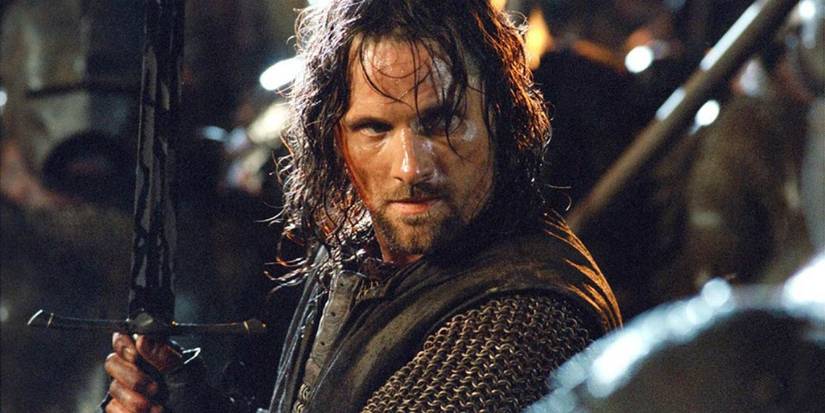 Image via New Line Cinema
The reason The Fellowship of the Ring is such an extraordinary first chapter is that it does not feel like an introductory volume nervously setting pieces into place. It feels complete in its own right. It has warmth, terror, wonder, melancholy, danger, and enough sincerity to make cynicism feel like a useless response. The Shire opening is one of the smartest tonal foundations any trilogy has ever laid. Then it starts letting dread into the frame, and from that point on the story expands with astonishing assurance.
Gandalf (Ian McKellen)’s fall, Boromir (Sean Bean)’s weakness, Frodo (Elijah Wood)’s growing isolation, Sam (Sean Astin) refusing to be left behind. All of it works because the movie has built the relationships cleanly. It is a first chapter with the soul of a farewell already inside it, and that gives it tremendous emotional force that makes you want to keep going even today.
5 'The Girl with the Dragon Tattoo' (2009)
 Image via Nordisk Film
What makes The Girl with the Dragon Tattoo such a great first chapter is how completely it locks the trilogy’s world, damage, and moral temperature into place. It never feels like a setup disguised as a movie. For instance, Mikael Blomkvist (Michael Nyqvist), right away, is already compromised, publicly wounded, and pulled into the kind of case that looks contained until it starts exposing rot that has been sitting in one family for decades. Then Lisbeth Salander (Noomi Rapace) enters, and the whole film sharpens. You see her intelligence in action, her memory, her suspicion, the way she studies people before deciding how to move, and the way the world keeps trying to reduce her while having no idea what kind of force it is dealing with.
The reason it works so powerfully as the opening chapter is that it gives you a full story while still making Lisbeth feel like someone you have only begun to understand. The Vanger investigation is gripping on its own because the clues actually build, the old photographs matter, the island setting traps everybody inside a history they cannot cleanly explain away, and the answers get uglier the deeper Mikael digs. But the film’s real hold comes from Lisbeth herself, especially once the movie stops asking whether she belongs in the story and starts proving she is the story’s most unforgettable presence. Her revenge on Nils Bjurman (Peter Anderson) is the moment the movie tells you exactly what kind of trilogy this is going to be: one where violation has consequences, one where survival requires intelligence and nerve, and one where conventional ideas of heroism are nowhere near enough. As a first chapter, it is outstanding and establishes a character, a wound, and a whole moral universe so vividly that the next two films feel necessary after this one ends.
4 'A Fistful of Dollars' (1964)
 Image via United Artists
There are first chapters that introduce a hero, and then there are first chapters that invent a screen myth so durable it starts feeling like it always existed. That is what A Fistful of Dollars does. What I love about this movie is how shamelessly it trusts style as substance. The Man with No Name (Clint Eastwood) barely needs dialogue. The hat, the poncho, the squint, the dry amusement, the sense that he is both detached from and faintly disgusted by the corruption around him, it all lands immediately. He is not a classical western hero here either.
This is not the clean moral frontier of older American westerns. This is a world of opportunism, cruelty, and swagger, where violence is both ugly and absurdly theatrical. The film’s visual language, the pauses, the close-ups, the tension stretched almost to the point of mockery before it snaps, became foundational for a reason. A Fistful of Dollars is not merely a good opening chapter. It is a cinematic declaration of intent.
3 'The Bourne Identity' (2002)
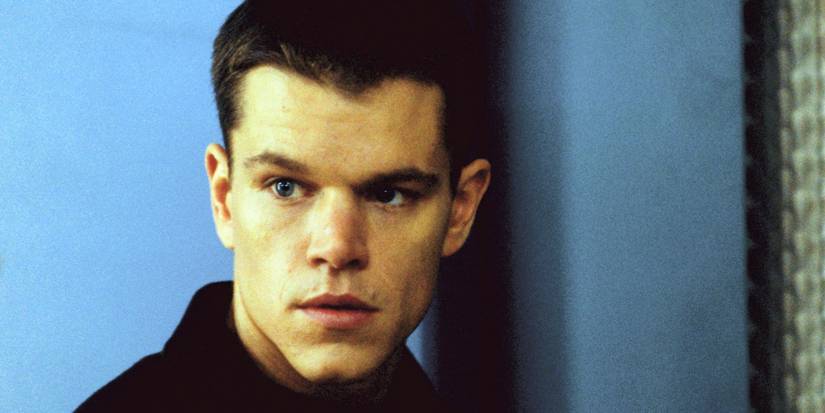 Image via Universal Studios
I think people forget how refreshing The Bourne Identity felt when it arrived. Modern spy cinema had not yet been fully dragged into this more grounded, wounded, improvisational mode, and here came a thriller that made amnesia feel less like a gimmick than a moral and physical condition. On top of it, Jason Bourne (Matt Damon) is perfectly casted. He does not look like a peacocking super-spy and instead feels like a man whose body knows things his face has not caught up to yet. That’s why the action works and every move clarifies character.
The movie also gets enormous mileage out of its central relationship. Marie (Franka Potente) is not just there to be dragged along by plot. Her skepticism, attraction, fear, and involvement give the film a human anchor it badly needs. Without her, the film might have become just another efficient exercise. With her, it becomes a story about a man trying to figure out whether his buried self is worth uncovering at all. As a first chapter, it is nearly ideal.
2 'Star Wars' (1977)

Image via Twentieth Century-Fox
I do not care how mythologized this movie has become; it still works like a miracle. Star Wars is one of the greatest first chapters ever because it has the confidence of something that fully understands how ancient and immediate it wants to be. It borrows from serial adventures, westerns, samurai films, mythology, war movies, fairy tales, and pulp, then somehow blends all of it into something so cleanly entertaining that it can hide how structurally elegant it really is.
The first half-hour alone is unbelievable in how efficiently it establishes a universe. Droids crossing the desert, a princess in danger, a farm boy aching for more, an old wizard with history in his voice, an empire that feels huge even before we understand its scale. None of this feels labored. It feels discovered. And then there is pure movie-star alchemy. Luke Skywalker (Mark Hamill) has just enough innocence, Han Solo (Harrison Ford) has exactly the right amount of charisma, Princess Leia (Carrie Fisher) is too smart and too impatient to be reduced to archetype, Obi-Wan Kenobi (Alec Guinness) gives the whole film a note of old sadness, and Darth Vader (David Prowse) arrives already larger than ordinary villainy. Most first chapters would be proud to create one iconic character. This creates a whole myth shelf at once.w
1 'The Godfather' (1972)
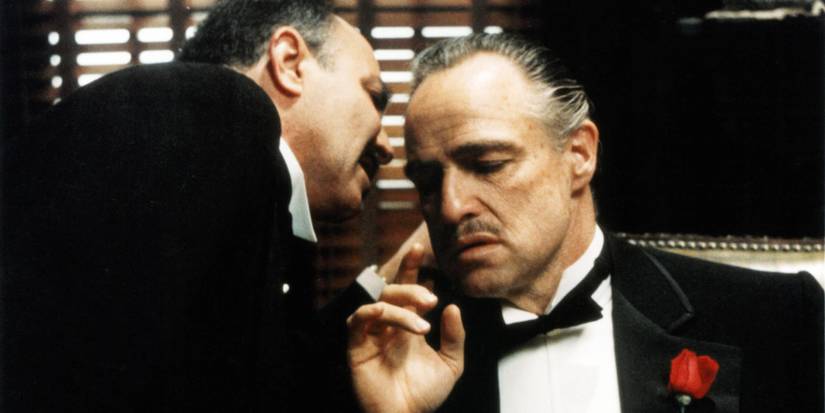 Image via Paramount Pictures
You can spend the rest of your life admiring the confidence of The Godfather. It opens not with a shootout or a flashy montage or some self-conscious piece of cinema, but with a man asking for justice in a dark room, and by the time the wedding sequence unfolds, Francis Ford Coppola has already done something astonishing: he has made power feel ceremonial, intimate, familial, and terrifyingly normalized all at once.
What makes The Godfather such a towering first chapter is that it never hurries the corruption. It lets the family breathe first. That is crucial. The warmth matters. The rituals matter. The laughter, the music, the petty business, the tomato sauce and ravioli, the old-country codes, the way affection and authority overlap, without that, Michael Corleone (Al Pacino)’s transformation would merely be plot. Instead it becomes one of the most devastating character arcs in American film. Vito Corleone (Marlon Brando), of course, is monumental, but one of the film’s greatest strengths is that it never lets Vito completely dominate the emotional center. The real tragedy is succession. It is the transfer of moral darkness from one generation to the next, disguised as duty, loyalty, and necessity.
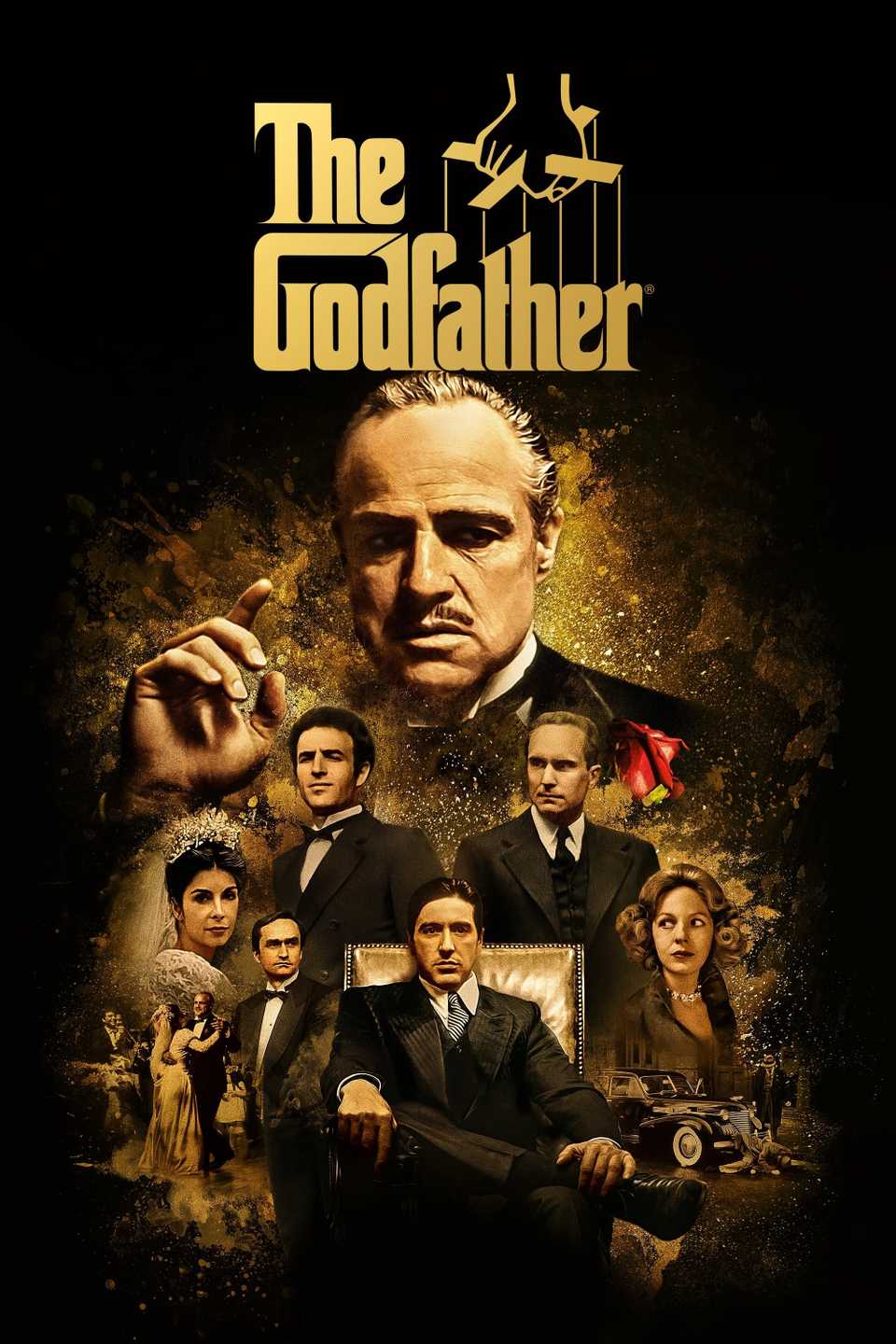
The Godfather
Release Date March 24, 1972
Runtime 175 minutes
Director Francis Ford Coppola
Writers Mario Puzo, Francis Ford Coppola
-

-

Al Pacino
Michael Corleone



 English (US) ·