
 Image via 20th Century Studios
Published Jun 18, 2026, 12:07 AM EDT
Luc Haasbroek is a writer and videographer from Durban, South Africa. He has been writing professionally about pop culture for eight years. Luc's areas of interest are broad: he's just as passionate about psychology and history as he is about movies and TV. He's especially drawn to the places where these topics overlap.
Luc is also an avid producer of video essays and looks forward to expanding his writing career. When not writing, he can be found hiking, playing Dungeons & Dragons, hanging out with his cats, and doing deep dives on whatever topic happens to have captured his interest that week.
Sign in to your Collider account
The USA has long been the epicenter of filmmaking, not least when it comes to sci-fi. Hollywood has given the world most of the genre's greatest masterpieces, from the classical grandeur of 2001 to the mythic adventure of Star Wars. With that in mind, this list attempts to rank the very best American sci-fi movies ever.
To qualify for this list, a movie must have been both produced by an American production company and directed by an American filmmaker, meaning that some classics (like Ridley Scott's original Alien) don't make the cut. With that out of the way, let's dive in.
10 'The Fly' (1986)
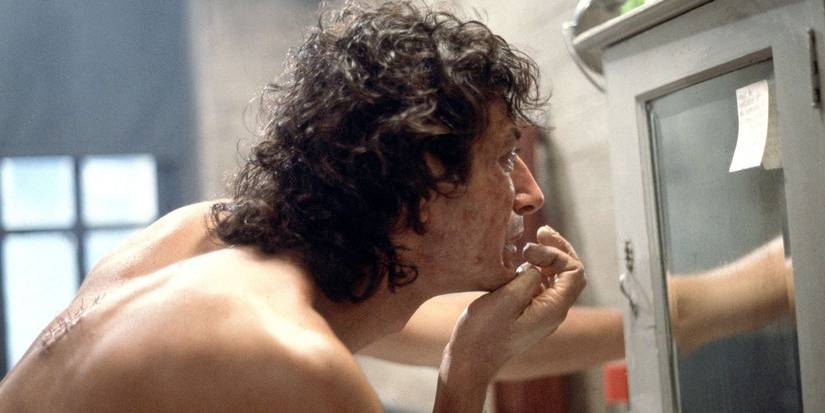 Image via 20th Century Studios
"Be afraid. Be very afraid." With The Fly, David Cronenberg gleefully mashes together 1950s-inspired pulp sci-fi, visceral body horror, and dark comedy, all with a more crowd-pleasing treatment than his work usually offers. Jeff Goldblum turns in one of his very best performances here as Seth Brundle, an eccentric scientist who invents a revolutionary teleportation device. He decides to test the machine on himself, unaware that a common housefly has accidentally entered the chamber with him, triggering a gruesome transformation.
From here, the story riffs on B-movies and Kafka's Metamorphosis, grounding the more far-out elements with real emotional weight. The horror becomes devastating because viewers genuinely care about the characters, not just Seth but also Ronnie (Geena Davis). Finally, on the visual front, the practical effects remain fantastic. Led by makeup artist Chris Walas, Seth's evolution unfolds in horrifying stages, each more disturbing than the last.
9 'The Thing' (1982)
 Image via Universal Pictures
"Nobody trusts anybody now... and we're all very tired." One of the darkest sci-fi movies of the '80s, The Thing follows a team of researchers stationed at an isolated Antarctic outpost who encounter a shape-shifting alien capable of perfectly imitating any living organism. As the creature infiltrates the group, trust begins collapsing and every human interaction becomes a potential threat. Uncertainty itself threatens to tear the group apart.
As with The Fly, the practical effects are truly legendary. Decades later, the creature transformations, handled by icon Rob Bottin, still feel shocking, imaginative, and deeply disturbing. Yet the movie's lasting power comes less from the gore than from its psychological tension. The mood is one of ever-increasing dread, turning an alien invasion premise into a study of fear and distrust. The famously ambiguous ending is great because it leaves audiences trapped within the same uncertainty that tormented the characters.
8 'Close Encounters of the Third Kind' (1977)
 Image via Columbia Pictures
"This means something. This is important." Spielberg's long-held fascination with alien contact starts here. Close Encounters centers on Roy Neary (Richard Dreyfuss), an electrical worker whose life changes forever after a mysterious encounter with an unidentified flying object. He becomes increasingly obsessed with understanding what he witnessed, soon discovering others experiencing similar visions connected to a mysterious location called Devils Tower.
Spielberg's first big innovation here was the sense of wonder. Spielberg approaches extraterrestrial life not as a source of horror but as a mystery worthy of fascination. Where earlier sci-fi flicks focused on invasion and destruction, Close Encounters sees first contact as something potentially wondrous, even spiritual. We see this in the visuals: the communication between humans and aliens through music and light feels optimistic, nearly transcendent. All in all, the movie is a great celebration of humanity's desire to understand the unknown.
 Image via Universal Pictures
"E.T. phone home." Spielberg strikes again, taking the awe and wonder of Close Encounters and increasing them by an order of magnitude. The plot is world-famous, practically archetypal: a lonely young boy (Henry Thomas) finds and befriends an alien stranded on Earth after becoming separated from his spacecraft. Elliott and his siblings help E.T. evade government authorities and find a way home, forging an extraordinary friendship that bridges two entirely different worlds.
E.T. is like a fable, a modern fairy tale, executed with visual bravura and total emotional sincerity. Because of its focus on childhood imagination, the story becomes less about extraterrestrial life and more about loneliness, friendship, family, and growing up. It's a stunning special effects showcase, hugely expanding the possibilities of cinematic sci-fi, while also serving as a vivid time capsule of American suburbia circa 1982.
6 'Back to the Future' (1985)
 Image via Universal Pictures / Courtesy Everett Collection
"If you put your mind to it, you can accomplish anything." The definitive '80s classic. Michael J. Fox delivers his most iconic performance here as teenager Marty McFly, who is accidentally sent back in time from 1985 to 1955 after a scientific experiment goes awry. Trapped in the past, Marty must ensure that his parents fall in love while simultaneously finding a way home. While far from hard sci-fi, the premise works because of how personal it is and how likable the protagonists are.
The performances are colorful across the board, and the visual effects are charming, yet Back to the Future's biggest strength is the script. It's endlessly clever, funny, and carefully engineered, while still feeling totally organic. Seemingly minor details introduced early in the story return later in satisfying ways, and countless lines have since become iconic. What a gem.
5 'Terminator 2: Judgment Day' (1991)
 Image via Tri-Star Pictures
"No fate but what we make." Though sequels rarely surpass beloved originals, Terminator 2: Judgment Day improved upon its predecessor in practically every way. Set years after the first movie, the story follows a young John Connor (Edward Furlong) after a shape-shifting Terminator known as the T-1000 (Robert Patrick) is sent back in time to assassinate him. Humanity's future leader is protected by an unlikely guardian: the very same model of Terminator (Arnold Schwarzenegger) that once tried to kill his mother (Linda Hamilton).
Bringing the original antagonist back as an ally was a genius move, ensuring that T2 would be something way more interesting than a simple retread. At the same time, James Cameron got more ambitious with the visuals and action sequences, from the liquid metal of the T-1000 to the stream of pulse-pounding chases and shootouts. A high point for action sci-fi.
4 'The Empire Strikes Back' (1980)
 Image via Lucasfilms / courtesy Everett Collection
"I am your father." As with T2, The Empire Strikes Back built masterfully on the sturdy foundation laid by the previous instalment. In it, Darth Vader intensifies his pursuit of the rebels, while Luke (Mark Hamill) seeks training from the wise Jedi Master Yoda, and his friends struggle to evade Imperial forces. The most important thing is the film's willingness to embrace uncertainty and failure. The Empire Strikes Back repeatedly places its heroes in situations they cannot easily overcome.
Indeed, the Rebel Alliance suffers devastating setbacks, Luke discovers uncomfortable truths about himself, and the story concludes on a note of bittersweet uncertainty. This movie also deepens the mythology dramatically. Yoda's teachings transform the Force from a simple adventure-story concept into a rich philosophical idea, while Vader evolves into one of cinema's most fascinating villains, not least due to that big reveal during the lightsaber duel.
3 'The Matrix' (1999)
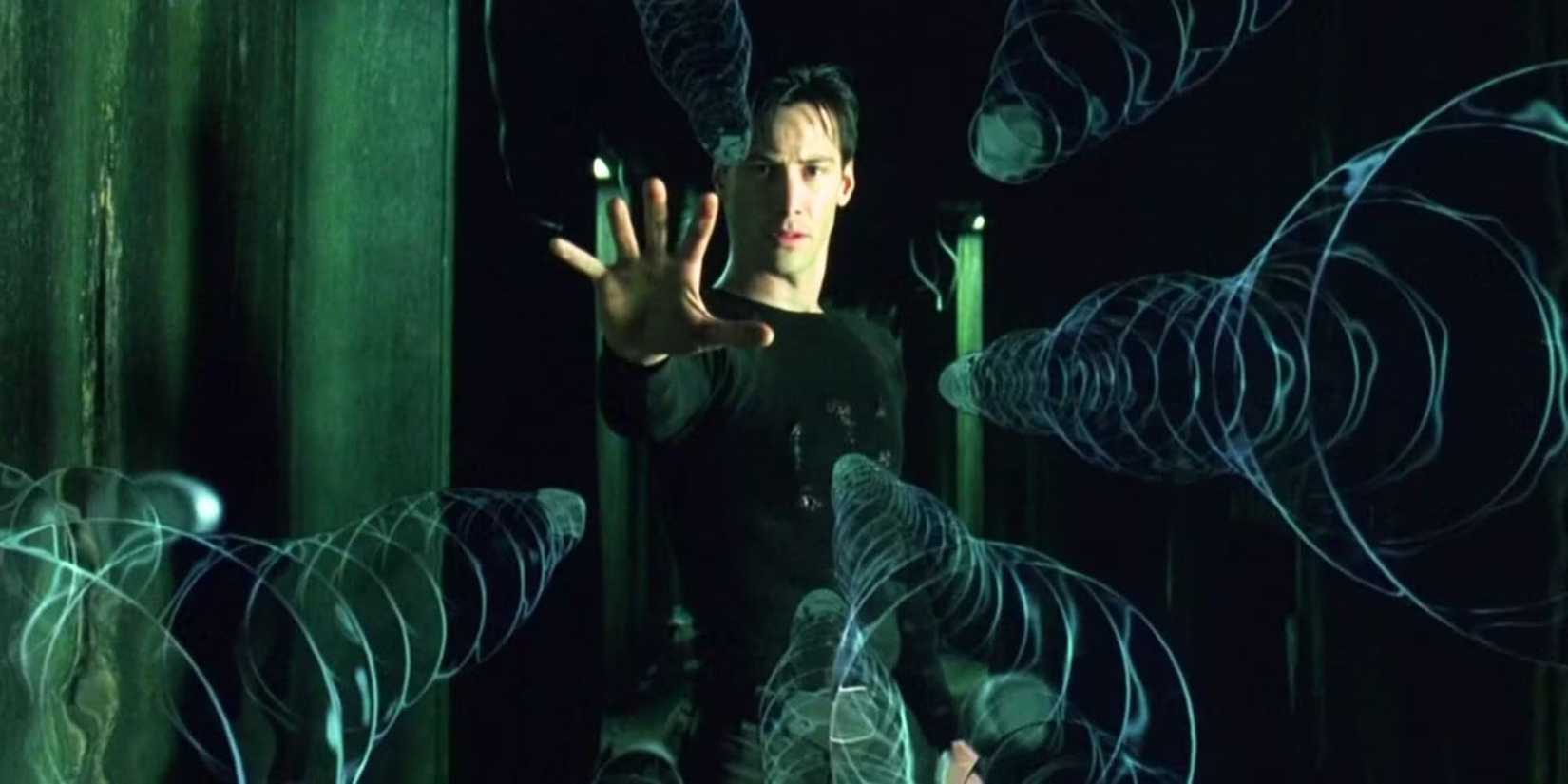 Image via Warner Bros. Pictures
"There is no spoon." The Matrix combined speculative sci-fi, big-brain philosophy, and butt-kicking martial arts action, all within an entertaining, digestible package. As a result, its impact on pop culture was immediate and immense. Keanu Reeves leads the cast as hacker Neo. After encountering a group of mysterious rebels led by Morpheus (Laurence Fishburne), he learns a shocking truth: the world he knows is actually a simulated reality created by intelligent machines to control humanity.
First up, the film's aesthetic revolutionized action cinema. Bullet time, wire-fu choreography, 'digital rain', and various other innovative visual effects became instantly iconic. Yet these techniques endure because they serve the story's themes rather than existing solely for spectacle. The Matrix succeeds because it transforms abstract philosophical questions into exhilarating cinema, and its vision of humans living a hollow life in an online world feels uncomfortably prescient.
Collider Exclusive · Sci-Fi Survival Quiz Which Sci-Fi World Would You Survive? The Matrix · Mad Max · Blade Runner · Dune · Star Wars
Five universes. Five completely different ways the future went wrong — or sideways, or up in flames. Only one of them is the world your instincts were built for. Eight questions will figure out which dystopia, galaxy, or desert wasteland you'd actually make it out of alive.
💊The Matrix
🔥Mad Max
🌧️Blade Runner
🏜️Dune
🚀Star Wars
TEST YOUR SURVIVAL →
01
You sense something is deeply wrong with the world around you. What do you do? The first instinct is often the truest one.
APull on every thread until I understand the system — then figure out how to break it. BStop asking questions and start stockpiling — food, fuel, weapons. Questions don't keep you alive. CKeep my head down, observe carefully, and trust no one until I know who's pulling the strings. DStudy the patterns. Every system has a rhythm — learn it, and you learn how to survive it. EFind the people fighting back and join them. You can't fix a broken galaxy alone.
NEXT QUESTION →
02
In a world of scarcity, what resource do you guard most fiercely? What we protect reveals what we believe survival actually requires.
AKnowledge. If you understand the system, you don't need resources — you can generate them. BFuel. Everything else — movement, power, escape — runs on it. CTrust. In a world of fakes and informants, a truly reliable ally is rarer than any commodity. DWater. And after water, information — the two things empires are truly built on. EShips and credits. The galaxy is big — you survive it by being able to move through it freely.
NEXT QUESTION →
03
What kind of threat keeps you up at night? Fear is useful data — if you're honest about what you're actually afraid of.
AThat reality itself is a lie — that everything I experience has been constructed to keep me compliant. BA raid. No warning, no mercy — just the roar of engines and then nothing left. CBeing identified. Once someone with power decides you're a problem, you're already out of time. DBeing outmanoeuvred — losing a political game I didn't even know I was playing. EThe Empire tightening its grip until there's nowhere left to run.
NEXT QUESTION →
04
How do you deal with authority you don't trust? Every dystopia has a power structure. Your approach to it determines everything.
ASubvert it from the inside — learn its rules well enough to weaponise them against it. BIgnore it and stay out of its reach. The further from any power structure, the better. CAppear to comply while doing exactly what I need to do. Visibility is the enemy. DManoeuvre within it carefully. You can't beat a system you refuse to understand. EResist openly when I have to. Some things are worth the risk of being seen.
NEXT QUESTION →
05
Which environment could you actually endure long-term? Survival isn't just tactical — it's physical, psychological, and very much about where you are.
AUnderground bunkers and server rooms — cramped, artificial, but with access to everything that matters. BOpen wasteland — brutal sun, no shelter, constant movement. At least the threat is honest. CA dense, rain-soaked city where you can disappear into the crowd and nobody asks questions. DMerciless desert — extreme heat, no water, and something enormous living beneath the sand. EThe fringe — backwater planets and busy spaceports where the Empire's attention rarely reaches.
NEXT QUESTION →
06
Who do you want in your corner when things fall apart? The company you keep is the clearest signal of who you actually are.
AA tight crew of believers who've seen behind the curtain and have nothing left to lose. BOne or two people I'd trust with my life. Any more than that and someone talks. CNobody, ideally. Alliances are liabilities. I work alone unless I have no choice. DA community bound by shared hardship and mutual survival — people who need each other to last. EA ragtag team with wildly different skills and total commitment when it counts.
NEXT QUESTION →
07
Where do you draw the line — if you draw one at all? Every survivor eventually faces a moment that tests what they're actually made of.
AI won't harm the innocent — even the ones who'd report me without hesitation. BI do what I have to to protect the people I've chosen. Everything else is negotiable. CThe line shifts depending on who's asking and what's at stake. DI draw a long-term line — nothing that compromises my people's future, even if it'd help now. ESome lines, once crossed, can't be uncrossed. I know which ones they are.
NEXT QUESTION →
08
What would actually make survival worth it? Staying alive is one thing. Having a reason to is another.
AWaking others up — dismantling the illusion so no one else has to live inside it. BFinding somewhere — or someone — worth protecting. A reason to keep moving. CAnswers. Understanding what I am, what any of this means, before time runs out. DLegacy — shaping the future in a way that outlasts me by generations. EFreedom — for myself, for others, for every world still living under someone else's boot.
REVEAL MY WORLD →
Your Fate Has Been Calculated You'd Survive In…
Your answers point to the world your instincts were built for. This is the universe your temperament, your survival instincts, and your particular brand of stubbornness were made for.
The Matrix
You took the red pill a long time ago — probably before anyone offered it to you. You're a systems thinker who can't help but notice the seams in things.
- You're drawn to understanding how the system works before figuring out how to break it.
- You'd find the Resistance, or it would find you — your instinct for spotting constructed realities is the machines' worst nightmare.
- You function best when you have access to information and the freedom to act on it.
- The Matrix built an airtight prison. You'd be the one probing the walls for the door.
Mad Max
The wasteland doesn't reward the clever or the well-connected — it rewards those who are hard to kill and harder to break. That's you.
- You don't need comfort, community, or a cause larger than the next horizon.
- You need a vehicle, a clear threat, and enough fuel to outrun it — and you're good at all three.
- You are unsentimental enough to survive that world, and decent enough — just barely — to be something more than another raider.
- In the wasteland, that distinction is everything.
Blade Runner
You'd survive here because you know how to exist in moral grey areas without losing yourself completely.
- You read people accurately, keep your circle small, and ask the questions others prefer not to answer.
- In a city where humanity is a legal designation rather than a feeling, you hold onto something that keeps you functional.
- You're not a hero. But you're not lost, either.
- In Blade Runner's world, that distinction is everything.
Dune
Arrakis is the most hostile environment in the known universe — and you are precisely the kind of person it rewards.
- Patience, discipline, and political awareness are your core strengths — and on Arrakis, they're survival tools.
- You understand that the long game matters more than any single victory.
- Others come to Dune and are consumed by it. You'd learn its logic and earn its respect.
- In time, you wouldn't just survive Arrakis — you'd begin to reshape it.
Star Wars
The galaxy far, far away is vast, loud, and in a constant state of violent political upheaval — and you wouldn't have it any other way.
- You find meaning in being part of something larger than yourself — a cause, a crew, a rebellion.
- You'd gravitate toward the Rebellion, or the fringes, or whatever pocket of the galaxy still believes the Empire's grip can be broken.
- You fight — not because you have to, but because standing aside isn't something you're capable of.
- In Star Wars, that willingness is what makes all the difference.
↻ RETAKE THE QUIZ
2 'Aliens' (1986)
 Image via 20th Century Fox
"Get away from her, you b----!" Following a masterpiece like Alien is always a challenge, so, instead of attempting to replicate Ridley Scott's haunted-house horror approach, James Cameron took the series in a different direction, keeping the tension but throwing in muscular action. This time around, the characters have guns but face down dozens of Xenomorph, with Ripley (Sigourney Weaver) teaming up with a squad of Colonial Marines.
The big set pieces are fantastic, from the pulse-rifle ambush to the sentry-gun defenses to the climactic confrontation between Ripley and the alien queen. The monster design is also just as great here as it was in the first movie, broadening the mythology of the aliens without diluting or undermining H.R. Giger's original twisted designs. The xenomorphs remain terrifying despite appearing far more frequently, largely because the movie emphasizes overwhelming numbers and relentless aggression.
1 '2001: A Space Odyssey' (1968)
 Image via Metro-Goldwyn-Mayer
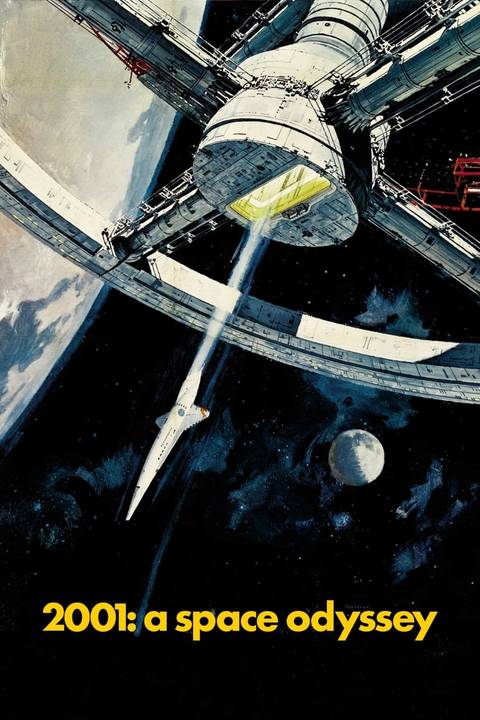
"Open the pod bay doors, HAL." Back in 1968, 2001 represented a giant leap forward for sci-fi filmmaking and, more than half a century after its release, it remains one of the most ambitious movies ever made. Its plot spans literal millennia, tracing humanity's evolution from prehistoric apes to spacefaring explorers, connected by mysterious black monoliths that appear to guide intelligence across vast stretches of time. The story eventually focuses on the mission of the spacecraft Discovery One and its increasingly troubled relationship with the artificial intelligence HAL 9000 (voiced by Douglas Rain).
Philosophical elements aside, the scientific realism in the film's visuals was simply revolutionary. Here, space travel feels vast and awe-inspiring. Even today, many depictions of space seem less convincing than Kubrick's vision from 1968. His pioneering techniques broke the ground on which later sci-fi masterpieces like Star Wars and Alien would be built.
2001: A Space Odyssey
Release Date April 10, 1968
Runtime 149 minutes
Director Stanley Kubrick
Writers Stanley Kubrick, Arthur C. Clarke
-

Keir Dullea
Dr. David Bowman
-
Gary Lockwood
Dr. Frank Poole






 English (US) ·