
Revisiting classic animated films as an adult can feel strangely different from the way we experienced them as children, because while the stories remain the same, the way we understand them quietly changes with time. What once looked like simple fairy tales or colorful adventures slowly begins to reveal careful storytelling, patient pacing, and characters that carry more emotional weight than we probably noticed the first time.
Animation has evolved greatly over the decades, becoming faster, louder, and visually overwhelming, yet some of these early classics still manage to feel timeless. These movies were built with a kind of storytelling patience that allows their themes, characters, and visual artistry to remain meaningful even today, which is exactly why the following animated classics continue to age with remarkable grace.
10 ‘Fantasia’ (1940)
 Image via Walt Disney Studios Motion Pictures
In the segment “The Sorcerer’s Apprentice,” Mickey Mouse (James MacDonald) assists a powerful sorcerer who controls magic through careful instruction. When the sorcerer leaves the room, Mickey decides to use the spell himself in order to complete the task of carrying water. At first the enchanted broom performs the work successfully. Because the spell continues after the task begins, Mickey attempts to stop it but fails.
As the broom continues carrying water, the room begins to flood. Mickey then breaks the broom with an axe, yet each piece becomes another broom carrying more water. The situation worsens because the original command remains active. When the sorcerer returns, he stops the spell immediately and restores order..
9 ‘Bambi’ (1942)
 Image via The Walt Disney Company
Bambi (Donnie Dunagan) begins life under the protection of his mother (Paula Winslowe), who teaches him how to walk, observe the forest, and avoid danger. During these early moments, the forest appears safe because her presence provides guidance. However, this safety changes when hunters enter the forest and begin chasing the animals.
During the escape, Bambi loses sight of his mother and later learns that she has been killed. This event removes the protection that shaped his early life. Afterward, the Great Prince (Fred Shields) leads him away from danger and watches his growth from a distance. As time passes, Bambi becomes stronger and eventually stands watching over new life in the forest. The movement from dependence to responsibility follows directly from earlier events.
8 ‘Pinocchio’ (1940)
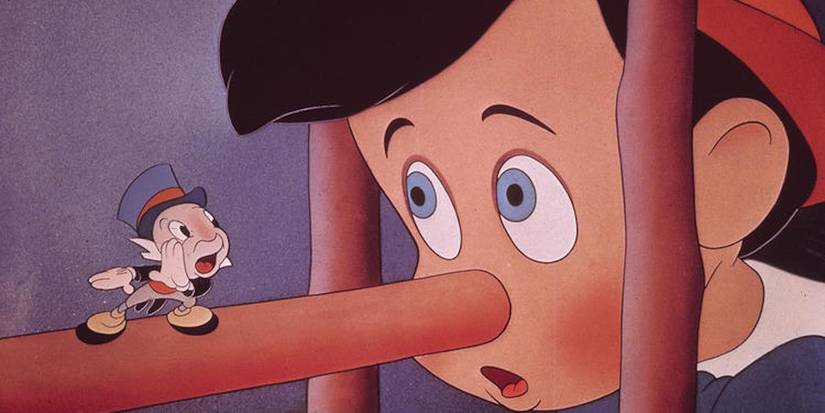 Image via Walt Disney Studios Motion Pictures
Pinocchio (Dickie Jones) is brought to life by the Blue Fairy (Evelyn Venable), who explains that he can become a real boy if he proves himself brave, truthful, and unselfish. On his way to school, he meets Honest John (Walter Catlett), who convinces him to perform in a puppet show instead. Because Pinocchio follows this advice, Stromboli (Charles Judels) traps him in a cage.
After escaping, Pinocchio again chooses pleasure instead of responsibility and travels to Pleasure Island. There, boys who avoid rules transform into donkeys. When Pinocchio begins to change, he realizes the danger and escapes. Later, he learns that Geppetto (Cliff Edwards) has been swallowed by Monstro. Pinocchio enters the whale to rescue him and risks his life during the escape.
7 ‘Snow White and the Seven Dwarfs’ (1937)
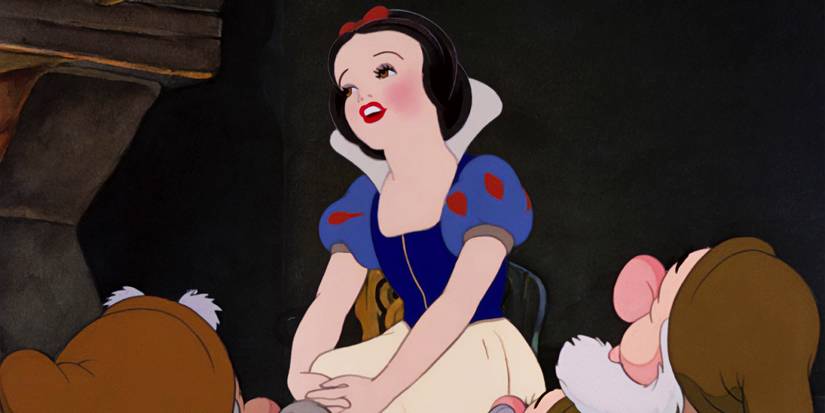 Image via Walt DIsney Studios Motion Pictures
Snow White (Adriana Caselotti) lives under the authority of the Queen (Lucille La Verne), who relies on her magic mirror to confirm that she is the fairest woman in the kingdom. When the mirror names Snow White instead, the Queen views her as a threat and orders the huntsman to kill her.
The huntsman releases Snow White, and she finds shelter with seven dwarfs, including Doc (Roy Atwell) and Grumpy (Pinto Colvig). When the mirror reveals that Snow White is still alive, the Queen disguises herself and gives her a poisoned apple. Snow White falls into enchanted sleep until a prince who had earlier met her finds her and kisses her.
6 Dumbo (1941)
 Image via Walt Disney Studios Motion Pictures
Dumbo (Edward Brophy) is born with unusually large ears, and circus audiences laugh at him during his first appearance. When his mother, Mrs. Jumbo (Verna Felton), defends him from teasing children, the circus staff confines her. This separation leaves Dumbo alone during performances.
Timothy Mouse (Cliff Edwards) decides to help him and encourages him to perform again. During one show, Dumbo falls from a high platform but begins gliding instead of crashing. This accident reveals that his ears allow him to fly. After practicing the ability, Dumbo performs in a new act that focuses on flight. This change in response leads to his reunion with his mother. The earlier separation, which resulted from shame, ends because his ability changes how others interpret him.
5 ‘The Jungle Book’ (1967)
 Image via Walt Disney Studios Motion Pictures
Mowgli (Bruce Reitherman) grows up among wolves in the jungle, but the return of Shere Khan (George Sanders) creates danger because the tiger hunts humans. Bagheera (Sebastian Cabot) decides that Mowgli must travel to the main village for safety, although Mowgli resists leaving the jungle.
During the journey, he meets several animals, including Kaa (Sterling Holloway) and King Louie (Louis Prima), who react differently to his presence. These encounters show that Mowgli does not fully belong among the animals. When Shere Khan confronts him, Mowgli uses fire to defend himself and later follows a girl from the village and follows her without coercion.
4 ‘Sleeping Beauty’ (1959)
 Image via Walt Disney Studios Motion Pictures
Princess Aurora (Mary Costa) is cursed by Maleficent (Eleanor Audley) so that she will prick her finger on a spindle and die before sunset on her sixteenth birthday. The fairies Flora (Verna Felton), Fauna (Barbara Jo Allen), and Merryweather (Barbara Luddy) weaken the curse so that it causes sleep instead of death.
They hide Aurora in the forest to prevent the curse from happening. However, Maleficent guides Aurora to a spinning wheel, and the curse activates. Prince Phillip (Bill Shirley) confronts Maleficent after the fairies free him from captivity. During the battle, Maleficent transforms into a dragon but is defeated. Phillip reaches Aurora and kisses her. The spell ends when the required action occurs. The kingdom awakens because the condition tied to the spell concludes.
3 ‘Cinderella’ (1950)
 Image via Walt Disney Studios Motion Pictures
Cinderella (Ilene Woods) lives with her stepmother, Lady Tremaine (Eleanor Audley), who forces her to perform household labor. When the royal ball is announced, Cinderella prepares to attend, but her stepsisters destroy her dress to stop her from going.
The Fairy Godmother (Verna Felton) provides a gown and carriage but warns that the magic will end at midnight. Cinderella attends the ball and meets Prince Charming (William Phipps). When midnight arrives, she leaves quickly and drops one glass slipper. The Prince later searches the kingdom to find the woman whose foot fits the slipper. The Prince recognizes her publicly, and the restriction imposed by her household ends. The lost slipper becomes proof of identity.
2 ‘Beauty and the Beast’ (1991)
 Image via Walt Disney Motion pictures
Belle (Paige O’Hara) lives in a village with her father until he is captured by the Beast (Robby Benson) in a cursed castle. She offers herself in exchange for her father’s freedom and remains in the castle as the Beast’s prisoner.
As time passes, their interaction changes from hostility to cooperation because they begin to understand each other. Gaston (Richard White) leads villagers to attack the castle, believing the Beast is a threat. During the fight, the Beast defeats Gaston but refuses to kill him. Gaston falls during the struggle. Belle declares love before the Beast dies and the curse breaks when love replaces fear.
1 ‘The Lion King’ (1994)
 Image via Walt Disney Studios Motion Pictures
Simba (Matthew Broderick) is the son of King Mufasa (James Earl Jones), who prepares him to rule the Pride Lands. Scar (Jeremy Irons) plans to take the throne and causes a stampede that kills Mufasa and Scar, then convinces Simba that he caused the disaster.
Believing this lie, Simba leaves the kingdom and grows up far away. Years later, Nala (Moira Kelly) finds him and explains that Scar’s rule has damaged the land. Simba returns and confronts Scar in front of the other lions. Scar’s deception is revealed during the fight, and Simba defeats him. Truth restores rightful leadership. The transition occurs because truth replaces manipulation.

The Lion King
Release Date June 15, 1994
Runtime 89 minutes
Director Roger Allers, Rob Minkoff
Writers Irene Mecchi, Jonathan Roberts, Linda Woolverton, Rick Maki, Jorgen Klubien, Chris Sanders, Joe Ranft, Thom Enriquez, Larry Leker, Barry Johnson, Francis Glebas, Burny Mattinson, Andrew Gaskill, Gary Trousdale, Lorna Cook, Tom Sito, Mark Kausler, Kevin Harkey, Ed Gombert, Jim Capobianco
-
Matthew Broderick
Simba (voice)
-





 English (US) ·