
 Image via Scholastic

Published May 1, 2026, 1:04 PM EDT
Diego Pineda has been a devout storyteller his whole life. He has self-published a fantasy novel and a book of short stories, and is actively working on publishing his second novel.
A lifelong fan of watching movies and talking about them endlessly, he writes reviews and analyses on his Instagram page dedicated to cinema, and occasionally on his blog. His favorite filmmakers are Andrei Tarkovsky and Charlie Chaplin. He loves modern Mexican cinema and thinks it's tragically underappreciated.
Other interests of Diego's include reading, gaming, roller coasters, writing reviews on his Letterboxd account (username: DPP_reviews), and going down rabbit holes of whatever topic he's interested in at any given point.
Sign in to your Collider account
As controversial a figure as she may rightfully be, there's no denying that J. K. Rowling helped transform literary fantasy into a mainstream, global cultural phenomenon with Harry Potter. The book series that has gotten millions of children and adults alike into reading over the years is timeless for a wide variety of reasons, not least of which is the saga's exceptional worldbuilding.
But as great as Harry Potter's world-building may be, some books and book series over the years arguably have even better worldbuilding. From sci-fi space adventures to grand fantasy epics, these are all among the strongest literary works in their respective genres and subgenres. A few of them are similar to Harry Potter in certain ways; others, not so much. But regardless, they're essential reading for those who love books with great world-building.
Collider Exclusive · Middle-earth Quiz
Which Lord of the Rings
Character Are You?
One Quiz · Ten Questions · Your Fate Revealed
The road goes ever on. From the green hills of the Shire to the fires of Mount Doom, every soul in Middle-earth carries a destiny. Ten questions stand between you and the truth of who you are. Answer honestly — the One Ring has a way of revealing what we most want to hide.
💍Frodo
🌿Samwise
👑Aragorn
🔥Gandalf
🏹Legolas
⚒️Gimli
👁️Sauron
🪨Gollum
BEGIN YOUR QUEST →
01
You are handed a responsibility that could destroy you. What do you do? The weight of the world falls on unlikely shoulders.
AAccept it. Someone has to, and running changes nothing. BStay by the side of whoever carries it. They shouldn't go alone. CStep forward and lead. This is exactly what I was made for. DIt's mine now. I won't let anyone else have it.
NEXT QUESTION →
02
Your closest companion is heading into terrible danger. You: True loyalty is revealed not in comfort, but in crisis.
AFollow them without hesitation. I'd rather die beside them than live without them. BRally others and forge a plan to help — strength in numbers. COffer wisdom and guidance. My counsel may save them where swords cannot. DLet them go. Only the strong survive, and sentiment is a weakness.
NEXT QUESTION →
03
Enormous power is within your reach. Your instinct is: Power corrupts — but only those who reach for it.
ADestroy it. Nothing good comes from power this absolute. BUse it to protect those I love — just this once. CWield it wisely. I have the will and the knowledge to do good with it. DSeize it. I have waited long enough. It belongs to me.
NEXT QUESTION →
04
What does "home" mean to you? Where we long to return reveals who we truly are.
AA simple, peaceful place — green hills, good food, no adventure required. BWherever the people I love are. Home is a feeling, not a place. CA kingdom I must earn before I can truly claim it as mine. DI lost it long ago. That loss is what drives everything I do.
NEXT QUESTION →
05
When a battle is upon you, your approach is: War reveals what we are made of — whether we like it or not.
ASurvive by any means. I'm not a fighter — but I'll do what I must. BFight for the person beside me, not for glory or honour. CLead the charge. Nothing inspires an army like a king at the front. DStrike from range, fast and precise — never let them get close.
NEXT QUESTION →
06
Someone comes to you for advice in their darkest hour. You: Wisdom is not knowing all the answers — it's knowing which questions to ask.
AListen, then offer honest encouragement. Sometimes people just need belief. BGive them practical help — words are fine, but action is better. CSpeak carefully. I have seen much, and I know what counsel can cost. DTell them what they want to hear. Trust is a tool like any other.
NEXT QUESTION →
07
How do you see yourself, honestly? Self-knowledge is the most dangerous kind.
ASmall and ordinary — but perhaps that's exactly why I was chosen. BDefined entirely by who I serve and love. I am nothing without them. CForged by hardship into something the world has not yet fully seen. DDiminished from what I once was — and consumed by the need to reclaim it.
NEXT QUESTION →
08
Which of these best describes your relationship with the natural world? Middle-earth speaks to those who know how to listen.
AI find peace in it — forests, rivers, open skies. Nature restores me. BI prefer the earth underfoot — stone, mines, solid and real things. CI have watched the world change for longer than most can comprehend. DNature offers hiding places, cold water, raw fish. That's enough for me.
NEXT QUESTION →
09
You encounter a wretched, pitiable creature who has done terrible things. You: How we treat the fallen reveals the height of our character.
AShow mercy. Even the most broken souls deserve a chance at redemption. BPity them — but never trust them. They made their choices. CSee them as a tool. Their knowledge or skills may still serve a purpose. DDestroy them before they can cause more harm. Mercy is a luxury we cannot afford.
NEXT QUESTION →
10
When the quest is over and the songs are sung, what do you hope they say about you? In the end, we are all just stories.
AThat an ordinary person did an extraordinary thing — and came home. BThat I never abandoned the person who needed me most. CThat I was worthy of the crown — and everything it demanded. DNothing. I don't need songs. I needed it, and now it's gone.
REVEAL MY FATE →
The Fellowship Has Spoken Your Place in Middle-earth
The scores below reveal your true character. Your highest number is your match. Even a tie tells a story — the Fellowship was never made of simple people.
💍 Frodo
🌿 Samwise
👑 Aragorn
🔥 Gandalf
🏹 Legolas
⚒️ Gimli
👁️ Sauron
🪨 Gollum
You carry something heavy — and you carry it alone, even when you don't have to. You were not born for greatness, and that is precisely why greatness chose you. Your courage is not the roaring, sword-swinging kind; it is quiet, stubborn, and terrifying in its refusal to quit. The Ring weighs on you more than anyone can see, and still you walk toward the fire. That is not weakness. That is the rarest kind of strength there is.
You are, without question, the best of them. Not the most powerful, not the most celebrated — but the most essential. Your loyalty is not a trait; it is a force of nature. You would carry the person you love up the slopes of Mount Doom if it came to that, and we both know you'd do it without being asked. The world needs more people like you, and the world is lucky it has even one.
You were born to lead, and you have spent years running from it. The crown is yours by right, but you know better than anyone that right means nothing without the will and the worthiness to back it up. You are tempered by loss, shaped by long roads, and defined by a code of honour you hold to even when no one is watching. When you finally step forward, the world shifts. Because it was always waiting for you.
You have seen more than you let on, and you say less than you know — which is exactly as it should be. You are a catalyst: you do not fight the battles yourself, you ignite the people who can. Your wisdom comes not from books but from an age of watching what happens when it is ignored. You arrive precisely when you mean to, and your presence alone changes what is possible. A wizard is never late.
Graceful, perceptive, and almost preternaturally calm under pressure — you see things others miss and act before others react. You do not need to make a scene to be remarkable; your presence speaks for itself. You are loyal to those you choose to stand beside, and that choice is not made lightly. You have lived long enough to know that the most beautiful things in this world are also the most fragile, and that is why you fight to protect them.
You are loud, proud, and absolutely formidable — and beneath all of that is one of the most fiercely loyal hearts in Middle-earth. You don't do anything by half measures. Your friendships are forged like iron, your grudges run as deep as mines, and your courage in battle is the kind that makes legends. You came into this fellowship suspicious of everyone and ended it willing to die for an elf. That is not a small thing. That is everything.
You think in centuries and act in absolutes. Order, dominion, control — not because you are cruel by nature, but because you have decided that the world left to itself always falls apart, and you are the only one with the vision and the will to hold it together. You were not always this. Something was lost, or taken, or betrayed, and the version of you that stands now is the answer to that wound. The tragedy is that you're not entirely wrong — just entirely too far gone to course-correct.
You are a study in contradiction — pitiable and dangerous, cunning and broken, capable of both cruelty and something that once resembled love. You are defined by loss: of innocence, of self, of the one thing that gave your existence meaning. Two voices war inside you constantly, and the tragedy is that the better one sometimes wins, just not often enough, and never at the right moment. You are a warning, yes — but also a mirror. We are all a little Gollum, given the right ring and enough time.
↻ RETAKE THE QUIZ
'The Silmarillion' (1977)
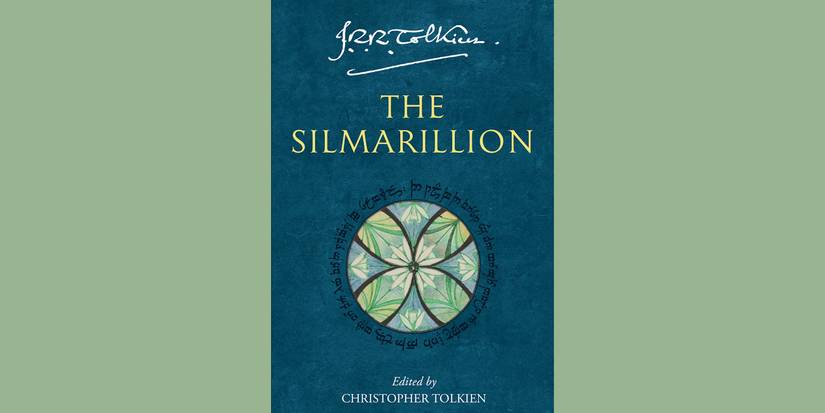 Image via Harper Collins
J. R. R. Tolkien revolutionized 20th-century children's literature with The Hobbit, the book that started what would soon become the author's legendary Middle-earth series. Following that book's success, Tolkien's publisher asked the author for a sequel, to which Tolkien offered an early draft of some writings that the publisher deemed too esoteric and "too Celtic." Four years after Tolkien's death, his son Christopher and Guy Gavriel Kay would edit those writings into the mythopoeic epic The Silmarillion.
The Silmarillion is a challenging read, that's for sure, but those with the patience for its Bible-like density will be treated to Tolkien at his very best. The author's unique eye for world-building shines as bright as the Star of Eärendil through Christopher Tolkien and Kay's editing, weaving together an almost overwhelmingly deep universe that greatly enriches the rest of Tolkien's oeuvre.
'The Expanse' Series
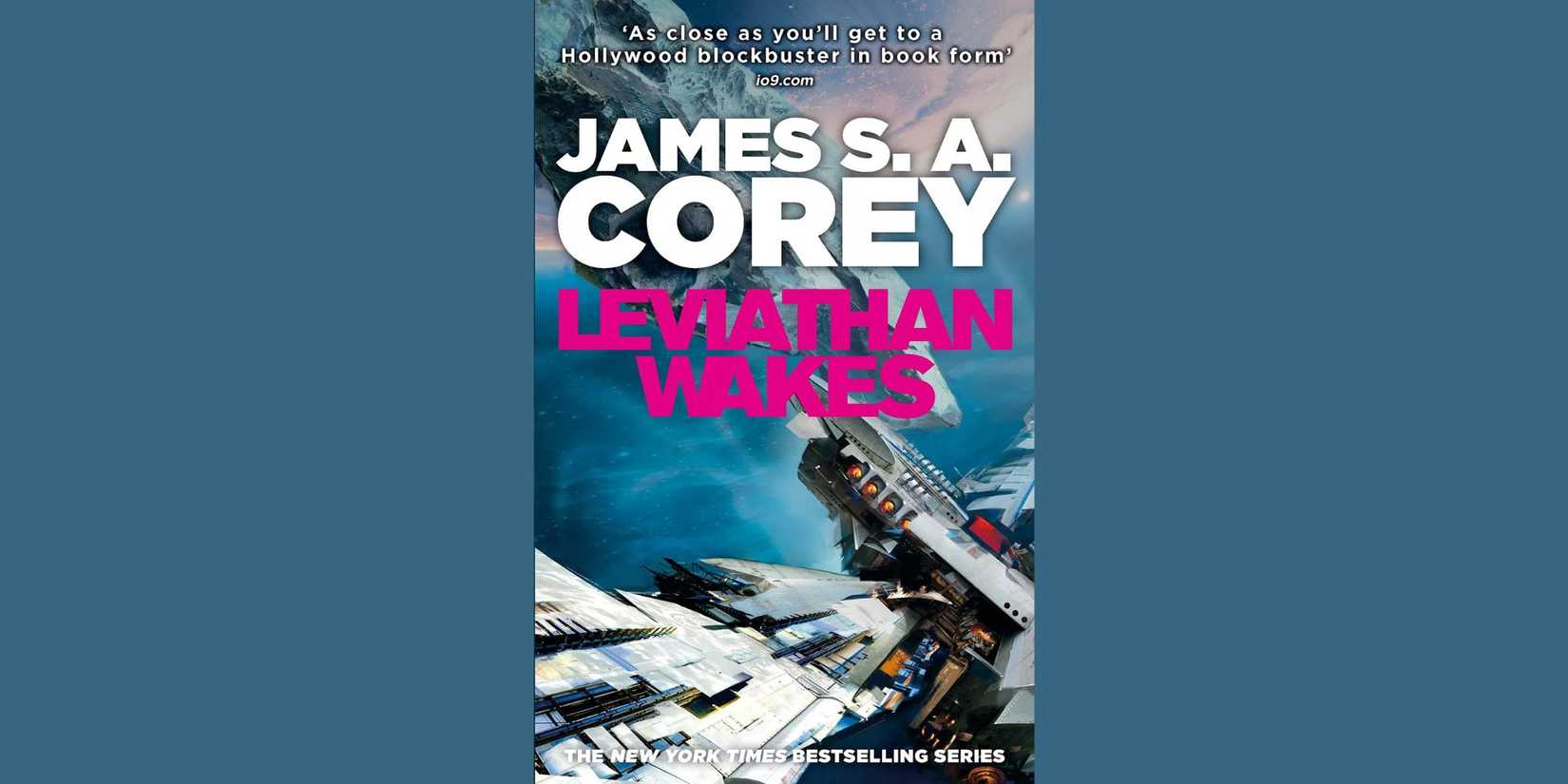 Image via Orbit Books
Syfy and Prime Video's The Expanse, one of the most rewatchable sci-fi shows ever, was based on an even-better series of novels, novellas, and short stories by James S. A. Corey, the joint pen name of Daniel Abraham and Ty Franck. From 2011's Leviathan Wakes to 2021's Leviathan Falls, this expansive (no pun intended) world started as the setting for an MMORPG and later a tabletop RPG, but was so ripe with potential that it eventually transformed into the book series we now have.
The books' worldbuilding keeps all of the nerdy extravagance and immersive details of its MMORPG and tabletop RPG days, mixed with an epic space opera feel and highly complex sociopolitics. With a focus on believable and realistic hard science fiction, Abraham and Franck make their universe feel gritty, vast, and entirely lived-in.
'The Dark Tower' Series
 Image by Michael Whelan
Inspired by the 19th-century English poem Childe Roland to the Dark Tower Came by Robert Browning, Stephen King wrote 1982's The Gunslinger. Thus started his The Dark Tower series, the best way to show a Stephen King novice that it's not only horror that the author excels at. Mixing elements of dark fantasy, science fiction, and Western, this series of eight novels, one novella, and one children's book wears its Tolkien, Arthurian legend, and The Good, the Bad and the Ugly influences on its sleeve.
Composed of nothing but phenomenal books, the series introduces the idea of King's work being a shared multiverse, where the Dark Tower series serves as a hub linking together many of the author's other novels. That alone is enough to make these books' worldbuilding deserving of the adjective "brilliant." Sprawling, meta, genre-bending, and beautifully immersive, the world of The Dark Tower is one that every Stephen King fan loves to get lost in.
'The Kingkiller Chronicles' Series
 Image via DAW Books
Fans have been waiting 15 years for Patrick Rothfuss to release the closing chapter of what's supposed to be a book trilogy. Still, even with just its first two installments, an experimental short story, and three novellas, The Kingkiller Chronicles is already one of the most iconic pieces of fantasy literature of the 21st century. With film and television adaptations also stuck in development hell, fans of the series haven't exactly been devoid of reasons to feel unsatisfied lately, but the work is simply that good.
The character work, thematic core, and prose style of The Kingkiller Chronicles are all virtually flawless, but it's the worldbuilding that really makes this series shine. Here, we have a dark tone and deep sense of realism, a highly complex economy, a beautifully built scientific magic system, myths, songs, folk tales, and board games. Rothfuss has built one of the most admirably expansive and engaging fictional worlds in the history of modern genre literature.
'The Stormlight Archive' Series
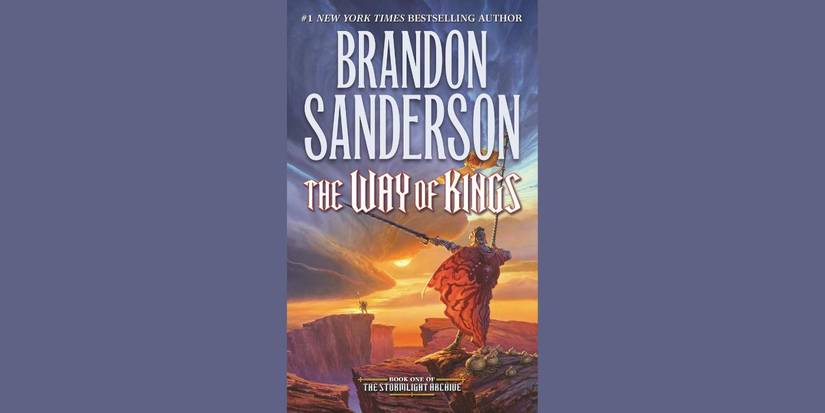 Image via Tor Fantasy
It's not just Rothfuss; several authors take a frustrating amount of time putting out their much-awaited work. That has never even come remotely close to being a problem with Brandon Sanderson, one of the most prolific authors in the game. He's perhaps best known for his high fantasy series of five novels and two novellas, The Stormlight Archive.
Starting with the legendary The Way of Kings, and going up to the middle chapter in what's projected to be a ten-novel series, 2024's Wind and Truth, these are the kinds of best-selling novels that would be amazing movies. Part of Sanderson's broader Cosmere universe, The Stormlight Archive's Roshar has a magic system, ecosystem, culture, and technology, all of which are absolutely fascinating and impeccably written.
'The Wheel of Time' Series
 Image via Tor Books
With the recent cancellation of Prime Video's television adaptation, Robert Jordan's The Wheel of Time series is more relevant today than ever before. Spanning a prequel novel, three companion books, and a whopping 14 volumes (the last three of which were co-authored by Brandon Sanderson), it's one of the best-selling and most influential fantasy book series of the last few decades.
Jordan masterfully crafted a world that's every bit as epic and expansive as you'd expect from a series with this many volumes.
Inspired by various European and Asian mythologies and philosophies, Jordan masterfully crafted a world that's every bit as epic and expansive as you'd expect from a series with this many volumes. Complete with a tremendous sense of scale, deep cultural nuances, and one of the most fleshed-out and layered magic systems in the history of literature, The Wheel of Time is an essential masterclass in fantasy world-building.
'Malazan Book of the Fallen' Series
 Image via Bantam
Penned by Canadian author Steven Erikson, The Malazan Book of the Fallen series consists of ten novels set in the engrossing Malazan Empire. Beginning with 1999's Gardens of the Moon and concluding with 2011's The Crippled God, the series spans millennia across multiple continents. What started as a backdrop to a role-playing campaign of Erikson and his friend and collaborator, Ian Cameron Esslemont, soon turned into this legendary series.
Esslemont has also added books to the Malazan canon through his Novels of the Malazan Empire series, but there's simply no beating Erikson's worldbuilding, which is arguably the main attraction of the series as a whole. Ambitious, dense, realistic, and perhaps the most intricate of any major fantasy book series, Malazan Book of the Fallen's worldbuilding is itself a masterpiece.
'A Song of Ice and Fire' Series
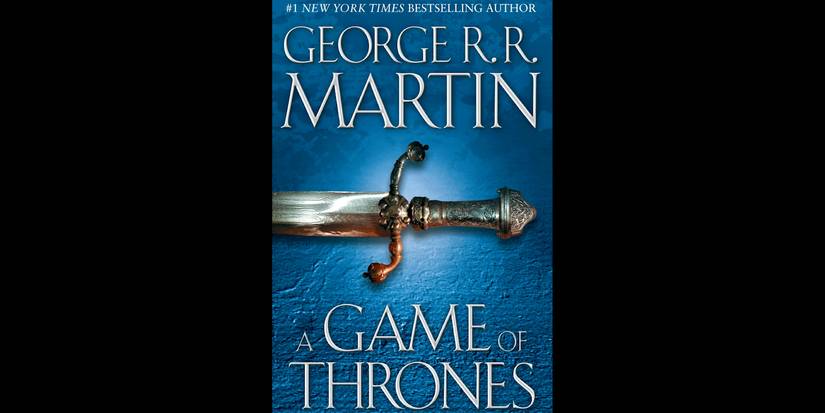 Image via Bantam Spectra
With HBO's Game of Thrones and its prequels, at this point, there's no need to introduce George R. R. Martin's A Song of Ice and Fire—a book series as beloved as it is infamous for Martin's 17-year delay in publishing the sixth chapter, The Winds of Winter. But regardless of whether the world will ever actually see the book, we're still talking about one of the most groundbreaking and influential series of fantasy novels in the modern history of the genre.
Sharp political realism, distinct cultures, incredibly detailed elements that make Westeros and Essos feel hugely lived-in; A Song of Ice and Fire's world-building is as good as it is because, instead of it feeling like just a plot backdrop to study, it actually feels organic and immersive. It's a hugely unique twist on traditional fantasy worldbuilding that fans of Harry Potter (grown-up fans, that is) are guaranteed to love.
'Dune' Saga
 Image via Chilton Books
With Denis Villeneuve's tremendous cinematic adaptations, Frank Herbert's Dune is today as mainstream as it will ever be. Not that this seminal work of soft science fiction ever needed the slightest bit of a push in popularity to begin with. Herbert redefined the genre with his 1965 book, and the five sequels that he wrote only further solidified his legacy as one of the most important sci-fi authors of the 20th century.
But of course, these wouldn't be some of the best sci-fi book masterpieces of all time if they didn't have absolutely incredible worldbuilding. Those who prefer their sci-fi worlds with plenty of scientific rigor are better off looking elsewhere, but people who love soft science fiction will find Herbert's world-building enrapturing. Politically complex, thematically layered, and with one of the most richly detailed ecosystems of any genre book of its time, the Dune universe is one that's abundantly easy—and absolutely delightful—to get lost in.
'The Lord of the Rings' Trilogy
 Image via Allen & Unwin
As phenomenal as The Silmarillion's world-building is, it's certainly quite a bit too dense for your average fantasy literature reader to enjoy. But The Lord of the Rings is essential reading for virtually anyone with even the slightest bit of enjoyment of the fantasy genre. This trilogy may just be the most important and influential work of fantasy literature of the 20th century, and that's in no small measure thanks to the tremendous depth of Tolkien's worldbuilding.
What makes the world of The Lord of the Rings so special is that Tolkien approached it not just as a novelist, but also—and perhaps mostly—as a historian and linguist. Cultures, histories, poems, folk songs, geography, several fully-formed languages; Tolkien constructed what one could deservedly call the deepest world in the modern history of fantasy. Not only Harry Potter, but also virtually every other fantasy book series that came after The Lord of the Rings owes something to Tolkien.





 English (US) ·