

Published Oct 16, 2026, 2:54 PM EDT
Abby Shewmaker is a journalist covering books, art, entertainment, and culture. She studied Communications and History at the University of California, Los Angeles (UCLA), and is a Contributing Writer at FLAUNT Magazine.
In the world of science fiction, the future is a realm primed for exploration. Many of the greatest sci-fi authors built their careers on telling stories that theorized about the technological and societal shifts that could emerge as a result of scientific development, creatively mapping out multiple possibilities for the future of humankind.
These predictions—whether they be advanced space travel, artificial intelligence, or alien invasion—all tend to reflect the times in which the stories were written, and what people during that time wanted (or feared) to see in the near or distant future. While these predictions can be farfetched or implausible, sci-fi books of the past have made eerily accurate predictions for the future that now match our present day.
The Machine Stops (1909)
E.M. Forster

It’s hard to believe that E. M. Forster wrote The Machine Stops nearly 120 years ago, and how relevant it remains to today's world. The story imagines a future in which people live alone in underground rooms, relying on a vast machine to provide for their needs and connect them through screens. Its inhabitants can communicate across the world without meeting in person, an idea that now is very familiar in the age of video calls and online communities.
Forster’s story predicts much more beyond technological advancement. It imagines a world linked by mass communication, where people can access endless information yet grow increasingly cut off from direct experience. The global network is a remarkable prediction; the story’s warning about dependence on it is what keeps the book feeling current.
The Machine Stops is available to purchase now through this link.
Fahrenheit 451 (1953)
Ray Bradbury

In Ray Bradbury’s vision of the future, people spend hours watching enormous television screens that cover their walls. The screens make entertainment feel immersive, but they also leave people isolated from one another. Bradbury imagined “seashell” radios worn in the ears, too, recalling the earbuds people now use to listen to music and other media anywhere they go.
The technologies in Fahrenheit 451 are not exactly the same as ours, but Bradbury understood how screens and constant entertainment and stimulation could shape people’s daily lives. His characters are surrounded by media, yet struggle to have meaningful conversations or pay attention to the world beyond their homes. That part feels familiar in a culture where it’s easy to fill every quiet moment with something to watch or listen to.
Fahrenheit 451 is available to purchase now through this link.
The Space Merchants (1953)
Frederik Pohl and C. M. Kornbluth

In The Space Merchants, the reach of advertising spans far further than the sale of products to consumers: it shapes the surrounding culture. Frederik Pohl and C. M. Kornbluth’s story follows an advertising executive in a society where agencies hold enormous power and consumer desire is carefully cultivated. One campaign even aims to convince people to support the colonization of Venus.
The novel takes that premise to an extreme, but its central idea is familiar to the prominence of advertising and marketing in today's world. Brands compete for attention across nearly every part of daily life, while targeted ads and sponsored content blur the line between entertainment and selling. Pohl and Kornbluth recognized that advertising could do more than tell people what to buy back in 1953, and that it could help shape what they want in the first place.
The Space Merchants is available to purchase now through this link.
The Shockwave Rider (1975)
John Brunner

John Brunner’s The Shockwave Rider imagines a near-future society built around computer networks. Its central character is a hacker who uses a program that can travel through the network, anticipating the computer “worms” that would later become a real cybersecurity threat. The novel also imagines personal information moving through interconnected systems, leaving people vulnerable to being tracked and exposed.
Which theme from these sci-fi futures are you most interested in exploring more in your own reading?
How constant connectivity shapes relationships and mental health
How constant connectivity shapes relationships and mental health 0%Corporate power, targeted ads, and consumer manipulation
Corporate power, targeted ads, and consumer manipulation 0%Surveillance, data privacy, and life under total visibility
Surveillance, data privacy, and life under total visibility 0%Virtual worlds, metaverses, and immersive digital identities
Virtual worlds, metaverses, and immersive digital identities 0%Brunner didn’t predict the internet in its exact modern form, but he understood the risks of a world where so much information is networked. The Shockwave Rider's future makes it possible to use computers to communicate and access data, while also giving institutions new ways to monitor people. That tension between connection and privacy is still part of how we use the internet today.
The Shockwave Rider is available to purchase now through this link.
Neuromancer (1984)
William Gibson

William Gibson’s Neuromancer helped give networked computing a name and a landscape. The novel’s hackers enter “cyberspace,” a digital world that they can navigate, while powerful corporations and artificial intelligences shape life beyond it. Gibson was writing before most people used the internet, and the technology in the book doesn’t match today’s systems exactly.
What feels prescient is the sense that computers could become more than tools sitting on a desk. In Neuromancer, digital networks are places where people work, take risks, and compete for power. Its hackers and corporate-controlled systems now look like early imaginative versions of parts of online culture, from cybersecurity to the influence of major technology companies.
Neuromancer is available to purchase now through this link.
Snow Crash (1992)
Neal Stephenson

Neal Stephenson’s Snow Crash introduced the term “Metaverse” for a virtual world where people meet through digital avatars. Its protagonist, aptly named Hiro Protagonist, moves between everyday life and this online space, where users socialize, work, and build their identities. The book’s virtual world is much more immersive than the versions available today, but its central idea has become a familiar part of conversations about technology.
The novel imagined that the internet might grow into a place people come to inhabit, rather than a collection of pages they visit. That vision has influenced how people think about virtual reality and online social spaces. Even as the Metaverse remains more concept than everyday reality, Stephenson’s idea of shared digital worlds has clearly traveled beyond the book.
Snow Crash is available to purchase now through this link.
Infinite Jest (1996)
David Foster Wallace

Most of Infinite Jest takes place in the Year of the Depend Adult Undergarment, generally read as 2009, though the novel’s timeline is debated. David Foster Wallace imagined a new kind of entertainment cartridge so captivating that viewers become unable to stop watching. It’s an extreme premise, but it anticipates today’s concerns about on-demand entertainment designed to hold our attention for as long as possible.
Wallace also imagined a future filled with video calls, though his characters find videophony intrusive and embarrassing. That prediction went differently: video calls are now routine. But the novel’s broader picture of media—always available, hard to turn away from, and woven into daily life—feels especially close to the way people stream shows and scroll through social media feeds today.
Infinite Jest is available to purchase now through this link.
Feed (2002)
M. T. Anderson

In M. T. Anderson’s Feed, people connect to the internet through an implant in their brains. The feed is with them constantly, delivering messages, entertainment, and personalized advertisements directly into their thoughts. The brain implant is still science fiction, but Anderson’s idea of a person never being disconnected feels increasingly close to life with smartphones and social media.
The book is especially prescient about advertising. Companies use information about people’s behavior and interests to target them with products, making it hard to separate personal desire from the messages they receive. Anderson imagined that process happening inside the brain, but the underlying idea—that technology and marketing can shape what people pay attention to and want—is now part of everyday life online.
Feed is available to purchase now through this link.
The Circle (2013)
Dave Eggers
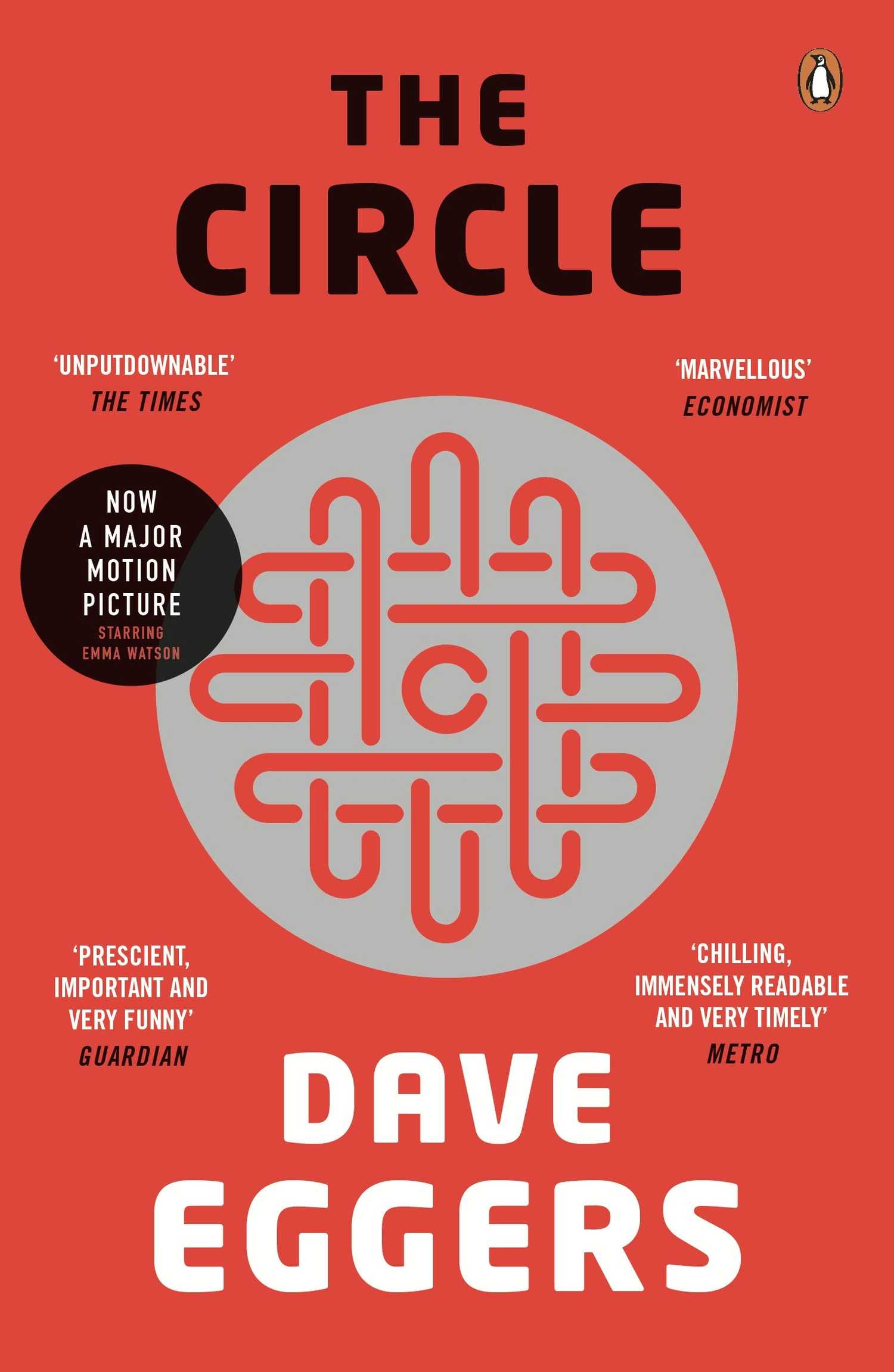
In Dave Eggers’s The Circle, a powerful technology company brings social media, email, banking, and shopping together under one system. Users have a single online identity, and the company promotes constant sharing as a way to make society more open and connected. The novel’s unified platform is fictional, but it echoes the way a few tech companies have come to shape so many parts of people’s digital lives.
Eggers is interested in what happens when convenience and connection come at the cost of privacy. In the world of The Circle, being visible is treated as a virtue, and keeping anything private looks suspicious. That pressure feels recognizable in a media culture where people are encouraged to share more, stay online, and make their lives legible to platforms.
The Circle is available to purchase now through this link.
The Continuous Katherine Mortenhoe (1973)
D. G. Compton

In D. G. Compton’s The Continuous Katherine Mortenhoe, a television producer turns a woman’s final days into a show for viewers. A reporter follows her using cameras implanted in his eyes, recording her life as he sees it. The camera-eye technology remains speculative, but the novel’s premise anticipates a media culture fascinated by turning private experiences into public entertainment.
The story is an early, unsettling take on reality television and constant surveillance. It asks what happens when the audience’s desire to watch takes priority over a person’s privacy and dignity. With reality shows, livestreams, and social media offering so many glimpses into other people’s lives, Compton’s imagined broadcast feels less farfetched than it once might have.
The Continuous Katherine Mortenhoe is available to purchase now through this link.






 English (US) ·