
If there is one broad genre that dominates cinemas, it’s the blockbuster. Often a big-budget, massive film filled with hype and superstars, the blockbuster not only brings in high numbers at the box office, but gets butts in the seats. But you may want to be wary of which films you bring the family to, because, despite their allure or appearance, not all blockbusters are meant for your younger viewers.
Imagine being traumatized as a child over kids’ movies and then watching giant dinosaurs eating humans, naughty cartoon characters, or a terrifying horror movie that had no business being rated PG. Though some parents may disagree, the 10 titles on his list are a tad too inappropriate for the kiddos. Yes, some of us snuck into the living room to catch a peek of these films, but retrospectively, perhaps not the best idea! Many of these films are brilliant, just simply not for kids.
1 'Austin Powers: The Spy Who Shagged Me' (1999)
 Image via New Line Cinema
Yeah, baby! After the first film saw the titular character ask, “Shall we shag now, or shag later?”, the indication was that the James Bond-esque parody was going to get raunchier in the sequel. Just look at the title! In Austin Powers: The Spy Who Shagged Me, Austin Powers (Mike Myers) must travel back to 1969 to recover his stolen "mojo". Dr. Evil steals this mojo, causing Austin to lose his sexual charisma, and uses it to fuel a giant laser, alongside his new clone, Mini-Me. Teaming up with American agent Felicity Shagwell (Heather Graham), Austin must stop Dr. Evil before it’s too late. With sex being the absolute central focus of the sequel, even with some subtle innuendo, the film prides itself on being raunchy and filthy for the laugh.
An absolute box office smash, Austin Powers: The Spy Who Shagged Me might be the best in the trilogy because, after already establishing itself, he had the freedom to go all out. With the parallels directly tied to the James Bond franchise, tapping into the source material's sexual nature was low-hanging fruit for the film to snag. Despite using terms like “shag” and “mojo” to soften the blow, there’s no way to shield children’s eyes from the non-stop sexual references. For the third character in Myers' arsenal, Fat Bastard, a composite of evil henchmen, served as a recurring punchline for his gross-out humor and flatulence. While children might laugh at a fart joke, they’re slapped right in between the sex jokes and scantily clad characters. Suggestive beyond compare, Austin Powers: The Spy Who Shagged Me is just not for kids. Teens, you may get a slight pass.
2 'Deadpool & Wolverine' (2024)
 Image via Marvel Studios
The moment that Ryan Reynolds’ Deadpool officially entered the MCU, there was grave concern that the fourth-wall-breaking, foul-mouthed hero would be sanitized for a family-tinged adventure. The moment it was announced it was going to be rated R, the first in the MCU, it was official: Kids were going to have to sit this feature out. Though some parents likely neglected the previous films, they saw it was canonically MCU, and let the kiddos watch. Graphic and dirty, Deadpool & Wolverine is an A+ film for adults only. In the third Deadpool film, Wade Wilson (Reynolds) traverses the multiverse to find a replacement Wolverine (Hugh Jackman) after the TVA reveals his timeline is decaying due to Logan’s death. Together, they combat Paradox and Cassandra Nova (Emma Corrin) to stop the destruction of his universe, with Logan becoming the new "Anchor Being". With strong, graphic violence, pervasive language, including over 100 F-bombs, and explicit sexual references, Deadpool & Wolverine is not your average MCU blockbuster.
Even as it forced the character into a new multiverse, the film captured exactly what audiences adored about the first two films. With a “fuckton” of swearing, it was true to the character. Wolverine, though? Not so much. Had you adored Jackman’s long-running Wolverine, seeing him in a new atmosphere might be jarring for younger viewers. And that’s after seeing him as a skeleton. Either way, with a gritty, nihilistic tone, Deadpool & Wolverine is a welcome diversion from previous entries, but that doesn’t mean it’s for kids. Even though it’s a masterpiece film, when Deadpool pops back into the MCU again, take some discretion.
3 'Gladiator' (2000)
 Image via Universal Pictures
There is absolutely no doubt that you’ll be entertained by Gladiator. But if you let a bunch of middle schoolers watch it at a sleepover, chances are at least one kid will be traumatized. Not that I was that kid, but I was at that sleepover! Directed by Ridley Scott, the authentic and graphic epic tells the story of Maximus Decimus Meridius (Russell Crowe), a beloved Roman general betrayed when Commodus (Joaquin Phoenix), the ambitious son of Emperor Marcus Aurelius (Richard Harris), murders his father and seizes the throne. Enslaved and forced into the gladiator arena, Maximus rises through the ranks, seeking vengeance against the new emperor while striving to restore the Roman Republic. Gladiator became the blueprint for 21st-century epics. All thanks to the bold, graphic, and violent depiction that left little to the imagination.
Scott did a mighty job dropping viewers into an immersive Ancient Rome. In doing so, he presented the immense brutality that many men faced at the whims of the powerful. The battle sequences were expertly directed and choreographed. Gladiator is a powerful film of vengeance, with Maximus becoming one of the best cinematic heroes. Still, it’s a film best saved for high school-aged kids when they’re perhaps learning about that history. As much as boys may think they’re ready for this film, chances are they’re not!
4 'Independence Day' (1996)
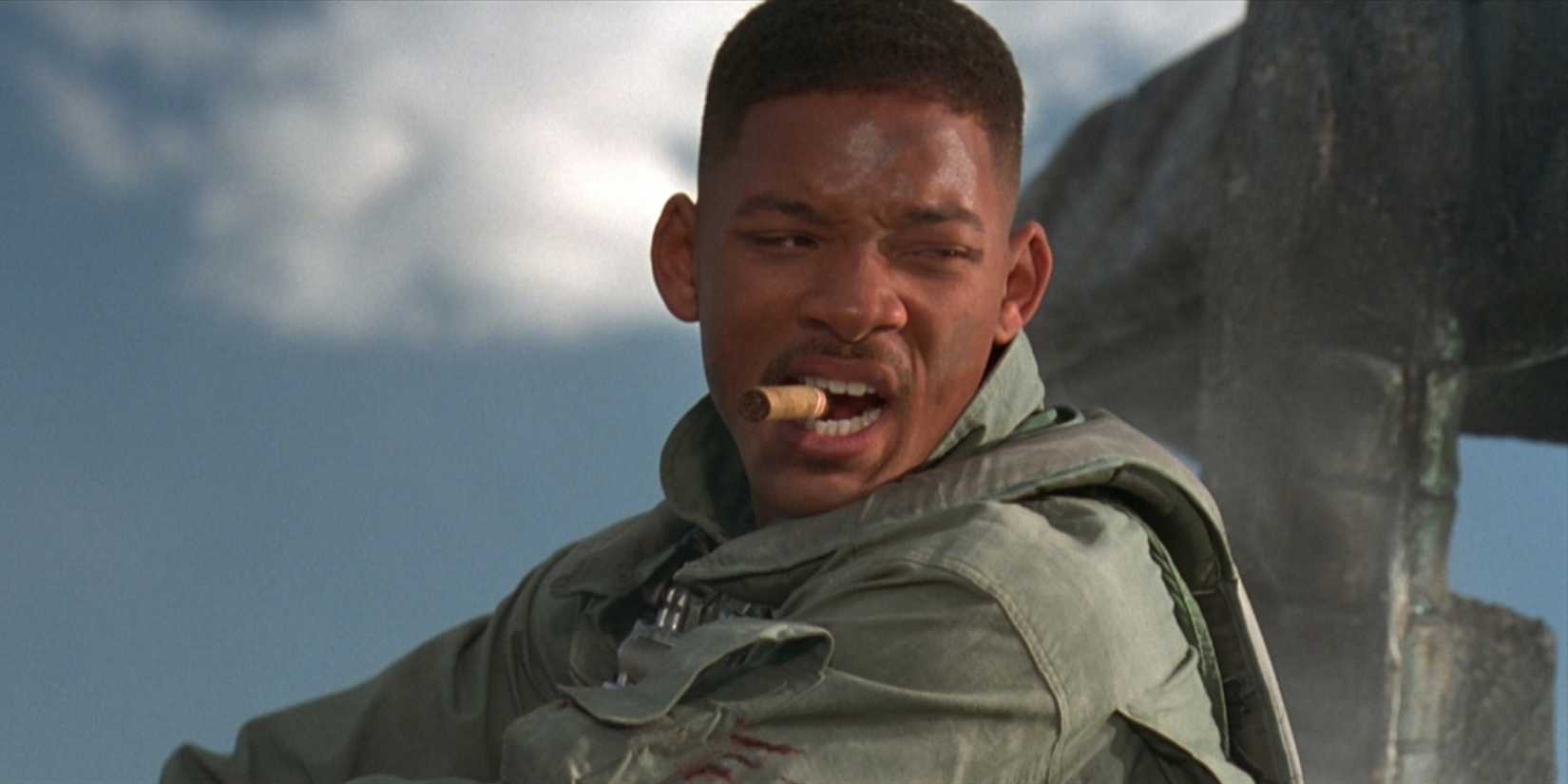 Image via 20th Century Studios
Aliens have always been a major factor in drawing audiences to blockbuster films. While the occasional movie depicts extraterrestrials as kind equals, the majority portray them as scary, horrific outsiders seeking a hostile takeover. That's what Independence Day was. Perhaps the biggest alien blockbuster of the decade, it chronicles the arrival of massive extraterrestrial ships over major Earth cities on July 2, sparking global panic. After the aliens launch a coordinated attack, a small group of survivors, including Captain Steven Hiller (Will Smith), analyst David Levinson (Jeff Goldblum), and President Thomas Whitmore (Bill Pullman), unite to launch a counterattack on July 4th. Independence Day is an action-packed blockbuster that satisfies the popcorn movie formula while spooking viewers with the terrifying prospect of a war against aliens.
A very patriotic premise, Independence Day is a mind-blowing visual extravaganza. You will be entirely enthralled by the cinematography and atmosphere that director Roland Emmerich brings to the film. But like the Xenomorphs in Ridley Scott’s Alien, these creatures are absolutely terrifying. The Harvesters had this menacing head with tendrils that could whip you silly. They may not be able to beat a Xenomorph, but they are a strong rival! If scary alien encounters, body horror, and children in peril are not for you, neither will this film. Independence Day is a ‘90s classic, but for the millennials who sat in the theaters to watch the all-star cast become total badasses, you likely still have the image of the White House being destroyed ingrained in your mind.
5 'Jaws' (1975)
 Image via Universal Pictures
The theme to Jaws is one of the most iconic and visceral tunes in pop culture. Though it has been sanitized in the 21st century as the intro to “Baby Shark,” for individuals who had their formative years prior to the viral sensation, when you hear those chords, it’s best to dart out of the ocean! Steven Spielberg’s Jaws changed how we view the deep blue sea forever. And for impressionable kids, had you tuned into this film, chances are you’d have a temper tantrum if you were being dragged for a beach day. The blockbuster action thriller follows Chief Martin Brody (Roy Scheider), marine biologist Matt Hooper (Richard Dreyfuss), and professional shark hunter Quint (Robert Shaw) as they hunt down a man-eating great white shark that terrorizes beachgoers in the quaint New England summer resort town of Amity Island.
A newfound horror film, Jaws is a brilliant depiction of fear and how it can take a toll on even the bravest amongst us. Except the kiddos. Jaws is the reason why an entire generation likely never wanted to learn to swim. With vivid depictions of graphic gore, including body dismemberment, Jaws is the film that leaves a lasting impression. For cinephiles, that’s a major factor in the film’s glory. Again, not for the kids, so terrified that they may fear a menacing shark might be in the pool! The truth is, when one of the most prominent victims of the shark attack is a young child, Alex Kintner (Jeffrey Voorhees), it’s utterly distressing. Just a reminder: when Jaws came out, film ratings were much more lenient, so from today’s perspective, a PG rating is absolutely mind-blowing.
6 'Jurassic Park' (1993)
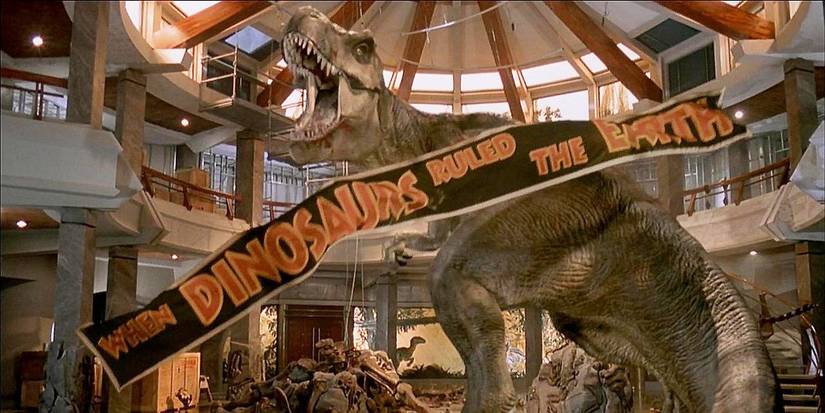 Image via Universal Pictures
It’s inevitable that as a kid, you had an affinity for dinosaurs. Whether an obsession or appreciation, dinosaurs have become synonymous with the wonderment surrounding them. The early 90s saw the rise of dinosaurs. For young viewers, with animated features like The Land Before Time and We’re Back! A Dinosaur’s Story, the prehistoric creatures were fun and lovable. So, when Steven Spielberg brought live-action dinosaurs to the screen, the logical deduction was that it would be a happy celebration of dinosaurs in the same vein he created with E.T. the Extra-Terrestrial and Close Encounters of the Third Kind. Well, Jurassic Park was a science fiction thriller that made some dinos terrifying.
The cautionary tale about the dangers of genetic engineering, Jurassic Park tells the story of a wealthy businessman, John Hammond (Richard Attenborough), and a team of genetic scientists who build a wildlife park on Isla Nublar, near Costa Rica, where genetically recreated dinosaurs roam free. But when industrial sabotage triggers a catastrophic shutdown of the park's power facilities and security systems, the visitors to Jurassic Park struggle to survive as carnivorous creatures escape their confines. The prospect of walking among these prehistoric creatures sounds glorious, but Jurassic Park destroyed that dream in one fell swoop. Spielberg holds nothing back, ensuring fear is a major part of building the perfect atmosphere. There is blood and death, which was inevitable. Though some moments of levity are presented, as funny as it was to see a man get ripped out of a toilet and eaten, it’s also utterly scary. So parents, hang onto your butts because your dinosaur-loving kiddo might have a change of heart after watching this classic blockbuster. My little brother sure did!
7 'Mad Max: Fury Road' (2015)
 Image via Warner Bros.
Gender roles have taught us that young boys love cars and trucks. Well, basically anything that goes vroom on wheels. But as fast and as high-octane a film about dystopian cars might seem appealing to a youngster, Mad Max: Fury Road is simply not for kids. In the fourth iteration of the George Miller franchise, Mad Max: Fury Road follows Max Rockatansky (Tom Hardy), who joins forces with Imperator Furiosa (Charlize Theron) against warlord Immortan (Hugh Keays-Byrne) and his army. Setting out on a large-spanning road battle in the desert wasteland where petrol and water are scarce commodities, Mad Max: Fury Road is a relentless thrill ride that keeps your heart racing from start to finish. As exciting as the film is, with disturbing images, intense violence, and some quite mature and sexually explicit plot lines, this is an adults-only blockbuster.
Miller's masterpiece is a poignant story that depicts a savage society obsessed with war, resource hoarding, and cult-like devotion. In order to push those themes to extremes, humanity is ripped straight out of the film as many, if not all, of the characters suffer from dehumanization. In turn, that includes the wives who are thrust into sexual slavery, War Boys bowing down to the whims of a ruthless individual, and inhalation of a chrome aerosol paint to get high before dying. These visceral moments are simply too much for a young viewer. As much fun as it is to see the high-octane chase scenes, the rest of the movie is psychologically damaging for those unprepared.
8 'Poltergeist' (1982)
 Image via MGM
"They're here!" When the darling Carol Anne Freeling (Heather O'Rourke) uttered those words, one of the scariest movies was officially underway. Poltergeist became one of the greatest and most influential horror films of all time. With a child at the center of the story and a PG rating, one might think that the Tobe Hooper-directed movie was a wonderful family film. The truth is, Poltergeist was the exact opposite. The classic horror thriller tells the tale of the Freeling family, whose suburban home is invaded by malevolent ghosts. As the spirits begin with playful antics, the terror soon escalates, abducting Carol Anne via a television portal. In order to get their daughter back, Steve and Diane Freeling (Craig T. Nelson and JoBeth Williams) turn to the paranormal help to rescue her from another dimension. Another example of a soft rating in a very different era, Poltergeist may be a gateway horror film, but meant solely for an older demographic.
Compared to many horror films, Poltergeist focuses more on atmospheric scares than on blood and gore. Yet, that fear factor is amped up to high volume. From demonic trees to a terrifying clown to a hallucination of a face being torn off, Poltergeist is a film where nightmares are born. There's a very high chance your child might be mortified at turning on the television because of the fear of ghosts coming through to take them away. A great sign of brilliant horror, but Poltergeist is a blockbuster that should be kept away from young kids. These ghosts are definitely not Casper the Friendly Ghost.
9 'South Park: Bigger, Longer, & Uncut' (1999)
 Image via Paramount Pictures
If we pull back and analyze the impact South Park had on society and pop culture, it was inevitable that Trey Parker and Matt Stone would find a way to capitalize on their hit series for the big screen. Two years after the show's debut, South Park: Bigger, Longer, & Uncut was censored-free and much more inappropriate than the Comedy Central show. When the show first debuted, some parents gave in and let their kids watch, thinking it was just another adult sitcom like The Simpsons. It was not. It was worse. South Park: Bigger, Longer, & Uncut followed the town's children, led by Cartman, Stan, Kyle, and Kenny, who see an R-rated Terrance and Phillip movie. Their parents blame Canada, triggering a war, a pact between Satan and Saddam Hussein, and the boys' mission to stop it. The meta-commentary allowed the film to focus on the hypocrisy of blaming the media for children's behavior rather than parenting. Even with the moral of the story being the parents' understanding of their own errors, those same real-life parents let this one seep into their own homes.
Pushing the bounds to the brink, its deliberate, extreme parody of censorship, rampant profanity, and explicit sexual and violent content was meant to defy the Motion Picture Association of America. And if kids got a hold of it, they experienced it all. The brilliance of the film was that it knew exactly what it was doing. In order to hammer home the point of how parents put the blame on themselves, the film was littered with nearly 150 uses of the f-word, with 399 swear words overall, graphic sexual innuendo, and intense violence. Don't let animation fool you. It's not always meant for the kids! And you certainly can't blame Canada for this one.
10 'Who Framed Roger Rabbit' (1988)
 Image via Walt Disney Studios Motion Pictures
As just mentioned, not everything with animation was appropriate for kids. When it comes to Who Framed Roger Rabbit, the hit 1988 film toes the line. It's a Disney-owned film featuring beloved cartoon characters, but even with Donald and Daffy Duck roaming around, they were overshadowed by murdered toons and the busty bombshell, Jessica Rabbit (Kathleen Turner). Directed by Robert Zemeckis, the live-action and animated hybrid set in an alternative-history Hollywood follows a world where humans and toons coexist. Private investigator Eddie Valiant (Bob Hoskins), a man with a grudge against toons, must help Roger Rabbit (Charles Fleischer), who is framed for murder. As much as this film appealed to a younger audience, its darker tone and overtly sexual character might have said otherwise.
Who Framed Roger Rabbit was heavy with adult innuendo, dark themes like alcoholism, and utterly frightening scenes. Watching Judge Doom's (Christopher Lloyd) eyes bulge out may make an impression, but nothing is more traumatic than watching the "dipping" of a toon shoe. Who Framed Roger Rabbit fell somewhere between classic cartoon tropes and adult elements. While we may be used to seeing cartoons run through brick walls and have anvils fall on their heads, here, toons being crushed, burned, and electrocuted had consequences. There was no comical soundtrack that helped them bounce back to life. Though violence was a main element of the film, raunchiness was a central one. Even though Baby Herman (Lou Hirsch) was downright horndog, Jessica Rabbit will forever be the most sexually explicit character. An icon for adults, an awakening for children. Who Framed Roger Rabbit is a landmark film, but Mary Poppins it was not.
Collider Exclusive · Oscar Best Picture Quiz
Which Oscar Best Picture
Is Your Perfect Movie?
Parasite · Everything Everywhere · Oppenheimer · Birdman · No Country
Five Oscar Best Picture winners. Five completely different visions of what cinema can be — and what it can do to you. One of them is the film that was made for the way your mind works. Ten questions will figure out which one.
🪜Parasite
🌀Everything Everywhere
☢️Oppenheimer
🐦Birdman
🪙No Country for Old Men
FIND YOUR FILM →
01
What kind of film experience do you actually want? The best movies don't just entertain — they leave something behind.
ASomething that pulls the rug out — that makes me think I'm watching one kind of film and then reveals I'm watching another entirely. BSomething overwhelming — funny, sad, absurd, and genuinely moving, all at once. CSomething grand and weighty — a film that makes me feel the full scale of what I'm watching. DSomething formally daring — a film that pushes what cinema can even do. ESomething lean and relentless — pure tension with no wasted frame.
NEXT QUESTION →
02
Which idea grabs you most in a film? Great films are driven by a central obsession. What's yours?
AClass, inequality, and what people are willing to do when desperation meets opportunity. BIdentity, family, and the chaos of trying to hold your life together when everything is falling apart. CGenius, moral responsibility, and the catastrophic weight of a decision you can never take back. DEgo, legacy, and the terror of becoming irrelevant while you're still alive to watch it happen. EEvil, chance, and whether moral order actually exists or if we just tell ourselves it does.
NEXT QUESTION →
03
How do you like your story told? Form is content. The way a story is shaped changes what it means.
AGenre-twisting — I want it to start in one lane and migrate into something completely different. BMaximalist and genre-blending — comedy, action, drama, sci-fi, all in one ride. CEpic and non-linear — cutting between timelines, building a mosaic of cause and consequence. DA single unbroken flow — I want to feel like I'm living it in real time, no cuts to safety. ESpare and precise — every scene doing exactly what it needs to do and nothing more.
NEXT QUESTION →
04
What makes a truly great antagonist? The opposition defines the protagonist. What kind of opposition fascinates you?
AA system — invisible, structural, and almost impossible to fight because it has no single face. BThe self — the ways we sabotage, abandon, and fail the people we love most. CHistory — the unstoppable momentum of events that no single person can stop or redirect. DThe industry — the machinery of culture that chews up talent and spits out irrelevance. EPure, implacable evil — a force so certain of itself it becomes almost philosophical.
NEXT QUESTION →
05
What do you want from a film's ending? The final note is the one that lingers. What do you want it to sound like?
AShock and inevitability — a conclusion that recontextualises everything that came before it. BEarned emotion — I want to cry, laugh, and feel genuinely hopeful, even if the world is a mess. CDevastation and grandeur — an ending that makes me sit in silence for a few minutes after. DAmbiguity — something that leaves enough open that I'm still thinking about it days later. EBleakness — an honest refusal to pretend the world is tidier than it actually is.
NEXT QUESTION →
06
Which setting pulls you in most? Where a film takes place shapes everything — mood, stakes, what's even possible.
AA gleaming modern city with a hidden underside — beauty masking rot, wealth masking desperation. BA collapsing suburban life that opens onto something infinite — the multiverse of a single ordinary person. CThe corridors of power and science at a world-historical turning point — where decisions echo for decades. DThe grimy, alive chaos of New York and Hollywood — fame as both destination and trap. EVast, indifferent landscape — desert and highway where violence arrives without warning or reason.
NEXT QUESTION →
07
What cinematic craft impresses you most? Every great film has a signature — a technical or artistic element that makes it unmistakable.
AProduction design and mise-en-scène — every frame composed to carry meaning beneath the surface. BEditing and tonal control — the ability to move between registers without losing the audience. CScore and sound design — music that becomes inseparable from the dread and awe of what you're watching. DCinematography as performance — the camera not recording events but participating in them. ESilence and restraint — what's left unsaid and unshown doing more work than any dialogue could.
NEXT QUESTION →
08
What kind of main character do you root for? The protagonist is the lens. Who you choose to follow says something about you.
ASomeone smart and resourceful who makes increasingly dangerous decisions under pressure. BSomeone overwhelmed and ordinary who turns out to be capable of something extraordinary. CA brilliant, tortured figure whose gifts and flaws are inseparable from each other. DA self-destructive artist whose ego is both their superpower and their undoing. EA quiet, principled person trying to make sense of a world that has stopped making sense.
NEXT QUESTION →
09
How do you feel about a film that takes its time? Pace is a choice. Some films sprint; others let tension accumulate slowly, deliberately.
AI love a slow build when I know the payoff is going to be seismic — patience for a devastating reveal. BGive me relentless momentum — I want to feel breathless and emotionally spent by the end. CEpic runtime doesn't scare me — if the material demands three hours, give me three hours. DI want it to feel propulsive even when nothing is technically happening — restless energy throughout. EDeliberate and unhurried — I want dread to accumulate in the spaces between the action.
NEXT QUESTION →
10
What do you want to feel walking out of the cinema? The best films leave a mark. What kind of mark do you want?
AUnsettled — like I've just seen something I can't fully explain but can't stop thinking about. BMoved and energised — like the film reminded me what actually matters and gave me something to hold onto. CHumbled — like I've been in the presence of something genuinely important and overwhelming. DExhilarated — like I've just seen cinema doing something it's never quite done before. EHaunted — like a cold, quiet dread that stays with me for days.
REVEAL MY FILM →
The Academy Has Decided Your Perfect Film Is…
Your answers have pointed to one Oscar Best Picture winner above all others. This is the film that was made for the way your mind works.
Parasite
You are drawn to films that operate on multiple levels simultaneously — that begin in one genre and quietly, brilliantly migrate into another. Bong Joon-ho's Parasite is a film about class, desire, and the architecture of inequality that manages to be darkly funny, deeply suspenseful, and genuinely shocking across a single extraordinary running time. Your instinct is for cinema that hides its true intentions until the moment it's ready to reveal them. Parasite is exactly that — a film that rewards close attention and punishes assumptions, right up to its devastating final image.
Everything Everywhere All at Once
You want it all — and this film gives you all of it. The Daniels' Everything Everywhere All at Once is one of the most maximalist films ever made: action comedy, multiverse sci-fi, family drama, existential crisis, and a genuinely earned emotional core that sneaks up on you amid the chaos. You are someone who responds to ambition, who doesn't want cinema to choose between being entertaining and being meaningful. This film refuses that choice entirely. It is overwhelming by design, and its overwhelming nature is precisely the point — because the feeling of being crushed by infinite possibility is exactly what it's about.
Oppenheimer
You are drawn to cinema on a grand scale — films that understand history not as a backdrop but as a force, and that place their characters inside that force and watch what happens. Christopher Nolan's Oppenheimer is a film about the terrifying gap between what we can do and what we should do, told with the full weight of one of the most consequential moments in human history behind it. You want your films to feel important without feeling self-important — to earn their ambition through sheer craft and the gravity of their subject. Oppenheimer does exactly that. It is enormous, complicated, and refuses easy comfort.
Birdman
You are drawn to films that foreground their own construction — that make the how of the filmmaking part of the what it's about. Alejandro González Iñárritu's Birdman, shot to appear as a single continuous take, is cinema examining itself through the cracked mirror of a fading actor's ego. You respond to formal daring, to the feeling that a film is doing something that probably shouldn't be possible. Michael Keaton's performance and Emmanuel Lubezki's restless camera create something genuinely unlike anything else — a film that is simultaneously about creativity, relevance, self-destruction, and the impossibility of ever truly knowing if your work means anything at all.
No Country for Old Men
You are drawn to cinema that trusts silence, that refuses to explain itself, and that treats dread as a form of meaning. The Coen Brothers' No Country for Old Men is a film about the arrival of a new kind of evil — implacable, arbitrary, and utterly indifferent to the moral frameworks we use to make sense of the world. It is one of the most formally controlled films ever made, and its controlled restraint is what makes it so terrifying. You want your films to haunt you, not comfort you. You are not interested in resolution if resolution would be dishonest. No Country for Old Men is honest in a way that most cinema never dares to be.
↻ RETAKE THE QUIZ



 English (US) ·