
 Image via 20th Century Studios
Published Jun 4, 2026, 3:33 PM EDT
Luc Haasbroek is a writer and videographer from Durban, South Africa. He has been writing professionally about pop culture for eight years. Luc's areas of interest are broad: he's just as passionate about psychology and history as he is about movies and TV. He's especially drawn to the places where these topics overlap.
Luc is also an avid producer of video essays and looks forward to expanding his writing career. When not writing, he can be found hiking, playing Dungeons & Dragons, hanging out with his cats, and doing deep dives on whatever topic happens to have captured his interest that week.
Sign in to your Collider account
Science fiction has always been fascinated with monsters. Sometimes they serve as symbols for deeper themes; other times they're simply badass and scary. The best of these creatures tap into something primal, lodging themselves in the public consciousness and cementing the genre itself as a vehicle for deeper storytelling.
With that in mind, this list ranks the very best-designed creatures the genre has produced. From the apocalyptic fury of Godzilla to the biomechanical nightmare of the Xenomorph to the time-bending intelligence of the Heptapods, these beings prove that sci-fi terror can come from other sources besides androids and AI.
10 Gwoemul – 'The Host' (2006)
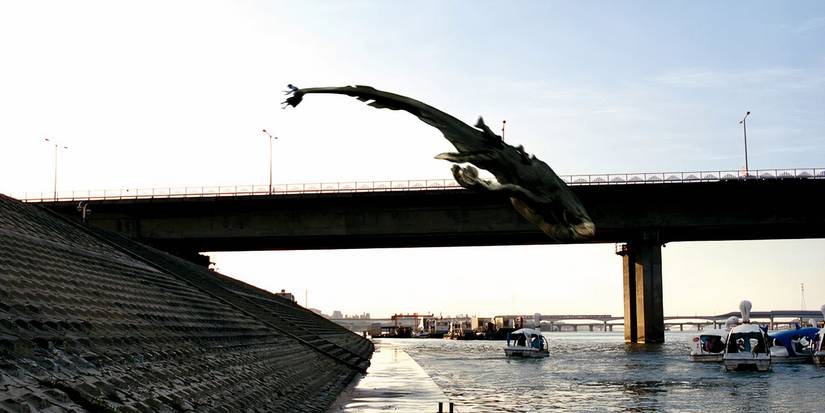 Image via Showbox
“They say it’s a virus.” This early gem from Bong Joon Ho revolves around a grotesque amphibious creature that emerges from the Han River in Seoul after years of toxic dumping by the military. When the monster abducts a young girl (Go Ah-sung) during its first rampage, her dysfunctional family launches a desperate mission to rescue her from the creature’s sewer lair. Along the way, Bong charms us with a confident blend of creature-feature thrills and biting social commentary.
Indeed, the monster becomes a symbol of environmental neglect and bureaucratic incompetence. Themes aside, it's simply a creepy and memorable beast, with an ugly anatomy and unpredictable movements. It swings from bridges, dives into water, and chaotically crashes into crowds. The CGI for it is admittedly a little shaky (the movie came out 20 years ago, after all), but the design was still forward-thinking, quickly influencing other movie monsters.
9 Clover – 'Cloverfield' (2008)
 Image via Paramount Pictures
“I saw it… It’s alive.” This lean found-footage banger, clocking in at just 85 minutes, follows a group of friends attempting to escape Manhattan as an enormous, unidentified creature attacks the city. The creature known as "Clover" is rarely seen in full, its enormous scale revealed only through fleeting glimpses amid collapsing skyscrapers and military bombardment. This approach makes it even more intense when we finally do see it.
The cinéma vérité aesthetic significantly adds to its impact. It makes the audience really experience the chaos alongside the characters: dust clouds, collapsing skyscrapers, distant screams, explosions, and sudden snatches of the creature emerging through smoke. All this imagery clearly invokes post-9/11 anxieties. At the eye of the storm is the monster itself, which, again, looks a little dated by today's standards, but was groundbreaking for the time.
8 Slattern – 'Pacific Rim' (2013)
 Image via Warner Bros. Pictures
“We’re canceling the apocalypse!” Pacific Rim is Guillermo del Toro's love letter to kaiju movies and mecha anime, taking their core elements but giving them their grandest blockbuster treatment yet. In it, colossal monsters emerge from an interdimensional rift in the Pacific Ocean, prompting humanity to build giant robots to fight them. The most formidable of these creatures is Slattern, a Category 5 Kaiju who basically serves as the movie's final boss.
Each of the kaiju has a distinctive look, with Slattern resembling an unholy hybrid of a demon and a hammerhead shark, with horns on his head deliberately designed to evoke a skull and crossbones. He's ridiculously strong but also swift and tough, with armor plating, multiple limbs, tentacle-esque tails, and a vicious spike on his chest. Various concept artists worked together to dream him up, with Industrial Light & Magic bringing him to life on screen.
7 Death Angels – 'A Quiet Place' (2018)
 Image via Paramount Pictures
“If they hear you, they hunt you.” In A Quiet Place, Earth has been overrun by extraterrestrial predators known as Death Angels, blind creatures with hyper-sensitive hearing that attack any sound. We follow an ordinary family struggling to survive in a world where even the smallest noise can be fatal. Walking, breathing, eating, talking, or, indeed, stepping on a nail suddenly become life-or-death risks. It is a simple but incredibly juicy premise, one that John Krasinski and his collaborators execute with style.
While their hearing is their most memorable feature, the look of the aliens is great, too. They draw on classic sci-fi monster elements like an armored exoskeleton and elongated limbs, and yet they don't feel derivative. They become especially creepy when their flower-like facial plates unfold to expose their hearing organs. A phenomenally gross visual.
Collider Exclusive · Sci-Fi Survival Quiz Which Sci-Fi World Would You Survive? The Matrix · Mad Max · Blade Runner · Dune · Star Wars
Five universes. Five completely different ways the future went wrong — or sideways, or up in flames. Only one of them is the world your instincts were built for. Eight questions will figure out which dystopia, galaxy, or desert wasteland you'd actually make it out of alive.
💊The Matrix
🔥Mad Max
🌧️Blade Runner
🏜️Dune
🚀Star Wars
TEST YOUR SURVIVAL →
01
You sense something is deeply wrong with the world around you. What do you do? The first instinct is often the truest one.
APull on every thread until I understand the system — then figure out how to break it. BStop asking questions and start stockpiling — food, fuel, weapons. Questions don't keep you alive. CKeep my head down, observe carefully, and trust no one until I know who's pulling the strings. DStudy the patterns. Every system has a rhythm — learn it, and you learn how to survive it. EFind the people fighting back and join them. You can't fix a broken galaxy alone.
NEXT QUESTION →
02
In a world of scarcity, what resource do you guard most fiercely? What we protect reveals what we believe survival actually requires.
AKnowledge. If you understand the system, you don't need resources — you can generate them. BFuel. Everything else — movement, power, escape — runs on it. CTrust. In a world of fakes and informants, a truly reliable ally is rarer than any commodity. DWater. And after water, information — the two things empires are truly built on. EShips and credits. The galaxy is big — you survive it by being able to move through it freely.
NEXT QUESTION →
03
What kind of threat keeps you up at night? Fear is useful data — if you're honest about what you're actually afraid of.
AThat reality itself is a lie — that everything I experience has been constructed to keep me compliant. BA raid. No warning, no mercy — just the roar of engines and then nothing left. CBeing identified. Once someone with power decides you're a problem, you're already out of time. DBeing outmanoeuvred — losing a political game I didn't even know I was playing. EThe Empire tightening its grip until there's nowhere left to run.
NEXT QUESTION →
04
How do you deal with authority you don't trust? Every dystopia has a power structure. Your approach to it determines everything.
ASubvert it from the inside — learn its rules well enough to weaponise them against it. BIgnore it and stay out of its reach. The further from any power structure, the better. CAppear to comply while doing exactly what I need to do. Visibility is the enemy. DManoeuvre within it carefully. You can't beat a system you refuse to understand. EResist openly when I have to. Some things are worth the risk of being seen.
NEXT QUESTION →
05
Which environment could you actually endure long-term? Survival isn't just tactical — it's physical, psychological, and very much about where you are.
AUnderground bunkers and server rooms — cramped, artificial, but with access to everything that matters. BOpen wasteland — brutal sun, no shelter, constant movement. At least the threat is honest. CA dense, rain-soaked city where you can disappear into the crowd and nobody asks questions. DMerciless desert — extreme heat, no water, and something enormous living beneath the sand. EThe fringe — backwater planets and busy spaceports where the Empire's attention rarely reaches.
NEXT QUESTION →
06
Who do you want in your corner when things fall apart? The company you keep is the clearest signal of who you actually are.
AA tight crew of believers who've seen behind the curtain and have nothing left to lose. BOne or two people I'd trust with my life. Any more than that and someone talks. CNobody, ideally. Alliances are liabilities. I work alone unless I have no choice. DA community bound by shared hardship and mutual survival — people who need each other to last. EA ragtag team with wildly different skills and total commitment when it counts.
NEXT QUESTION →
07
Where do you draw the line — if you draw one at all? Every survivor eventually faces a moment that tests what they're actually made of.
AI won't harm the innocent — even the ones who'd report me without hesitation. BI do what I have to to protect the people I've chosen. Everything else is negotiable. CThe line shifts depending on who's asking and what's at stake. DI draw a long-term line — nothing that compromises my people's future, even if it'd help now. ESome lines, once crossed, can't be uncrossed. I know which ones they are.
NEXT QUESTION →
08
What would actually make survival worth it? Staying alive is one thing. Having a reason to is another.
AWaking others up — dismantling the illusion so no one else has to live inside it. BFinding somewhere — or someone — worth protecting. A reason to keep moving. CAnswers. Understanding what I am, what any of this means, before time runs out. DLegacy — shaping the future in a way that outlasts me by generations. EFreedom — for myself, for others, for every world still living under someone else's boot.
REVEAL MY WORLD →
Your Fate Has Been Calculated You'd Survive In…
Your answers point to the world your instincts were built for. This is the universe your temperament, your survival instincts, and your particular brand of stubbornness were made for.
The Matrix
You took the red pill a long time ago — probably before anyone offered it to you. You're a systems thinker who can't help but notice the seams in things.
- You're drawn to understanding how the system works before figuring out how to break it.
- You'd find the Resistance, or it would find you — your instinct for spotting constructed realities is the machines' worst nightmare.
- You function best when you have access to information and the freedom to act on it.
- The Matrix built an airtight prison. You'd be the one probing the walls for the door.
Mad Max
The wasteland doesn't reward the clever or the well-connected — it rewards those who are hard to kill and harder to break. That's you.
- You don't need comfort, community, or a cause larger than the next horizon.
- You need a vehicle, a clear threat, and enough fuel to outrun it — and you're good at all three.
- You are unsentimental enough to survive that world, and decent enough — just barely — to be something more than another raider.
- In the wasteland, that distinction is everything.
Blade Runner
You'd survive here because you know how to exist in moral grey areas without losing yourself completely.
- You read people accurately, keep your circle small, and ask the questions others prefer not to answer.
- In a city where humanity is a legal designation rather than a feeling, you hold onto something that keeps you functional.
- You're not a hero. But you're not lost, either.
- In Blade Runner's world, that distinction is everything.
Dune
Arrakis is the most hostile environment in the known universe — and you are precisely the kind of person it rewards.
- Patience, discipline, and political awareness are your core strengths — and on Arrakis, they're survival tools.
- You understand that the long game matters more than any single victory.
- Others come to Dune and are consumed by it. You'd learn its logic and earn its respect.
- In time, you wouldn't just survive Arrakis — you'd begin to reshape it.
Star Wars
The galaxy far, far away is vast, loud, and in a constant state of violent political upheaval — and you wouldn't have it any other way.
- You find meaning in being part of something larger than yourself — a cause, a crew, a rebellion.
- You'd gravitate toward the Rebellion, or the fringes, or whatever pocket of the galaxy still believes the Empire's grip can be broken.
- You fight — not because you have to, but because standing aside isn't something you're capable of.
- In Star Wars, that willingness is what makes all the difference.
↻ RETAKE THE QUIZ
6 Godzilla – 'Godzilla' (1954)
 Image via Toho
“Look! It’s moving!” One of the archetypal movie monsters, progenitor of a whole subgenre. Godzilla is a prehistoric creature awakened by nuclear testing, rising from the ocean to devastate Tokyo. Visually, the beast is very simple, in a good way. The reptilian form, jagged dorsal fins, massive tail, thunderous footsteps are now recognizable the world over, even by those who've never seen the film. Then there's Godzilla's iconic roar, achieved by playing the sound of a distorted double bass at reduced speed.
That said, Godzilla isn't simply a frightening beast; he's also a surprisingly rich symbol. The movie came out less than a decade after Hiroshima and Nagasaki, and the monster embodies atomic destruction. His attacks evoke firebombings and radiation sickness. Godzilla is terror, trauma, grief, and nuclear anxiety made physical, the creation of a society still reeling from total war.
5 Sand worm – 'Dune: Part Two' (2024)
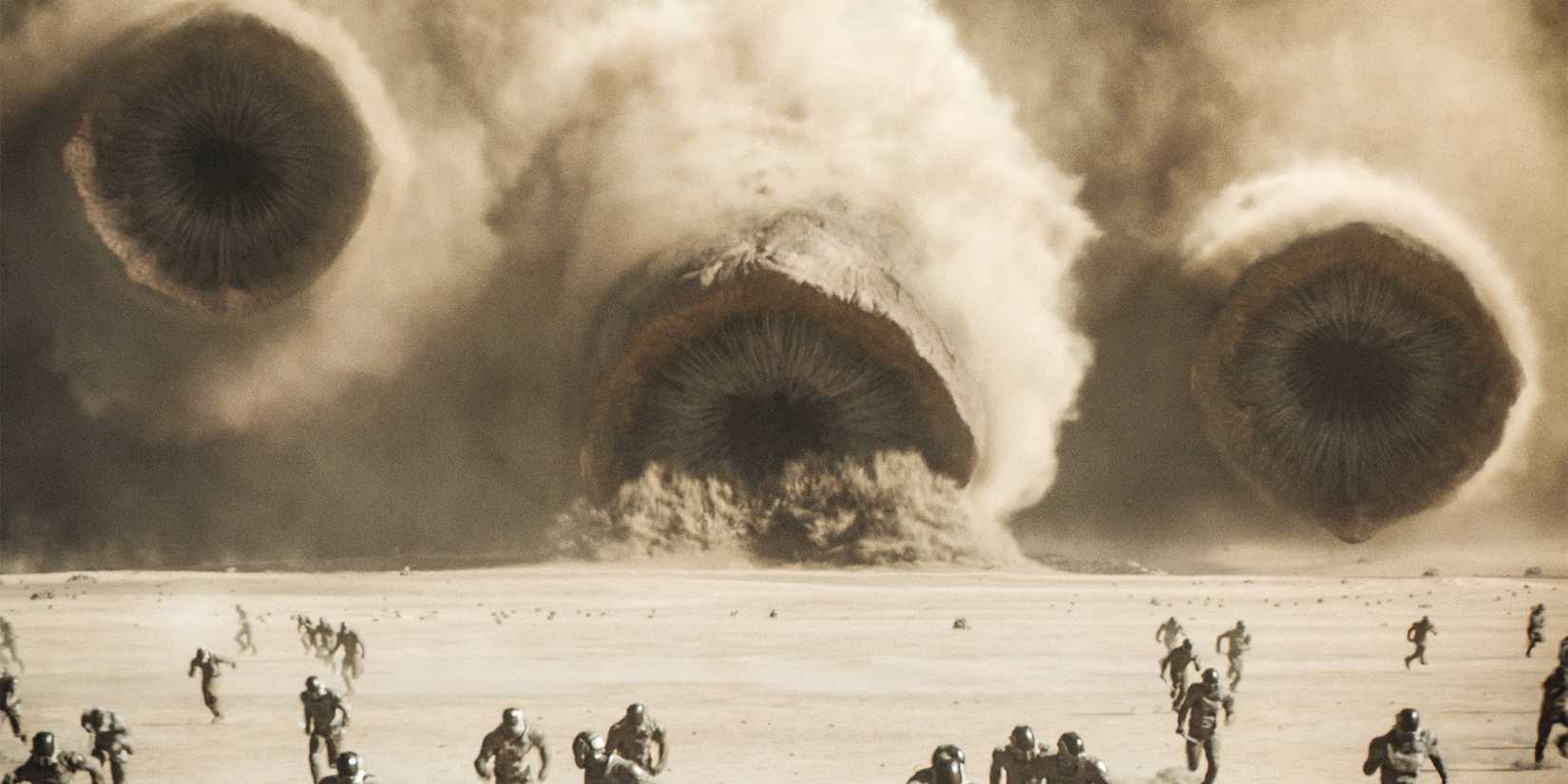 Image via Warner Bros. Pictures
“Bless the Maker and His water. Bless the coming and going of Him.” In Dune: Part Two, Paul Atreides (Timothée Chalamet) continues his transformation from displaced noble to prophetic leader among the desert-dwelling Fremen. Along the way, he faces several sandworms, colossal subterranean creatures that dominate the desert, only really hinted at in the first movie. These behemoths aren't simply monsters but fundamental components of Arrakis’s ecology, responsible for creating the precious spice that powers interstellar civilization.
Denis Villeneuve gives them a relatively restrained and plausible design, avoiding too much ornamentation. They are almost elemental: a gigantic cylindrical body, armored rings, and a circular mouth filled with endless crystalline teeth. The sound design is crucial to their impact as well. Before the worms even appear, the earth begins to groan and vibrate. The deep subterranean rumble creates dread long before viewers see anything.
4 Heptapods – 'Arrival' (2016)
 Image via Paramount Pictures
“If you could see your whole life from start to finish, would you change things?” Villeneuve strikes again. This time, he takes a more philosophical approach to alien sci-fi, telling the story of linguist Louise Banks (Amy Adams), recruited to decipher the intentions of the extraterrestrial visitors. She slowly learns to communicate with the Heptapods, towering seven-limbed beings whose language and perception of time challenge human understanding.
Their design avoids the sleek humanoid aesthetic common in sci-fi and instead goes for something organic, ambiguous, and more than a little unsettling. They look ancient and intelligent without resembling recognizable Earth life too closely. Nevertheless, it's their language that is the most creative aspect of the creatures. The circular, ink-like symbols they produce are not merely translation devices or cool visuals; they reflect an entirely different understanding of causality. The Heptapods perceive past, present, and future simultaneously.
3 Predator – 'Predator' (1987)
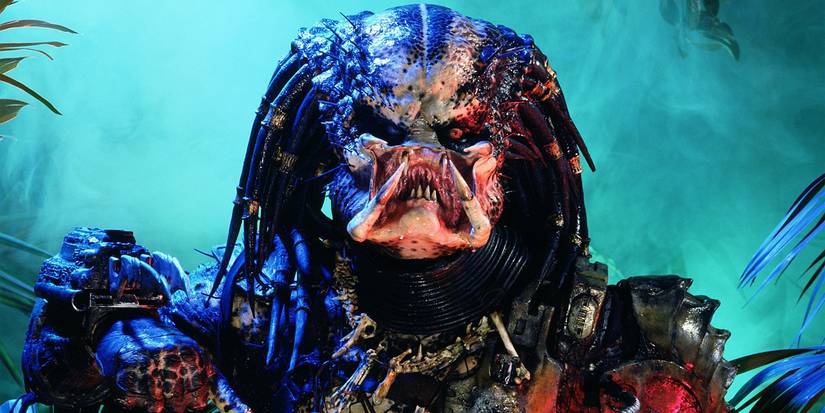 Image via 20th Century Studios
“I ain’t got time to bleed.” In Predator, an elite group of commandos led by Dutch (Arnold Schwarzenneger) travels into a Central American jungle on a rescue mission, only to discover they are being hunted by an invisible extraterrestrial warrior. The Predator stalks its prey using advanced weapons and cloaking devices, though it also operates with a strange, brutal code of honor. Fast, smart, strong, and relentless, it's the epitome of the top of the food chain.
The creature’s tech is still incredibly cool nearly forty years later. The thermal vision, shoulder cannon, voice mimicry, and self-destruct device have all been widely imitated. Its aesthetic is immediately striking as well. The dreadlocks, mandibles, bulging muscles, and glowing eyes create one of the most instantly recognizable silhouettes in sci-fi history. The reveal of the unmasked face is especially iconic, as is Dutch's apt response to it: "You're one ugly motherf—r!"
2 The Thing – 'The Thing' (1982)
 Image via Universal Pictures
“I know I’m human. And if you were all these things, then you’d just attack me right now.” This cold, grim sci-fi horror takes place at a remote Antarctic research station where scientists discover a shape-shifting alien capable of perfectly imitating any organism it infects. Paranoia spreads among the isolated crew as they realize the creature could be anyone among them. The threat is as much psychological as physical, with the characters at risk of turning on one another out of sheer terror.
The Thing constantly mutates into grotesque biological nightmares: splitting heads, spider limbs, distorted human faces, erupting jaws, and writhing masses of flesh. All these disturbing creations come courtesy of effects legend Rob Bottin, who makes them all feel tactile and disgusting in a way CGI just can't replicate. Flesh stretches, tears, and bursts apart with a horrifying, physical texture.
1 Xenomorph – 'Alien' (1979)
 Image via 20th Century Studios
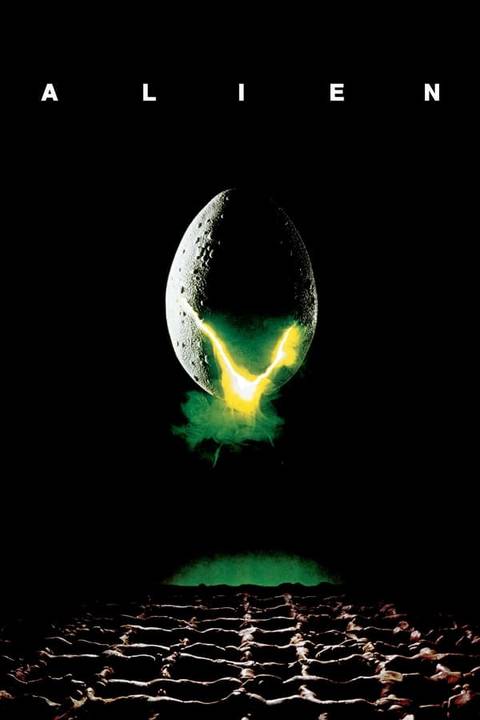
“In space no one can hear you scream.” A spaceship crew unknowingly brings a parasitic alien aboard. The creature evolves rapidly through multiple stages, from facehugger to chestburster to full-grown hunter, each more twisted and frightening than the last. Created by artist H. R. Giger, the creature’s biomechanical appearance is truly the stuff of nightmares, with its long cranium, eyeless face, barbed tail, and second mouth attached to its tongue.
Simply put, the xenomorph is the best monster design in all of sci-fi. The Xenomorph is an apex predator, with lightning reflexes, acid blood, and the strength to crumple up androids like they were soda cans. Ridley Scott wisely frames it in darkness, letting suggestion and the viewer's imagination do most of the heavy lifting. Then James Cameron builds ably on that foundation with the sequel, throwing the towering, crested alien queen into the mix. All these decades later, these designs are still compelling.
Alien
Release Date June 22, 1979


 English (US) ·