
 4 hours ago
30
4 hours ago
30
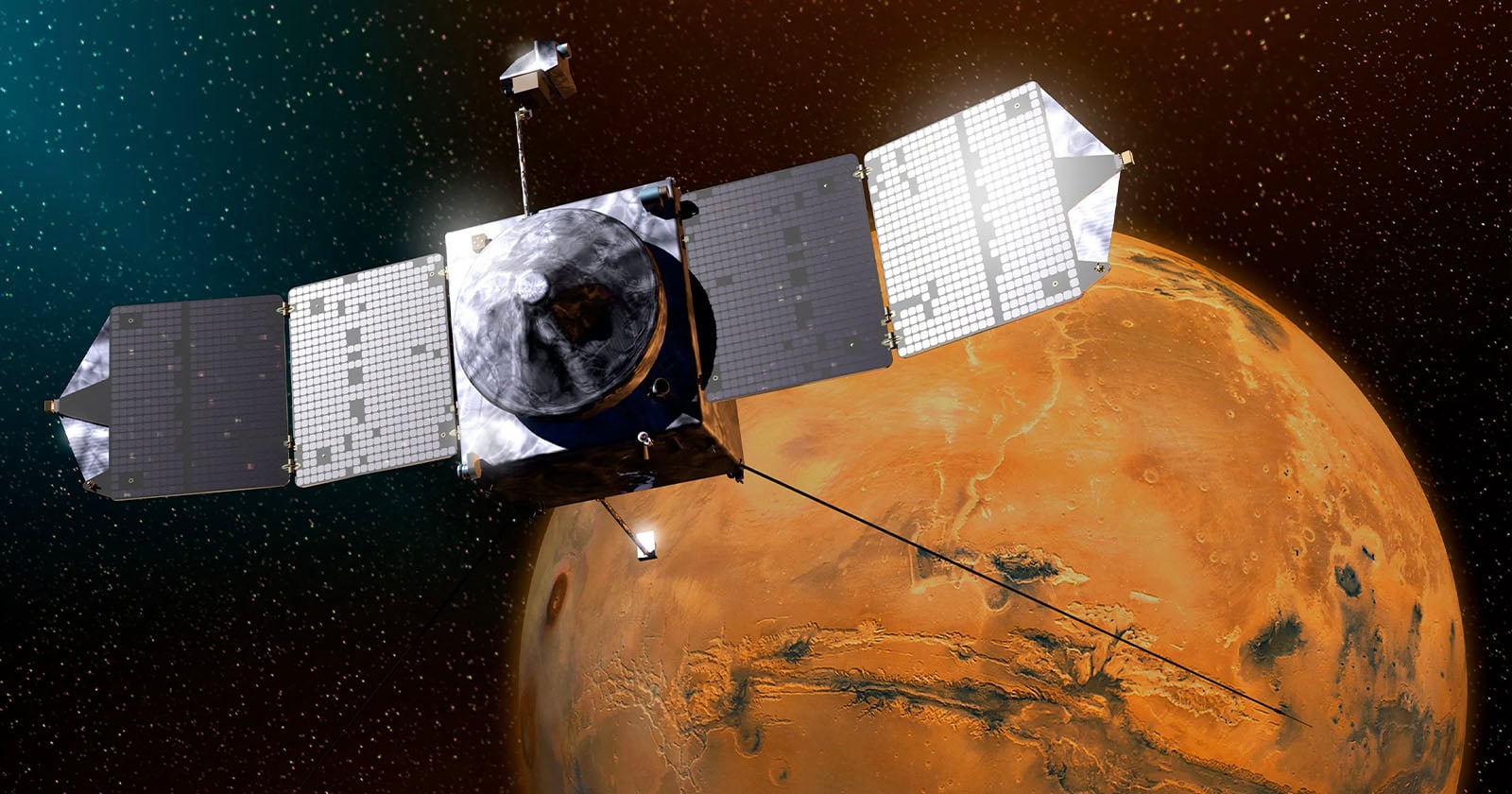 Artist’s concept of NASA’s MAVEN spacecraft at Mars. The spacecraft entered orbit around the planet in 2014 and has completed over 11 years of observing the Martian upper atmosphere, ionosphere, and interactions with the Sun and solar wind to explore the loss of the Red Planet’s atmosphere to space.
NASA has announced the death of one of its Mars imaging probes, MAVEN, after losing contact with the spacecraft at the end of last year.
Despite repeated attempts to reestablish communication with MAVEN, it has failed to respond. After conducting a review, NASA determined the probe is not recoverable and is no longer capable of performing its science and data relay mission.
According to Science Alert, data indicates that after passing behind Mars in December, MAVEN went into a fast spin, which drained the onboard batteries and altered its orbit.
MAVEN is expected to remain in the Red Planet’s orbit for another 50 to 100 years before ultimately crashing into the Martian surface.
The spacecraft’s principal investigator, Shannon Curry, says the MAVEN team “really experienced the loss of a loved one with the end of the mission here,” calling the probe the “Best. Mars. Mission. Ever.” during a press conference yesterday (Monday).
Curry pointed to MAVEN’s accomplishments, calling it “the best observer of atmospheric escape anywhere in the solar system.”
“The MAVEN mission has truly advanced our understanding of the Martian atmosphere and evolution. This dataset has had a tremendous impact on the field,” says Curry. “Our science team is exceptionally proud of all of these amazing discoveries.”
“The science MAVEN has given us is key to informing what kind of radiation protection and safety measures we must take before sending humans to Mars,” adds Louise Prockter, director of the Planetary Science Division at NASA Headquarters in Washington. “The data collected from MAVEN will continue to provide valuable insight into Mars for decades to come.”
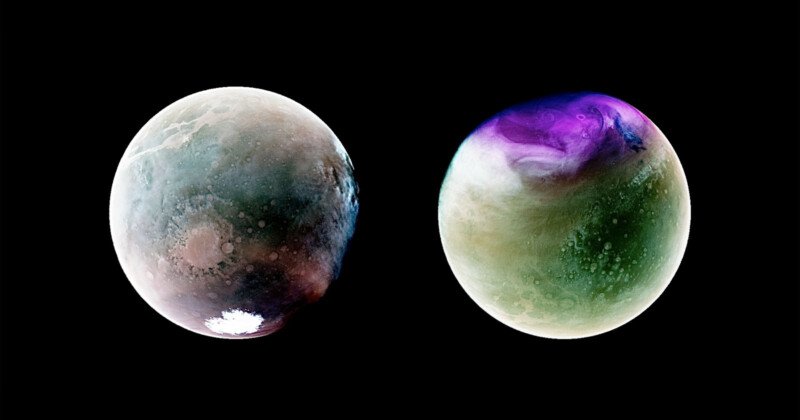 MAVEN captured some ultraviolet images of the Red Planet taken at two different points along its orbit around the Sun.
Launched in 2013 and in orbit since 2014, MAVEN was originally designed for a two-year mission to study Mars’ upper atmosphere and its interaction with the solar wind. The spacecraft exceeded its primary objectives and continued operating for more than a decade, providing data on how Mars lost much of its atmosphere over billions of years. It has also served as a communications relay for surface missions for the Curiosity and Perseverance rovers.
Image credits: NASA/Goddard/University of Colorado/Laboratory for Atmospheric and Space Physics
PetaPixel articles may include affiliate links; if you buy something through such a link, PetaPixel may earn a commission.
Love PetaPixel? Go Premium.
PetaPixel is the world’s largest independent photography publication and we’re only able to continue our work with your help. Become a PetaPixel Member now and support our mission to bring you regular, high-quality reviews, features, news, and more.
- Remove banner ads
- Gain access to full-resolution RAW and JPEG Sample Galleries
- Get 5% off orders from KEH.com
- Get a $15 coupon to spend at Moment
- Get 10% off lighting equipment from FJ Westcott
- Get 10% off film development, scanning, and printing from Blue Moon Camera and Machine







 English (US) ·