
 2 hours ago
10
2 hours ago
10

Published Jul 7, 2026, 8:27 AM EDT
Asha Sharma doles out the hard truths and the hard cuts — and is clear about who she thinks is to blame (not her)
 Image: Double Fine Productions / Xbox Game Studios
It's not often, as someone who writes analysis of the mysterious workings of video game companies, that a CEO does your job for you. It's more common to find yourself reading the tea leaves of their gnomic LinkedIn-speak and translating it, or attempting to translate it, into words and concepts that make sense to normal people who live in the real world.
Imagine my surprise on Monday, then, when Xbox CEO Asha Sharma published this devastating summary of what Microsoft's gaming arm has been doing for the past five to eight years. It displays what I can only describe as admirable clarity and brevity, as well as a bracing disregard for the feelings of any of her predecessors:
Our business today is not healthy. We are operating at margins that are 3-10x lower than comparable platform and publishing businesses. We entered Gen 9 with a smaller install base and a higher cost structure. To grow, we bet on Game Pass, multi-platform, and a broader portfolio of content. While those businesses have created meaningful value, they did not grow at the pace we expected. As that happened, our core business weakened, and we added more teams, more investment, and more time, hoping for a better outcome. And now the industry is facing the most severe hardware crisis in its history. We must reset XBOX.
I don't have much to add to that — other than to note that "hoping for a better outcome" is an exquisitely dry phrase, a dagger in Phil Spencer's heart. Poor guy. He always seemed quite nice, but looking at the devastation his tenure has wrought, I guess he deserves it.
So, yeah, to summarize Sharma's near-perfect summary: Xbox started this console generation in a bad place, made bad bets, things got worse, and it doubled down to an absurd degree, throwing away tens of billions of dollars of good money while blindly hoping for the best. This is how we end up with 3,200 livelihoods destroyed and five game studios leaving the fold.
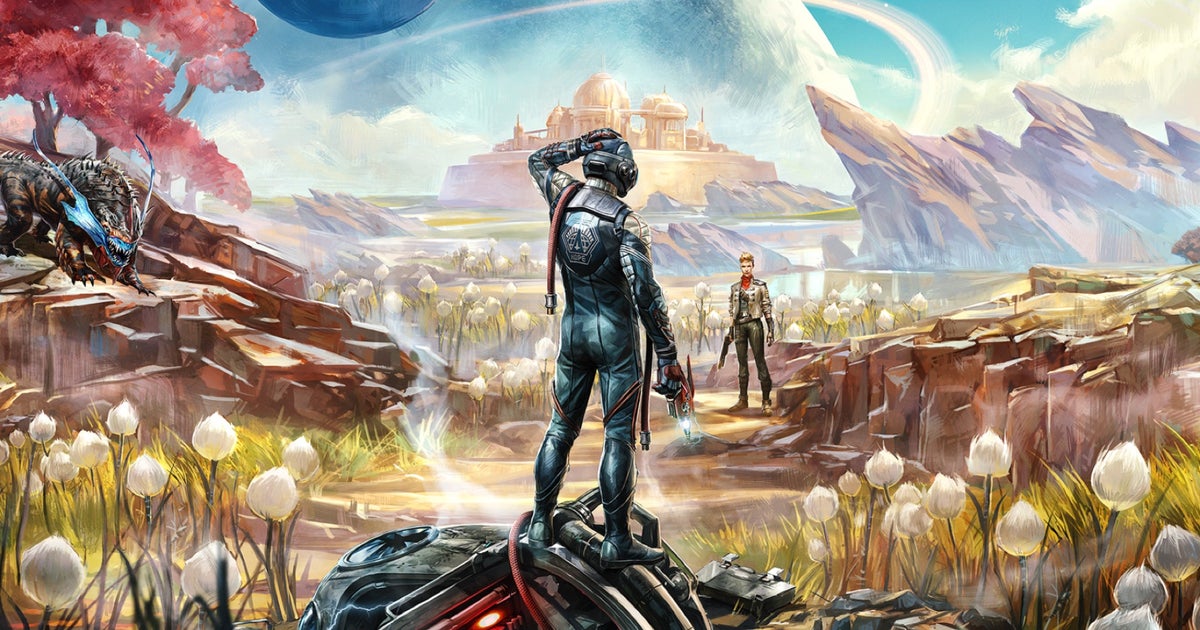
As devastating as all this is, it's important to recognize that Sharma has found a way not to shutter Compulsion Games, Double Fine, Undead Labs, and Ninja Theory. (Arkane's fate has yet to be determined.) Tough times, and more layoffs, probably lie ahead for these studios as they adjust to life as indies or under new owners. But their studio cultures, institutional knowledge, creative traditions, and unreleased projects have not been laid to waste, as has happened to so many other developers over the years, like Lionhead or Sony's Japan Studio. That really isn't nothing, and I am sure this wasn't the cheapest or easiest route for Xbox to take. Fair play.
 Image: Ninja Theory/Xbox Game Studios
In another unexpectedly candid (and damning of Spencer) section, Sharma admitted that "we have also learned that we are not the best home for every type of studio." No kidding. Whether Xbox is a good home for any type of studio remains an open question. It would be far too generous to portray what has happened to Compulsion, Double Fine, Undead Labs, and Ninja Theory as an act of kindness. But there is a real possibility that some or even all of them will be better off in the long term.
Sharma's overall message is clear: Xbox is simply too big, and has acquired too many parts that don't really make sense. The philosophy of the Spencer era — backed, it bears repeating, by the urging and deep pockets of Microsoft CEO Satya Nadella — was that scale was the answer. Consoles not competing? Think beyond them, go multiplatform. Game Pass not doing Netflix numbers? Buy Call of Duty. Be on mobile. Get into MMOs. Minecraft worked, so why not try to have five Minecrafts? Grow so much you become, in Sharma's notable choice of word, "inevitable." (Thanos would approve.)
In the heady days of 2018's Fortnite mania, or after the game industry's pandemic-fueled fast-forward in 2020, it was possible to believe this might work. I believed it for a while. I was wrong. Xbox wasn't too big to fail. It was too big not to. The world's biggest game publisher was assembled too quickly on a weak foundation and without a clear mission statement. It was bound to topple over.
Over the past weeks, we all braced for Double Fine and the other studios to suffer the tragic denouement of this story. In fact, their fate is the closest thing this sorry affair has to good news. Their hundreds of staff are not included in the 1,600 "role eliminations" on Monday or the 3,200 over the course of the next 12 months. Sharma's blunt honesty about the state of the business did not extend to a thorough accounting of where these layoffs would hit, other than everywhere. Activision, Bethesda, Blizzard, King, Mojang, and the remaining Xbox studios will all suffer "reductions" to varying degrees.
 Photo: Getty Images for King Games
King, which makes Candy Crush, and Mojang, which makes Minecraft, will probably get away relatively lightly, since Sharma singles them out for the size and diversity of their audiences and has carved them out to report to her directly. At Xbox, the reward for success is that you no longer have to work for chief content officer Matt Booty. Congratulations to them. I bet Blizzard, for one, is hoping for a similar fate. I guess that's one way to motivate your employees.
It's all very vague. According to Bloomberg's Jason Schreier, studios like id Software and ZeniMax Online Studios (The Elder Scrolls Online) are getting hit with massive layoffs now, while Blizzard staff will have to wait to see how they're affected. The next year will be torturous for anyone working at any of these developers.
But no, even this is not all the bad news. Sharma talks grandly of increasing efficiency in Xbox's central platform operation and reducing management layers. Sounds great. But she also notes darkly that "our platform teams are 40% larger than they were at the start of this generation, even as our player base and playtime have declined." You don't say that unless you're planning to make them at least 40% smaller again to reduce "complexity" and speed up "decisions."
Who cares about middle managers at Xbox? Well, they can't all be middle managers, and Xbox's platform team is where Spencer did some of his very best work, pressuring rivals to raise standards on issues like backward compatibility and accessibility, backed with real policy and engineering muscle. If you think any of that inheritance will be preserved, I'm afraid you're mistaken. One of Sharma's biggest challenges is figuring out what level to set Game Pass at, between "all the games, amazing value, completely unsustainable" and "PlayStation Plus, take it or leave it." With less budget and less staff, it'll probably be the latter.
Beyond the incalculable human cost of this "reset" is a tale as old as time: corporate hubris, growth above everything, execs playing rashly with things they don't fully understand. Sharma is good at telling it straight, but she's just the pain sponge doling out hard truths on behalf of a system that's incapable of caring. The way she's laying it out, this had to happen. But really, none of this needed to happen at all.





 English (US) ·