
 Image via Warner Bros.

Published Feb 9, 2026, 3:00 PM EST
Therese Lacson is a Senior TV Editor who has been with Collider since 2021. She got started in this business over ten years ago working primarily as an interviewer and critic. At Collider, she works closely with the features team to support the writers and also ideates and develops content daily. She has covered major industry events including Cannes Film Festival, Sundance Film Festival, SXSW, Toronto International Film Festival, and San Diego Comic-Con. Although she reviews and covers both film and television, her focus is in television and her expertise is in fantasy and sci-fi genre shows. Her favorite shows to cover include House of the Dragon, Bridgerton, Fallout, 9-1-1, and Rivals.
Sign in to your Collider account
One of the most iconic characters in English literature has to be Emily Brontë's Heathcliff from her novel Wuthering Heights. A dark figure who is cruel, bitter, and abusive, the only thing redemptive about this villain is his deep and unshakable love for Catherine Earnshaw, the young girl he grew up with. Though often looked back on as a romantic character, Heathcliff in Wuthering Heights is a wild figure, one who embodies wickedness. This is not a love story. It's a Gothic ghost story about revenge, incorporating themes of class and race, set on the wild moors of Yorkshire. Knowing all of this, going into Emerald Fennell's Wuthering Heights proves a jarring, vapid, and ultimately insulting experience.
Fennell has made no bones about how her "interpretation" of Brontë's novel is based on her feelings for the book after reading it at 14. However, after cutting away nearly all the story's characters and only adapting about half of the book, I have to wonder if Fennell has ever actually read the novel she's based her passion project on. Because if you strip this movie of its title and change the characters' names, this isn't anything close to Brontë's story.
Emerald Fennell Fails on Every Level in Adapting Emily Brontë's 'Wuthering Heights'
The first thing that stands out in Wuthering Heights isn't the fact that its most important character is played not by a person of color but by a white Australian man; it's that Fennell has taken a knife and gutted out some of the most pivotal characters of the book, rewriting the story to the point where it barely resembles the source at all.
Wuthering Heights, the novel, hinges heavily on Cathy's brother Hindley. As the favored child, Hindley grows jealous and bitter when his father brings home a young orphan from his trip to Liverpool to live with them as an adopted sibling. Named after Mr. Earnshaw's son, who died in childhood, Heathcliff is doted on by his adoptive father, making both Cathy and Hindley deeply jealous and sparking the story's primary conflict. Heathcliff, as an orphan boy with dark skin, has been raised in status monumentally thanks to Mr. Earnshaw, and Hindley deeply resents him for it, resorting to abuse that ultimately makes Heathcliff's life a living hell once Mr. Earnshaw dies. This inspires Heathcliff to seek lifelong vengeance against Hindley, which extends well past Hindley's life and even to their children in the next generation.
Recounting the beginning of the book is a necessity because Fennell completely erases Hindley from existence in her film, thereby erasing all the motivation that her Heathcliff (Jacob Elordi) has to seek vengeance and become the man he is in the book. Instead, her script gives Mr. Earnshaw (Martin Clunes) many of Hindley's traits. He's abusive, a drunk, and sees Heathcliff more like a charity case than his own son. The problem here is that this also robs the character of one of his most wholesome relationships with his father. Instead, the film focuses on a young Heathcliff (Owen Cooper) and a young Cathy Earnshaw (Charlotte Mellington), instantly forming a bond and finding a kinship in the shadows of Mr. Earnshaw's rage.

Related
The 10 Greatest 'Wuthering Heights' Adaptations, Ranked
Heathcliff and Cathy wander the silver screen eternally
Rather than this story being one about generational trauma, which is finally dispelled when the children of these characters find happiness and love together, those descendants from the book are also erased — no Cathy Linton, no Linton Heathcliff, and, saddest of all, no Hareton Earnshaw. If you're unfamiliar with the novel, this narrative takes up almost half of the book. By robbing the story of these characters, this film can no longer be called Wuthering Heights.
Even worse, characters like Nelly (Hong Chau), Joseph (Ewan Mitchell), and Isabella Linton (Alison Oliver) are completely unrecognizable. Nelly goes from a well-meaning servant and quiet observer to a stifled bastard daughter of a lord who seems to harbor deep hate for Cathy. Joseph is transformed from a religiously violent and evil man into a servant who likes a bit of BDSM and ultimately is just sort of... there. Worst of all, Isabella turns from a naive, innocent without an ounce of cruelty, who is tortured by Heathcliff after their marriage, into a kinky, obsessive, and mean person. To list the amount of betrayals this film has inflicted on the source material would involve recounting the movie scene by scene, but this is only the tip of the iceberg.
Emerald Fennell's 'Wuthering Heights' Is an Insult to Heathcliff and Cathy
 Image via Warner Bros.
The most corrupted part of Fennell's Wuthering Heights lies with its core characters. Cathy is, first and foremost, ill-cast with Margot Robbie in the role. Robbie is too old to play the character, and Cathy is less a wild child with a natural arrogance and defiance and more a whiny rich girl who worries about ruining her skirts if she's placed on a tree branch out on the moors. Rather than giving us tension between Cathy and Heathcliff, the film instantly pairs them together, heavy-handed in its reassurance that, at every turn, they are soulmates. This isn't a toxic love; this is two star-crossed lovers separated by circumstance and a poorly used miscommunication trope.
Robbie gives a completely unremarkable performance as Cathy, partially because a woman in her twenties might get away with being a brat, but a woman who appears in her mid-thirties is given a lot less slack on that front. The prime example is Oliver's Isabella, who is also a quirky brat, given a pass because she is young and naive — but this version of Cathy is also a poor match for Heathcliff, played by a dull Elordi, who turns the character into a defanged and besotted schoolboy. The two inanely repeat "I love you's" to each other for about half of the movie and quickly consummate their relationship, leading to some truly exhausting sex scenes that overstay their welcome.
All of this gives the impression that this isn't Heathcliff and Cathy, but Fennell's imagined romantic version of her own fantasies. Obviously, when a filmmaker takes on an adaptation, it's their prerogative to decide how loyal they wish to be to the source material. Stories that follow the source to the letter might be awful, while adaptations that go far off-book might end up being masterpieces. Many reactions have compared this film to Baz Luhrmann's gorgeous Romeo + Juliet, and while the stylistic decisions might reflect Luhrmann's use of color and modern fashion, his movie follows Shakespeare's play to the letter. Wuthering Heights is a botched mismatch of cobbled-together scenes more than anything else. The point of an adaptation is to keep the soul of the source alive. Scenes can be changed, characters can be combined or removed, but the heart of the story must remain; Wuthering Heights easily proves it is lacking both heart and soul.
Emerald Fennell's 'Wuthering Heights' Is Visually Captivating, but Narratively Shallow
Fennell, who has been praised plenty in the past for her vibrant visual aesthetic in Saltburn and Promising Young Woman, brings that same palette to Wuthering Heights. While the cotton-candy colors of Promising Young Woman were a stark contrast to its dark subject matter, and Saltburn indulged in extravagance thanks to the wealth and privilege of its characters, Wuthering Heights is stylistically bold for no reason. If you're looking for a visual feast that bravely utilizes color alongside a story actually worth chewing on, watch Guillermo del Toro's Crimson Peak instead.
Atmospherically, Fennell's film tries to imitate that style, but the choices made in production design and costuming are baffling. It's a fever dream of a film, and not in a good way. Excessive use of non-organic textiles like polyester and latex makes the film look cheap. This must have been a creative decision from Fennell, as costume designer Jacqueline Durran has been no stranger to accurate and beautiful period costumes (having won Oscars for Anna Karenina and Little Women). Similarly, production designer Suzie Davis, who has worked on projects like Conclave and Mr. Turner, turns the home of Wuthering Heights into rubble while transforming Thrushcross Grange into a clownish carnival.

Related
Don't get me wrong, Wuthering Heights is still a beautiful film. Linus Sandgren's cinematography means every scene pops off the screen. Similarly, Anthony Willis' sweeping score accents the wild moors perfectly (though fewer compliments can be lauded to Charli xcx's contribution). But it's a film that's ultimately hollow, with a bizarre tone that toes the line between surreal and serious. There are purposefully comedic moments that make the story feel almost like a parody, leaning into absurdism, as well as scenes soaked in serious melodrama that weigh everything down. Couple that with the Forever 21 fashion, funhouse sets, and heavy-handed homages to Gone With the Wind, and it's just further proof that this is a soulless adaptation best reserved for Tumblr than the silver screen.
Emerald Fennell (Poorly) Made a Harlequin Romance, Not a Literary Classic
 Image via Warner Bros.
While there's a laundry list of mistakes that Fennell makes throughout the film, the largest takeaway is that this is closer to an original story than anything that Emily Brontë ever wrote. Replacing complexity and nuance with melodrama might mask the film enough for those unfamiliar with the book to take it as a romance. Given that it lacks the true substance of the original story — a deep understanding of the racial, societal, and class divides between Heathcliff and the other characters — Wuthering Heights is a waste of two hours of your time.
Fennell has said multiple times in interviews that this is her interpretation of the book, something she's wanted to make for years, but I'd argue there's probably better-written Wuthering Heights fanfiction on Archive of Our Own than what's been produced here. Fennell has prided herself on including original dialogue from Brontë's novel, but without the meaningful context, the scenes work as well as putting lipstick on a pig. Analyzing the film on its own, completely disregarding the source, reveals a story that might have been found on the pages of a Harlequin romance novel — but if you think I'm disparaging these other forms of media, this comparison is far more insulting to romance novels and fanfiction than it is to this film.
What makes the original Wuthering Heights so powerful is the dizzying story at its core. The Earnshaws and Lintons have a complicated family tree, and Heathcliff comes in like a wrecking ball to blow everything up. On one hand, we want to believe that Heathcliff can change from his wicked ways with enough love from Cathy, but on the other hand, his actions are so cruel that it feels like Brontë is pushing us to the very brink of what is acceptable before ultimately redeeming him in his final moments. Emily Brontë's novel is about characters who are hateful and pitiable but still full of enough charm and complexity that we are desperate to learn their full, messy tale. Emerald Fennell's film is merely telling a shallow story about two people overcoming all obstacles to fall in love — not necessarily awful on paper, but it's an adaptation that feels like a 14-year-old skimmed the book and jumped to her own conclusions without any true understanding of the novel.
Wuthering Heights debuts in theaters on February 13.
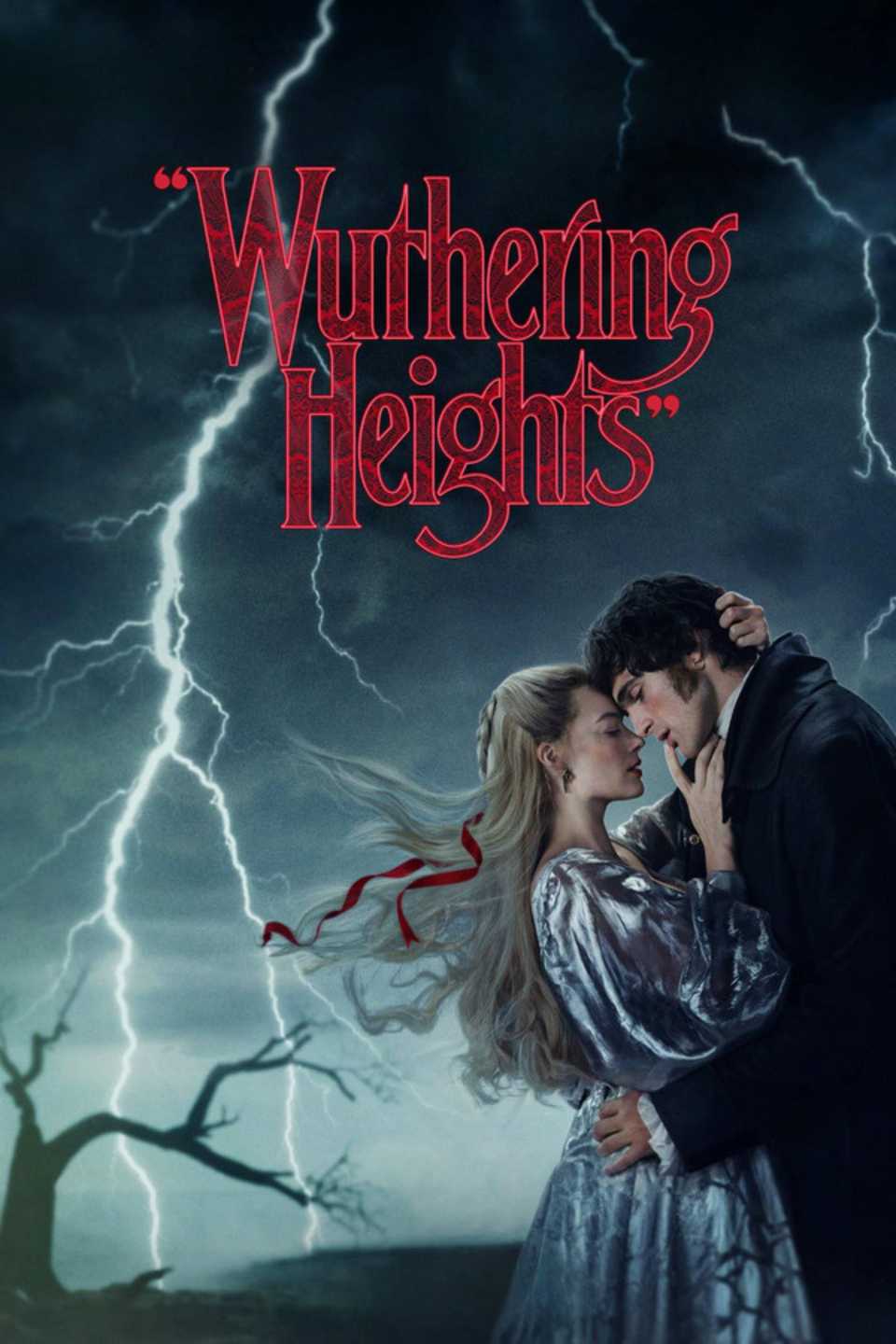
Release Date February 13, 2026
Runtime 136 Minutes
Director Emerald Fennell
Writers Emerald Fennell, Emily Brontë
Pros & Cons
- Fennell's interpretation of the source cuts the book in half, erases the majority of the supporting characters, and completely wipes away the characterisation of its leads.
- Set design and costuming in particular are colorful and eye-catching but ultimately jarring to the setting and cheap-looking.
- Robbie and Elordi are both poorly cast in the leading roles, delivering underwhelming performances.

 English (US) ·