Batman/Wonder Woman: Truth Is Weirdly Sexist
Catwoman’s role in Batman/Wonder Woman: Truth is disappointing, but what is worse is that she is basically boiled down to being a scorned ex-girlfriend. It is explicitly stated in-dialogue that the reason for Catwoman’s petty, spiteful “tone” toward Batman is because he broke up with her, and this is further confirmed with her confessing that while wielding Wonder Woman’s Lasso of Truth.
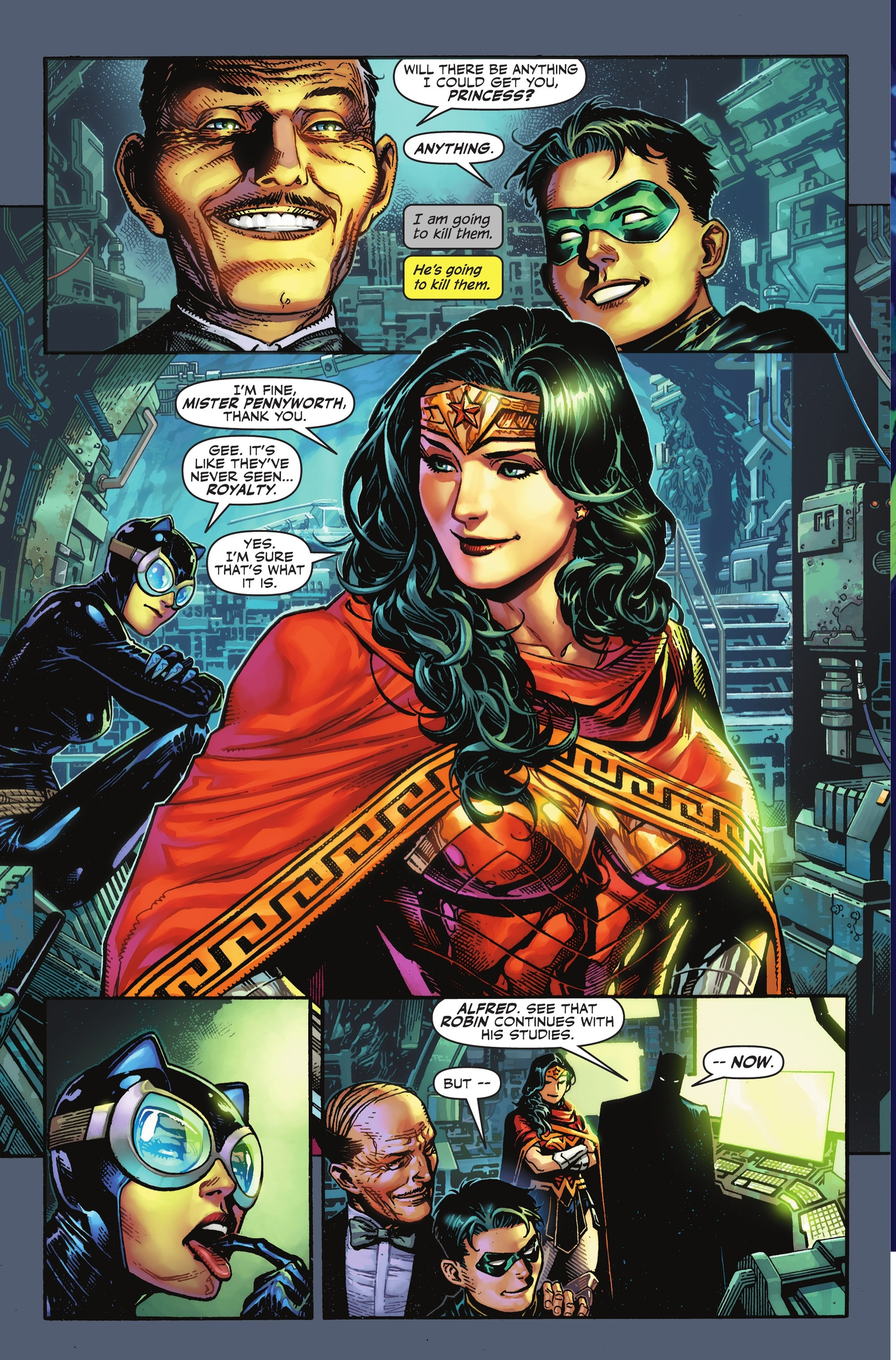
However, the most egregious and significant moment of sexism in Batman/Wonder Woman: Truth occurs when Wonder Woman, Batman, and Catwoman go to the Batcave to track the lasso’s whereabouts via its energy signature. Here, both Alfred Pennyworth and Robin gawk over Wonder Woman, who knows full well that their wide-grinned admiration and pledges of servitude toward her are not due to her being “royalty.”
It is so awkward, in fact, that Batman is forced to shoo them away like they are children with a crush on the playground during recess, and exacerbated when Alfred and Robin creepily stare at Wonder Woman as they leave. Moreover, the dialogue Wonder Woman and Catwoman then exchange is equally out of touch and arresting:
“What is it with men and their toys?”
“I know, right?”
“Do not think for a second I meant this as any sort of female bonding.”
“Mrrow.”
It is true that Batman/Wonder Woman: Truth is representative of an older era, but indulging in dialogue such as this reduces characters to antiquated ‘battle of the sexes’ gender stereotypes. It is a bewildering sequence to include in the book, nonetheless, when Batman/Wonder Woman: Truth’s elementary plot would not be affected at all if this brief, filler trip to the Batcave had been omitted wholly.
Joker And Harley Quinn Have Come A Long Way
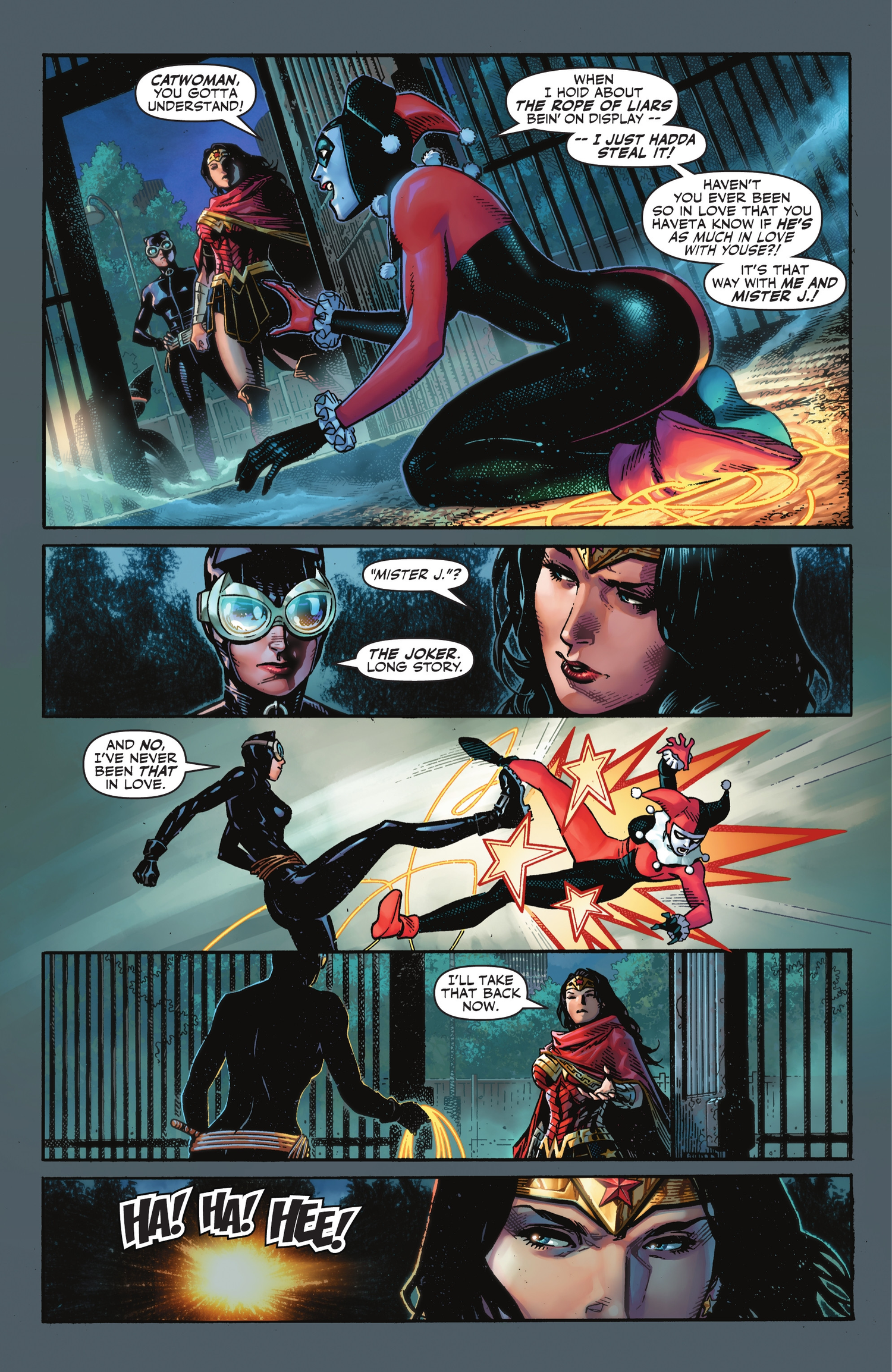
It may be quite alarming to see in a comic nowadays, considering how wildly different Harley is in the modern landscape and how much development she has been given in order to distance herself from Joker, but Batman/Wonder Woman: Truth depicts Joker and Harley Quinn’s relationship as it was, as this comic takes place not long after the events of Batman: Hush. This Harley, who wears a red-and-black harlequin costume, is tragically manipulated by Joker and devoted to him, thus failing to overcome his incessant cruelty and abuse—her character’s defining trait since she debuted in Batman: The Animated Series.
Today, Joker and Harley are unrecognizable husks of who they were more than two decades ago. Joker has apparently had his emotions successfully regulated by Dr. Annika Zeller’s Crown of Storms and become sane, for instance, while Harley has been reformed somewhat and running around as an anti-hero (she ironically lacks a clear identity now, regardless of how ubiquitous she has been in DC media, but at least her tethers to Joker and their toxic relationship have since been severed).
Despite how jarring it may be after all that has happened in the last 23-or-so years, this is an accurate and nostalgic portrayal of what Joker and Harley’s relationship looked like. Granted, we do not even get to see Joker and Harley interact with one another in Batman/Wonder Woman: Truth. Rather, how Wonder Woman and Catwoman are portrayed seems far less nostalgic and more needlessly degrading in the incredibly short span of this story.
Wonder Woman Deserves Better In Her Own Comic
Batman/Wonder Woman: Truth is a crossover comic featuring both titular characters, sure, but it is largely a Batman story (complete with his mythology’s batch of rogues, supporting characters, and locations), while Wonder Woman is merely a fish out of water and in service to Batman’s character arc. Essentially, Princess Diana of Themyscira is there to make a public appearance in a Wonder Woman-themed charity exhibition and talk an emotionally walled-off Batman through his troubled love life.
It also introduces a conflicting piece of character assassination for Wonder Woman and the Amazons, implying that she won the right to be a representative of Themyscira and leave the island after bloodying and/or killing her sisters in a gladiatorial contest.
It is interesting because Batman/Wonder Woman: Truth gets away with Bruce Wayne being flirtatious toward Diana at the Wonder Woman exhibition when that behavior is understandably in-character for his billionaire socialite persona. There is not an excuse for Alfred and Robin ogling her, though, and Catwoman and Batman’s relationship woes lack the number of panels needed to be fleshed out sufficiently and are no more compelling than Harley and Joker’s poorly thought-out and swiftly thwarted plans to steal Wonder Woman’s lasso.
Therefore, the lasso would arguably be more important to the narrative than Wonder Woman is, if not for Wonder Woman being Batman’s emotional backbone and ending the issue by telling him he is worthy of love. These beats truly are special in the beginning and end of the book, but are tainted by Wonder Woman being portrayed via a male gaze and not playing a bigger role otherwise in Batman/Wonder Woman: Truth.
Batman/Wonder Woman: Truth #1 is out now.
Created By
William Moulton Marston, H. G. Peter
First Appearance
All Star Comics
Alias
Diana Prince
Alliance
Justice League, Justice Society of America, Justice League Dark, Justice League International
Race
Amazon-Olympian
Wonder Woman is the superhero identity of Diana, Princess of the Amazons. Created on the island of Themyscira, Wonder Woman is a super-powered demi-goddess with extreme physical strength who utilizes magical gifts (like her famous Lasso of Truth) to defeat her foes. As mighty as her fellow heroes Superman and the Justice League, Wonder Woman is unmatched in her compassion and virtue.






 English (US) ·