
Serving tech enthusiasts for over 25 years.
TechSpot means tech analysis and advice you can trust.
WTF?! You might assume that Microsoft has learned its lessons when it comes to pushing ads into Windows, but you'd be wrong. The Redmond firm is back to its old tricks, and this time it isn't even an ad for its own services: it's for a Harry Potter movie collection, which was inserted into the Bing Wallpaper app.
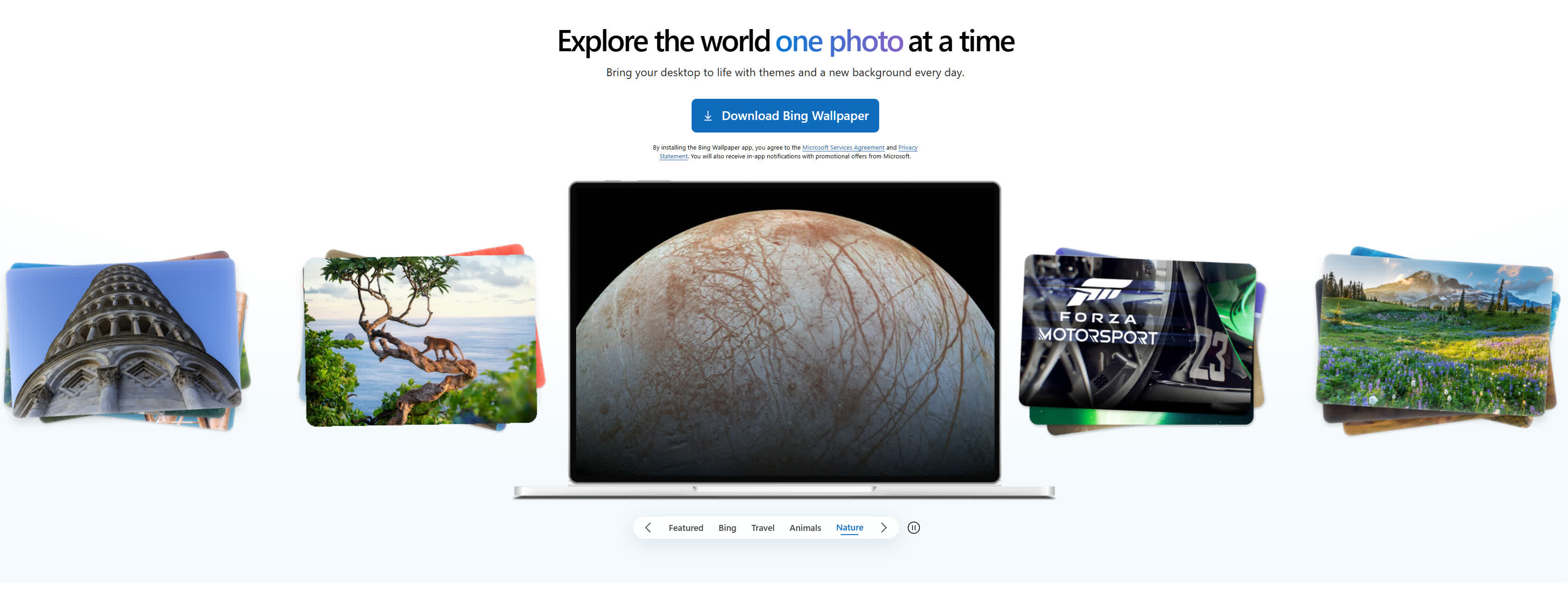
For those unfamiliar, the optional Bing Wallpaper app gives users a new wallpaper each day and lets them browse previous Bing images and themed collections. It usually consists of nature photos, animals, space, gaming, sports, and seasonal wallpapers.
But some users got an unwelcome surprise recently when they turned on their PCs and found an ad for Harry Potter/Fantastic Beasts 11-film collection as their wallpaper. It included a simple graphic of Hogwarts Castle and an "available now" message.
One user on the Thurrott.com forum was so shocked at the ad that they briefly thought that they'd installed some adware.
"Why in the world is my Bing wallpaper today an advertisement for a film collection, not a beautiful landscape or nature photo," writes another user on the Microsoft Learn site. "Will there be more advertisements, and if so, must I uninstall Bing wallpaper now to prevent them, or is there a way to opt out?"
Someone on Reddit put it more succinctly: "Usually it's animals, landscapes, or architecture," they said. "Today it's sh*t."
It's not just the fact that ads are being shoehorned into the wallpaper app; for some people, the fact it's for Harry Potter is making them even angrier. Series creator JK Rowling is as well known for her political views as for her books, which several people have pointed out.
It's a little surprising that Microsoft chose Harry Potter for the ad, but then one could point to Hogwarts Legacy being the best-selling video game of 2023.
This isn't the first time the Bing Wallpaper app has faced controversy. In 2024, a researcher found it automatically installed Bing Visual Search and included code to decrypt cookies saved in other browsers. Microsoft said at the time that it didn't decrypt "all user Edge and Chrome cookies," failing to mention anything about Firefox.
Microsoft has a long history of putting ads in Windows. In 2016, it introduced Rise of the Tomb Raider promotions on Windows 10 lock screens and announced plans to double the number of promoted Start menu apps from five to ten.
Windows 11 continued the tradition with Microsoft Editor ads tested inside File Explorer in 2022, followed by Start menu prompts pushing Microsoft accounts in 2023.
By April 2024, Microsoft was rolling out app promotions in the Start menu's Recommended section. Just two months later, Game Pass subscription ads appeared in the Windows 11 Settings app.



 English (US) ·