
Warner Bros. Animation
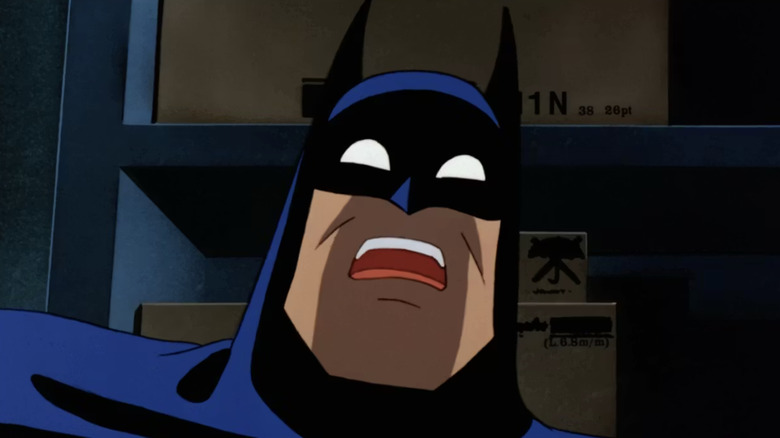
"Batman: The Animated Series" never had a conclusive series finale, even as it kept getting second chances. The series was so widely acclaimed that it went beyond the syndication standard 65 episode order for cartoons.
After the initial 65-episode run from 1992-1993, a 20-episode second season — running from 1994 to 1995 — concluded with "Batgirl Returns." That episode, featuring little of Batman himself, stars Catwoman (Adrienne Barbeau) teaming up with Barbara Gordon/Batgirl (Melissa Gilbert).
While "Batman" season 2 was the last set of episodes produced for Fox Kids, the series wasn't done yet. Two years later, in 1997, the sequel "The New Batman Adventures" premiered on Kids' WB. Batgirl graduated from a rare guest character to the main cast, while Dick Grayson (Loren Lester), the original Robin, had become Nightwing. Orphaned Tim Drake (Mathew Valencia) stepped up as the new Boy Wonder. Kids' WB was also more permissive about the show's content than Fox Kids, as evidenced when they allowed pyromaniac villain Firefly to appear.
Despite a tweaked art style and character designs, "New Batman Adventures" had largely the same cast and crew. (Batgirl was recast with Tara Strong, while Jeffrey Combs took over as The Scarecrow.) As such, it is widely considered a season 3 of "Batman: The Animated Series" and generally packaged with the former show on streaming services. But "New Batman Adventures" ran only 24 episodes because WB wanted a new kind of Batman in the vein of the hit "Buffy the Vampire Slayer."
Speaking to Vulture, "Batman" crew members, like co-creator Bruce Timm and writer/producer Paul Dini, discussed how this demand led to "New Batman Adventures" being canceled in favor of a new show: "Batman Beyond," their best effort at making WB head Jamie Kellner's request for a teenage Batman work.
WB canceled New Batman Adventures for Batman Beyond
WB Animation
According to Paul Dini, WB's executives had the "primitive mindset" that their target audience (young boys) couldn't relate to Batman because he was a grown man. (It apparently didn't cross their minds that Robin is there to give kids someone to relate to.) As Timm recalled:
"Jamie [Kellner] literally, at one point in a meeting, said, 'What if we made Batman a teenager?' And we all freaked out. We tried to keep a straight face, because you don't want to say to the head of the WB network, 'That's a really stupid idea!' But we were all thinking it."
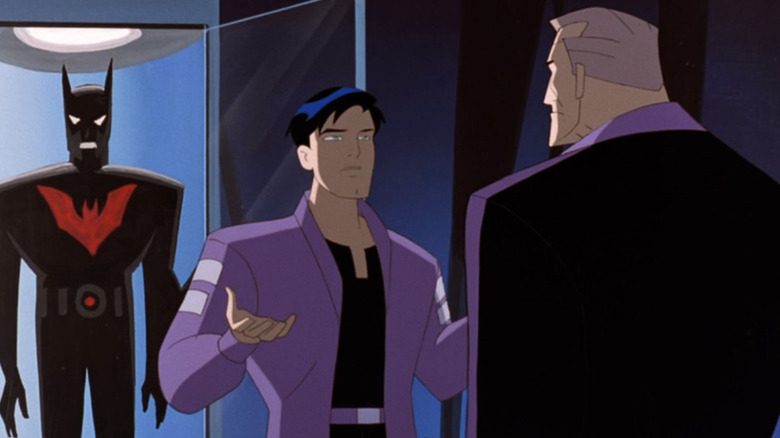
Timm, who also didn't want to scrap the continuity they'd built, suggested a story where an aged Bruce Wayne was training a kid as a new Batman. That became "Batman Beyond," where an elderly Bruce Wayne (still Kevin Conroy) mentors a rookie Batman, teenaged Terry McGinnis (Will Friedle). To account for Bruce being about 40-50 years older than he was in "Batman: The Animated Series," "Batman Beyond" was set decades in the future. This presented a chance to create "a more science-fiction-y version [of Batman]," as Timm put it.
"The fact that they were willing to back off and give us a little leeway where we didn't have to have a nine-year-old in the suit trying to drive the Batmobile — which is, I think, more what they wanted — was good," Dini remembered. Still, the greenlighting of "Batman Beyond" meant "New Batman Adventures" had to come to an end. For Dini, that was "heartbreaking":
"[We] would have loved to have done at least another two or three years of the show along our lines. Especially because you can go back to the villains and develop them even further, and take them in new areas."
Batman Beyond ultimately gave Batman: The Animated Series a finale
Warner Bros. Animation
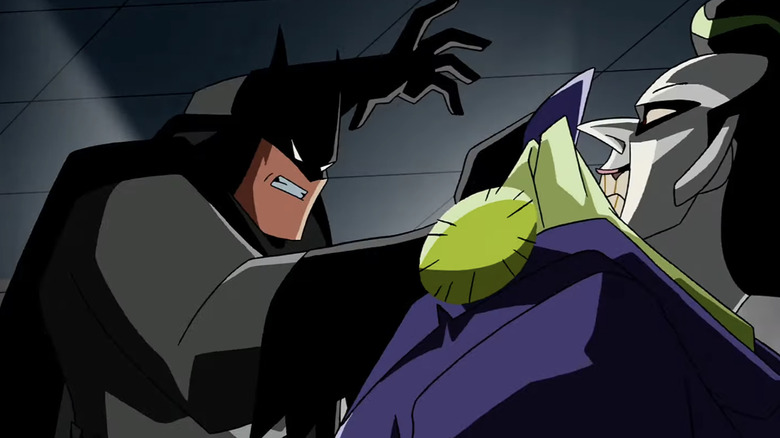
However, the crew was ultimately able to return to that era again in the 2000 film "Batman Beyond: Return of the Joker." True to its title, the long-dead Joker (Mark Hamill) somehow reappears in the future Gotham, so the new Batman, Terry McGinnis, has to learn the mystery of the original Batman and the Joker's final battle.
That leads to a 10-minute flashback sequence, like an episode of "New Batman Adventures" with crisper-than-ever animation and no worries about keeping things G-rated. In this sequence, the Joker and Harley Quinn (Arleen Sorkin) abduct, torture, and brainwash Tim Drake into being a "son" for themselves. Batman, angrier than ever, almost kills the Joker ... until Tim/"Joker Jr." snaps out of his mind control and shoots the clown himself.
The sequence is genuinely violent and disturbing without getting try-hard the way some "dark and gritty" superhero stories can. It's also the definitive finale for the "present day" Batman that "New Batman Adventures" never got, and more of a downer than Kids' WB would've ever aired. "Batman Beyond" showed that Bruce ended up a bitter old man, and that flashback provides a damn good reason why.
"Batman Beyond" ultimately ended at season 3 without its own series finale, because the crew were called on to make a new DC series: "Justice League," returning to the present day of "Batman: The Animated Series." Even so, "Return of the Joker" retroactively works as an epic finale to "Batman Beyond," and "Justice League" was later able to revisit Terry's story in the episode "Epilogue."
Though "Batman: The Animated Series" closed out in 1999, the Batman brought to life by Timm, Paul Dini, Kevin Conroy and co. kept having adventures for several more years before "Justice League Unlimited" wrapped in 2006.
 English (US) ·