
 4 hours ago
13
4 hours ago
13
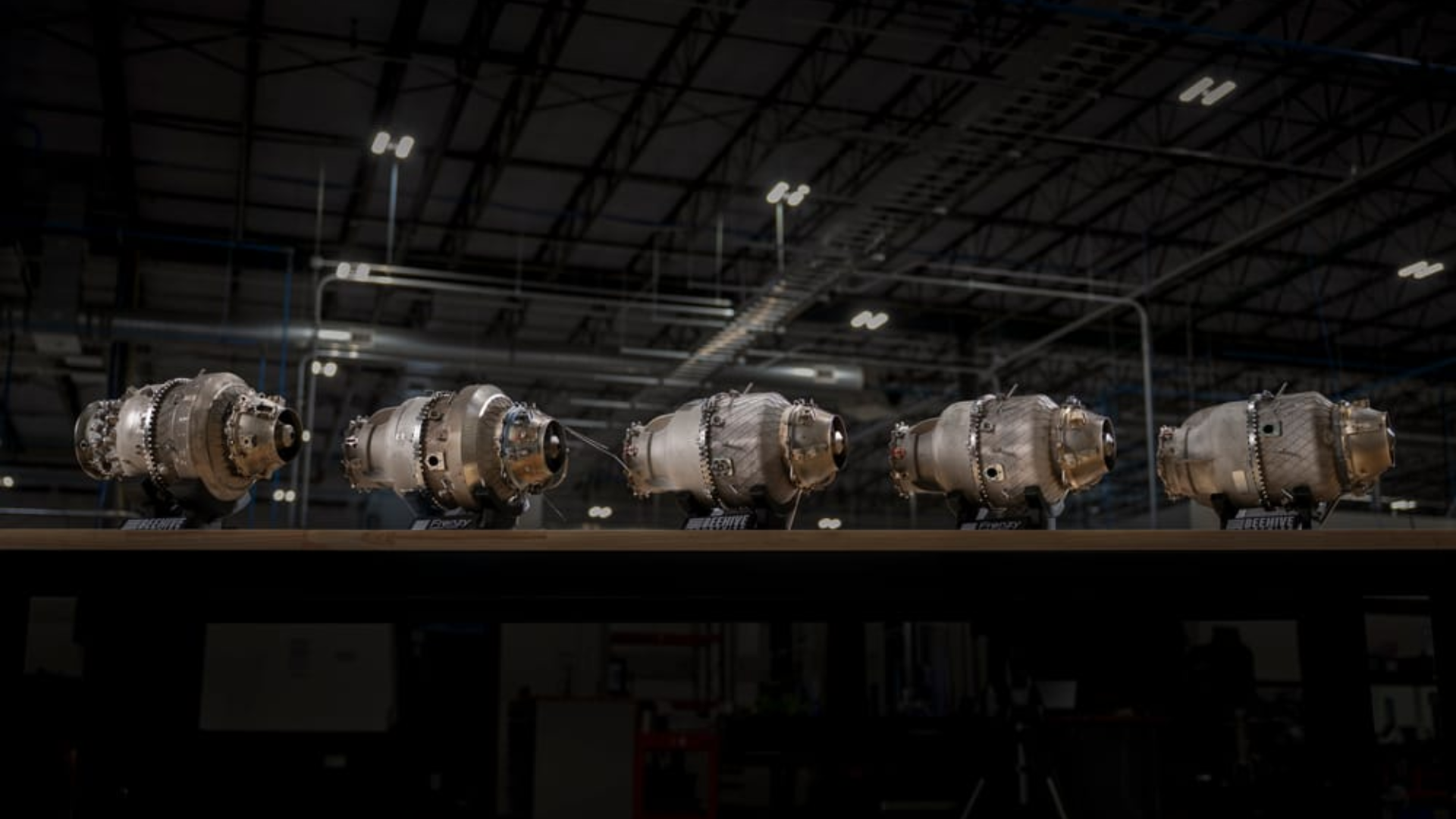
Beehive Industries, a startup jet engine manufacturer based in Colorado, just secured a $30 million contract from the U.S. Air Force (USAF) to continue the research and development of small 3D-printed jet engines for uncrewed aircraft and stand-off weapons. According to the company, the USAF funding is allocated for vehicle integration, flight testing, and qualification of the Frenzy 8 — the company’s flagship engine that delivers 200lbs of thrust — as well as the possible flight demonstration of the smaller 100lb-thrust Frenzy 6. By comparison, the F-16 Viper is powered by either a GE F110 or Pratt & Whitney F100 engine, both of which develop thrust of over 29,000lbs.
Tom's Hardware Premium Roadmaps
3D printing, more accurately called additive manufacturing, has been used by the aviation industry for over 10 years now. In fact, GE, which makes the LEAP engine found in the Airbus A320neo in partnership with Safran, has been using this technique to manufacture jet engine parts since 2016. But despite the industry's use of 3D printing, not just anyone can (or should) start printing airplane parts at home. These require special materials and construction techniques, or you may cause an accident if you make a mistake.
However, it appears that Beehive will use 3D printing to build the engine from top to bottom. This would allow the company to manufacture all the parts that it needs to assemble a turbojet instead of relying on a specialized supply chain that could easily be disrupted. More importantly, it would reduce the time required to design, test, and deploy an engine, as well as minimize its production cost — an issue that the U.S. military is contending with, especially as it sometimes uses expensive missiles to take down cheap drones.
“By harnessing additive manufacturing to collapse complex supply chains into scalable, 3D-printed propulsion, we are providing the ‘affordable mass’ essential to modern deterrence,” said Beehive Industries Chief Product Officer Gordie Follin said. “This collaboration ensures our warfighters will have the high-volume, mission-ready capabilities they need to maintain a competitive edge in any theater.” The company is competing against established giants like GE Aerospace, Pratt & Whitney, and Honeywell Aerospace for the small engine contract. This might seem like it’s disadvantaged, especially as these companies have established contracts with the Pentagon. However, all three have reported backlogs in various departments, meaning Beehive could probably deliver and maintain its engines much quicker than them.
Article continues below
Other nations are building their own micro turbojet engines, too. A Chinese state-backed firm showed off a fully 3D-printed design in 2025, delivering much over 350lbs of thrust at 13,000ft. Engines are one of the most expensive components on an aircraft, accounting for nearly 25% to 40% of the cost. By making cheaper alternatives to traditional manufacturing, militaries can reduce the acquisition and maintenance costs of drones and missiles, allowing them to keep their costs low and get more weapons for every dollar in the budget.

Follow Tom's Hardware on Google News, or add us as a preferred source, to get our latest news, analysis, & reviews in your feeds.






 English (US) ·