
 3 weeks ago
27
3 weeks ago
27

Published Mar 10, 2026, 11:03 AM EDT
The live-action adaptation of the beloved manga and anime franchise brings some bold choices to its second season
 Image: Netflix
The second season of Netflix’s successful live-action adaptation of the best-selling manga in history, Eiichiro Oda’s One Piece, is finally here. After shocking fans and critics by producing the first great live-action version of a manga or anime (truth be told, the Japanese Death Note wasn’t that bad, but everybody remembers Dragon Ball Evolution), showrunners Matt Owens and Steven Maeda still have a lot to prove with its second season.
One of the biggest challenges for Netflix’s One Piece is to carve its spot in a franchise that’s been going on for close to 30 years. One Piece fans are familiar with the saga and its story beats, so any creative liberty taken by Owens and Maeda comes under scrutiny. On the other hand, a big slice of the show’s audience is made up of viewers who are not familiar with the manga or anime. Torn between catering to the existing fanbase and carving its own path, Netflix’s One Piece could have ended up in a weird spot, but season 2 suggests the show has already chosen a side.
[Ed. Note: Spoilers ahead for Netflix’s One Piece season 2 and for story developments in the manga and anime that haven’t been shown yet.]
In its first episode, One Piece season 2 shows a sequence that manga and anime fans only got to see much later in the story. Twenty-two years before the events of the show, Garp (Vincent Regan), who is Luffy’s grandfather and a Marine vice admiral, visits the Pirate King, Gold Roger (Michael Dorman), in a cell before his execution in Logue Town. The two reminisce about their years of battles. Then, Roger drops an unexpected request for his longtime rival: take care of his son. Garp reluctantly agrees, but Roger’s son is never mentioned by name. Of course, fans of the franchise know about his identity, a major reveal in a later arc. But the live action is taking a different direction.
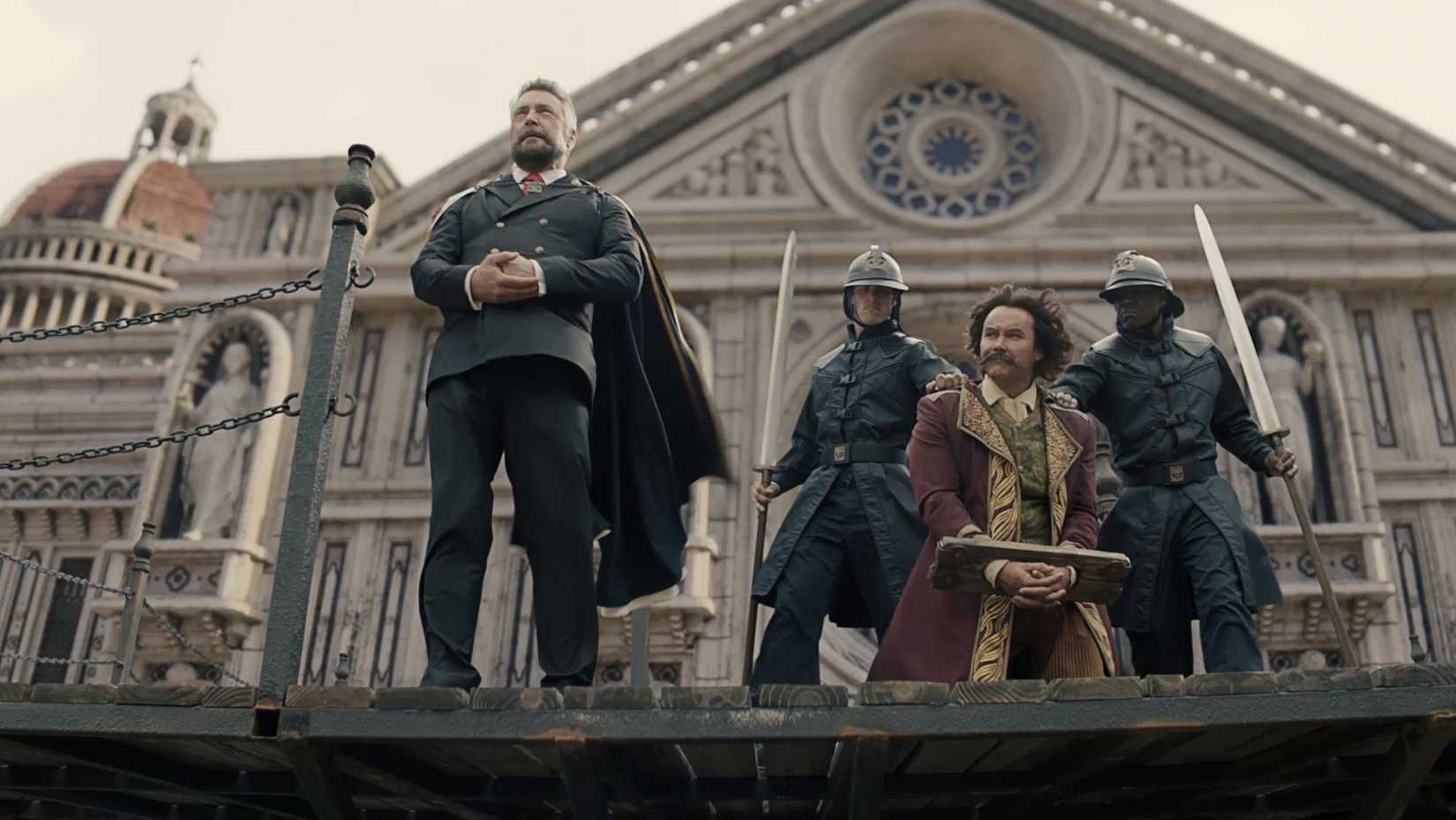 Image: Netflix
Netflix’s One Piece builds up its story in a way that suggests that series' protagonist Monkey D. Luffy (Iñaki Godoy) is Roger’s secret son. Even after the scene teasing that Garp has been raising Roger's son, the parallels are evident: In the first episode, Luffy visits Roger’s execution spot and vows to become the Pirate King, laughing in the face of death just like Roger did. Marine captain Smoker (Callum Kerr) is so impressed by the similarities that he decides to pursue the Straw Hats into the Grand Line. Later, in the season finale, as the Straw Hats are sailing away from the Drum Kingdom, Kureha (Katey Sagal) reveals that Roger’s true name was Gol D., not Gold, and she compares it with Monkey D. Luffy, saying that “the will of D. lives on.”
These events are all present in the manga too, and I’m not implying that the live action will change the story and the identity of Roger’s son, but it’s clearly implying that son is Luffy. Otherwise, it wouldn’t make much sense to show that sequence with Garp and Roger so early, considering that it will take at least another five seasons or more before we see a payoff (assuming the show follows the same sequence of events as the source material). Of course, this would be pointless if the live action didn’t cater specifically to an audience not already familiar with the story.
This approach allows the creators more freedom to play with their source material (such as setting up this red herring). It could also pay off in the long term, as staying faithful to the source material will become increasingly difficult as Eiichiro Oda’s story keeps getting bigger, more chaotic, and sprawling. Once the Straw Hats hit their stride in the Grand Line, the scale of that setting and the battles that await there could force the live-action show to change the story significantly to keep it more grounded (and not turn this into a CGI fest).
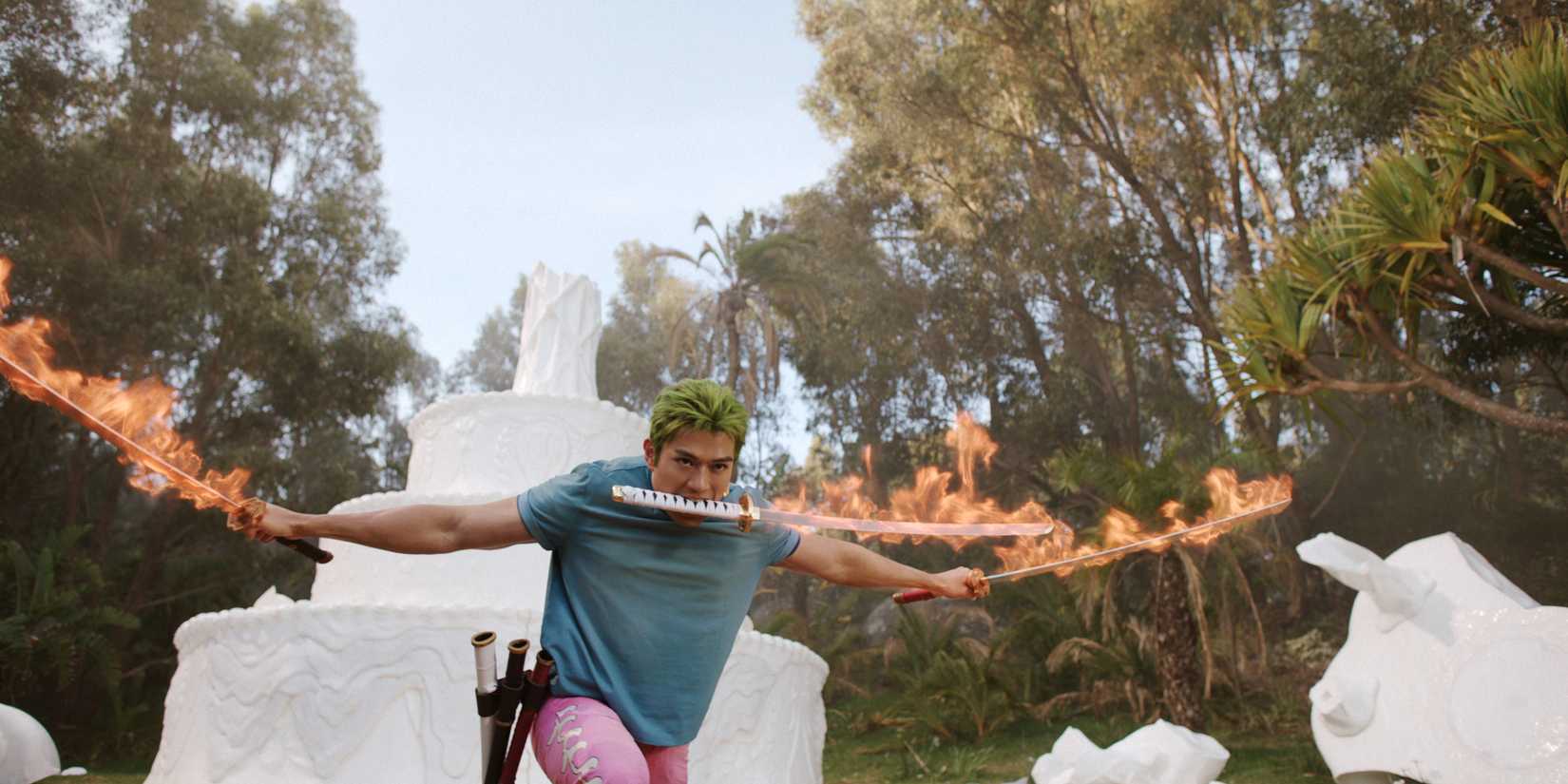 Image: Netflix/One Piece
On the other hand, some of the changes made in Netflix’s One Piece to the original story were not for the best. I wasn’t a fan of Luffy calming down Laboon with a song rather than jamming down the Going Merry’s mast into the whale’s head and fighting the giant beast to a draw (according to Luffy, at least). It’s a massive shift from the personality of the Straw Hat’s captain as we’ve come to know him.
Despite that, One Piece season 2 is still an entertaining run, like the first one. The special effects massively increase in size and frequency, but are handled carefully. Compared to season 1, there were no important changes to the plot, with some small exceptions that are sure to irk purist fans (Nico Robin appearing in Loguetown looked very wrong to me, for example). These same fans will likely be pleased by the impressive number of cameos, namedrops, and foreshadowing of future events.
Overall, Netflix’s One Piece is still in a conflicted spot, forced to carefully pick which moments and story beats to adapt faithfully and which can be skipped or changed. Rather than walk on this dangerously thin line, it would be better if the show embraced its autonomous nature and fully catered to an audience that’s unfamiliar with the source material. The decision to manipulate the revelation of Roger’s son is a clue the live action is heading in exactly that direction.



 English (US) ·