
 2 hours ago
4
2 hours ago
4
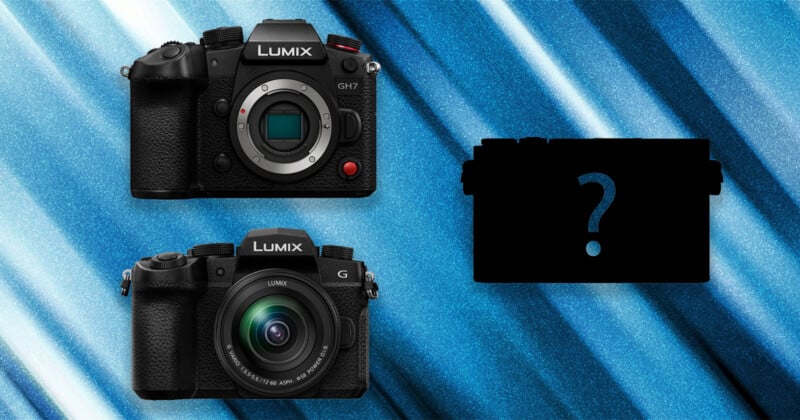
Photographers would be forgiven for thinking that Panasonic is no longer committed or interested in developing new Micro Four Thirds products, but as the company told PetaPixel at CP+ 2026 in Japan, it is still very much interested in developing new MFT products that capitalize on the format’s core strengths.
Jointly developed by Olympus, now OM System, and Panasonic in 2008, the Micro Four Thirds system has experienced very high highs and, in recent years, relatively low lows.
Although Panasonic’s latest Micro Four Thirds cameras were released not all that long ago, in 2024, the company has clearly been more focused on full-frame in recent years.
The Lumix GH7 was by far the most interesting of the two releases in 2024, while the G97 was less of a show-stopper. Before that, Panasonic launched the very good Lumix G9 II in 2023 and the GH6 in 2022. That’s four Micro Four Thirds cameras in the past four years and as many new Panasonic MFT lenses.
That output is not terrible, but over that same period, Panasonic released eight full-frame Lumix S lenses and six full-frame cameras. Since the last new Panasonic Micro Four Thirds product launched, the G97 in December 2024, five new Panasonic full-frame products have hit store shelves.
The point is that it’s easy to wonder not only where Panasonic’s priorities lie, but whether it remains interested in Micro Four Thirds at all. To that concern, Panasonic is clear.
“We continue to [develop] Micro Four Thirds,” Toshiyuki Tsumura, Executive Vice President and Director of Panasonic’s Imaging Business, told PetaPixel at CP+.
“One of our strengths is that Lumix can offer distinctive cameras in both full-frame and Micro Four Thirds mounts,” Tsumura said.
The company is quick to point out that it developed a new Micro Four Thirds sensor not very long ago, the 25.2-megapixel BSI CMOS image sensor featured in the G9 II and GH7.
“In terms of development resources, the evolution of basic camera performance reflects a high commonality of customer needs regardless of mount, and we conduct technology development with the advancement of both mounts in mind. We will continue to make new proposals that highlight the distinctive features of MFTS, such as the mobility and speed offered by the compactness of the entire camera system, including lenses unique to this mount.”
However, as has been the theme in Micro Four Thirds for a long time, it feels like the system has hit a wall. Flagship Micro Four Thirds cameras have been hovering around that 20-25 megapixel mark for a long time, since the GH5 back in 2017. Even 2010’s GH2 had a 16-megapixel sensor.
While there have obviously been significant advancements in sensor technology and performance since then, the difference in resolution between 16 and 25 megapixels is not particularly dramatic. This is a major hurdle Micro Four Thirds cameras must overcome in the court of public opinion, and Panasonic knows it.
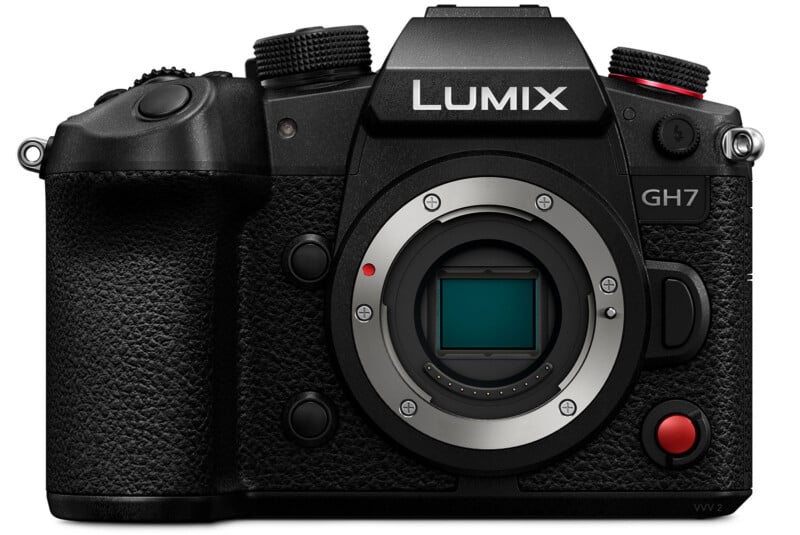 Panasonic GH7 | Credit: Panasonic
When asked whether there is still room to increase the resolution of Micro Four Thirds image sensors to better compete with APS-C and full-frame cameras, which routinely hit 40-plus megapixels even in mid-range models, Panasonic acknowledged the technical challenges it faces.
“It’s really difficult technically,” Tsumura explained. “We can technically brush up the dynamic range and raw noise [reduction] technology by using AI. If we can realize this type of new technology, we can increase the resolution for Micro Four Thirds.”
AI is a touchy subject, but computational photography has been part of Micro Four Thirds cameras for a while now. Handheld pixel-shift modes, especially in OM System cameras, have proven effective in a wide range of scenarios.
Panasonic is also very aware of recent advancements in smartphone image sensor technology, such as the new LOFIC sensors hitting the market, which may be relevant to Micro Four Thirds.
Although Micro Four Thirds cameras primarily compete against other dedicated cameras with larger sensors, the smartphone sensor realm is an interesting one to consider. Micro Four Thirds sensors are a fair bit bigger than smartphone sensors, of course, but they are also much closer in size to them than a full-frame sensor is. There are unique advantages to smaller image sensors, especially for sophisticated, swift image processing. Sometimes, smaller sensors are a strength, rather than a weakness.
The cutting-edge LOFIC image sensor technology, which stands for Lateral Overflow Integration Capacitor, features a different sensor architecture that enables it to store excess photoelectric charge, which can be used to expand the dynamic range of a single image. This extra data is discarded in traditional image sensors, resulting in a lower full-well capacity.
“We know [about LOFIC],” Tsumura continued. “We know. We analyze other companies’ technology.”
“Looking at the entire functionality of the camera, we still have to consider the tradeoffs, and whether it is fitting for Micro Four Thirds cameras.”
A key functionality advantage of Micro Four Thirds cameras relative to their APS-C and full-frame competitors is the size and weight of MFT cameras and lenses.
“We believe that the mobility and speed provided by the compactness of the entire camera system, including lenses, remains an enduring appeal of MFTS,” Tsumura said.
PetaPixel’s Take
Panasonic faces a significant challenge in developing future Micro Four Thirds products. On the one hand, it wants to develop more powerful, capable cameras with better performance and image quality. On the other hand, it cannot do this at the expense of the unique selling point of Micro Four Thirds in the first place, the fact that MFT cameras and lenses are smaller and lighter.
Another factor to consider is market size. It is easy to believe that Panasonic truly wants to launch exciting new Micro Four Thirds products with cutting-edge, innovative technology. The company has a storied history of doing just that. However, what is more challenging to grapple with is that the Micro Four Thirds segment is relatively niche. The overall camera market is much smaller than it was a decade ago, and Micro Four Thirds products account for only a small share of today’s photo market.
Panasonic’s other Lumix focus, full-frame, is a bigger market with more expensive cameras and lenses. It’s not that Panasonic can’t innovate still in Micro Four Thirds, of course it can, but it also stands to reason that when push comes to shove, the full-frame Lumix S series warrants more attention and greater resources.
Perhaps what Panasonic’s Micro Four Thirds system needs most is not cutting-edge technological advancements, but interesting new products that emphasize the format’s size and weight advantages. New GM-series models, for example, are a much easier lift from an engineering perspective than brand-new, high-resolution image sensors. Panasonic’s latest 25-megapixel Micro Four Thirds sensor takes great photos. Why not put it in a camera that is more fun, charming, and compact?
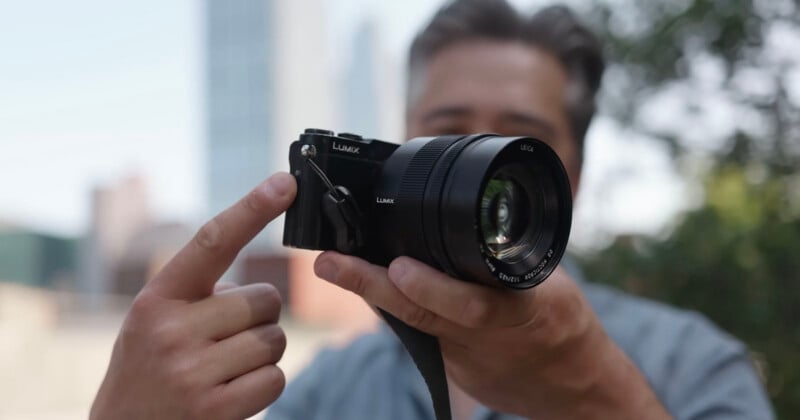
PetaPixel‘s Chris Niccolls argued last year that the Panasonic GM5 is “the greatest digital camera ever made,” and a new one would be very well received.
Tsumura, who enjoyed PetaPixel‘s GM5 video, agrees that the camera is one of the best showcases for the strengths of Micro Four Thirds.
“We continue to challenge ourselves daily to overcome the high technical hurdle of combining compact, lightweight design with the latest features. Being compact and lightweight is an important value for users, and we will continue to explore the needs for small cameras and envision the future of the next Best Digital Camera of All Time,” Tsumura said.
Competing on the same playing field as APS-C and full-frame interchangeable lens cameras may have made sense in the time of the GH4 and GH5, but these days, perhaps Panasonic should consider playing a different game altogether. For those who demand the most performance and the best image quality, the Lumix S series is there. Lumix G can be something else entirely, something full-frame cameras cannot be.
Image credits: Panasonic. Header photo created using an asset licensed via Depositphotos.com.








 English (US) ·