
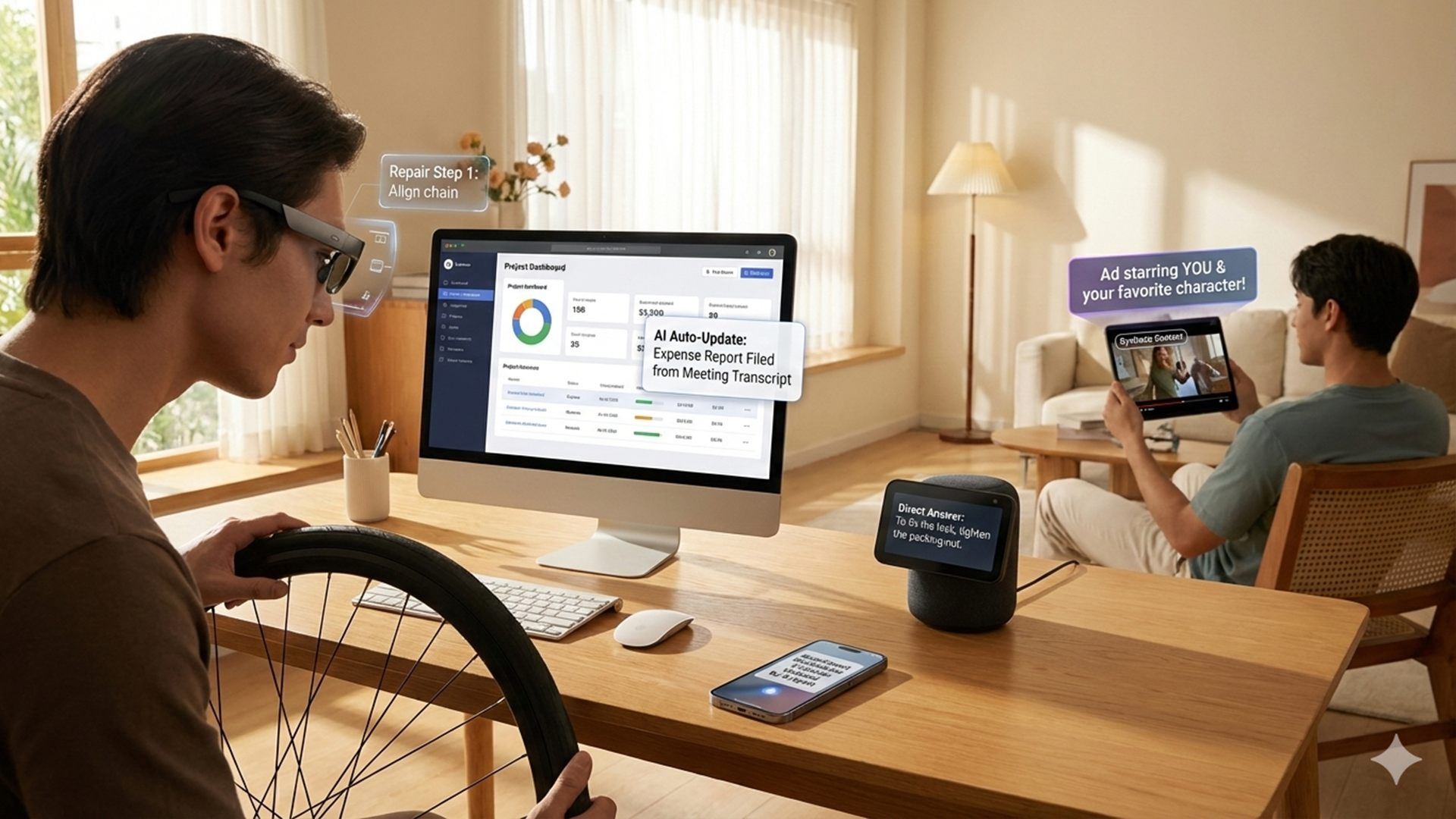
In the final stretch of 2025, it became increasingly clear that artificial intelligence had become invisible yet influential infrastructure, as much a novelty toy as a novelty. People are using it like spreadsheets or plumbing, to move things around, combine and analyze information, and clean things up. But what do some of the most popular AI models think will happen next?
I asked ChatGPT, Gemini, and Claude, three of the best-known and widely used AI chatbots, to predict what everyday life with AI might look like in 2026. I tried to get them to stick to more realistic opportunities. I asked ChatGPT, Gemini, and Claude, three of the best-known and widely used AI chatbots, to predict what everyday life with AI might look like in 2026. and not predictions of the singularity, utopian fantasies, or alien encounters mediated by AI diplomats, just plausible extrapolations.
ChatGPT predicts AI in the background
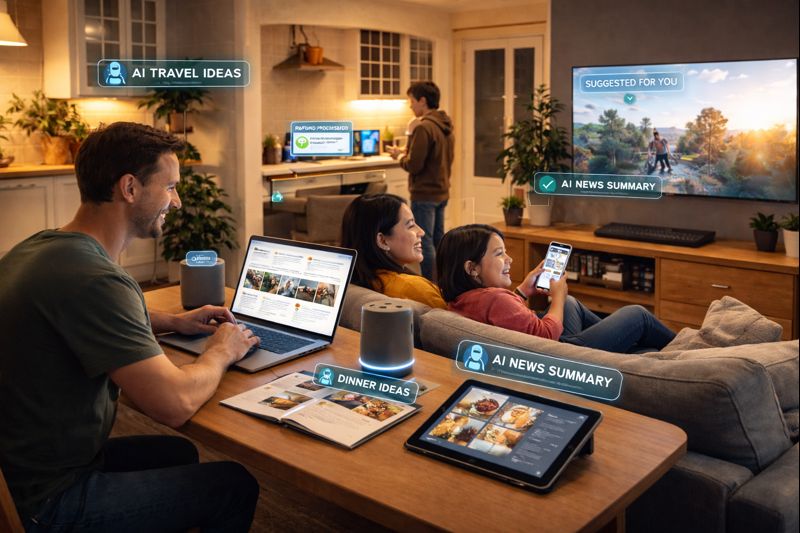
"By the end of 2026, most people will experience AI less as a destination and more as something that quietly sits inside whatever they are already doing. AI will become the default layer in everyday apps rather than a separate feature you open on purpose."
ChatGPT sees AI in 2026 as an ambient presence. AI will always be on, often unnoticeable, and subtly controlling many of the things we once did manually. The embedded AI won't be a distinct tool as much as an omnipresent assistant that you won't have to ask before it helps.
"AI assistants will take on more small decision-making tasks, not just advice. AI might automatically reorder household supplies, choose a streaming show based on mood, or pick a route, restaurant, or gift with minimal input."
ChatGPT sees this shift as born from 2025’s wave of assistant panels, summary tools, and suggestion overlays. It’s not about building something new, but about making the existing feel inevitable. This frictionless help has consequences, though, and could overrule your own agency. The AI is trying to help, but it's also making plenty of assumptions.
"The frustration is that it can feel invasive or hard to turn off, with people unsure whether they are using an app or being nudged by an assistant they did not invite."
ChatGPT suggests a cultural shift in which people feel uncertain about their sense of control. The ambiguity around consent further erodes trust in things like AI-powered summaries, a shortcut people rely on maybe too much. The issue is not just compression but transformation. ChatGPT recognizes that summaries are editorial rather than neutral. What gets left out or softened matters, especially as people slowly lose contact with firsthand content. As these overviews replace originals, skepticism builds.
"In 2026, this means many people will rarely read full reviews, articles, or manuals, relying instead on AI-generated overviews embedded in search results and apps. The tradeoff is a growing unease about what gets left out, simplified, or subtly reframed."
What’s striking is that ChatGPT is describing a quiet, invisible takeover more than a transformation. On the positive side, it reduces the stress of the many annoying little chores one has to remember, but on the other hand, people may not be thrilled about seeing those tasks undertaken by AI.
Still, ChatGPT leaves the door open for optimism. If designed with user clarity in mind, these embedded systems could reduce decision fatigue, streamline everyday tasks, and help people regain mental space for more meaningful moments.
Gemini predicts active AI
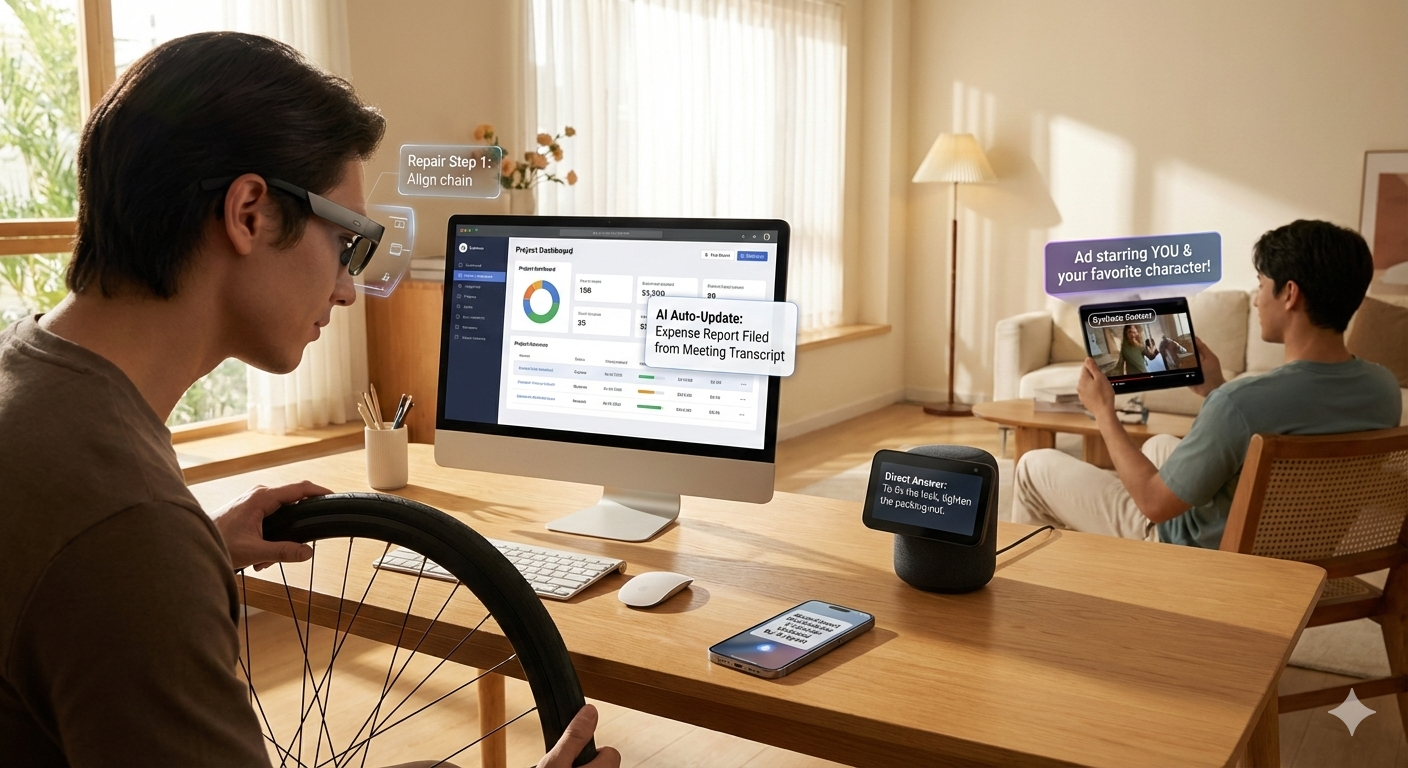
"2026 will likely see a shift from AI that simply talks to AI that takes action. The first major change will be the rise of personal agents that handle multi-step logistics... without you touching your phone."
Gemini zeroed in on structural changes in its prediction. ChatGPT focused on behavior and a gloomy cultural mood in its prediction, but Gemini's idea of AI as a "proactive operator" by the end of next year is far more positive. Gemini sees agents that anticipate prompts. It might reschedule appointments, update calendars, and even handle travel changes with minimal intervention from you.
More immediately relevant to Google is Gemini's prediction of the death of the traditional search interface. Seamless synthesized answers will replace links and citations to save time. Gemini calls this a transparency loss, where speed comes at the expense of clarity. The search engine becomes a black box. That black box metaphor carries over into Gemini’s prediction about work. It sees AI taking on routine professional tasks without prompts.
"Software that operates in a 'closed-loop' fashion can observe a video meeting and independently update project trackers, file expense reports, and assign follow-up tasks."
Gemini also has ideas about what will happen right in front of your face. It imagines 2026 as the year AI escapes the screen and enters your field of vision, layered over the world via smart glasses.
"You will notice a surge in AI smart glasses that provide 'ambient vision.' Instead of looking at a screen, you will point your glasses at a broken sink or a foreign menu to see real-time repair overlays or translations floating in your field of vision. There will also be hyper-personalized media feeds. By 2026, you may see social media ads or educational videos featuring your favorite licensed characters or even yourself, tailored to your specific interests and learning level."
Gemini’s outlook ultimately hopes that true agentic assistance will free people from the dullest parts of modern life within a year, returning time for creativity, deep work, or rest. It's not quite paradise, as many potential issues get glossed over, but Gemini is definitely painting a rosy picture of AI in a year.
Claude predicts saturation
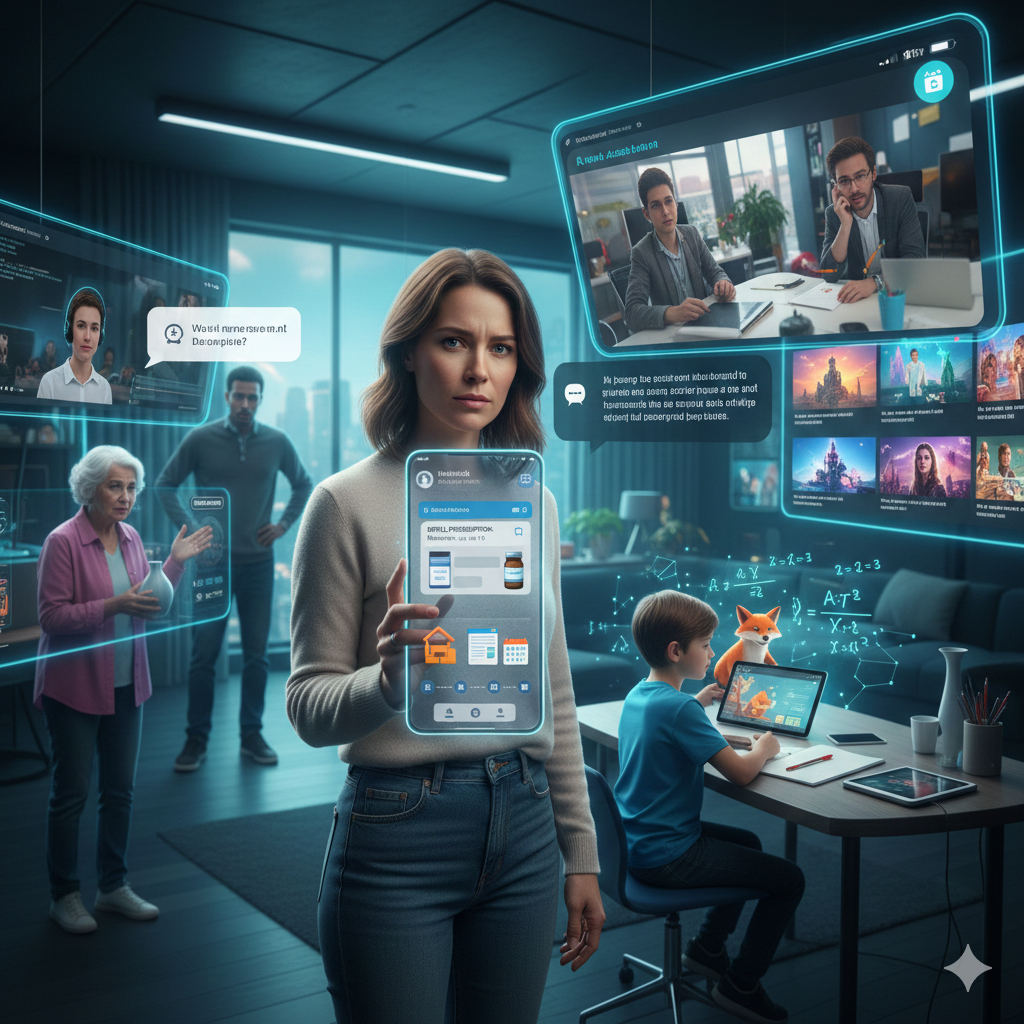
Claude agrees that AI will be a passive presence and the big shift will be about subtlety as much as intelligence or speed.
"In 2026, people will increasingly encounter AI that can fluidly handle a conversation while simultaneously looking at what's on your screen, listening to background sounds, and pulling up relevant information without being asked."
The AI suggested that your phone might remind you about a prescription refill because it detected the medicine bottle in a photo you took last week, or that a work app could join a meeting, listen quietly, and speak only when someone asks a question it can answer. Claude sees AI evolving into something that quietly understands the full context of your environment and can respond to speech, images, and ambient cues without ever asking for a prompt.
"In 2026, you'll start seeing AI that can genuinely coordinate across different apps and websites—rescheduling a chain of appointments when one gets cancelled, comparing insurance plans by reading through actual policy documents, or managing a home repair by contacting contractors, comparing quotes, and checking your calendar for availability."
While Claude acknowledges that this kind of passive awareness might make some users uneasy, it also predicts that the upside of fewer forgotten tasks and less context-switching will overcome most people's misgivings. Partly, that's because Claude also predicts that the glitchy, limited AI integrations of 2025 will mature into real task automation. Claude also predicts AI becoming ubiquitous as personalized tutors in schools and homes, tailored to how each student learns.
"The year will feel less like a single dramatic AI breakthrough and more like a gradual saturation, where AI is simply embedded in more of what we do, for better and worse."
AI in 2026
Taken together, these three visions suggest that 2026 won’t feel like a leap forward in artificial intelligence as much as a soft spread across our lives. ChatGPT, Gemini, and Claude all agree that AI will become more helpful, more ambient, and more capable, but also more invisible. They forecast a year where AI stops acting like a tool and starts behaving like part of the operating system of daily life. That might mean fewer to-dos, less friction, and a smoother experience overall, as AI anticipates needs, rewrites awkward emails, reschedules appointments, or quietly listens for questions during meetings so you don’t have to repeat yourself.
At the same time, each model points to a subtle but important cost. ChatGPT warns that we might forget what it feels like to make choices ourselves. Gemini suggests we may struggle to understand decisions made on our behalf. Claude reminds us that always-on convenience can carry emotional weight, especially when we feel like we’re being monitored or managed by something we didn’t consciously summon. These are tradeoffs worth watching. The very things that make AI feel seamless also make it harder to question, redirect, or turn off.
Still, there’s reason to be hopeful. If AI systems become more transparent, if defaults include real choice, and if users are given the tools to stay in the loop, then the 2026 imagined by these models need not be dystopian. It could be a year when artificial intelligence finally becomes a genuinely useful companion. The challenge is shaping the changes wrought by AI so that we have more freedom, not less.
Follow TechRadar on Google News and add us as a preferred source to get our expert news, reviews, and opinion in your feeds. Make sure to click the Follow button!
And of course you can also follow TechRadar on TikTok for news, reviews, unboxings in video form, and get regular updates from us on WhatsApp too.

 English (US) ·