
 3 hours ago
14
3 hours ago
14
You probably already have a few hiding in plain sight.
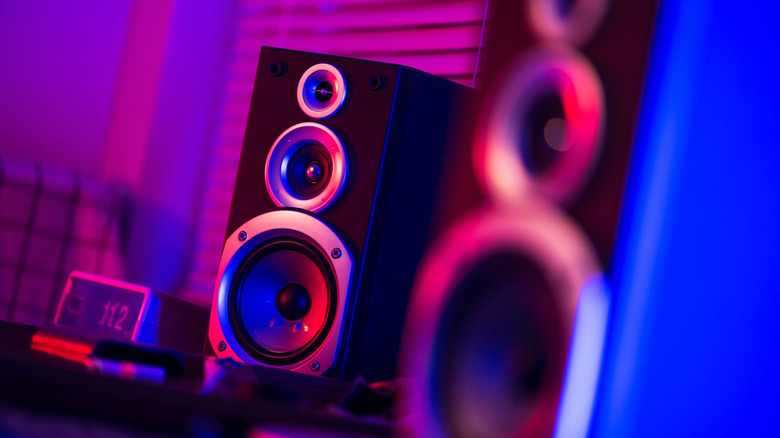
Nor Gal/Shutterstock
Gear makers will gladly sell you a hundred different add-ons to improve your sound system. To this day, it's possible to buy gold-plated audio cables, even though they can't really improve digital audio — you're either getting a clean data signal or you're not. On the short list of products to take seriously is an amplifier, whether you're building a home theater or your own private music sanctuary. There's a reason your local boutique audio store has been selling them for decades.
You shouldn't automatically pick up an amplifier alongside a new set of speakers, however. It's critical to understand what an amplifier does, how much it can improve sound quality in the real world and whether you need to buy a separate one at all. If you're a newcomer to "serious" audio, you might be surprised to learn that you probably have several amps in your home, hidden in plain sight. That speaks to the underlying importance of the technology.
It's also worth tackling some fundamental misconceptions along the way. Those include not just the necessity of separate amps, but notions like the inherent superiority of tube amps to solid-state models. Don't buy into the temptation to spend hundreds of dollars on something just because it might look good on your shelf. Presumably, your goal is high-quality audio, rather than just showing off to your friends — and there may be more cost-effective ways to upgrade your system.
How amplifiers can improve your sound system
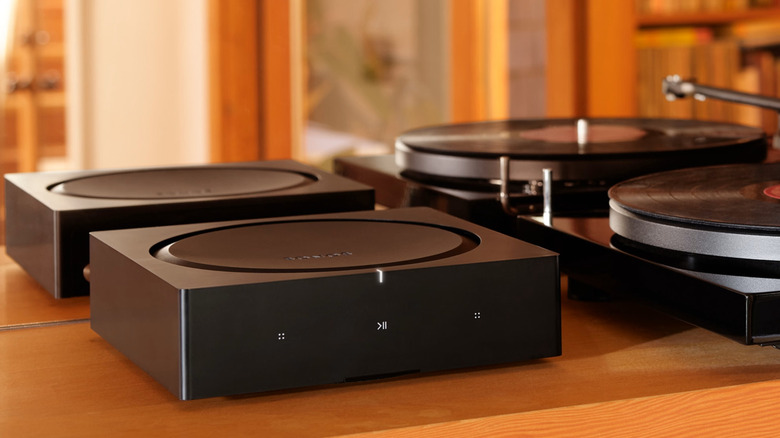
Sonos
On their own, most audio signals aren't strong enough to be heard clearly. For a demonstration of this, all you need is a turntable with its speakers disabled. If you listen closely, you'll hear something called "needle talk" — the stylus running along the vinyl grooves. This is quiet, and it may not even be distinguishable as music. For you to hear anything meaningful, all sound systems need an amplifier to increase the strength of a signal before output. It's important to match an amp to the power and impedance specs of your speakers, measured in watts and ohms, respectively.
Amps accomplish more than just an increase in volume. Any quality amp will let you adjust gain (the amount of signal boost) and shape sound to your preferences via its equalizer (EQ). You might tweak frequencies for heavier bass or clearer vocals, for example. It's important to get gain and EQ settings right not just for pleasing sound, but to prevent clipping, distortion or even hardware damage.
Let's take a moment to distinguish between amps and preamps. The latter simply raise audio up to line level for correct gain throughout your sound system, meaning that you still need an amp to power your speakers. Some amps have a preamp built-in, streamlining the audio chain.
That leads us to the question of whether you need to buy an amp at all. The truth is that in many cases, you don't. Many, if not most, consumer speakers are active, meaning that they already have integrated amps, as evidenced by their individual power cords. Only passive speakers require external power sources, and even then, you may not need a dedicated unit. Receivers often incorporate both amp and preamp functions, making them a one-stop shop. Exceptionally power-hungry systems may demand an amp on top of that. For example, elaborate Dolby Atmos setups that exceed the number of channels your receiver can power simultaneously will need an amp.
Most people should probably opt for a solid-state amp rather than a tube-based one. While tube models famously provide a "warmer" sound and are visually slick — especially for fans of Fallout's brand of retrofuturism — they typically deliver 50W or less apiece, making them unsuited to surround-sound configurations unless you're willing to spring for several of them. Tubes also require more maintenance, namely swapping them as they wear out. Trying to run a home theater based on tube amps would be an expensive exercise in futility.
More cost-effective sound upgrades

Max4e Photo/Shutterstock
More often, it's the quality of the speakers you have that could stand to be upgraded. If you've got a basic stereo soundbar or speaker pair, jumping to a high-powered, all-in-one Atmos bar will make a world of difference. If you've already got that, it might be time to add rear and side channels for enhanced sound separation. Adding ceiling channels is the endgame for an audiophile, yet they can potentially be more trouble than they're worth, given that you need to both mount and wire them.
A lot of improvements are far cheaper. Unwanted rattling can be solved by add-ons like mats or speaker stands. You can reduce unwanted reverb with acoustic panels, and sometimes muddy bass can be fixed by moving speakers farther away from your walls. If you've got smart speakers with automatic room calibration, you should be running that process whenever you make significant space alterations.
As we've said, amps do have a place in sound systems. It's just that if you have active speakers or a receiver, they're probably redundant until you reach high-end territory. In other words, if you don't have a 7.2.4-channel home theater, or an entire wall devoted to kicking back with Pink Floyd and Dr. Dre, you can probably tuck your wallet away.






 English (US) ·