
 4 weeks ago
54
4 weeks ago
54
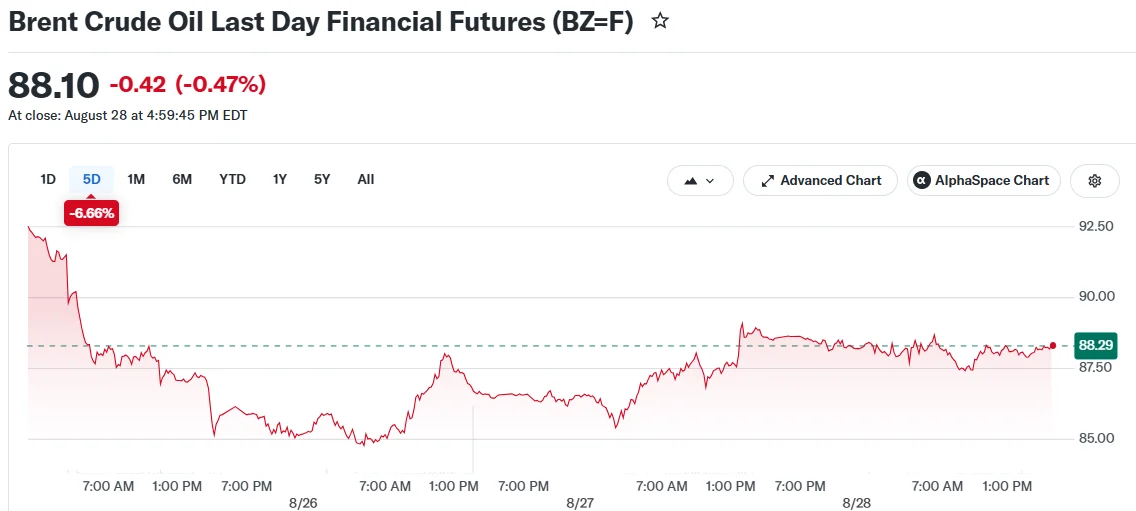
Brent crude has been surging on the back of escalating US-Iran hostilities, with prices climbing above $80 per barrel and at times spiking as much as 13% during peak volatility windows. The kicker: Washington has signaled it has no plans to release crude from the Strategic Petroleum Reserve to cool things down.
What’s driving the price spike
The US-Iran conflict, which saw initial strikes between late February and early March 2026 before a temporary pause, reignited in July with renewed fighting. The immediate market consequence has been predictable but painful: Brent crude jumping 2-4% within days of each escalation.
The Strait of Hormuz sits at the center of this story. Roughly one-fifth of the world’s oil supply passes through that narrow waterway between Iran and the Arabian Peninsula. When tensions flare in the region, shipping routes get disrupted, insurance costs spike, and traders start pricing in worst-case scenarios.
The SPR problem
The reserve currently sits at approximately 319.5 million barrels, its lowest level since 1983. Years of prior loans and releases, exceeding 100 million barrels, have left the cupboard looking pretty bare. The SPR’s capacity is around 714 million barrels — it’s currently less than half full.
The decision not to release stockpiles means consumers are essentially absorbing the full impact of geopolitical risk premiums at the pump.
The crypto ripple effect
Bitcoin’s price was rejected near $67,000 during the July tensions. On days of heightened oil price volatility, the broader crypto market dipped by 1.24%.
Rising oil prices stoke inflation fears. Inflation fears make central banks less likely to cut rates. Higher-for-longer rate expectations reduce the appeal of speculative assets that generate no yield.
On July 31, 2026, the US Treasury imposed sanctions on Iran-linked companies involved in a Bitcoin-accepting maritime insurance scheme tied to shipping through the Strait of Hormuz.
Traders are increasingly rotating into stablecoins or traditional hedges as a defensive measure. The ones staying in risk assets are watching two things: any diplomatic signals that could de-escalate the Iran situation, and weekly oil inventory data that might signal a price ceiling.
Disclosure: This article was edited by Editorial Team. For more information on how we create and review content, see our Editorial Policy.




 English (US) ·