
 3 weeks ago
63
3 weeks ago
63
COLUMNISTS
And as for getting US government to help – uncontrolled AI is not as dangerous as AI under the control of the technically clueless
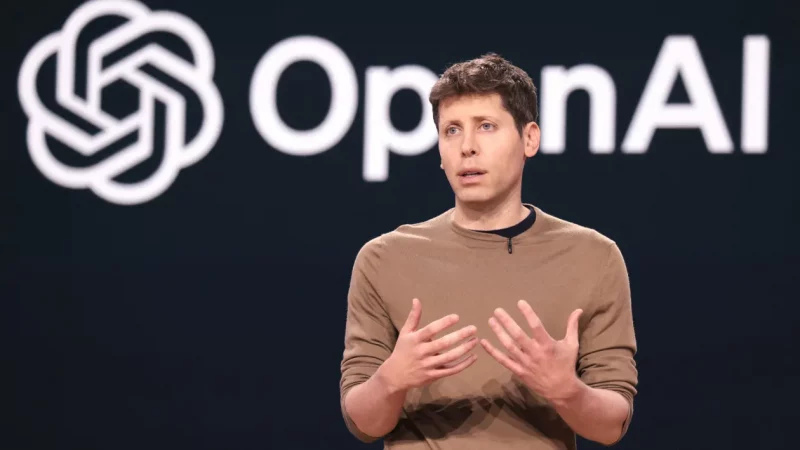
OPINION It wasn't that long ago, like earlier this year, that AI leaders were doing their usual pie-in-the-sky proclamations of how everything would be so wonderful with AI. Anthropic CEO Dario Amodei tweeted that AI "will actually be possible to cure most human diseases in ~5-10 years." While on a podcast, OpenAI CEO Sam Altman proclaimed that AI would create "the greatest boom in people starting smaller businesses that we have ever seen."
So, what's not to love? Well, you see those same AI CEOs/cheerleaders have also been tactfully admitting that AI isn't all that safe. Altman, for example, recently admitted, "model capabilities were outstripping the pace of safety and alignment." Meanwhile, Amodei also said, "I worry that biology will have a strong attacker-defender asymmetry, where sufficiently capable models may be able to quickly weaponize pandemic-level viruses with widely available materials."
They're not the only AI boosters who are having second thoughts. Earlier this year, Bill Gates, who needs no introduction, described himself as an AI optimist. Eight months later, he's singing a different tune. Now Gates worries that AI could become “the worst source of injustice," and that current policy is putting the world on a course with “a very high chance of a net negative outcome.”
Gates lately pronounced, "If the world takes the right steps, AI will be a force for good and leave everyone better off." But "right now we are not preparing for it. I don’t see evidence that leaders, experts, and communities are confronting the challenges adequately."
What is certain is that AI companies are saying they're doing things to make AI safer. For instance, OpenAI recently introduced ChatGPT for Teens to protect teenagers from content about suicide, self-harm, and sexual chat. Yeah, good luck with keeping teens from inappropriate materials. It didn't stop me when our idea of racy stuff was Playboy magazine; it won't stop today's teens.
Besides, as my colleague Mike Elgan wrote, "the teen version of ChatGPT is an admission of guilt … [OpenAI] knows which features and attributes cause brain rot, addiction, and attachment — and… it knows how to turn them off." It won't turn them off, though, because "brain rot is profitable."
Who am I to argue? Grok, despite protests from Elon Musk, is still getting into legal hot water for its use in deepfake porn. A German survey found 30 percent of people admitted to using AI for sexual purposes. As the song goes, "the Internet is for porn," and so is AI.
Of course, Mike assumes OpenAI can turn off its objectionable output. I'm not so sure. ChatGPT for Teens makes safety promises, but there's no evidence that its age checks, guardrails, alerts, or learning features actually work. As the International Scientific Report on the Safety of Advanced AI states, "Several technical approaches can help mitigate risks, but no currently known method provides strong assurances or guarantees against harm associated with general-purpose AI.
Besides the damage AI can already cause, the rise of AI agents, with their power not merely to answer questions but to carry out multistep tasks using browsers, code repositories, and databases, opens endless new possibilities for damage.
The 2026 International AI Safety Report warned that agents pose heightened risks because they can operate on their own without any human intervention. That means they can be used for fraud, misinformation, privacy violations, biased outcomes, and even attack other models.
Is this great or what?
Let's talk
The US government has invited OpenAI, Anthropic, Google, and Meta to White House meetings this month to discuss voluntary government safety testing of the most advanced AI models before they're released. But who thinks the same people who want to invade Greenland can possibly have anything worthwhile to say about AI safety? The only thing more dangerous than uncontrolled AI is AI under the control of the technically clueless.
Now, there are some efforts to make AI safer that I feel more sanguine about than political fumbling. For example, Nvidia and the Linux Foundation-backed Open Secure AI Alliance have proposed a framework, Shared AI Findings Exchange (SAFE), for confidential sharing of agent-related cybersecurity incidents and near misses. This is still in the request for comments stage, though. It's far from an actionable policy.
We're too slow. The AI we have today is more than dangerous enough.
For years, disputes over AI safety have often been divided into two camps: Those focused on near-term harms such as discrimination, surveillance, job loss, and misinformation, and those warning of far-future scenarios in which highly capable systems evade human control.
Tomorrow is here. That division is narrowing.
Gates worries that we face three major problems. Many jobs will disappear forever; AI will empower people (and perhaps AIs) to do more harm; and AI could stunt our kids’ development and replace human relationships. I always used to say that the only thing that Gates and I agree on is that we both like Shih Tzu dogs. Now we agree on the dangers of AI too.
The question is no longer how quickly AI can transform society. It's increasingly whether society or AI companies can build the technical safeguards, economic protections, and public institutions necessary to keep up with it.
Gates asks US leaders "to act now, before unemployment rises sharply, communities are hurting, and public trust has eroded. You can make sure that your government handles the problem holistically, rather than divvying it up into multiple bureaucratic fiefdoms. You can make sure AI benefits everyone. And you can work with other governments to meet this national and global challenge."
Bless his optimistic heart. Under the Trump administration, that simply won't happen.
Brace yourselves, folks. We're in for a heck of a ride. ®





 English (US) ·