
US Fleet Tracking: Overview
US Fleet Tracking has been in the GPS hardware business since 2005, originally supplying tracking systems exclusively to 911 dispatch, law enforcement, and emergency services before opening to commercial fleets. That public safety heritage shows up in its core product: fast, reliable, no-frills location tracking at a price that doesn't require a three-year commitment. You can find it listed among TechRadar's best fleet management software, though it occupies a specific niche rather than aiming for broader industry appeal.
TechRadar reviewers spend hundreds of hours each month researching B2B software, but fleet management is a crowded and competitive category. Our overall pick for 2026 has to be Samsara, which offers a much broader platform. US Fleet Tracking is a different kind of product, I think it's worth being clear about that upfront.
The platform has been rebranded by over 350 GPS tracking companies, now claiming hundreds of thousands of business customers. It has also served as the tracking provider for every Super Bowl since 2007. Those are real endorsements of its core tracking hardware, even if the software around it feels spartan by modern standards.
Latest Videos From

US Fleet Tracking: At a glance
Swipe to scroll horizontally
GPS tracking | Industry-leading 5–10 second refresh rates with satellite and cellular options | 5/5 |
Asset management | Supports asset tracking with geofencing and location history, but no temperature monitoring | 3.5/5 |
Usage analytics | Fleet summary and mileage reports are available, but depth is limited compared to competitors | 2.5/5 |
Cost control | IFTA tracking, idle alerts, and one fuel card integration cover the basics | 3/5 |
Compliance monitoring | DVIR available via Android app; ELD requires an add-on | 2.5/5 |
Alerts & notifications | Fast, real-time alerts covering speed, idling, geofencing, ignition, and weather | 4/5 |
Ease of use | Consistently praised for its clean interface and quick device activation | 4/5 |
Price and scalability | Transparent, contract-free pricing; volume discounts available for larger fleets | 4/5 |
Customer service | Live chat, phone, and email support available; no BBB rating; one-year hardware warranty | 3/5 |
US Fleet Tracking is a focused product with a very clear strength: GPS speed. Everything else in the platform is adequate at best. I'd recommend it to fleet operators who want live location visibility without paying for features they won't use, but it falls short as an all-in-one management system.
US Fleet Tracking: Features
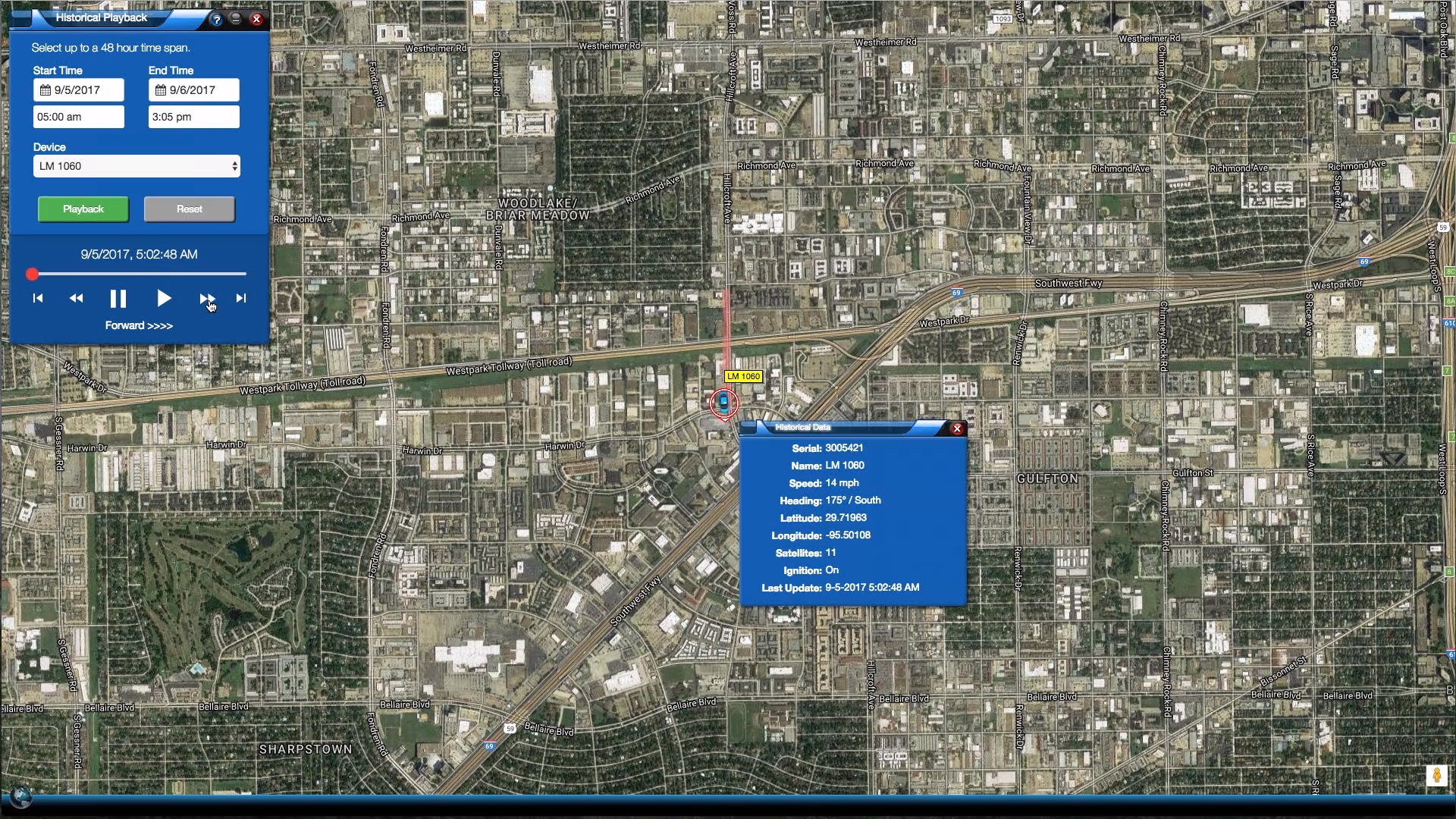
- Cellular GPS updates every 5 or 10 seconds, faster than nearly every competing platform.
- Satellite tracking plans extend coverage globally, including remote areas without cellular service.
- Geofencing alerts notify managers when vehicles or assets enter or exit designated zones.
- Remote vehicle kill switch lets managers disable a stolen or unauthorized vehicle remotely.
- IFTA mileage tracking by state simplifies fuel tax reporting for commercial operators.
- Asset tracking shares the same refresh rate as vehicle tracking, useful for construction equipment and trailers.
The platform's headline feature is its refresh rate. The cellular "Most Popular" plan updates vehicle location every 10 seconds, while the "Blazing Fast" plan cuts that to every five seconds. Those speeds are genuinely faster than most competitors, many of which update every 30 seconds to two minutes. For operations where pinpoint real-time awareness matters, such as emergency response contractors or urban delivery fleets, that gap is meaningful.
Beyond GPS speed, the feature set narrows considerably. You get geofencing alerts, ignition notifications, idle warnings, maintenance reminders based on mileage or hours, and historical route playback. Weather and traffic overlays are built into the map view. There's also a remote kill switch, remote door unlock, and an ExxonMobil Fleet Affinity fuel card integration for managing fuel purchases. These are genuinely useful tools, but they cover a fairly small slice of what a full fleet management platform should handle.
Where US Fleet Tracking falls short is driver and vehicle management. There are no vehicle diagnostic tools, no maintenance records (only reminders), no automatic route optimization, no panic button, and no two-way messaging between drivers and dispatchers. ELD compliance, required for commercial carriers under FMCSA regulations, is only available as a paid add-on rather than a standard inclusion. Competitors like Samsara and Verizon Connect bundle most of this at comparable price points.
US Fleet Tracking: Ease of Use
US Fleet Tracking has a reputation for being one of the simpler fleet systems to set up and use. Device activation is handled online without needing a service call, and the interface is clean enough that most managers can navigate it without dedicated training. The mobile app is available on both iOS and Android, allowing location monitoring and alert management from a phone.
The web-based dashboard is functional but visually dated compared to platforms like Samsara or Motive, which have invested heavily in modern UI design. For users who don't need advanced dashboards, that's a reasonable trade-off. For teams expecting the kind of polished experience you'd get from newer entrants to the market, the interface may feel like a step back.
US Fleet Tracking: Pricing
US Fleet Tracking offers four plans split across cellular and satellite options. The cellular plans cost $29.95 per vehicle per month for 10-second updates and $39.95 per month for five-second updates. Satellite plans are $24.95 per month for standard coverage with three daily updates, and $79.95 per month for premium satellite with five-minute refresh intervals. Battery-powered trackers add $10 per month to any plan. Hardware is purchased separately: the entry-level AT-V4 Wireless GPS Tracker costs $199, while the QT-V4 Pro with additional sensor support runs $249.
The biggest pricing advantage is the absence of long-term contracts. Most competing platforms, including Samsara and Verizon Connect, require commitments of one to three years. US Fleet Tracking operates on rolling monthly agreements, which makes it easy to test the platform or scale down without penalty. Volume pricing is available for larger fleets by contacting the sales team directly, though those rates aren't published online.
US Fleet Tracking: Customer support
Support is available through live chat on the website, by phone at (405) 726-9900, and by email at [email protected]. The company also offers a free live demo for prospective customers, which is a reasonable substitute for the free trial many competitors provide. Hardware comes with a one-year limited warranty. There is no publicly listed Better Business Bureau rating, and independent user reviews are relatively sparse, which makes it harder to assess long-term support quality at scale.
US Fleet Tracking does not provide on-site installation technicians. For plug-and-play OBD-II devices, that's not a problem. For hardwired trackers across a larger fleet, you'll need to handle installation in-house or arrange a third-party technician. That's an extra cost and coordination burden that some operators may not anticipate upfront.
US Fleet Tracking: Alternatives
- Samsara: Techradar’s best fleet management platform for 2026, offering real-time tracking, AI dashcams, driver safety scoring, and ELD compliance in a single platform with strong support.
- Verizon Connect: Provides deeper vehicle diagnostics and driver management tools, making it a better fit for fleets that need comprehensive reporting alongside GPS tracking.
- Motive : covers ELD compliance, fuel management, and driver coaching out of the box, with near-real-time GPS updates at a competitive price point.
US Fleet Tracking: Final verdict
US Fleet Tracking occupies a clear but narrow position in the market. If your fleet's most pressing need is real-time location visibility at the fastest possible update speed, and you want to pay month-to-month without contracts, this platform is genuinely hard to beat at its price point. The satellite coverage options also make it a practical choice for operations in remote regions where cellular networks are unreliable.
Most commercial fleets, though, need more than a fast GPS signal. The missing maintenance records, lack of route optimization, absence of driver communication tools, and ELD locked behind an add-on are real gaps, not minor omissions. For any fleet where compliance, safety monitoring, or operational analytics are priorities, I'd point you toward Samsara or Verizon Connect instead.
US Fleet Tracking: How we tested
My evaluation drew on hands-on assessment of US Fleet Tracking's platform, published pricing and feature documentation from the company's official website, and corroborating data from independent review platforms.
I assessed the platform across nine key attributes relevant to fleet operators, comparing feature depth, pricing transparency, and support access against leading competitors in the category.
US Fleet Tracking: FAQs
Does US Fleet Tracking require a long-term contract?
No. US Fleet Tracking operates on a month-to-month basis with no mandatory long-term commitment. This is one of its strongest differentiators against competitors like Samsara and Verizon Connect, which typically require one- to three-year contracts. Volume pricing agreements are available through the sales team for larger fleets that prefer that structure.
Does US Fleet Tracking support ELD compliance?
ELD (Electronic Logging Device) compliance is available as an add-on, not included in the standard plans. DVIR (Driver Vehicle Inspection Reports) are supported through a dedicated Android app. IFTA mileage tracking by state is included natively. For fleets with heavy ELD compliance needs, platforms that bundle this as a standard feature may be a better fit.
What hardware does US Fleet Tracking use?
The company manufactures its own GPS tracking devices, which it also supplies to over 350 third-party GPS companies. Hardware options include wired and wireless units, OBD-II plug-in trackers, dash cams, and asset trackers. Entry-level hardware starts at $199 for the AT-V4 Wireless GPS Tracker. Installation is self-managed, as the company does not provide on-site technicians.
How fast are US Fleet Tracking's GPS updates?
The fastest cellular plan updates every five seconds, and the standard cellular plan updates every 10 seconds. Those are faster refresh rates than most fleet management platforms on the market. Satellite plans update either three times per day or every five minutes, depending on the plan tier, making them more suitable for coverage in areas without reliable cellular networks.
Is US Fleet Tracking suitable for small fleets?
Yes. The pricing structure, starting at $24.95 per vehicle per month with no minimum fleet size requirement, makes it accessible for businesses tracking a single vehicle. The lack of long-term contracts also reduces the risk of committing to a platform before you've confirmed it meets your needs. That said, small fleets with growth plans may eventually find the limited analytics and driver management tools a constraint.





 English (US) ·