
- President Trump has reissued a national emergency banning foreign bulk‑power systems in the US
- Order targets risks from foreign hardware/software, likely focused on Chinese‑made equipment
- The US Energy Department has 120 days to set enforcement rules in consultation with other agencies
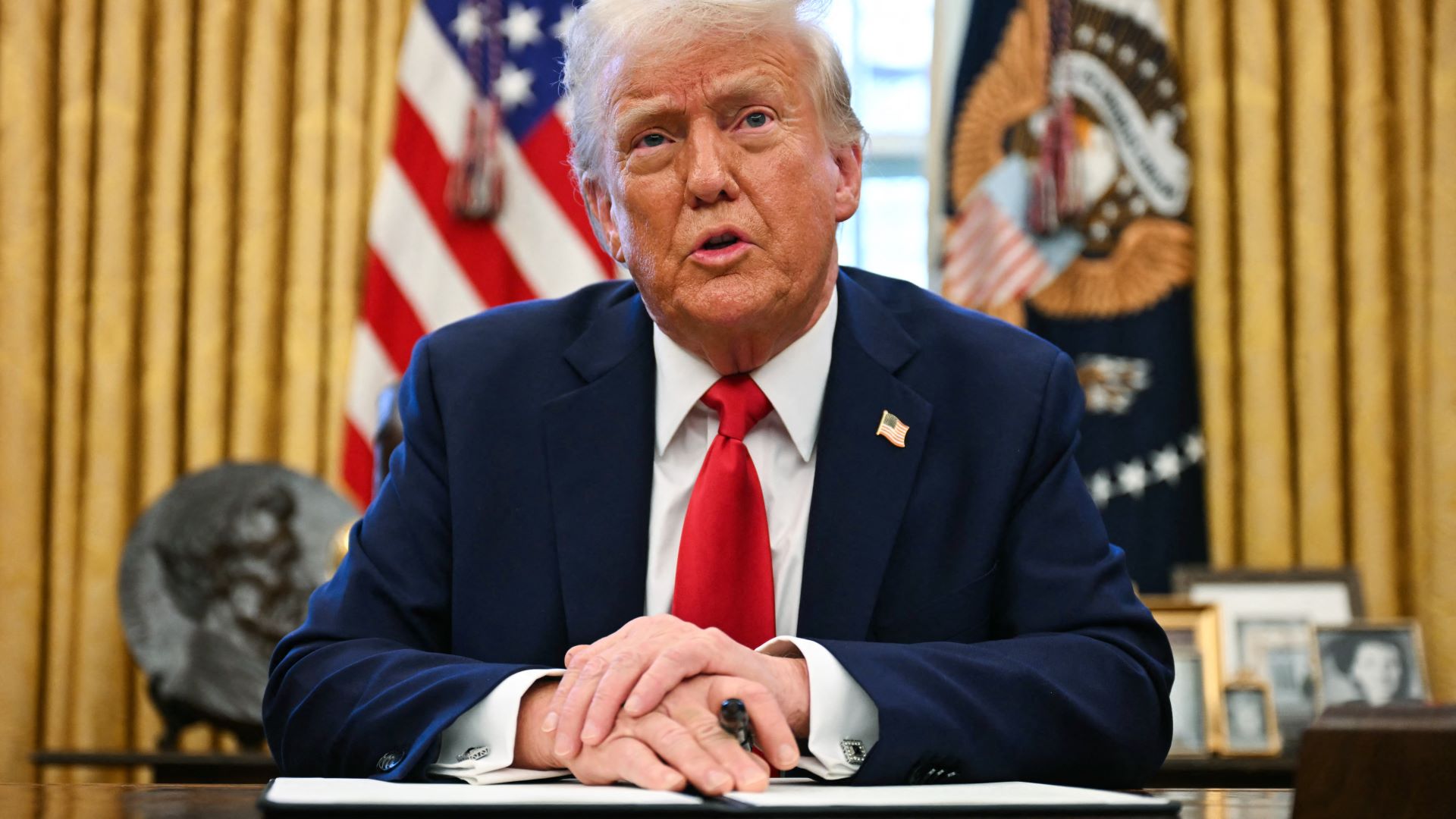
US President Donald Trump just declared a national emergency and banned all foreign bulk-power systems from being imported, installed, or used in the country - again. He also said the government will now analyze existing systems to see how many of them contain foreign-built hardware or software, how those parts could be isolated, eliminated, and then replaced with domestic alternatives.
Bulk-power systems are high-voltage infrastructure that generate and transmit electrical power throughout the country. They include power plants, transmission lines, substations, and the accompanying hardware and software gear. These systems are considered the backbone of the country’s electrical grid, and since disrupting them could cause widespread outages, they are seen as critical infrastructure.
The White House has now published an executive order in which Trump says that “certain foreign actors are increasingly creating and exploiting vulnerabilities in the United States bulk-power system.”
Reissuing the same ban
“During my first term, I found that the bulk-power system could be a target of those seeking to commit malicious acts against the United States, including malicious cyber activities, because of the significant risks that a successful attack would have on our economy, human health and safety, and national defense,” the announcement reads.
President Trump also said there were “minimal restrictions” on both acquisition and operation of these foreign-produced systems. As a result, the situation “constitutes an unusual and extraordinary threat … to the national security, foreign policy, and economy of the United States.”
Under the executive order, US citizens and companies are no longer allowed to buy, import, transfer, or install foreign-produced bulk-power systems that the Energy Department determines poses a national security risk, including software.
What the criteria for being a national security risk are, and how the Energy Department will enforce it, remains to be seen. It is also worth mentioning that this is not the first time Trump is doing this.
In mid-2020, Trump issued an almost identical executive order, declaring a national emergency over threats posed by foreign adversaries, and banning certain transactions of bulk-power gear. It was short-lived, though. President Joe Biden suspended it in January 2021 for 90 days, while the administration reviewed whether to replace it. It was later formally revoked by the Energy Department.
Taking aim at China (again)
Although it is not directly named anywhere in the executive order, the ban is most likely aimed primarily at China. Even during his first term, Trump was very vocal about China being a threat and spoke openly about the potential of Chinese hardware being used to eavesdrop on US citizens, companies, and the government.
During his first term, the Trump administration moved to eliminate Chinese firms from US 5G network infrastructure over national security and cyber-espionage concerns. Two companies bore the brunt of this campaign: Huawei and ZTE. In 2019, the former was placed on the Commerce Department’s Entity List, restricting its access to US technology. The FCC later labeled both as national security threats.
The administration also prohibited US telcos from using federal subsidies to buy Chinese gear and established a “rip and replace” program to eliminate whatever hardware was already installed.
This time around, the focus is mostly on electrical power. In its report, Cyberscoop says the executive order is a “response to fears of Chinese-made equipment housed within US energy infrastructure”. Citing the International Atomic Energy Agency, the same publication says China supplies 85% of solar supply chain production capacity and is a “major player” in the power transformer manufacturing business.
For this new order, the US Department of Energy now has a deadline of 120 days to develop rules on how to implement the order, and it will have to consult other key departments in the process.


Follow TechRadar on Google News and add us as a preferred source to get our expert news, reviews, and opinion in your feeds.








 English (US) ·