Trump calls $14 billion Taiwan arms deal a 'negotiating chip' with China after Xi said Taiwan issue could lead to 'clashes and even conflicts' — Trump says 'Taiwan would be very smart to cool it a little bit'
3 weeks ago
35
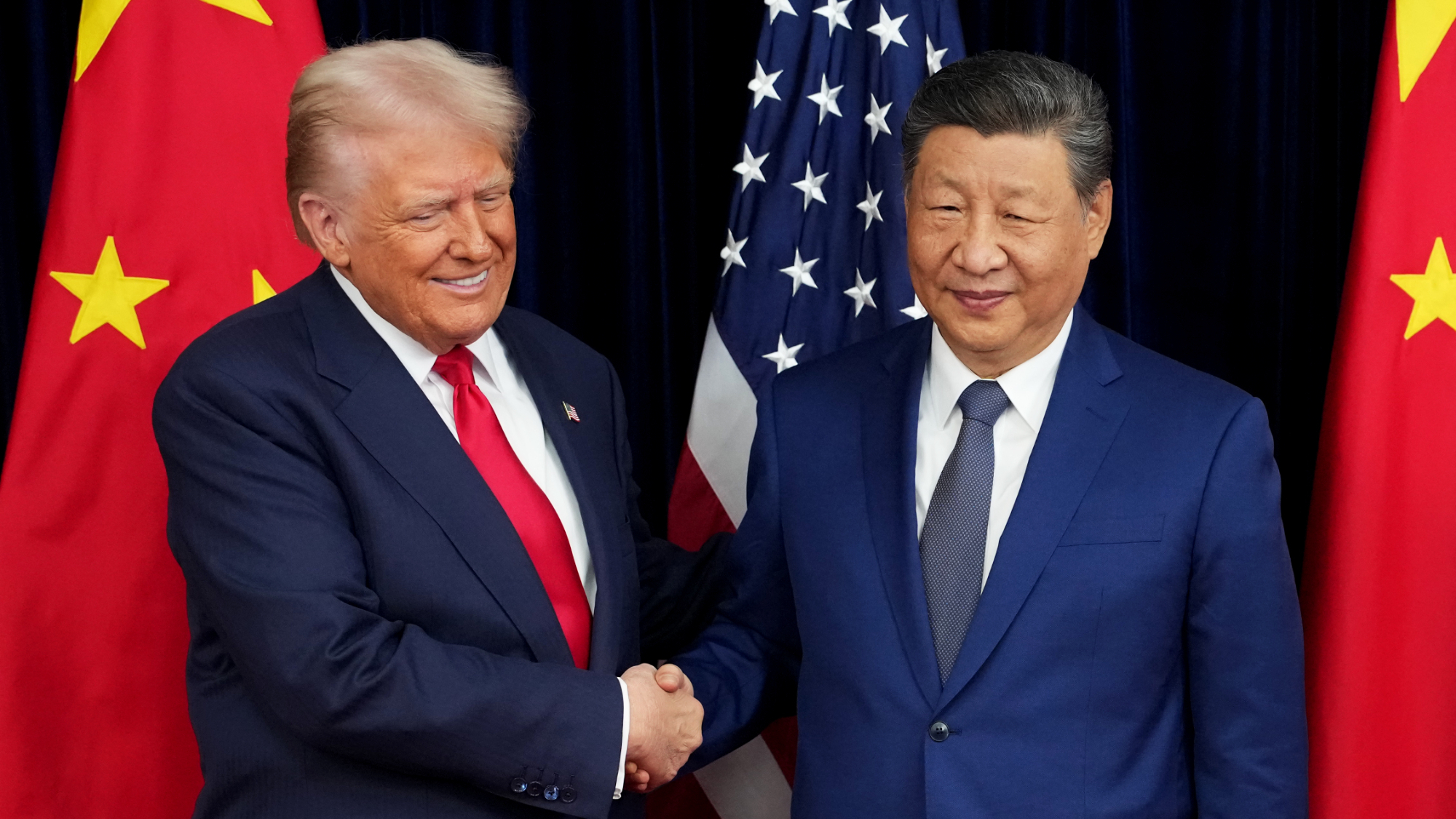
(Image credit: Getty / Andrew Harnik)
President Donald Trump described a pending $14 billion arms sale to Taiwan as a "very good negotiating chip" with China in a Fox News interview taped in Beijing on Friday, saying he had not yet approved the deal and was holding it "in abeyance." The package, which includes PAC-3 MSE interceptors and NASAMS air defense missiles, had been ready for Trump's signature since Congress approved it in January.
Trump's remarks came at the close of a two-day summit with Chinese President Xi Jinping, during which Xi warned that Taiwan is "the most important issue" in the bilateral relationship and that mishandling it could lead to "clashes and even conflicts." Trump told reporters aboard Air Force One that the two discussed Taiwan arms sales "in great detail."
Karen Kuo, spokesperson for Taiwanese President Lai Ching-te, called China the "sole destabilizing factor" in the Indo-Pacific and said arms sales between the U.S. and Taiwan reflect Washington's security commitment under the Taiwan Relations Act.
Secretary of State Marco Rubio told NBC News that U.S. policy toward Taiwan is "unchanged" and called any Chinese attempt to take the island by force "a terrible mistake." A bipartisan group of U.S. senators had written to Trump ahead of the trip, urging him not to treat Taiwan's defense as a bargaining tool, stating that American support for the island "is not up for negotiation."
Trump, however, framed the situation in transactional terms to Fox News, saying that when looking at the odds, “China is a very, very powerful, big country. That's a very small island," adding, "I do say this: Taiwan would be very smart to cool it a little bit."
Taiwan produces more than 90% of the world's most advanced semiconductors through TSMC, which fabricates chips for Nvidia, AMD, Apple, and Qualcomm. That concentration of manufacturing capacity is the foundation of what analysts and Taiwanese officials call the island's "silicon shield," the idea that global dependence on Taiwanese chips gives allied nations a strategic incentive to defend it.
Trump's willingness to treat Taiwan's military support as leverage over Beijing could, however, test that assumption. The U.S. struck a trade deal with Taiwan earlier this year that commits Taiwanese firms to over $500 billion in U.S. semiconductor investment, and TSMC is already building $165 billion in Arizona fab capacity. But reshoring chip production takes years, and the most advanced nodes remain in Taiwan under legal restrictions designed to preserve that shield.
Get Tom's Hardware's best news and in-depth reviews, straight to your inbox.
In 2023, U.S. intelligence officials privately briefed the CEOs of Nvidia, Apple, and AMD that China could invade or blockade Taiwan by 2027. Trump announced an $11 billion weapons package for Taiwan in December 2025, but has yet to begin fulfilling it.
Luke James is a freelance writer and journalist. Although his background is in legal, he has a personal interest in all things tech, especially hardware and microelectronics, and anything regulatory.
Trump calls $14 billion Taiwan arms deal a 'negotiating chip' with China after Xi said Taiwan issue could lead to 'clashes and even conflicts' — Trump says 'Taiwan would be very smart to cool it a little bit'

 3 weeks ago
35
3 weeks ago
35







 English (US) ·