
 Image via 20th Century Studios
Published Aug 26, 2026, 11:03 PM EDT
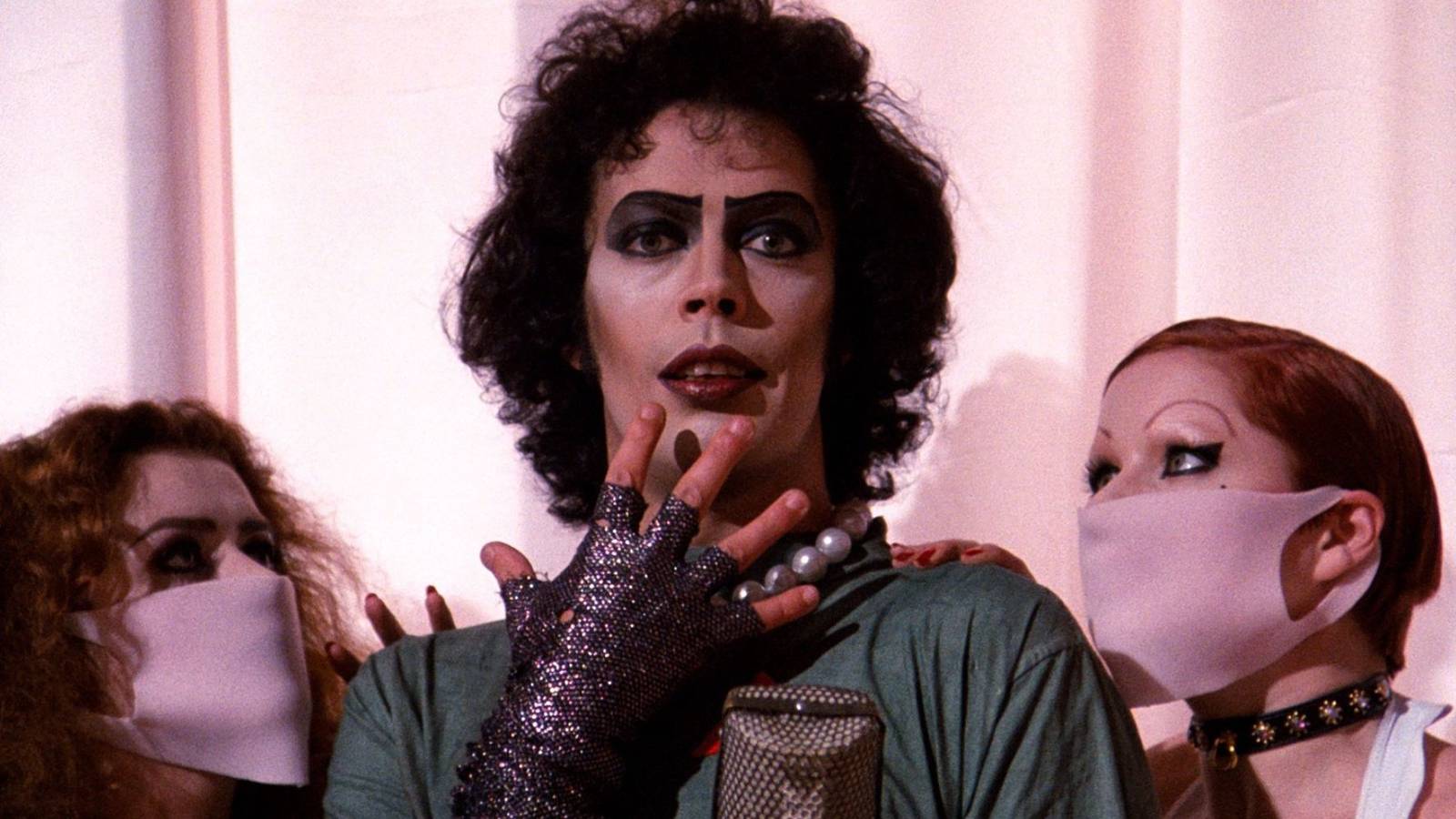
On August 26, movie fans around the world mourned the passing of actor Tim Curry, a star whose work had touched generations. Many adored him for his comedic turns in films such as Clue or Home Alone 2, or his performance as the terrifying Pennywise the Clown in the 1990 miniseries IT. To others, however, he will always be Dr. Frank-N-Furter, the mad scientist at the center of 1974’s The Rocky Horror Picture Show.
A startling performance that exuded queerness before the term was mainstream, on the surface, Curry's Frank-N-Furter was a chaotic and provocative pastiche of old sci-fi movies. In between the lines, however, the character shone a light for outsiders around the world, inviting you to be yourself without fear of judgment, if only for a couple of hours. To the millions who kept the movie in theaters for over 50 years, and to the actor himself, the performance was a beacon that could never have been foreseen.
Tim Curry Created a Cinematic Icon with Dr. Frank-N-Furter
 Image via 20th Century Studios
Based on the stage play by Richard O’Brien, the movie adaptation of Rocky Horror was developed in 1973, with Curry reprising the role he originated in London’s West End. Susan Sarandon and Barry Bostwick play Janet and Brad, an innocent young couple who find themselves stranded with a flat tire on a stormy night, only to seek refuge at “the Old Frankenstein place,” an ominous mansion with the lights turned on. Initially, Brad and Janet just want to use the phone, but the couple are soon unwittingly introduced to the world of Dr Frank-N-Furter (Curry), a cross-dressing mad scientist whose diabolical experiments and seductive nature draw them into chaos.
Featuring timeless songs such as “Sweet Transvestite” (Curry’s opening number) and “The Time Warp”, the film is a lurid cinematic rebellion that throws many of the rules of filmmaking out the window (along with some of the doctor’s failed experiments!). What gives it its power, however, is Curry’s performance, a symphony of gender ambiguity and reckless desire held together with the actor’s signature dry wit. His outfit – a corset, fishnets, and provocative makeup – stands in direct contrast with his upper-class English accent (the character was initially meant to be German, until Curry overheard two rich British women discussing their houses and mimicked their accent).
Playing the character with elements of British aristocracy, drag, and theatrical showmanship, he is the ringmaster gleefully welcoming us to the circus that is to come. Even if you haven’t seen the film, you’ve doubtless seen a picture of him in costume somewhere, alongside other great movie icons. Over time, however, his legacy became something more.
‘The Rocky Horror Picture Show’ Became a Haven for Outsiders
 Image via 20th Century Studios
Upon its initial release in 1975, Rocky Horror was critically ignored and a box office misfire. Yet, that initial release never actually ended, as The Rocky Horror Picture Show is still showing in theaters to this day, making it the longest-running theatrical release of all time. The film’s producers convinced 20th Century Fox to begin showing it at midnight screenings, inspired by the popularity of cult movies such as 1972’s Pink Flamingos that had thrived in that time slot. It proved a success, with fans beginning to show up to screenings in costume, develop their own responses to certain scenes, and even stage “shadow-cast” screenings, where actors perform alongside the film itself.
Over 50 years later, regular screenings are still common, because of their reputation as a place to experiment, let go, and be yourself. Those curious about changing their gender expression could attend a screening without judgment, and be part of the fun in an accepting environment. It became a safe haven for the LGBTQ+ community, fans of musicals, and those who simply like their cinema a bit twisted.
And there, on the big screen, was Dr. Frank-N-Furter to welcome them all. He called to audiences, telling them “don’t dream it, be it.” Whoever you were, whatever you wanted to be, you were welcomed with open arms by a character who presented gender fluidity, bisexuality, and general queerness as a celebration, at a time when so much of the community hid from persecution. His performance, and the film itself, became a lighthouse for the lost, a shelter for the curious, and a home for the mischievous.
Tim Curry Always Valued the Film’s Legacy
Many movie stars bristle against being associated too closely with one role, and Tim Curry would be well within his rights to point out that he had many celebrated parts beyond Dr. Frank-N-Furter. However, instead of distancing himself, he embraced it. He appeared at screenings and conventions, took part in documentaries, and even took on the role of the narrator in a 2016 tribute/TV remake, The Rocky Horror Picture Show: Let’s Do The Time Warp Again.
Looking back on the film during its 50th anniversary in 2025, he said (via Gayety): “I’ve had people who left [the film] thinking they would say the stuff they had always wanted to say, and did.” When asked if the movie gave people the freedom to be who they are, he answered: “I think so”. Over five decades, a part that seemed like it was destined to sink without a trace became his defining role, and in his final years, he looked back on its legacy with grace and gratitude.
The Rocky Horror Picture Show may seem quaint or outdated at a time when LGBTQ+ stories are more present in mainstream culture. To generations, however, Curry’s man-making antagonist was an invitation that few other movies offered: the chance to sing, dance, and scream exactly the way you want to. To those who accepted the invitation, his performance was a gift, and a glimpse of a life where you could not just dream it, but be it.

Release Date August 15, 1975
Runtime 100 minutes
Director Jim Sharman
Writers Richard O'Brien, Jim Sharman
Franchise(s) The Rocky Horror Picture Show



 English (US) ·