
 Image courtesy of Everett Collection
Published Jun 26, 2026, 12:00 PM EDT
Cathal Gunning has been writing about movies, television, culture, and politics online and in print since 2017. He worked as a Senior Editor in Adbusters Media Foundation from 2018-2019 and wrote for WhatCulture in early 2020. He has been a Senior Features Writer for ScreenRant since 2020.
Although Yellowstone was initially sold to viewers as a modern-day Western, one pivotal scene made it clear that Taylor Sheridan’s hit series was more like The Godfather with horses. For some readers, that headline might seem a little confusing. After all, The Godfather famously has a horse, the head of which infamously ends up in the bed of one of the movie’s minor villains, sans the rest of its carcass.
However, while The Godfather’s racehorse decapitation is a deservedly legendary shock, the trilogy more broadly isn’t concerned with the world of ranches, horse-riding, and cowboys. Typically, movies and shows that do focus on this milieu, whether in the modern day or the old West, are viewed as Westerns. That explains why Taylor Sheridan’s Yellowstone was dubbed a Neo-Western when the hit series began in 2018. Focused on the Dutton family’s attempts to hold onto their massive sprawling titular ranch through any means necessary, the show certainly had the sunburned look of a Western.
Yellowstone also had hardened, amoral antiheroes reminiscent of the two outlaw brothers at the center of Sheridan’s earlier Neo-Western movie Hell or High Water, so it makes sense that viewers spent the first few seasons of the series treating it like a modern-day Western. However, by the time Yellowstone season 3’s dramatic, show-shaking finale came around, it was clear that the series was really a gangster show, rather than a Western, that shared as much creative DNA with The Godfather movies as it did with Clint Eastwood’s output.
Yellowstone Season 3's Ending Transformed It Into A Gangster Show

In season 3’s finale, the villain Garrett Randall organizes a series of hits on all the Duttons aside from Jamie. In a sequence that plays out like the ending of The Godfather in reverse, Beth receives a mail bomb, John is shot in a drive-by while helping a stranded woman change a tire on the freeway, and Kayce’s office is shot up by masked gunmen.
Now, of course, the fact that Yellowstone’s spinoffs star Kayce and Beth proves that none of these events were quite as disastrously lethal as they seemed, and season 4’s premiere revealed that everyone survived Randall’s attacks in one of the show’s sillier twists. However, the structure of the sequence, from the targeted nature of Randall’s hits to the distinctly territorial feud between the family and this rival, owed more to mob movies than any Westerns.
Yellowstone Obscures The Fact That John Dutton Is A Mob Boss In All But Name

Although Sheridan’s hit spy series Lioness proves that not all of his work resides in the Western and Neo-Western genre, the iconography of Yellowstone went out of its way to portray the show as a Western. Many of its main characters were literal cowboys, a lot of plots centered on the everyday tasks involved in ranching, and its prequels, 1883 and 1923, were much more traditional, straightforward historical Westerns.
However, all of this was used to elide the fact that Kevin Costner’s John Dutton was a mob boss in all but name, making the show as indebted to gangster movies as it was to Westerns. The fact that Sheridan’s other shows include crime thrillers like Mayor of Kingstown, Tulsa King, and its upcoming spinoff Frisco King, and his big-screen CV consists of crime thrillers like Sicario and Wind River, is no coincidence.
For all of its Western trappings, the Yellowstone franchise owes as much to the movies of Martin Scorsese as it does to those of Sergio Leone. It might have taken until season 3’s finale for this to become obvious to many viewers, but Yellowstone’s secret debt to The Godfather couldn’t be unseen once it became clear.
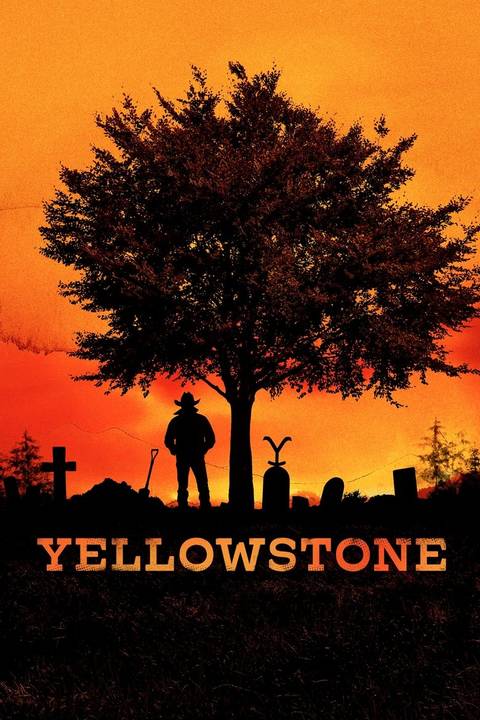
Release Date 2018 - 2024
Network Paramount Network
Showrunner Taylor Sheridan
Directors Stephen Kay, Taylor Sheridan, Christina Alexandra Voros, Guy Ferland, John Dahl
Writers John Coveny, Ian McCulloch


 English (US) ·