
 9 hours ago
6
9 hours ago
6
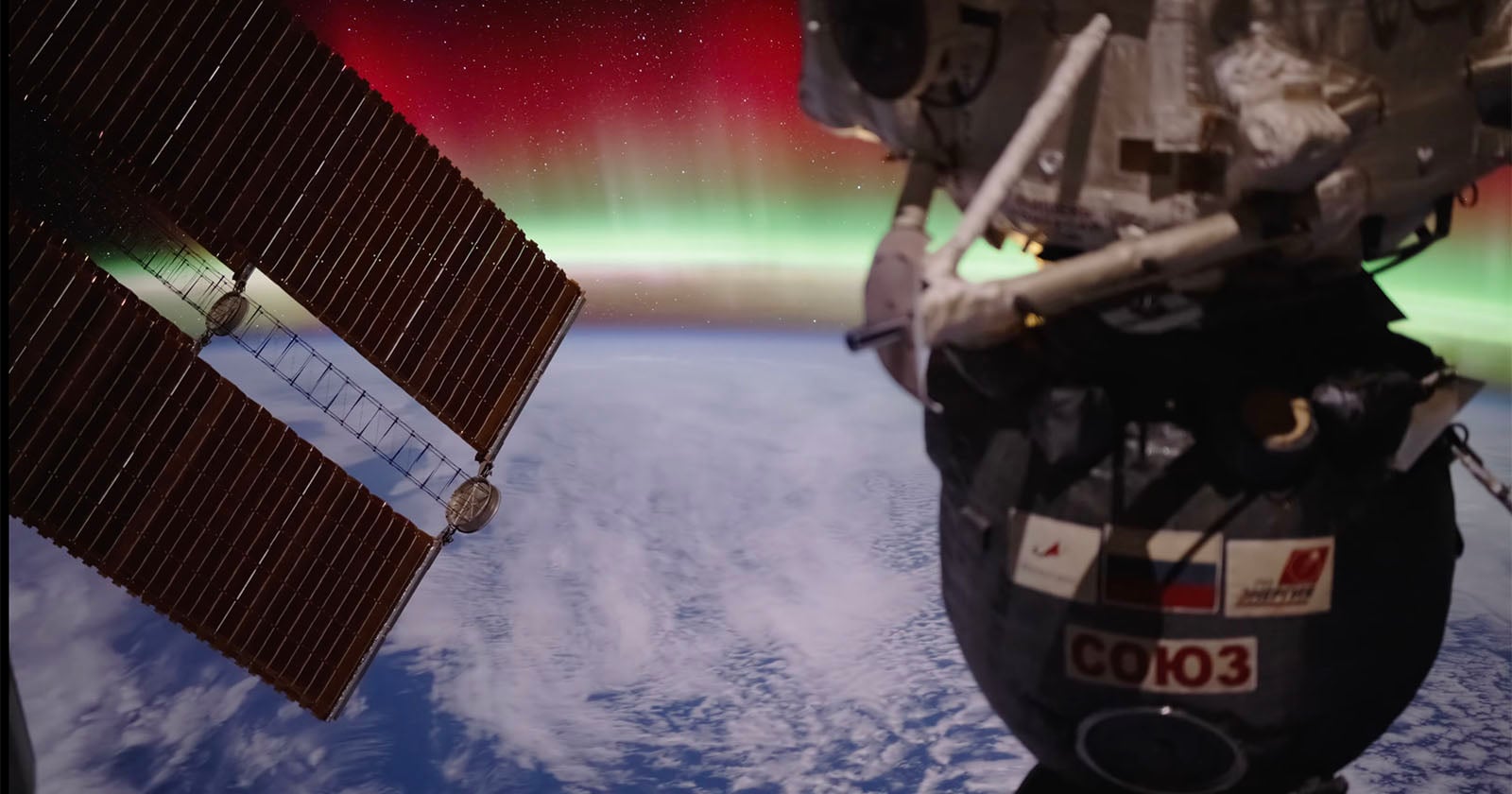 Sophie Adenot / Jessica Meir / ISS / NASA / ESA / Seán Doran
A filmmaker has created a beautiful timelapse from photos taken by astronauts onboard the International Space Station.
Seán Doran used recent photos taken by Sophie Adenot and Jessica Meir of aurora lights swirling and dancing majestically over the surface of the Earth.
Footage taken by French astronaut Adenot is particularly spellbinding. She shared the timelapse last week to her social media channels, which she captured on Day 139 of her mission during orbit 2155.
“I’m thrilled to finally share with you the timelapse of the most spectacular aurora (so far!) from the εpsilon mission,” Adenot says.
“It’s hard not to give in to the magic of the moment while watching this ribbon of green light ripple and dance before our eyes.”
Adenot says that moments such as seeing the aurora lights “never get old” and that when it happens, “the whole crew suddenly find themselves vying for a good spot at a window.”
Doran took Adenot’s and Meir’s footage — a total of 5,234 images — and “repaired, remastered, and retimed” them.
“33,946 additional frames are created to complete this 4x real time video footage,” Doran explains. “A method called frame interpolation is used to calculate the extra video frames required to re-create the smooth motion of ISS orbiting Earth.”
Doran says each sequence presents a unique set of challenges when attempting to upscale the footage to ultra high definition.
“Restoration requires manual repair of image artifacts such as hot pixels present on the camera’s imaging sensor, dust on the camera’s lens, dirt, and micro-meteor damage to the ISS cupola windows,” he says.
“Visuals are enhanced by applying a denoising algorithm, correcting exposure offsets across the timelapse and adjusting contrast, brightness, and color grade.”
“Visual artifacts that detract from the desired outcome are repaired. Intermediate sequences are produced to consolidate the restoration and remastering processes and to assist with the frame interpolation method used to produce the final video,” he adds.
Doran says that he upscales the videos to present the work done by astronauts onboard the ISS “in the best possible light.” Adding that his work is best viewed on a large screen with a good sound system.
Image credits: Sophie Adenot / Jessica Meir / ISS / NASA / ESA / Seán Doran





 English (US) ·