
 Image via Miramax Films

Published Feb 10, 2026, 5:23 PM EST
André Joseph is a movie features writer at Collider. Born and raised in New York City, he graduated from Emerson College with a Bachelor's Degree in Film. He freelances as an independent filmmaker, teacher, and blogger of all things pop culture. His interests include Marvel, Star Wars, Ghostbusters, Robocop, wrestling, and many other movies and TV shows.
His accomplishments as a filmmaker include directing the indie movie Vendetta Games now playing on Tubi, the G.I. Joe fan film "The Rise of Cobra" on YouTube, and receiving numerous accolades for his dramatic short film Dismissal Time. More information can be found about André on his official website.
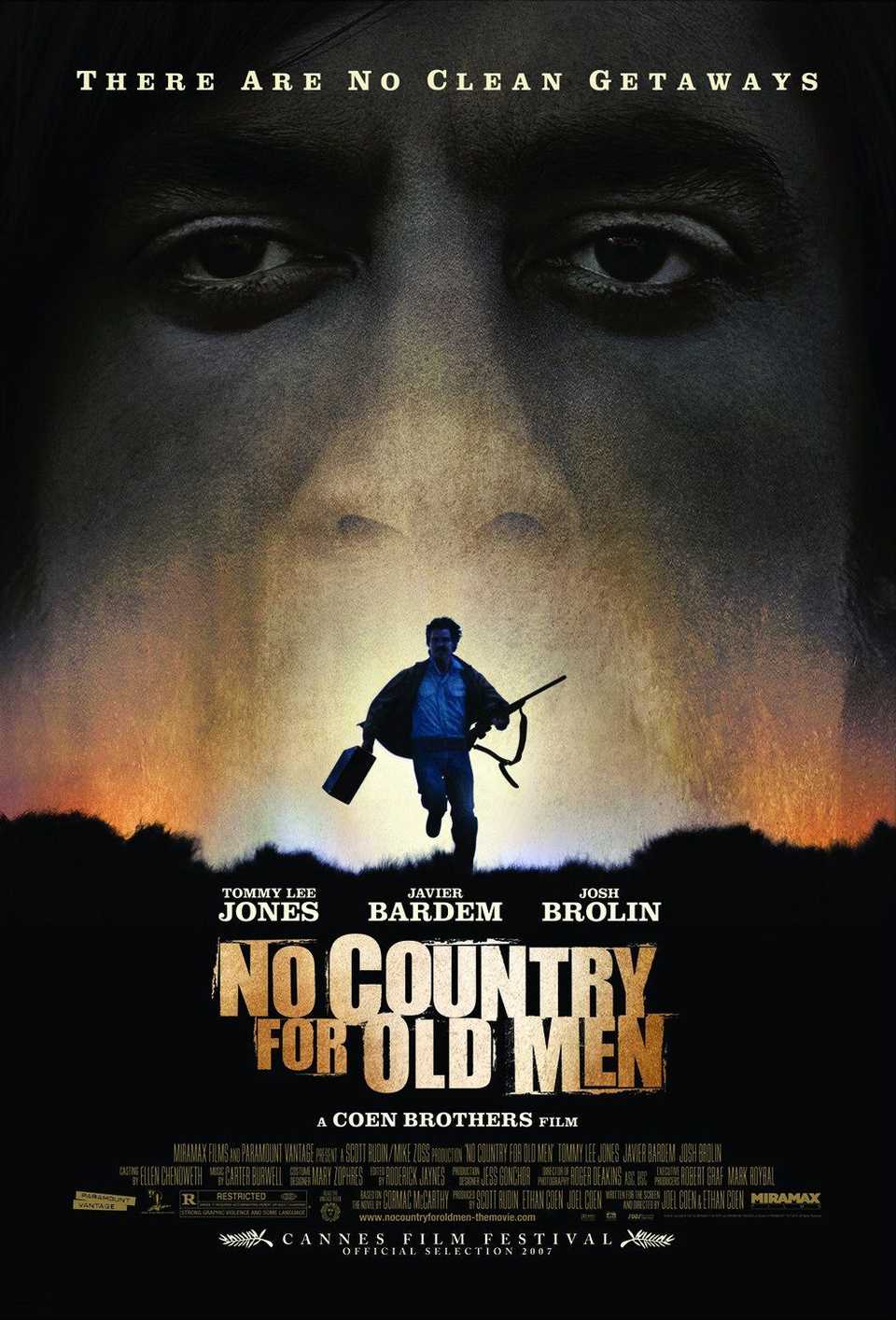
Few films in the revisionist or neo-Western canon feel as cold to the touch as No Country for Old Men. Joel and Ethan Coen’s 2007 masterpiece isn’t built on horseback heroics or dusty showdowns at high noon. Instead, it weaponizes stillness, inevitability, and moral decay. Adapted from Cormac McCarthy’s novel, the movie strips the Western genre down to its bleakest philosophical core — a place where violence isn’t romanticized but treated as an unavoidable force of nature. At the center of that dread stands Anton Chigurh (Javier Bardem), a figure so detached from humanity that he feels less like a man and more like fate incarnate.
It only takes one line to understand why he lingers in the cultural imagination: “What’s the most you ever lost on a coin toss?” Spoken in a quiet Texas gas station, the question lands like a death sentence disguised as small talk. It’s one of the most chilling lines ever uttered in a Western-themed film — not because it’s loud or theatrical, but because it reduces life and death to the flip of a coin. In a genre historically defined by codes of honor and moral reckonings, Chigurh’s philosophy is terrifyingly impersonal. He doesn’t kill out of rage, greed, or revenge. He kills because, in his mind, fate has already decided.
‘No Country for Old Men’ Reframes Violence in a Philosophical Way
The horror of the gas station scene lies in its restraint. There’s no swelling score, no sudden violence, and no overt threat. Chigurh engages the elderly clerk (Gene Jones) in what initially feels like an awkward conversation. But as the dialogue unfolds, tension coils tighter with each pause. By the time he instructs the man to “call it,” the audience realizes the stakes — a human life hinging on a coin toss the clerk never consented to. The randomness is the point. Death, in Chigurh’s worldview, isn’t personal. It’s procedural.
This line is so chilling because it removes agency entirely. The victim’s survival has nothing to do with morality, strength, or intelligence. It’s luck — pure and indifferent. At the same time, Chigurh reframes violence as philosophy. He treats the coin as if it has traveled through time to arrive at this exact moment, imbuing chance with spiritual weight. Even politeness becomes dangerous; the clerk’s attempt to humor the conversation nearly costs him his life. In that sense, the scene reflects the film’s broader thesis: the world has grown more chaotic and senseless, beyond the comprehension of old-guard figures who still believe in order.
Javier Bardem’s Chilling Performance Earned Him an Oscar
None of this would work without Bardem’s performance, which transforms Chigurh from the page into a cinematic nightmare. Bardem doesn’t portray him like a traditional movie psychopath. There’s no theatrical rage or flamboyant villainy. Instead, he operates with eerie calm — his movements precise, his speech measured, his gaze unblinking. The now-iconic pageboy haircut and hollow stare only heighten the unease. When he asks about the coin toss, it doesn’t sound like curiosity. It sounds like the inevitability of death speaking.
Bardem’s restraint is precisely what makes the performance so powerful. He dominates scenes through stillness rather than spectacle, creating tension through implication alone. The coin toss sequence became the defining showcase of his work — a masterclass in psychological menace delivered through minimalism. It’s no surprise the role earned Bardem the Academy Award for Best Supporting Actor. The win wasn’t just recognition of a strong performance; it was acknowledgment of one of the most indelible villains in modern film history.
What makes Chigurh especially impactful within the Western framework is how he dismantles the genre’s traditional moral structure. Classic Westerns revolve around justice — lawmen, outlaws, and the eventual restoration of order. But in No Country for Old Men, that order is eroding. Sheriff Bell (Tommy Lee Jones) represents the old world: a man trying to apply logic and morality to crimes that defy both. He isn’t chasing a villain he can understand; he’s confronting a force he can’t rationalize.
The coin toss becomes symbolic of that generational and philosophical shift. In the mythic West, men shaped their destinies through courage and confrontation. In the Coens’ neo-Western landscape, destiny is arbitrary — cruelly indifferent to human values. Chigurh doesn’t see himself as evil. He sees himself as an instrument of fate, merely carrying out what chance has decreed.
Nearly two decades after the film’s release, “What’s the most you ever lost on a coin toss?” remains one of the most haunting lines in cinema — not just because it’s memorable, but because it encapsulates the film’s existential terror. It represents fate replacing justice, chance replacing morality, and silence replacing spectacle. In a genre built on mythic heroism, the line feels like a funeral bell tolling for the Old West.
No Country for Old Men is streaming on Pluto TV in the US.
Release Date November 21, 2007
Runtime 122 minutes
Director Joel Coen, Ethan Coen
Writers Ethan Coen, Joel Coen







 English (US) ·