
Tribit PocketGo: two-minute review
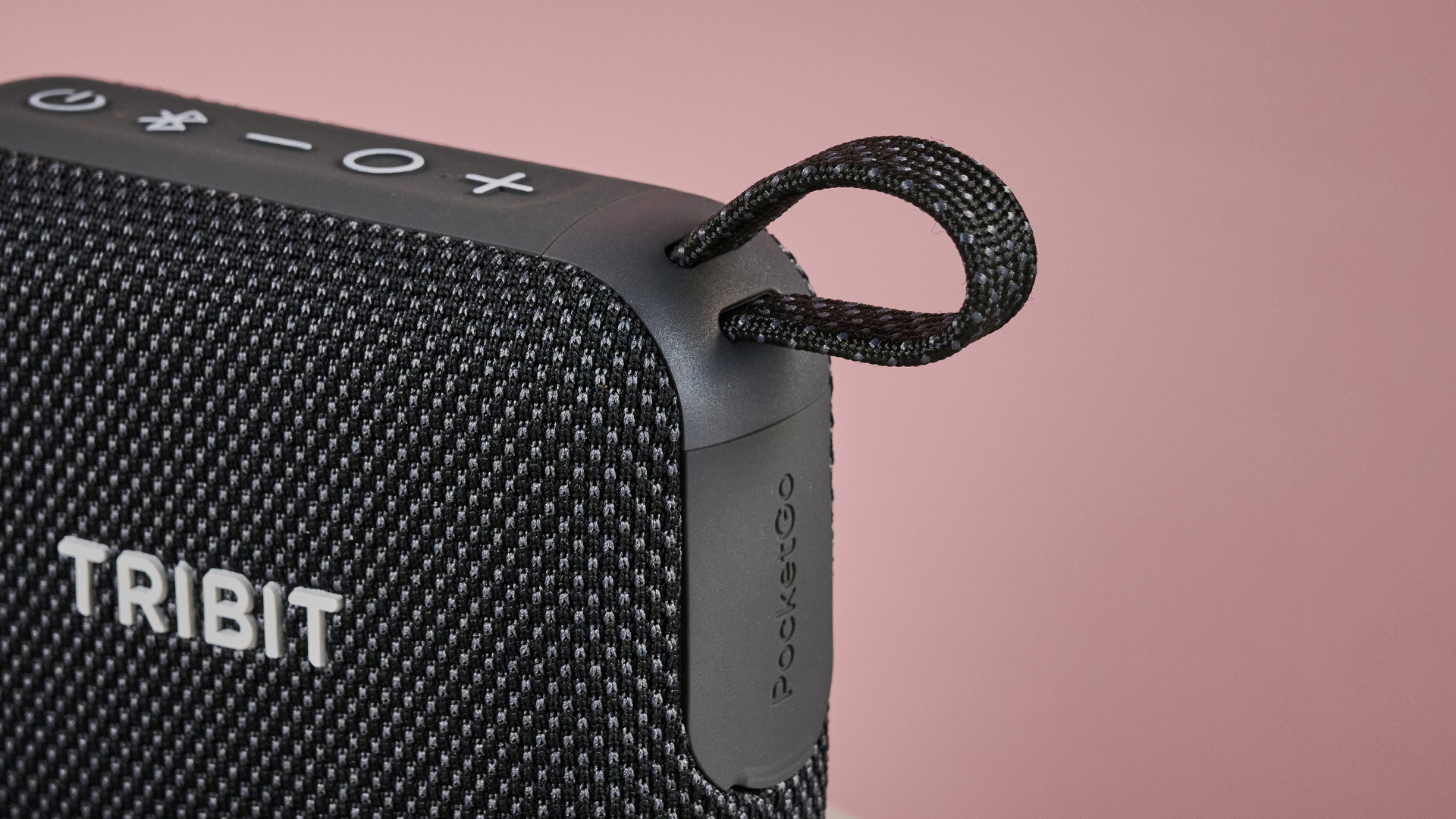
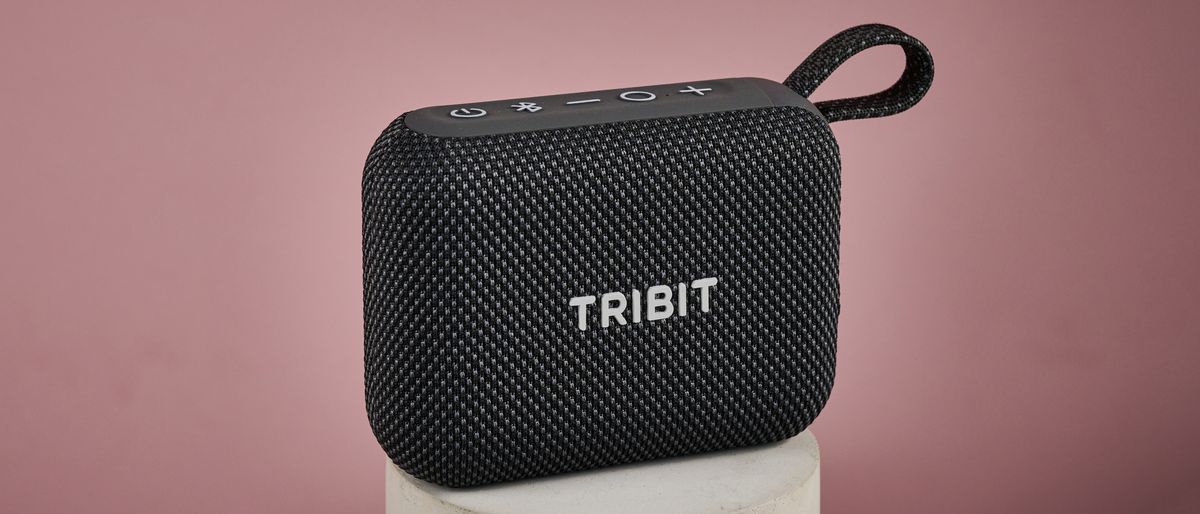
The Tribit PocketGo is an ultra-small Bluetooth speaker that comes with an equally small price tag. It’s lightweight, can be easily hooked up, and is ideal for on the go use thanks to its pocket-sized form.
One more positive is the model’s 20 hour battery life, which is right up there with the best Bluetooth speakers in its size class. Unfortunately, though, this is where much of my praise reaches its end.
See, the most important thing for any Bluetooth speaker is to sound good. And even when accounting for this speaker's limited size, I still think it falls flat in a few areas. Of course, you’re not going to expect much in the bass department, but I felt that audio could get muddied too easily on the PocketGo, with a generally one-note sound. Compression is also pretty prominent at higher volumes, and dynamics are pretty lacking.
Don’t get me wrong, the Tribit PocketGo isn’t the worst sounding speaker I’ve heard, not by some margin. Mids and highs still sound clear enough at mid-volumes, and less demanding tracks come through pretty well. But its obvious rival – the JBL Go 4 – sounds considerably better, and comes at a pretty similar cost.
Speaking of the JBL Go 4, it's clear that it was a huge source of inspiration for Tribit’s small-sized speaker. The two models look highly similar, but Tribit’s speaker doesn’t quite have the same level of refinement, and isn’t available in the same broad, exciting array of colors.
It’s not all doom and gloom, though. There’s an effective nine-band equalizer and a commendable selection of EQ presets. I was also interested to see microSD playback onboard – not something you’d see from a lot of rivals.
But in the end, it just feels as if the PocketGo fails to beat out its hero, the JBL Go 4. It doesn’t have the visual flair, the audio quality, or the sophisticated app required to assert supremacy. And as a result, I can’t recommend Tribit’s small speaker outright.
Tribit PocketGo review: price and release date
- $34.99 / £29.99 / AU$49.99
- Launched in November 2025
The Tribit PocketGo released in November 2025, and can be purchased in a range of color options, including Black, Blue, and Green. It has a list price of $34.99 / £29.99 / AU$49.99, which is a fair bit cheaper than the typical cost of its main competitor, the JBL Go 4, which is $49.95 / £39.99 / AU$59.95.
It's worth noting that Tribit isn't alone in wanting to offer the Go 4 for less; another option we tested, the AO mini portable wireless speaker, tried (in the UK at least) to match JBL's option for a cheaper £29 (around $34). But sadly, neither has fully succeeded…
Tribit PocketGo review: specs
Swipe to scroll horizontally
Weight | 0.5lbs / 220g |
Dimensions | 4.3 x 3.2 x 1.7 inches / 108 x 81 x 42mm |
Connectivity | Bluetooth 6.0 |
Battery life | 20 hours |
Speaker drivers | 1x 7W full range |
Waterproofing | IP68 |
Tribit PocketGo review: features
- Pleasing customizable EQ options
- Impressive 20-hour battery life
- Multi-speaker pairing, but no Auracast
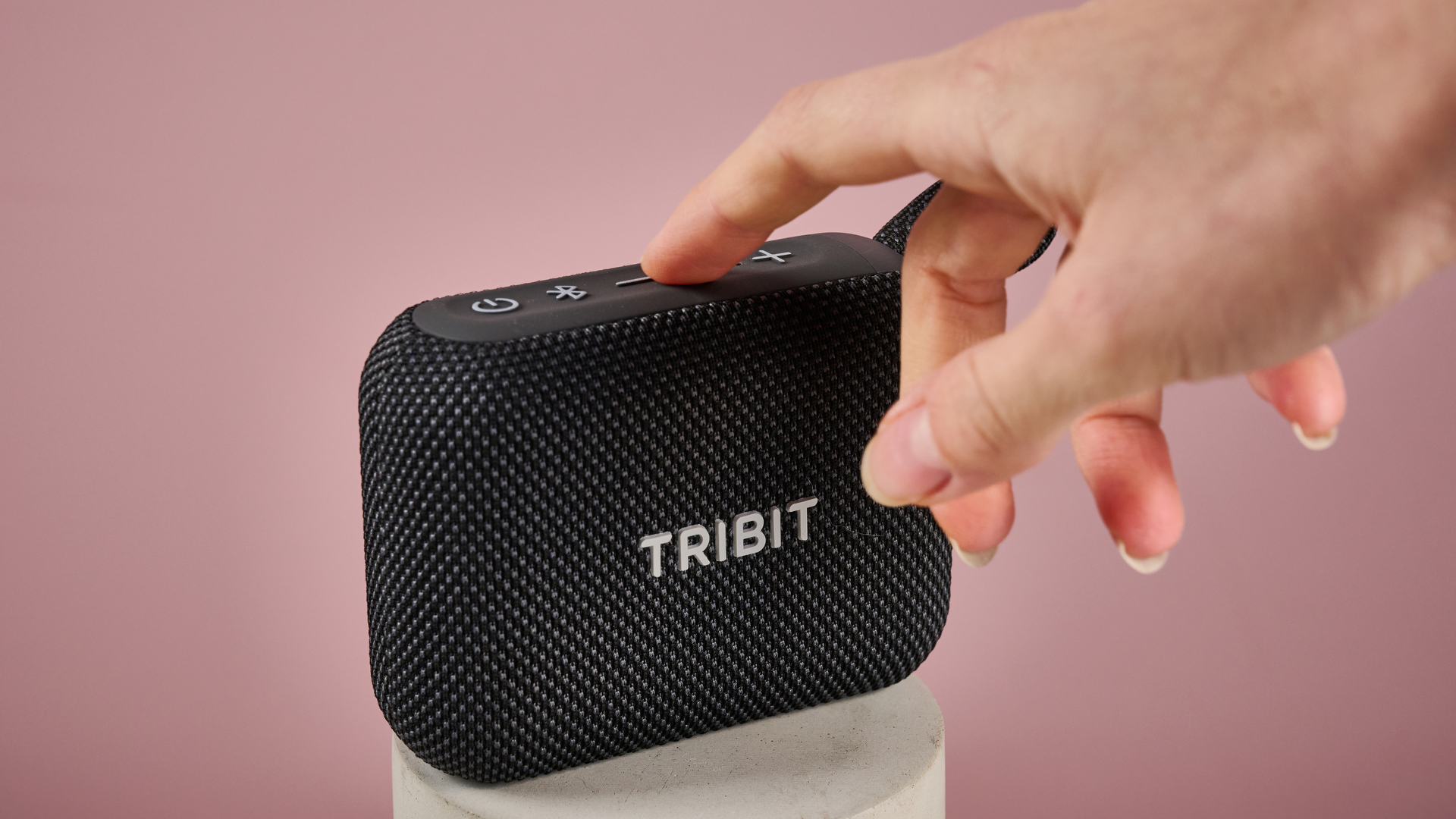
The Tribit PocketGo has a decent set of features, with a few customization features available through the Tribit companion app. This opens up a bunch of EQ presets for different genres and listening environments, as well as a nine-band custom equalizer, which is a most welcome inclusion.
There’s not much more to explore in the app, though. You can control audio playback, alter the auto shutdown window, and toggle voice prompts on and off, but that’s about it. There are no battery preservation options, device management section, or anything out of the ordinary. I was also surprised to see Auracast left out, especially given the use of Bluetooth 6.0. You can pair two speakers together for stereo playback, though.
Another small thing worth noting is that the app isn’t the best I’ve used. It has a fairly rudimentary appearance, and I also experienced an issue where the app wouldn’t allow me to upgrade the speaker’s firmware. It believed that I wasn’t using the latest version of the companion software, but even after updating the app, I still couldn’t upgrade to the latest firmware, which was puzzling.
Anyway, your mileage may vary on that issue, and there are still plenty of good features to discuss. For instance, hands-free calling is available on the PocketGo thanks to its built-in mic. Quality-wise, the mic is just OK – a colleague said that I sounded pretty distant, but my words were still discernible. But one good thing is that the built-in mic enables you to use a voice assistant, which some users will appreciate.
One of the key benefits of the PocketGo is also its battery life. 20 hours is a very generous portion of playtime for a speaker of this size, though it’s worth noting that you can expect less if you’re listening at more than 50% volume. Still, 20 hours is almost three times the battery life of the JBL Go 4, which is the PocketGo’s nearest rival.
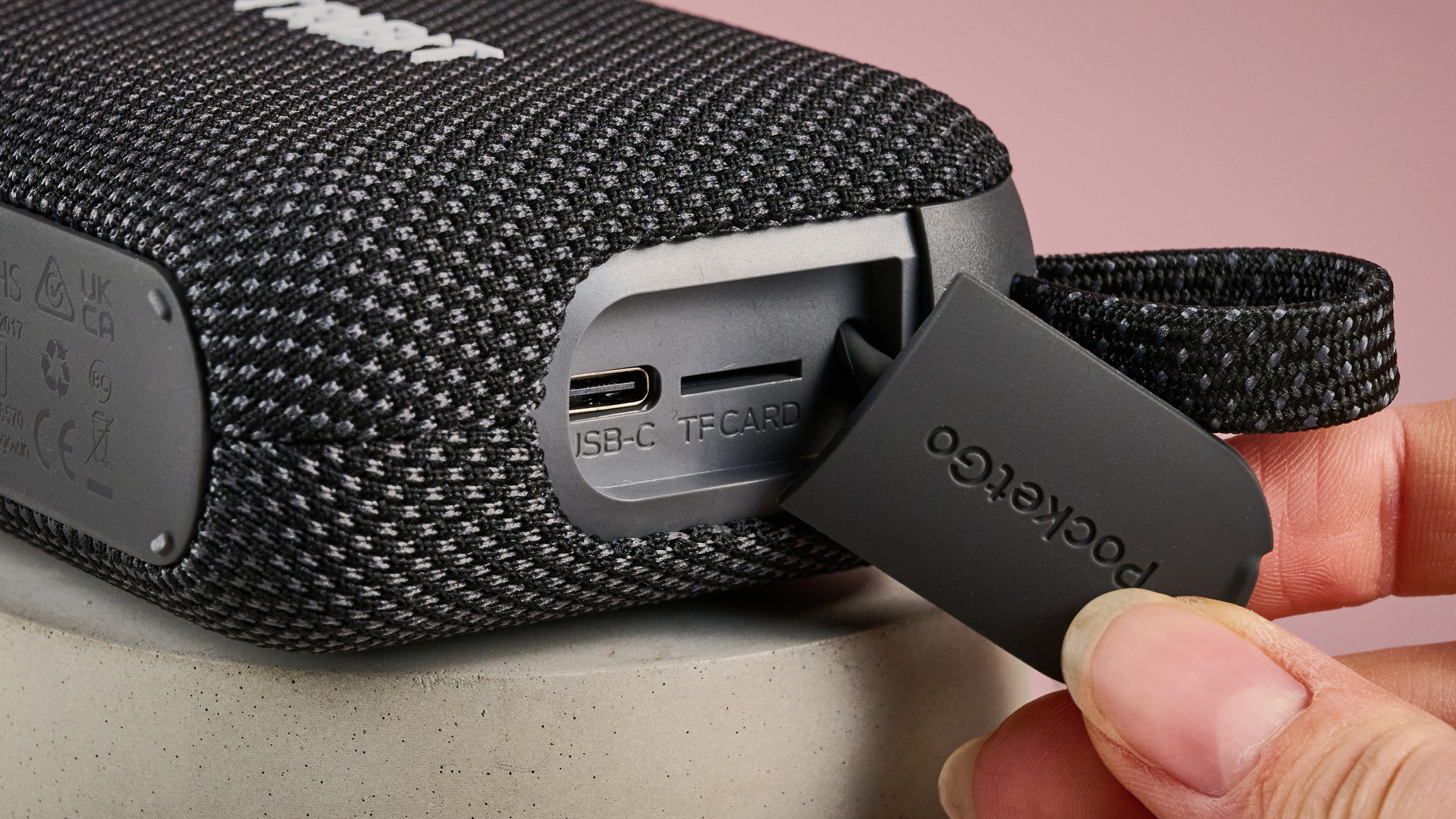
Finally, you’re able to play music from a microSD card thanks to a TF card input slot on the speaker. This isn’t something I’ve seen from a lot of rival models, and though it doesn’t seem to be the most practical way to enjoy your tunes, playback was stable when I tested it out.
- Features score: 3.5/5
Tribit PocketGo review: sound quality
- Mid-range and treble perform decently at mid-volume
- Bass is lacking, largely due to restricted size
- Lacks the dynamism and expression of the JBL Go 4
I’ll put my cards on the table – the Tribit PocketGo isn’t the best-sounding speaker I’ve tested, but it does have some redeeming qualities.
When listening to Black Eye by Allie X, the rapid-fire drum machine never sounded lethargic or bloated, although it did lack quite a bit of depth. That’s largely down to the small size of the PocketGo, which is light on power and can’t reach down all too deeply.
Higher in the frequency range, sudden percussive hits didn’t quite have the bite I’d hoped for – and generally the speaker’s dynamics never blew me away – but treble sounds were never harsh or uncontrolled at 50% volume or less. Vocals were also clear in the mix, which made for a decent overall listen, although I will say that they started to get muddied when I pushed volume above that 60-70% mark.
Tracks that feature sub-bass or generally deeper bass won’t fare well at all on the PocketGo. As I mentioned, there are some limitations here, so it’s to be expected, but tracks like 12 O.C Riddim by M-High featured almost inaudible low-frequency elements, which stripped them of the energy and excitement bass heads will be seeking out.
With a less demanding track like I’ve Got Your Number by Ned Doheny, there was a notable improvement, though. Strumming acoustic guitars were clear even with soulful vocals at the fore, and mid-bass – though not particularly impactful – came through cleanly. Again, there was very noticeable compression as I edged towards top volumes, but this speaker can get pretty loud for its size, so you might not need to crank things all the way to the top.
When I compared the PocketGo against its rival, the JBL Go 4, the latter model typically performed better. The PocketGo could get louder, but it had a less expressive overall sound, with the Go 4 plating up superior instrument separation and dynamics. Both speakers suffer from similar restrictions due to their size – neither gave me amazing deep bass or beautifully layered, detailed sound. But I think the Go 4 is the better sounding model.
- Sound quality score: 3/5
Tribit PocketGo review: design
- A less refined-looking JBL Go 4
- Small and lightweight
- Exceptional IP68 dust and waterproofing
Let’s address the elephant in the room here. To say that the Tribit PocketGo is inspired by the JBL Go 4 would be an understatement.
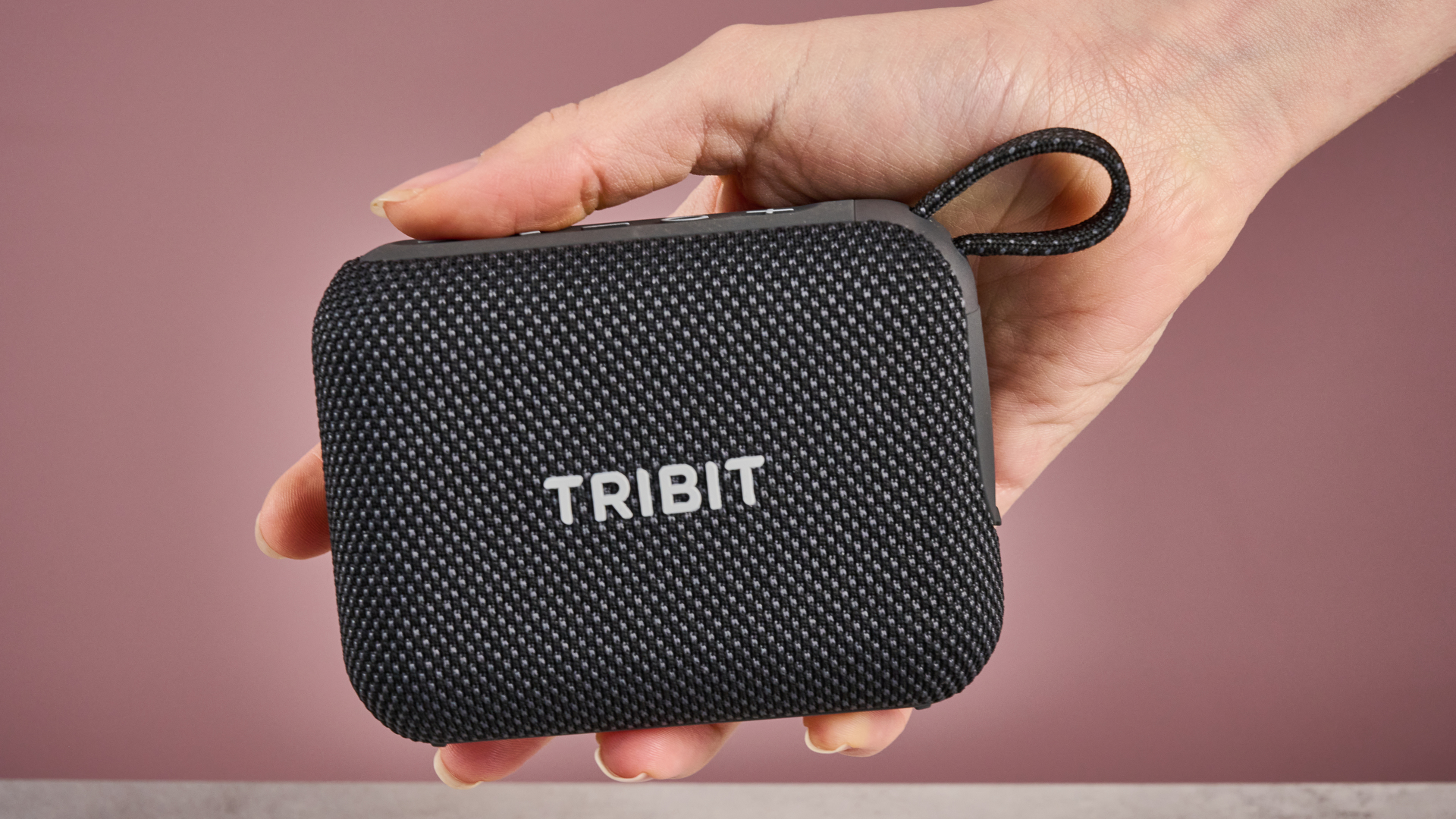
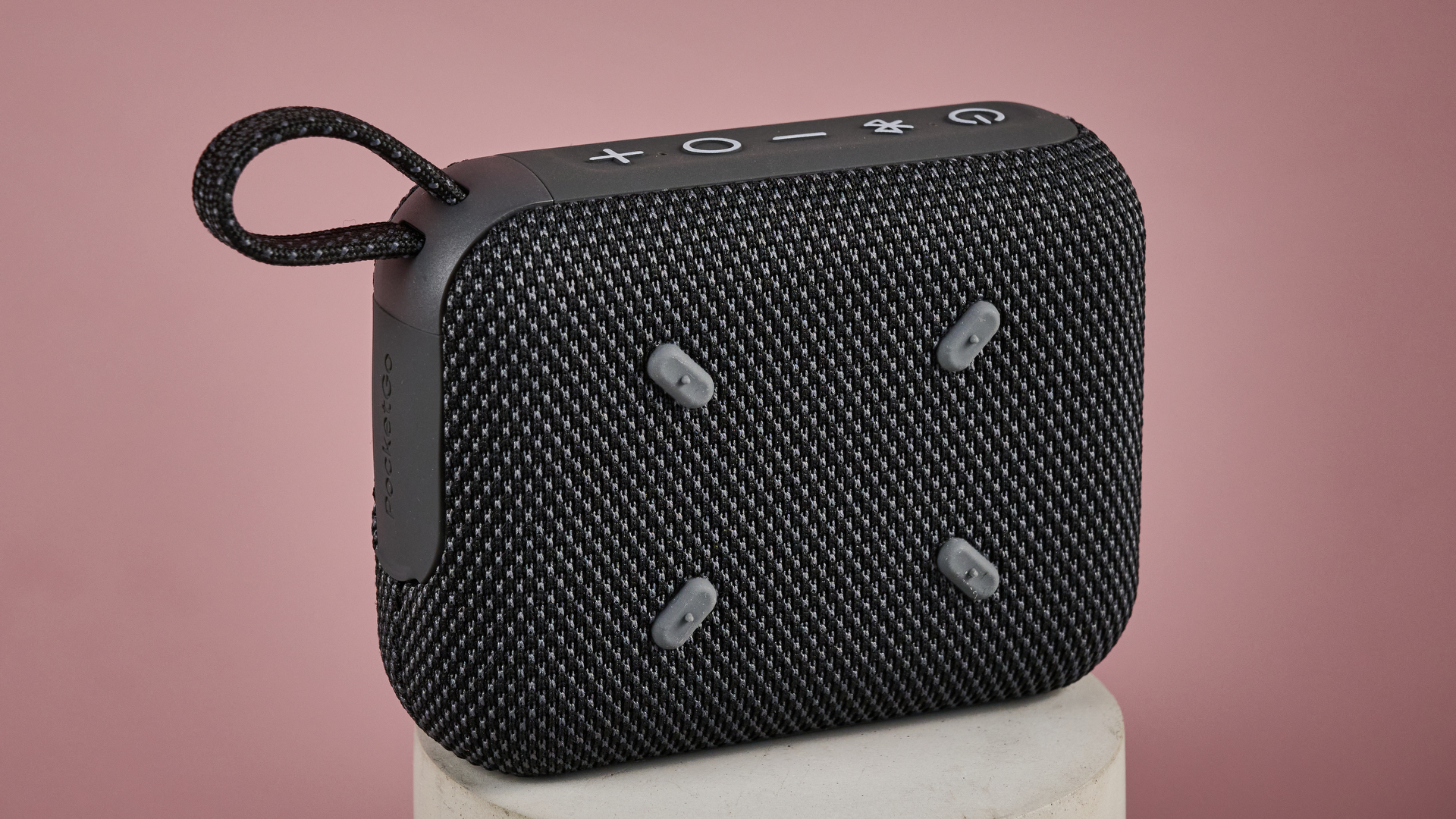
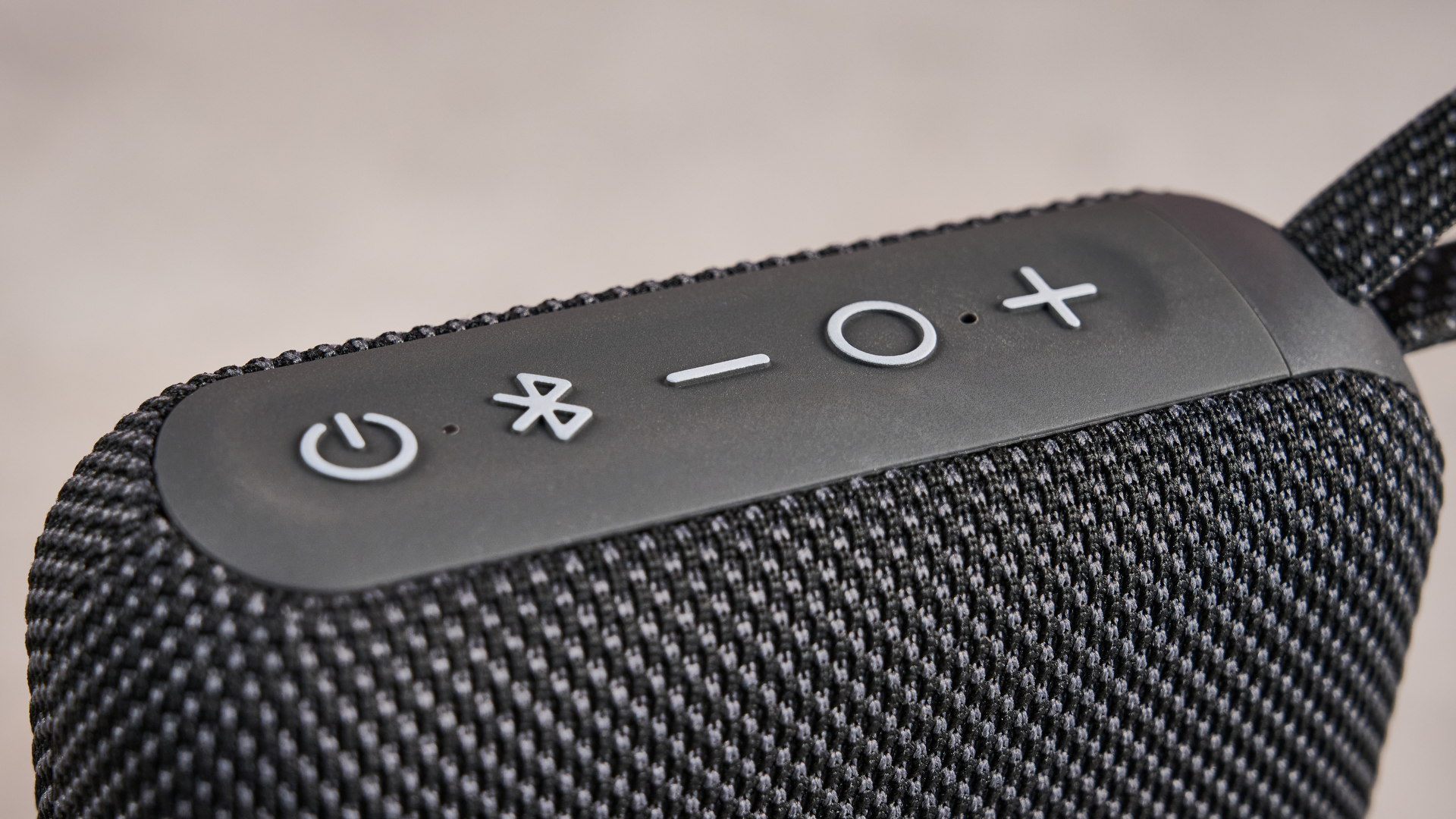
This is almost a one-for-one copy, featuring a fabric speaker grille, a rubber control pad, and small loop for hanging the speaker up. It’s not as refined or premium looking as JBL’s model, though, and its color options aren’t the most exciting, meaning it's not my favorite looks-wise.
But there are some definite positives to discuss in regard to this speaker’s design. First of all, it’s pleasingly compact and lightweight, coming in at just 0.5lbs / 220g. Its fabric loop also makes it easy to place on a hook – though I’d recommend laying it flat or on its base to listen to music, if you want the best audio quality.
What’s more, the Tribit PocketGo has an IP68 rating. That means it’s fully protected against dust, and highly waterproof too. More specifically, it can live through a 30 minute dunking under a meter and a half of water – it doesn’t get much better than that. In addition, it has a fairly solid construction, and should easily survive the occasional drop.
- Design score: 3/5
Tribit PocketGo review: value
- Has a very modest price tag
- Although you can grab an on-sale JBL Go 4 for similar
- Fairly average overall quality
The Tribit PocketGo is a very budget friendly option, coming in with a list price of just $34.99 / £29.99 / AU$49.99.
Of course, this speaker is far from perfect. It produces average audio with solid mid-range and treble output at mid-volumes, but limited instrument separation and poor overall sound at louder levels. Its design is also a little unoriginal, and there are some missing features I would’ve liked to see.
But when you consider its impressive playtime, excellent waterproofing, and compact build, there is still plenty to like. Is it going to blow you away for the price? Perhaps not, but I still think you get what you pay for.
Still, would I recommend it outright? Not exactly. I think the JBL Go 4 is still the stronger pick if you’re seeking out a cheap, small-sized option. It may have a slightly higher list price, but it's on sale fairly regularly for around $40 / £35 / AU$49. Its superior sound quality and aesthetic makes it the better pick, for me.
- Value score: 3.5/5
Should I buy the Tribit PocketGo?
Swipe to scroll horizontally
Features | Great battery life, but lacks Auracast, and companion app is pretty rudimentary. | 3.5/5 |
Sound quality | OK sounding at mid-volume, but struggles beyond that, generally one-note audio. | 3/5 |
Design | A little too close to the JBL Go 4, but lightweight and highly waterproof. | 3/5 |
Value | Overall, you get what you pay for, but no more than that. | 3.5/5 |
Buy it if...
You want a compact speaker to take on the go
One of my favorite things about the PocketGo is its satisfyingly small size, which makes it easy to throw in a bag or, well you know, in your pocket. It’s also dust and waterproof, meaning it's fit for use in any environment.
You’re on a tight budget
The low list price of the Tribit PocketGo makes it an enticing option. Its audio isn’t going to blow you away, and it's not the prettiest looking speaker on the market, but its long battery life and lightweight build may tempt you.
Don't buy it if...
You want great sound quality
Of course, some of this speaker’s flaws are linked to the inherent restrictions of its size. For instance, you can’t expect deep bass or amazing loudness here. But even still, this model left a little to be desired sonically, with a fairly one-note sound, limited instrument separation, and harsh audio at higher volumes.
You’re looking for something with style
This model looks a little bit too similar to the JBL Go 4 for my liking, but doesn’t quite have the refinement and charm of that model. There are less color options to choose from too, so I’d suggest picking the Go 4 over it.
Tribit PocketGo review: also consider
Swipe to scroll horizontally
Price | $34.99 / £29.99 / AU$49.99 | $49.95 / £39.99 / AU$59.95 | $89.99 / £50 / AU$99.99 |
Weight | 0.5lbs / 220g | 0.6lbs / 285g | 0.7lbs / 0.3kg |
Dimensions | 4.3 x 3.2 x 1.7 inches / 108 x 81 x 42mm | 3.7 x 3 x 1.7 inches / 94 x 78 x 42mm | 3.6 x 3.7 x 2 inches / 90.4 x 93.7 x 49.7mm |
Connectivity | Bluetooth 6.0 | Bluetooth 5.3 | Bluetooth 5.4 |
Battery life | 20 hours | 7 hours | 15 hours |
Speaker drivers | 1x 45mm full range | 1x 45mm full range | 1x 43mm full range |
Waterproofing | IP68 | IP67 | IP67 |
JBL Go 4
This is the speaker that the Tribit PocketGo wants to be. It’s not the best sounding speaker ever, but I appreciate the Go 4’s clear mids and controlled treble, and you can adjust EQ to your personal taste. It’s a colorful, well-built, and lightweight option that’s even in my guide to the best Bluetooth speakers. Read our full JBL Go 4 review.
Edifier ES20
The Edifier ES20 was one of my favorite Bluetooth speakers of 2025. It's a little larger than the PocketGo and Go 4, but it’s still nice and compact, and highly waterproof. Sonically, this is an excellent choice, with surprisingly detailed mids, punchy bass, and expressive treble. Read our full Edifier ES20 review.
Tribit PocketGo review: how I tested
- Tested within a one-week period
- Mainly used at home
- Predominantly tested using Tidal
I tested the Tribit PocketGo over a week-long period, mainly using it at home. During my time with the speaker, I spent hours listening to music, exhausted all of its features, and even compared it directly against the JBL Go 4.
When listening to tunes, I made sure to start with the TechRadar testing playlist, which features tracks from a range of genres. I also listened to songs from my personal library through both Tidal and Spotify.
And more generally, I’ve reviewed dozens of Bluetooth speakers here at TechRadar – more than 30 to be precise. As a result, I’m highly familiar with the PocketGo’s competition, and I know what it takes for a speaker to stand out in a highly convoluted market.
- First reviewed: January 2026
- Read more about how we test






 English (US) ·