This Is the Mount Rushmore of Horror Movie Directors
13 hours ago
5
Image via PA Images/Startraksphoto.com
Published Mar 14, 2026, 4:11 PM EDT
Diego Pineda has been a devout storyteller his whole life. He has self-published a fantasy novel and a book of short stories, and is actively working on publishing his second novel.
A lifelong fan of watching movies and talking about them endlessly, he writes reviews and analyses on his Instagram page dedicated to cinema, and occasionally on his blog. His favorite filmmakers are Andrei Tarkovsky and Charlie Chaplin. He loves modern Mexican cinema and thinks it's tragically underappreciated.
Other interests of Diego's include reading, gaming, roller coasters, writing reviews on his Letterboxd account (username: DPP_reviews), and going down rabbit holes of whatever topic he's interested in at any given point.
Horror is one of the most unique and historied genres in all of cinema. What other film genre is entirely designed with the ultimate goal of generating a reaction as visceral as being afraid? Shivers, chills, screams, and covering one's eyes are natural reactions when watching a good horror film, and throughout the history of cinema, many directors have mastered the art of generating these kinds of reactions in people. From directors from the early days of horror as a proper genre, to directors who continue putting out some of the strongest horror flicks one can find today, these are filmmakers who deserve far more respect and recognition than the mainstream public typically grants them.
In many cases, history's best horror directors could very well be counted among the greatest, most important, most groundbreaking, and certainly most influential filmmakers of all time. But coming up with a hypothetical Mount Rushmore of horror directors is no straightforward task. One needs to look not just at the quality of their horror output over the years, but also at how influential they've been throughout history, how they've changed and re-defined the genre for future generations, whether or not they've mastered certain subgenres of horror, and whether horror is the genre that their name is most often associated with. These four iconic faces are the people behind several of the most perfectly-directed horror movies ever made, and a horror Mount Rushmore could never hope to feel complete without them.
James Whale
Image via Universal Pictures
During the Great Depression, movie studios had to find ways to make lower-cost, higher-profit content or face financial ruin. Universal's answer to the issue? Monsters. Universal's horror films weren't Hollywood's first horror features, but they sure were the first successful horror feature franchise in Hollywood's history. Several filmmakers contributed to this cycle of timeless classics, but the most noteworthy was easilyJames Whale. Purely in terms of horror output, Whale's track record is not all that impressive, as he only directed four horror films during his career. But as soon as the conversation shifts from quantity to sheer quality, influence, and especially legacy, it's not really a competition: Here we have one of the most important directors of Hollywood's entire Golden Age.
Starting with 1931's Frankenstein, Whale completely revolutionized Hollywood horror, and created one of the most iconic characters in the history of cinema (played by the legendary Boris Karloff). Then came 1932's The Old Dark House, a terribly underrated haunted house masterpiece. That was followed by 1933's The Invisible Man, a groundbreaking film with some of the most impressive visual effects of the era. Finally, Whale's last horror flick was The Bride of Frankenstein—arguably his magnum opus—, an exquisitely campy cult classic that's today remembered as a cornerstone of queer cinema, made by one of Hollywood's first openly gay mainstream directors. Sure, it's only four movies, but seeing as they're some of the most iconic and influential in the history of horror, this Mount Rushmore would be incomplete without Whale.
David Cronenberg
For his approach to gore and violence, Torontonian auteur David Cronenberg has always been one of the most divisive and controversial horror filmmakers around. Inspired by avant-garde and arthouse cinema, classic horror, and science fiction magazines, Cronenberg started making feature films in 1969. From there, it didn't take him long to father the horror subgenre that would end up characterizing the rest of his career up to the present day: body horror, a term coined in 1983 by filmmaker and theorist
Phillip Brophy. Not all of Cronenberg's most essential movies are body horror—or even horror in general—, but it's definitely the field of the genre that he's become best-known for.
Absolutely no one on the planet or in history has ever (or likely will ever) make body horror flicks quite like Cronenberg. That makes it unsurprising that virtually all body horror films made nowadays, from Coralie Fargeat's The Substanceto James Gunn's Slither, show clear signs of having been in some way inspired by Cronenberg's work. There's The Fly, an iconic cautionary tale that's probably left the biggest impact on pop culture of any Cronenberg movie. There's Videodrome, a sci-fi film so thematically layered that film scholars have been studying it for decades. There's Dead Ringers, one of the greatest Canadian films ever made. Whenever Cronenberg releases a film, horror fans can pretty much take it for granted that it'll be a spectacle to behold.
Wes Craven
Image via New Line Cinema
You'd be hard-pressed to find a horror movie fan who would not be willing to call the late Wes Craven one of history's great masters of horror. His work was primarily within slashers—a genre that he constantly proved deserved more respect—, where he subverted and made fun of horror clichés by mixing them with a twisted sense of humor. For many years, Craven worked in the adult film industry, which was booming during the 1970s. It was during that same time that he made his directing debut at 33 years old, with the 1972 cult classic The Last House on the Left. Craven was fascinated by cinema's power to shock, cause fear, and appeal to the darker side of the human experience. That fascination defined his work throughout his career.
Whether he was making a surreal slasher, an exploitation flick, a satire, or a film that wasn't horror at all, Craven was always doing high-quality work.
Craven was catapulted to mainstream success with 1984's A Nightmare on Elm Street, and his fame could go nowhere but up from there. Whether he was making a surreal slasher, an exploitation flick, a satire, or a film that wasn't horror at all, Craven was always doing high-quality work. From mainstream successes like the Screamfranchise to other cult classics like The Hills Have Eyes, he was constantly exploring themes like fractured family structures, the blurry line between dreams and reality, and the general concept of violence. Craven is a legend of exploitation cinema, cult horror, and just film in general. Film scholars have dived deep into his work countless times over the years, and audiences have fallen in love with it over and over again. That's not likely to change anytime soon.
John Carpenter
Image via Universal Pictures
Filmmaker and composer John Carpenter has influenced countless artists over the years, from Guillermo del Toro to Quentin Tarantino to Hans Zimmer. He's far and away one of the most prolific, successful, and iconic movie directs in history. He has worked across several different genres all throughout his career, but he will forever be most strongly remembered for the genre he's left the biggest mark on: horror. Visually minimalistic, slow-burning in their sense of tension and dread while rarely relying on jump scares, and with catchy scores composed by himself, Carpenter's work is one of the strongest and most impactful oeuvres of any genre director in history.
Several of Carpenter's most noteworthy gems are among the most essential horror films of all time for horror fans. There's The Thingand the way it revolutionized sci-fi horror with a story about paranoia and mass hysteria. There's Halloween, which completely re-defined the slasher subgenre—with what's easily Carpenter's most iconic score. There's Christine, one of the best Stephen King adaptations ever made for the big screen. Carpenter has left a huge, indelible mark on cult cinema, B-horror pictures, and prestige genre cinema unlike that of most other directors of his generation. As such, he would arguably be the single most essential face to carve on the side of a Mount Rushmore of horror directors.

 Image via PA Images/Startraksphoto.com
 Image via Universal Pictures
 Image via New Line Cinema
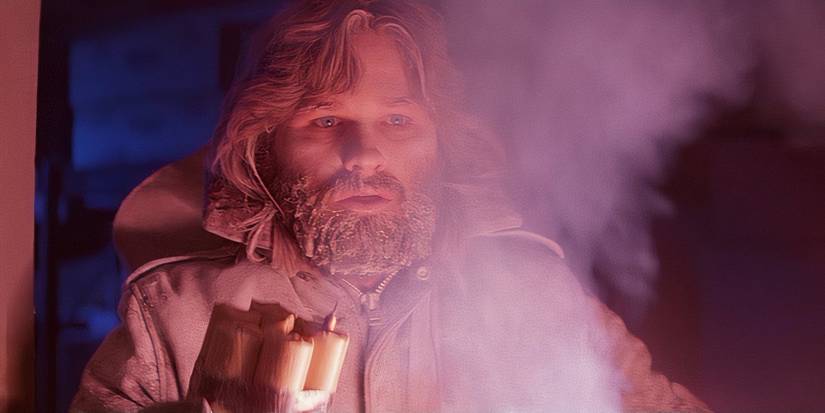 Image via Universal Pictures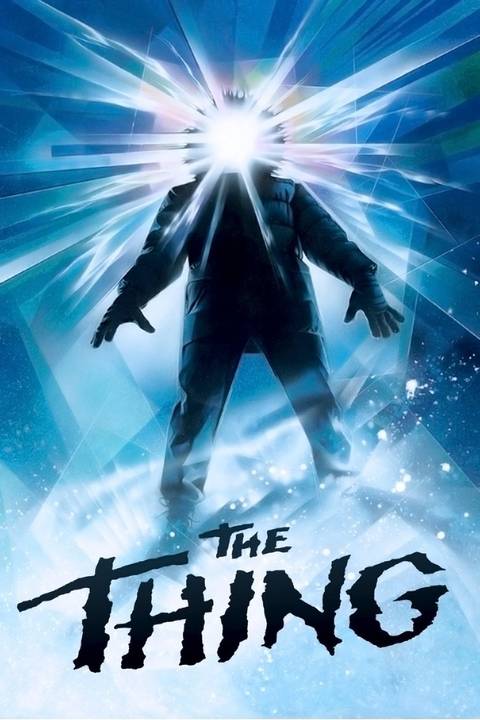



 English (US) ·