
 Image via HBO
Published Jun 18, 2026, 8:39 AM EDT
Michael Hein has been covering entertainment, fandom news, and trending topics since 2016 on outlets including Rogues Portal, PopCulture.com, and ComicBook.com. He has provided live coverage of red carpet premieres, conventions, and up-fronts, and has interviewed major stars including Charles Dance, Patrick Stewart, and Chloe Sevigny. An avid fiction reader and writer, Michael has been diving deep into all the biggest book-to-screen adaptations of the last decade, from Game of Thrones to Foundation.
Game of Thrones isn't exactly known for being uplifting, but there's one quote early in the series that makes the whole story look even darker. In Season 1, Episode 6, "A Golden Crown," Arya Stark (Maisie Williams) gets a pep talk from her swordplay instructor, Syrio Forel (Miltos Yerolemou). He warns her, "There is only one god, and His name is Death." In context, it's an inspiring mantra that will carry Arya through the next few months. However, from a broader perspective, with the end in mind, it has grim and horrifying implications for religion and magic in the world of Westeros.
In the scene where we first hear this quote, Syrio is trying to inspire Arya to continue training even when she's frightened. He asks her if she prays, and she specifies that she prays to both the old gods and the new. However, Syrio is not from Westeros — he's from the free city of Braavos across the Narrow Sea, and he gives Arya a glimpse of his cosmology. "There is only one god, and His name is Death. And there is only one thing we say to Death: 'Not today.'"
'Game of Thrones' is All About Facing Impossible Odds
 Image via HBO
This article is not intended to ruin Syrio's excellent quote for you or strip it of its uplifting message. It fits with the themes of the series, and it does a lot of the work of connecting Arya's plot to the greater struggle going on in Westeros. In many ways, this line sums up the entire series, as the heroes take on unwinnable fights against more powerful opponents, invading armies, the White Walkers, and the human tendency towards war in general.
One of the most brilliant things about Game of Thrones and George R.R. Martin's A Song of Ice and Fire is how it tells two concurrent stories — one about the horrors of wars between kingdoms, and one about more abstract wars between the living and the dead, which involves White Walkers, Children of the Forest, Weirwood trees, and dragons. Syrio's quote only makes the series look darker in the latter context, with the ending of the show and all the worldbuilding we have in mind.
As mentioned above, Syrio comes from Braavos, an independent city state founded by escaped slaves from Valyria, the dragon-riding empire that spawned House Targaryen. The Braavosi have a culture of religious tolerance, and that has led to some unique esoteric rites of their own. Arya traveled to Braavos and learned the shapeshifting abilities of the Faceless Men, but in the books that power is implicitly linked to other forms of magic, including the skin-changing and warging abilities of House Stark.
The books also imply that the Faceless Men helped cause the Doom of Valyria, and that they still hold some secret knowledge of that fallen empire. If their organization — and all of Braavosi culture — worship Death in some way, it puts a frightening spin on their powers and their involvement in world politics. If their shapeshifting abilities are distantly related to the Starks' skin-changing and greensight, that might also mean there's a dark history to be uncovered in the worship of the "old gods" as well.
'Game of Thrones' Has Another Character Who Preaches A Lot
 Image via HBO
Syrio Forel may have been trying to make Arya feel better, but there's another character who preaches about how many gods there are and how they should be worshipped: Melisandre (Carice van Houten). The Red Priestess worships R'hllor, and believes that there are only two gods — R'hllor and his enemy, who cannot be named. Throughout the series, she also warns others that the wars between kings are petty, and the only true war is that between the living and the dead. In Season 8, Episode 3, "The Long Night," she even twists this around by repeating Syrio's lesson to Arya.
"What do we say to the god of death?" she asks Arya as wights try to batter down the doors. It's an odd moment, as Melisandre seemed shocked and horrified by Arya when they met earlier in the series. Here, however, she tells the young assassin just what she needs to hear before she runs outside to confront the Night King. Melisandre definitely doesn't share Syrio's monotheistic beliefs, but this isn't the only time she uses a well-timed quote rom the past to spur someone into action.
 Related
From Melisandre's perspective, all people and all religions are either on the side of light or the side of darkness, and she makes it plain that she thinks the old gods are on the side of darkness. Her meeting with Arya in Season 3 also seems to imply that she thinks Arya and the Faceless Men are on the side of darkness. She may be willing to work with them for her own ends in the final battle, but that doesn't change their placement in her cosmology.
The fact that Arya landed the killing blow on the Night King with this quote in mind haunts many fans. It implies that the cycle isn't broken, just reset. The White Walkers may not be defeated, they've just been told, "not today." However, if we extend that metaphor, it means that on some level the Braavosi regard the Night King as a god of Death, or an avatar of that god. That would mean that in a certain sense, they were beholden to him all along. It could also mean that abilities like skin-changing, glamors, shapeshifting, and greensight are all derived from that same power, in some sense.
'The Winds of Winter' Could Make These Connections Clear
If Martin ever finishes his book series A Song of Ice and Fire, we'll be able to answer at least some of these questions once and for all. If nothing else, the last two books in Martin's series will need to dedicate more time to the White Walkers than the show did, and delve deeper into the history of the Wall, greenseers, and the old gods. Many popular fan theories posit that the white walkers use a form of skin-changing to raise wights from the dead, and that their power is also connected to the Weirwood trees.
As for Syrio's quote, it seems clear that the ending of the books would cast Arya's whole arc in a darker light. There's no telling if Martin would reveal any esoteric horrors behind the Faceless Men, but there are many places in the story where that would be appropriate. If Arya were to land the killing blow in the books, it would likely come with more magical links to the old gods, and even more implications that this war between humanity and White Walkers isn't truly over.
In fact, the ending of the show comes with a major hint that there are still dark forces at work in Westeros. By the end of the show, Bran Stark (Isaac Hempstead Wright) has lost his humanity and become a living repository for all the memories and spirits of the Weirwood trees. The showrunners said that it was Martin's idea to make Bran king in the end, which means that the old gods themselves are now essentially ruling over Westeros. If those old gods have something to do with the White Walkers, the war for the dawn is definitely not over.
Hopefully, Martin will satisfy our curiosity one day, but in the meantime the Game of Thrones fandom is alive and well through spinoffs, fan theories, and speculation. House of the Dragon Season 3 comes next, premiering on Sunday, June 21 on HBO and HBO Max. Martin's books are available now in print, digital, and audiobook formats.
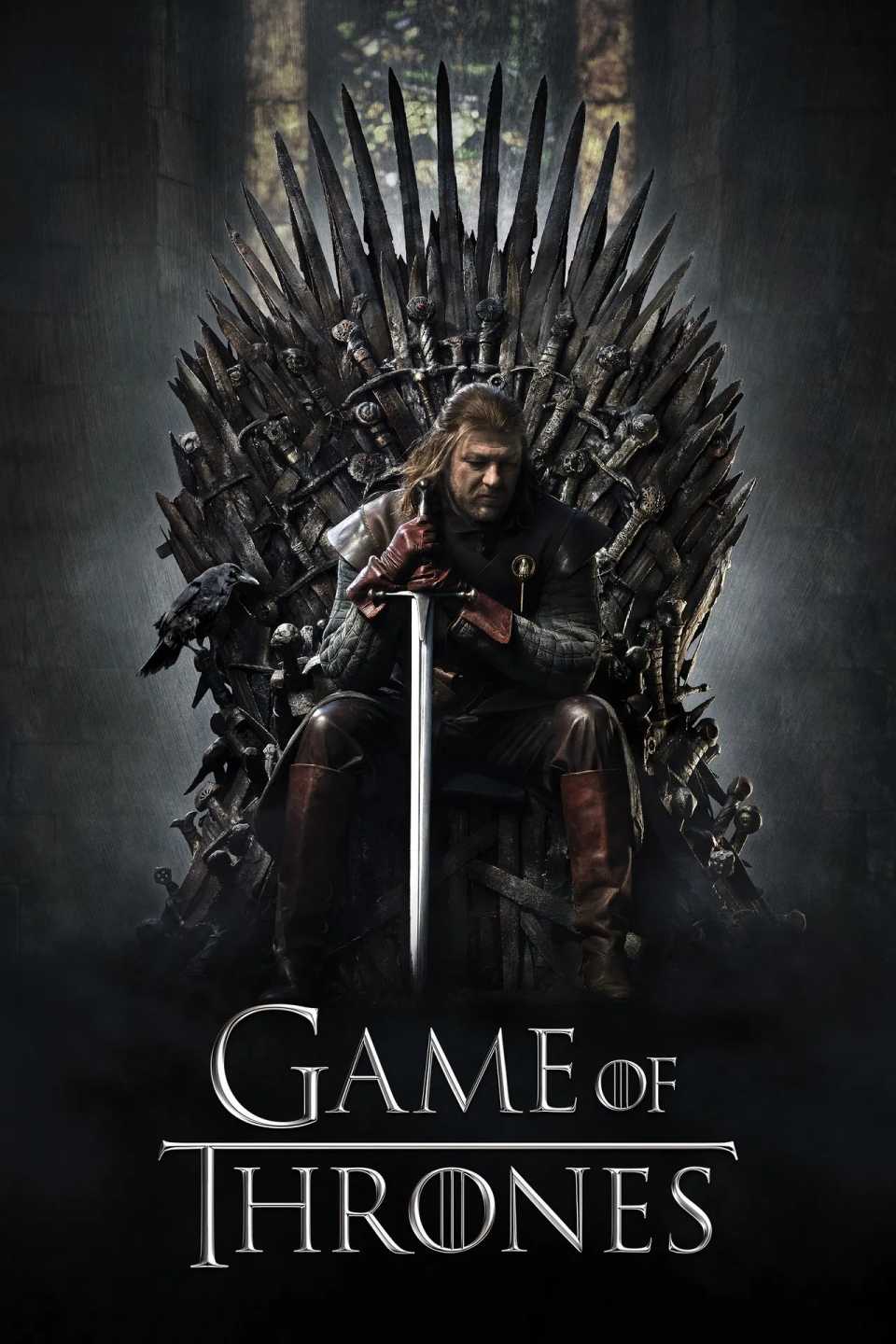
Release Date 2011 - 2019-00-00





 English (US) ·