


Published Feb 1, 2026, 2:55 PM EST
Shawn S. Lealos is an entertainment writer who is a voting member of the Oklahoma Film Critics Circle. He has written for Screen Rant, CBR, ComicBook, The Direct, The Sportster, Chud, 411mania, Renegade Cinema, Yahoo Movies, and many more.
Shawn has a bachelor's degree in professional writing and a minor in film studies from the University of Oklahoma. He also has won numerous awards, including several Columbia Gold Circle Awards and an SPJ honor.
He also wrote Dollar Deal: The Story of the Stephen King Dollar Baby Filmmakers, the first official book about the Dollar Baby film program. Shawn is also currently writing his first fiction novel under a pen name, based in the fantasy genre.
To learn more, visit his website at shawnlealos.net.
When it comes to antiwar movies, few filmmakers have made three that are as critically acclaimed as Stanley Kubrick's ventures into the genre. In 1957, Kubrick released the brilliant antiwar movie Paths of Glory, which showed French soldiers in World War I murdered by their own commanders to "set an example" to other soldiers.
In 1987, Kubrick directed the Vietnam War masterpiece Full Metal Jacket, which showed half of the movie taking place at Recruit Training, where the soldiers were dehumanized to horrific results. However, in between those two horrific war movies was a comedy that delivers just as strong an antiwar message as any movie.
Dr. Strangelove Found Humor In Terrible Situations
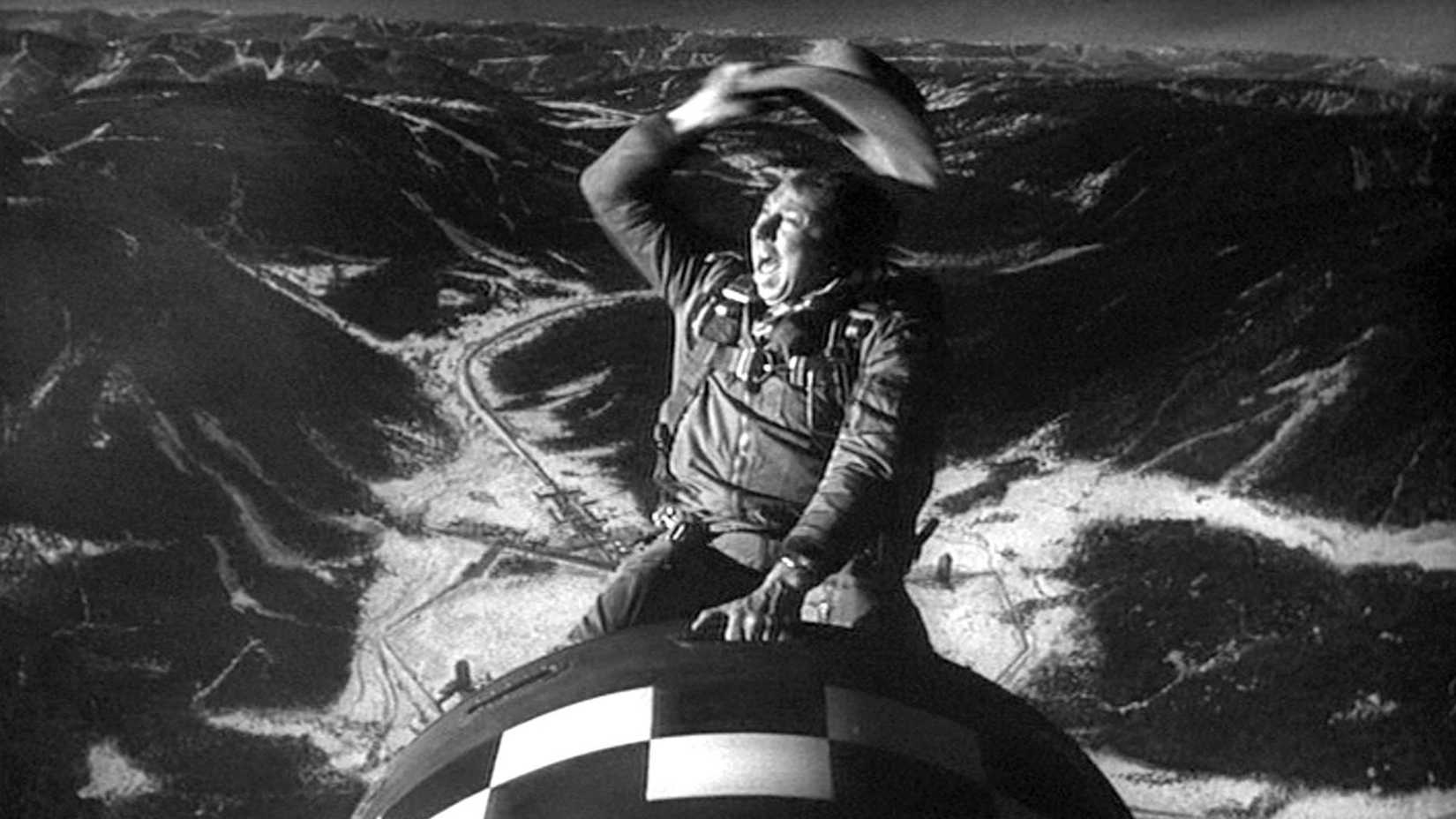
Dr. Strangelove or: How I Learned to Stop Worrying and Love the Bomb came out 42 years ago on January 29, 1964, and it remains a biting satire about the ridiculous nature of politics and war, and how it can destroy everything based on simple misunderstandings.
This brilliant masterpiece is a political satire, an antiwar movie that Stanley Kubrick co-wrote, produced, and directed. Based on the novel, Red Alert by Peter George, Kubrick took the worrying story about nuclear war and turned it into an abstract comedy.
It was clear from the start that Kubrick was doing something different with the story when he cast Peter Sellers in the lead role as Dr. Strangelove (as well as two other characters). The movie is set during the fears of the Cold War and has the United States and Soviet Union on the verge of launching nuclear attacks on each other.
Kubrick cast some distinguished actors in roles as politicians and soldiers trying to decide whether to launch an attack on the Soviet Union. George C. Scott took on the role of General Buck Turgidson, Chairman of the Joint Chiefs of Staff, while Sterling Hayden was Brigadier General Jack D. Ripper, a paranoid commander of an Air Force Base.
However, it was Peter Sellers who appeared as three different characters, including the nuclear war expert who was a former Nazi and had alien hand syndrome, causing him to cast the Nazi salute at random moments. He is also U.S. President Merkin Muffley and Lionel Mandrake, a British RAF exchange officer.
In the end, what Stanley Kubrick did with this movie was show how ridiculous the War Room is, and how a select number of men could decide to end the world without a second thought. Part of the film takes place on a bomber jet, with comedian Slim Pickens as the commander. It is Pickens who appears in one of the film's final shots.
This is nothing less than an absurd and hilarious ending to a horrific event as Slim launches the nuclear missile that will start the end of the world, and does so by riding it like a horse as it flies to the Earth, ready to start the nuclear apocalypse. This leads to the War Room preparing for their next step as a montage of explosions destroys the world.
Robin Williams Praised Stanley Kubrick's Comic Skills

Stanley Kubrick didn't make many comedies over his career, but with Dr. Strangelove, he received critical acclaim and the praise of his peers. Critics lavished praise on the movie, awarding it a 98% Rotten Tomatoes rating, while the audience score was also exemplary, at 94%.
The movie also earned four Oscar nominations, including Best Picture, Best Director, and Best Actor, while winning the BAFTA Awards for Best Film From Any Source and Best British Film. It was also added to the National Film Registry in 1989 as one of the first movies ever inducted into the institution.
Furthermore, to prove its comedy status, Robin Williams had nothing but praise for Stanley Kubrick in a tribute video from the American Film Institute. He called Peter Sellers the most influential actor in films and then pointed out the mastery of Dr. Strangelove.
"To see one person play that many characters, and to play each one of them differently, and each one so committed, especially Dr. Strangelove himself ... Plus, the fact it's all about the end of the world, and it just struck me that comedy could be that and hit that hard."
Dr. Strangelove Lives & Dies With Peter Seller's Performance
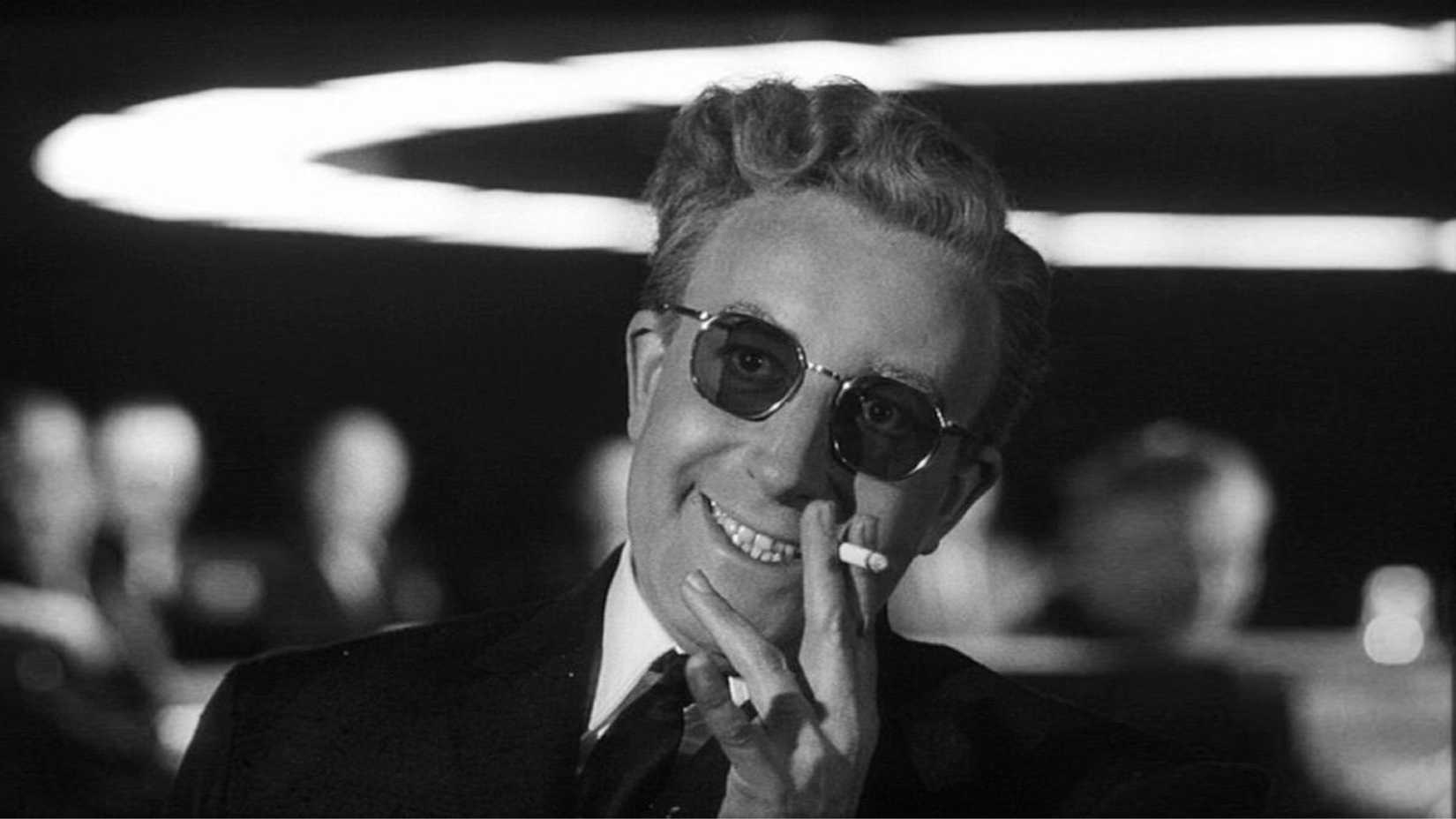
As Robin Williams mentioned, it was Peter Sellers who really sold this movie, and it was through him playing three different characters, all of whom were drastically different. He played the U.S. President as a more normal person, although one who deserved respect.
While playing Lionel Mandrake, he played the character as a nervous and twitchy man, especially compared to Sterling Hayden's paranoid military man, who was losing his senses as the battles wore on. However, these two characters were as different from his biggest character in the film.
That was Dr. Strangelove, who was a former Nazi who was brought in during Operation Paperclip to help the American military in their war planning. However, he was clearly still a Nazi at heart, whether it was his involuntary saluting or his exclamations of "Mein Führer."
Sellars had an incredible acting career, earning award recognition for Being There, The Pink Panther, and Lolita, but it was his work in Dr. Strangelove or: How I Learned to Stop Worrying and Love the Bomb that showed the actor at his absolute best, and the movie remains a masterpiece thanks in part to his performance.




 English (US) ·