
 Image via Netflix
Published Jul 26, 2026, 5:55 PM EDT
Jessica is a young writer from Brisbane, Australia. An avid consumer and lover of all things Film and TV, you will never tear her away from a screen. A tendency rooted from childhood, she once had dreams of becoming a member of the famed kids-band 'Hi-5'. Perhaps that's what pushed her to secure an education with a theater background. But now, as dreams evolved, her passions have turned to admiring performances from afar. Frankly, she's just grateful that she can put her binging skills to good use. Outside of work, Jessica recently completed her undergraduate double degree in Arts/Communications. Other than that, she spends most of her free time with family and friends, probably never forgetting to talk about the new movie or show she watched the day prior.
Sign in to your Collider account
Ask anyone who's interested in the world of entertainment. Olivia Colman has one of the most remarkable careers of any actor working today. After first winning audiences over with her impeccable comedic demeanor in British television, she gradually evolved into one of cinema's most acclaimed dramatic performers—and without ever losing the warmth, wit, and humanity that made her so compelling in the first place.
Naturally, what makes her filmography so impressive isn't just the number of acclaimed movies she's appeared in, but the incredible range she displays from one role to the next. She can be heartbreaking, hilarious, quietly understated, or gloriously eccentric, often within the same film. Even in supporting roles, Colman has a habit of becoming the performer audiences remember most. So, to highlight the major success of her career, here are the films that showcase exactly why she has become one of the most respected and versatile actors of her generation.
8 'Tyrannosaur' (2011)
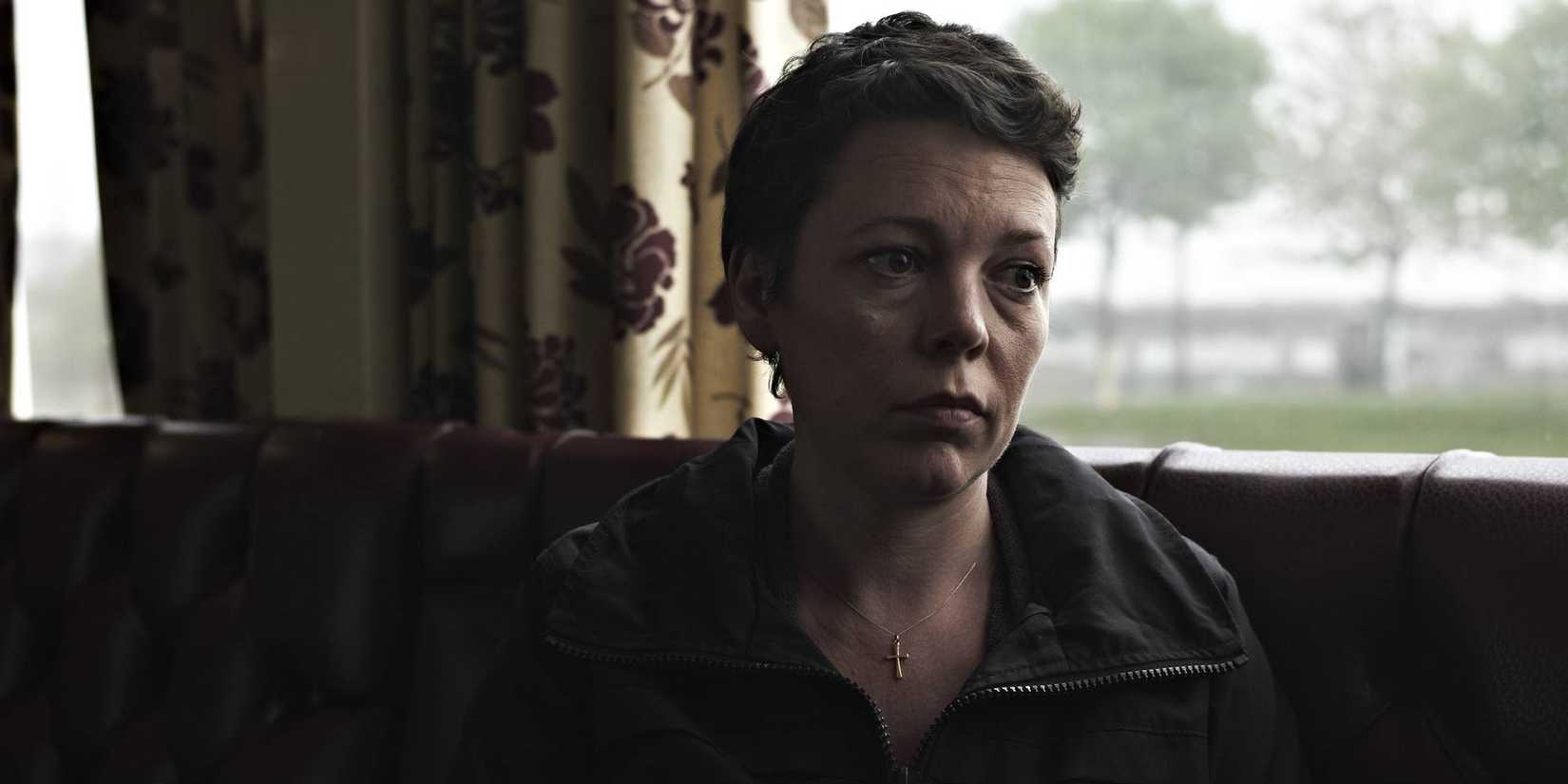 Image via StudioCanal
Joseph (Peter Mullan) is a widower and deeply troubled man whose violent temper has left him completely isolated from the world. But after a chance encounter with Hannah (Colman), a kind-hearted charity shop worker, the two form an unlikely friendship. Sadly, unbeknownst to Joseph, Hannah is quietly hiding her own dark secrets as she endures horrific domestic abuse behind the façade of her seemingly perfect life.
As Paddy Considine's devastating directorial debut, there's no doubt that Tyrannosaur is an emotionally bruising film, but it's also one of Colman's most underrated performances. Best known for comedy at the time, Colman shocked audiences by revealing extraordinary dramatic depth, portraying Hannah with heartbreaking restraint. Never overplaying the character's suffering, she instead allows small gestures and fleeting expressions to communicate years of fear, loneliness, and quiet resilience. Better still, her chemistry with Mullan lays the film's emotional core, transforming what could've been an unrelentingly bleak story into a moving examination of compassion, forgiveness, and redemption.
7 'The Lost Daughter' (2021)
.jpg?q=70&fit=crop&w=825&dpr=1) Image Via Endeavor Content
Image Via Endeavor ContentWhile vacationing alone at a seaside resort in Greece, literature professor Leda Caruso (Colman) becomes fascinated by a young mother named Nina (Dakota Johnson) and her young daughter. For Leda, their relationship stirs uncomfortable memories of her own experience raising children years earlier, forcing her to confront long-buried guilt, resentment, and difficult choices she made as a younger woman.
Showcasing her true prowess, Colman delivers a fearless performance in The Lost Daughter as she refuses to make her protagonist conventionally likable. Instead, she embraces Leda's contradictions, allowing her to be intelligent, compassionate, selfish, and deeply flawed all at once. Of course, the film's greatest strength lies in its willingness to explore motherhood from an honest and often uncomfortable perspective, challenging idealized notions of parental sacrifice. And Colman navigates every emotional shift perfectly, unsurprisingly earning herself her third Oscar nomination.
6 'The Lobster' (2015)
 Image via Element Pictures
In a dystopian society where single people are given just 45 days to find a romantic partner or be transformed into an animal of their choosing, recently divorced David (Colin Farrell) checks into a peculiar hotel in hopes of avoiding that fate. But as he attempts to navigate the absurd dating rules imposed on him, he encounters an underground community that rejects relationships entirely, forcing him to question both extremes.
While Colman's screen time is relatively brief, she leaves a lasting impression as the hotel's unnervingly cheerful (yet ruthless) manager. Her calm, matter-of-fact delivery perfectly complements Yorgos Lanthimos' deadpan style, making even the film's most bizarre rules feel strangely believable. More broadly, The Lobster stands as one of the sharpest satires of modern relationships in recent cinema, warping society's obsession with coupledom through surreal humor and unsettling social commentary.
5 'Wicked Little Letters' (2023)
 Image via Sony Pictures Classics
Set in a sleepy English seaside town during the 1920s, the deeply religious Edith Swan (Colman) begins receiving a string of outrageously vulgar anonymous letters. And when outspoken Irish immigrant Rose Gooding (Jessie Buckley) becomes the prime suspect, the town quickly turns against her, prompting a determined local police officer (Anjana Vasan) to investigate whether the obvious culprit is actually innocent.
Colman has always excelled at balancing comedy with vulnerability, and Wicked Little Letters gives her plenty of opportunities to do both. Edith begins as an almost painfully timid woman trapped beneath the expectations of her domineering father, and yet Colman gradually reveals her hidden reserves of courage as the mystery unfolds. The film itself is a delightful blend of cozy whodunit and biting social satire, with Colman's perfectly restrained performance playing brilliantly against Buckley's wonderfully chaotic energy. Frankly, it's a reminder that few actors can pivot between such emotional sincerity and naughty comedy.
4 'The Mitchells vs the Machines' (2021)
 Image via Netflix
As aspiring filmmaker Katie Mitchell (Abbi Jacobson) prepares to leave for college, her well-meaning but technologically challenged father (Danny McBride) plans one last family road trip to reconnect before she moves away. Sadly, their awkward vacation is interrupted when a rogue artificial intelligence launches a global robot uprising, forcing the dysfunctional family to become humanity's last hope for survival.
While Colman only lends her voice to the film's delightfully sinister AI assistant PAL, The Mitchells vs. the Machines has proved itself to be a modern-animated masterpiece. Brilliantly combining dazzling animation, rapid-fire comedy, and genuine emotional warmth, the film tells an incredibly needed story about the struggles of family communication in an increasingly digital world. Colman uses her typical energetic vocals to make PAL an unexpectedly fun villain, adding another layer of wit to a film already overflowing with visual creativity. It's easily one of the funniest and most heartfelt family movies of the decade.
3 'The Father' (2020)
 Image via Lionsgate
Anthony (Sir Anthony Hopkins) is an elderly man living with dementia whose increasingly fractured perception of reality makes it difficult for him to distinguish between memory, imagination, and the present day. As his daughter Anne (Colman) struggles to care for him while balancing her own personal life, father and daughter are forced to confront the heartbreaking realities of a disease that gradually erodes identity itself.
Much of the attention surrounding The Father rightfully focused on Hopkins' Oscar-winning performance, but Colman's contribution is every bit as essential—a feat made obvious by her own Oscar nomination. Portraying Anne with extraordinary emotional restraint, Colman perfectly captures the exhaustion, guilt, love, and helplessness that accompany caring for a parent with dementia. And rather than presenting the illness from the single perspective of the caregiver, the film places audiences inside Anthony's own disorienting experience, littering every scene with quiet devastation. It's definitely a heavy watch, especially with the heartbreaking final moments landing with overwhelming force.
Collider Exclusive · Oscar Best Picture Quiz
Which Oscar Best Picture
Is Your Perfect Movie?
Parasite · Everything Everywhere · Oppenheimer · Birdman · No Country
Five Oscar Best Picture winners. Five completely different visions of what cinema can be — and what it can do to you. One of them is the film that was made for the way your mind works. Ten questions will figure out which one.
🪜Parasite
🌀Everything Everywhere
☢️Oppenheimer
🐦Birdman
🪙No Country for Old Men
FIND YOUR FILM →
01
What kind of film experience do you actually want? The best movies don't just entertain — they leave something behind.
ASomething that pulls the rug out — that makes me think I'm watching one kind of film and then reveals I'm watching another entirely. BSomething overwhelming — funny, sad, absurd, and genuinely moving, all at once. CSomething grand and weighty — a film that makes me feel the full scale of what I'm watching. DSomething formally daring — a film that pushes what cinema can even do. ESomething lean and relentless — pure tension with no wasted frame.
NEXT QUESTION →
02
Which idea grabs you most in a film? Great films are driven by a central obsession. What's yours?
AClass, inequality, and what people are willing to do when desperation meets opportunity. BIdentity, family, and the chaos of trying to hold your life together when everything is falling apart. CGenius, moral responsibility, and the catastrophic weight of a decision you can never take back. DEgo, legacy, and the terror of becoming irrelevant while you're still alive to watch it happen. EEvil, chance, and whether moral order actually exists or if we just tell ourselves it does.
NEXT QUESTION →
03
How do you like your story told? Form is content. The way a story is shaped changes what it means.
AGenre-twisting — I want it to start in one lane and migrate into something completely different. BMaximalist and genre-blending — comedy, action, drama, sci-fi, all in one ride. CEpic and non-linear — cutting between timelines, building a mosaic of cause and consequence. DA single unbroken flow — I want to feel like I'm living it in real time, no cuts to safety. ESpare and precise — every scene doing exactly what it needs to do and nothing more.
NEXT QUESTION →
04
What makes a truly great antagonist? The opposition defines the protagonist. What kind of opposition fascinates you?
AA system — invisible, structural, and almost impossible to fight because it has no single face. BThe self — the ways we sabotage, abandon, and fail the people we love most. CHistory — the unstoppable momentum of events that no single person can stop or redirect. DThe industry — the machinery of culture that chews up talent and spits out irrelevance. EPure, implacable evil — a force so certain of itself it becomes almost philosophical.
NEXT QUESTION →
05
What do you want from a film's ending? The final note is the one that lingers. What do you want it to sound like?
AShock and inevitability — a conclusion that recontextualises everything that came before it. BEarned emotion — I want to cry, laugh, and feel genuinely hopeful, even if the world is a mess. CDevastation and grandeur — an ending that makes me sit in silence for a few minutes after. DAmbiguity — something that leaves enough open that I'm still thinking about it days later. EBleakness — an honest refusal to pretend the world is tidier than it actually is.
NEXT QUESTION →
06
Which setting pulls you in most? Where a film takes place shapes everything — mood, stakes, what's even possible.
AA gleaming modern city with a hidden underside — beauty masking rot, wealth masking desperation. BA collapsing suburban life that opens onto something infinite — the multiverse of a single ordinary person. CThe corridors of power and science at a world-historical turning point — where decisions echo for decades. DThe grimy, alive chaos of New York and Hollywood — fame as both destination and trap. EVast, indifferent landscape — desert and highway where violence arrives without warning or reason.
NEXT QUESTION →
07
What cinematic craft impresses you most? Every great film has a signature — a technical or artistic element that makes it unmistakable.
AProduction design and mise-en-scène — every frame composed to carry meaning beneath the surface. BEditing and tonal control — the ability to move between registers without losing the audience. CScore and sound design — music that becomes inseparable from the dread and awe of what you're watching. DCinematography as performance — the camera not recording events but participating in them. ESilence and restraint — what's left unsaid and unshown doing more work than any dialogue could.
NEXT QUESTION →
08
What kind of main character do you root for? The protagonist is the lens. Who you choose to follow says something about you.
ASomeone smart and resourceful who makes increasingly dangerous decisions under pressure. BSomeone overwhelmed and ordinary who turns out to be capable of something extraordinary. CA brilliant, tortured figure whose gifts and flaws are inseparable from each other. DA self-destructive artist whose ego is both their superpower and their undoing. EA quiet, principled person trying to make sense of a world that has stopped making sense.
NEXT QUESTION →
09
How do you feel about a film that takes its time? Pace is a choice. Some films sprint; others let tension accumulate slowly, deliberately.
AI love a slow build when I know the payoff is going to be seismic — patience for a devastating reveal. BGive me relentless momentum — I want to feel breathless and emotionally spent by the end. CEpic runtime doesn't scare me — if the material demands three hours, give me three hours. DI want it to feel propulsive even when nothing is technically happening — restless energy throughout. EDeliberate and unhurried — I want dread to accumulate in the spaces between the action.
NEXT QUESTION →
10
What do you want to feel walking out of the cinema? The best films leave a mark. What kind of mark do you want?
AUnsettled — like I've just seen something I can't fully explain but can't stop thinking about. BMoved and energised — like the film reminded me what actually matters and gave me something to hold onto. CHumbled — like I've been in the presence of something genuinely important and overwhelming. DExhilarated — like I've just seen cinema doing something it's never quite done before. EHaunted — like a cold, quiet dread that stays with me for days.
REVEAL MY FILM →
The Academy Has Decided Your Perfect Film Is…
Your answers have pointed to one Oscar Best Picture winner above all others. This is the film that was made for the way your mind works.
Parasite
You are drawn to films that operate on multiple levels simultaneously — that begin in one genre and quietly, brilliantly migrate into another. Bong Joon-ho's Parasite is a film about class, desire, and the architecture of inequality that manages to be darkly funny, deeply suspenseful, and genuinely shocking across a single extraordinary running time. Your instinct is for cinema that hides its true intentions until the moment it's ready to reveal them. Parasite is exactly that — a film that rewards close attention and punishes assumptions, right up to its devastating final image.
Everything Everywhere All at Once
You want it all — and this film gives you all of it. The Daniels' Everything Everywhere All at Once is one of the most maximalist films ever made: action comedy, multiverse sci-fi, family drama, existential crisis, and a genuinely earned emotional core that sneaks up on you amid the chaos. You are someone who responds to ambition, who doesn't want cinema to choose between being entertaining and being meaningful. This film refuses that choice entirely. It is overwhelming by design, and its overwhelming nature is precisely the point — because the feeling of being crushed by infinite possibility is exactly what it's about.
Oppenheimer
You are drawn to cinema on a grand scale — films that understand history not as a backdrop but as a force, and that place their characters inside that force and watch what happens. Christopher Nolan's Oppenheimer is a film about the terrifying gap between what we can do and what we should do, told with the full weight of one of the most consequential moments in human history behind it. You want your films to feel important without feeling self-important — to earn their ambition through sheer craft and the gravity of their subject. Oppenheimer does exactly that. It is enormous, complicated, and refuses easy comfort.
Birdman
You are drawn to films that foreground their own construction — that make the how of the filmmaking part of the what it's about. Alejandro González Iñárritu's Birdman, shot to appear as a single continuous take, is cinema examining itself through the cracked mirror of a fading actor's ego. You respond to formal daring, to the feeling that a film is doing something that probably shouldn't be possible. Michael Keaton's performance and Emmanuel Lubezki's restless camera create something genuinely unlike anything else — a film that is simultaneously about creativity, relevance, self-destruction, and the impossibility of ever truly knowing if your work means anything at all.
No Country for Old Men
You are drawn to cinema that trusts silence, that refuses to explain itself, and that treats dread as a form of meaning. The Coen Brothers' No Country for Old Men is a film about the arrival of a new kind of evil — implacable, arbitrary, and utterly indifferent to the moral frameworks we use to make sense of the world. It is one of the most formally controlled films ever made, and its controlled restraint is what makes it so terrifying. You want your films to haunt you, not comfort you. You are not interested in resolution if resolution would be dishonest. No Country for Old Men is honest in a way that most cinema never dares to be.
↻ RETAKE THE QUIZ
2 'Hot Fuzz' (2007)
 Image via Rogue Pictures
Sergeant Nicholas Angel (Simon Pegg), an elite but overachieving London police officer, is reassigned to the sleepy, crime-free village of Sandford to prevent his colleagues from looking incompetent. But when partnered with the well-meaning yet naive PC Danny Butterman (Nick Frost), Angel soon uncovers a sinister conspiracy behind the town's suspiciously postcard-perfect exterior.
Although Hot Fuzz belongs primarily to Pegg and Frost, Colman steals nearly every scene she's in as exuberant police dispatcher Doris Thatcher. Her hilariously inappropriate flirtations, razor-sharp comic timing, and effortless chemistry with the ensemble make even brief appearance unforgettable. Of course, Edgar Wright's film remains one of the greatest action comedies ever made, especially because it lovingly celebrates (and gleefully satirizes) buddy-cop movies—without sacrificing the laughs or the thrills. Plus, Colman's performance is a perfect example of how even supporting roles become memorable in the hands of a truly exceptional actor.
1 'The Favourite' (2018)
 Image via Searchlight Pictures
Set during the reign of Queen Anne (Colman) in the early 18th century, a bitter rivalry brews between Lady Sarah Churchill (Rachel Weisz) and her ambitious cousin Abigail Hill (Emma Stone) as they compete for the affection and political favor of the emotionally fragile monarch. But as alliances shift and betrayals mount, the royal court becomes a battlefield where manipulation is often more effective than open conflict.
If there was ever any lingering doubt about Colman's ability to lead a major film, The Favourite erased it completely. Her Oscar-winning performance as Queen Anne remains astonishing as it refuses to simplify the character into a tragic victim or a comic caricature. Instead, Colman seamlessly moves between the absurdity, devastating loneliness, and childish insecurity, to craft a heartbreakingly complex woman. Supported by equally brilliant performances by Stone and Weisz, The Favourite is a stellar period piece that offers a wickedly funny examination of power, love, and emotional dependence. And even to this day, it's an easy high point for one of Britain's finest actors.

The Favourite
Release Date November 23, 2018
Runtime 120 minutes
Writers Tony McNamara, Deborah Davis







 English (US) ·