

Published Feb 9, 2026, 2:31 PM EST
Michael John Petty is a Senior Author for Collider who spends his days writing, in fellowship with his local church, and enjoying each new day with his wife and daughters. At Collider, he writes features and reviews, and has interviewed the cast and crew of Dark Winds. In addition to writing about stories, Michael has told a few of his own. His first work of self-published fiction – The Beast of Bear-tooth Mountain – became a #1 Best Seller in "Religious Fiction Short Stories" on Amazon in 2023. His Western short story, The Devil's Left Hand, received the Spur Award for "Best Western Short Fiction" from the Western Writers of America in 2025. Michael currently resides in North Idaho with his growing family.
The Western has long been a genre that has shifted with the times, growing as new filmmakers bring their bold takes to the Old West. Although it could be considered a distinctly American genre, it has notably pulled in artists from around the globe to meditate on what makes the West so challenging, brutal, or mythic. As such, we've compiled a list of some of the Westerns that ought to be considered a masterclass in filmmaking, either for their unique styles, stellar performances, or overall legacy.
Of course, there are dozens of films that could probably end up on this list, so don't take it too hard if your favorite horse opera got pushed aside. We fully acknowledge that most of these films could be subbed in for some other spectacular pictures, but these are the ones that stood out to us as the most memorable from a filmmaking perspective. So, without further ado, here are some Western triumphs worth revisiting for their contributions to cinema.
'A Fistful of Dollars' (1964)
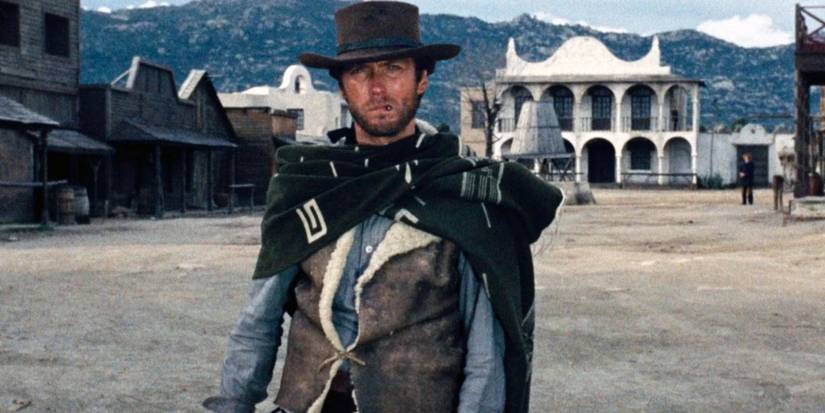 Image via United Artists
No matter which entry of Sergio Leone's famed Dollars Trilogy you put on this list, the Italian director of "Spaghetti Westerns" elevated the subgenre in his collaborations with Clint Eastwood. However, we've chosen A Fistful of Dollars here due to the film's clear-cut plot, tight script and runtime, and its masterful use of time, space, camera, and action. It was the film that launched Eastwood into international stardom, and we can fully understand why.
Eastwood's contributions to the feature, namely his choice to speak quite rarely as "The Man With No Name," were pivotal to the success of future installments. More than that, he set the re-tone for all "tough guy" gunslingers who came after him. Leone was a fabulous filmmaker to be sure, but while one could consider some of his subsequent entries as somewhat bloated, A Fistful of Dollars is a tight film that runs exactly as long as it should — extreme close-ups and all.
'Hostiles' (2017)
Scott Cooper may not be the first filmmaker who comes to mind when you hear "Western," but Hostiles is an incredible motion picture that pushes the audience to uncomfortable levels of understanding. As Christian Bale's Captain Joseph Blocker is tasked with escorting his sworn enemy, Chief Yellow Hawk (Wes Studi), to his new home in Montana, the two men learn to understand each other. With gut-wrenching levels of violence and an inspired use of space to give the characters time to accept one another, Hostiles is a genuine triumph.
It helps, of course, that such talented actors as Bale and Studi are the main focus of the film. They understand the weight of the material, and Cooper's direction as they go from hateful enemies to unsure allies is something to be admired. Few Westerns are able to tell this story with such honesty and purpose, proving that both men can be violent offenders in need of forgiveness.
'Stagecoach' (1939)
 Image via United Artists
As the Western that elevated the genre from B-picture fodder to A-list action, John Ford really reinvented the Western with Stagecoach. Not only did this flick help launch the career of John Wayne, but it also proved to Hollywood and audiences alike that there was more to the Western than shoot-'em-up action and melodramatic drama. A straightforward tale with understandable characters and a clear problem, Stagecoach is exceptional in every way.
The masterful use of tension and suspense really pushes the story forward, and as the Apaches are on the merry band's trail, Ford crafts plenty of emotional suspense as well. With fine character performances and a strong leading lady in Claire Trevor, Stagecoach is a knockout picture that gives audiences everything they could ask for. It's no wonder it's long been considered a classic.
'The Man Who Shot Liberty Valance' (1962)
 Image via Paramount Pictures
Another John Ford film that elevated the genre, The Man Who Shot Liberty Valance seems like your standard Western that capitalizes on its leading stars, John Wayne and James Stewart, but it's so much more than that. Stewart's Rance Stoddard is an unlikely hero, one who gets to live the life he always dreamed due to the sacrifices made by Wayne's Tom Doniphan. Further postulating the notion that the West was built on strong men, the film plays quite ingeniously with the myths that make up the genre.
Made in black-and-white in an era where color was now the norm, Ford evokes the power of the classic Westerns that launched his career by telling a tale of the West's end, bookending what he began with Stagecoach. It's a brilliant picture, and one that largely works due to the masterful work of Stewart and Wayne. It's a shame they didn't make many Westerns together.
'Winchester '73' (1950)
 Image via Universal Pictures
Another James Stewart classic, Winchester '73 was the first picture he made alongside director Anthony Mann, kickstarting a collaborative effort that would rival Wayne and Ford. Following Stewart's Lin McAdam, the feature begins with his character winning the title firearm in a shooting competition against his sworn enemy, only for the Winchester to get stolen out from under him. Here, Mann dares to follow the gun rather than the man, turning the picture into an almost tragic anthology that moves alongside the rifle as it changes hands.
Part of what makes Winchester '73 stand out is Mann's use of film noir techniques, including harsh lighting and skewed camera angles. These, coupled with Stewart's fine work on the screen, make for an intense picture that is only more intense by the very end. Although their later collaborations, namely The Naked Spur, may improve on many of these techniques, there's something spectacular about the way that Winchester '73 is told.
'High Noon' (1952)
 Image via United Artists
No list of masterful Westerns would be complete without High Noon. Directed by Fred Zinnemann, the Gary Cooper-led picture follows Marshal Will Kane as he defends his town from the impending villains who seek his head after a previous encounter. Told in a stunning real-time style that serves as a daring ticking clock, Cooper is phenomenal in this 85-minute drama that remains mighty influential to this day.
Although it was quite controversial at the time (Wayne made Rio Bravo partially in protest), High Noon is a masterclass in cinematic tension and dramatic pacing that is elevated further by the stunning cinematography and performances. If you didn't already love Gary Cooper before, High Noon will undoubtedly change your mind.
'Unforgiven' (1992)
 Image via Warner Bros.
Clint Eastwood's final venture to the Old West, Unforgiven is everything you would want a Western send-off to be. The film meditates on the cost of a life of violence as Eastwood's Will Munny is forced back into the gunslinging world he once left behind. Highlighting the true historical realities of the American West by contrasting them with the myths that sprang from saloon tales and rumors, this character-driven drama is the balance between fact and fiction.
There's no denying that Eastwood is at his very best here, which is why Unforgiven is one of only four Westerns to receive an Oscar for Best Picture. Everything about this meditative film is deeply personal, and it shows how far Eastwood has come from his days as the Man With No Name. From the shot composition to the moving performances, Unforgiven is the best at what it does.
'Tombstone' (1993)
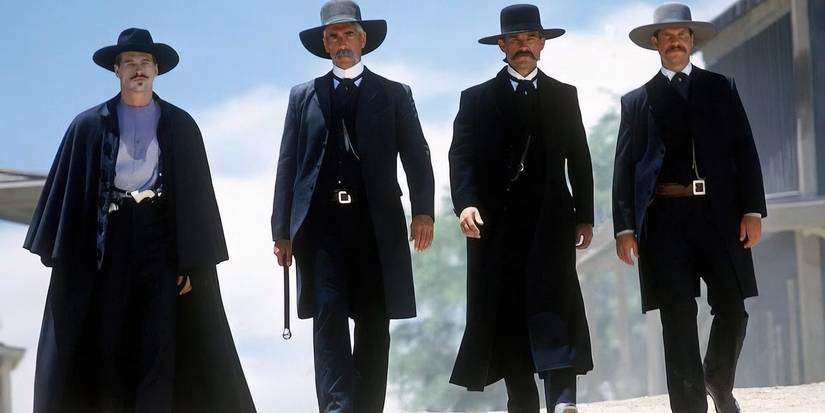 Image via Buena Vista Pictures
As far as action-packed Westerns go, Tombstone is the perfect blend of character development and gunslinging fare. With a cast that includes the incredible Kurt Russell, Val Kilmer, and Michael Biehn, among many others, there's nothing that this Wyatt Earp-inspired horse opera lacks in the drama department. The performances here are top-notch, and the riveting action sequences (most notable the famed Gunfight at the O.K. Corral) are to die for.
Despite so many behind-the-scenes issues during the production, Tombstone is a reminder that a good screenplay mixed with fabulous performances is a recipe for instant success. There's a reason that this film continues to be so loved by audiences after all these years, and if Val Kilmer's Doc Holliday wasn't enough to convince you, there are so many small touches that make this film work that it's truly a miracle of a picture. It's really that good.
'The Searchers' (1956)
 Image via Warner Bros.
As the magnum opus of both John Wayne and John Ford, The Searchers is arguably the most cinematic a Western has ever felt. With the sprawling landscapes that are captured with perfect ease in the shot composition of that famous doorway moment where Wayne's Ethan Edwards wanders back into the wild, it's a powerhouse to which all other movies are compared. The story may be simple — two men search for the missing niece of the elder after she's taken by Indians — but the results are undeniable.
Ford was always one to get the best performances out of Wayne, and here he gets the best of them all. It's no wonder that the Duke considered The Searchers to be his best movie, and we certainly concur. The Searchers has enough substance to last a lifetime as Ford masterfully constructs these characters who embody everything good, bad, and ugly about the wild frontier.
'The Gunfighter' (1950)
 Image via 20th Century Studios
Arguably the most underrated Western classic that truly deserves to be considered a masterpiece is The Gunfighter. Directed by Old Hollywood legend Henry King, the film followed the title gunman, Jimmy Ringo (Gregory Peck in a career-defining performance), on the run from three siblings whose brother he killed in self-defense. In the town of Cayenne, he meets with his woman and the boy he's failed to raise. In a meditative and intellectually-driven Western, Peck brings a certain level of dramatic substance to a notorious gunfighter, truly humanizing the outlaw.
The Gunfighter is one of those Westerns that holds up so much better than you might remember. With strikingly grand character arcs, understated tension that never overwhelms the viewer, and an anticlimax that speaks to the dark truths of the Old West, it's is one picture that cannot be denied for its clear ingenuity and style. Often overshadowed compared to the rest of these, The Gunfighter is a masterclass in filmmaking that offers a fine balance of mythic and truthful Western yarn.



 English (US) ·