
 Image via NBC

Published Feb 20, 2026, 6:46 PM EST
Michael Block is a 14 time GLAM Award nominated writer, producer, and host of the podcast Block Talk. Throughout his time in the entertainment industry, he has worked on and off Broadway as a stage manager, written several produced plays, critiqued hundreds of theatrical performances, drag and cabaret shows, and has produced events randing from drag competitoons to variety concerts!
On Block Talk, he interviews nightlife personalities, covers the wide world of entertainment through features, ranking episodes, and recaps ALL of Drag Race, as well as Dragula and Survivor. He has interviewed hundreds of RuGirls that span the globe at DragCon NYC, DragCon LA, and DragCon UK.
In his free time, he makes one-of-a-kind jewelry and gift baskets with his mom. He is a proud member of the LGBTQ+ community.
Sign in to your Collider account
The sitcom has been a timeless part of television for decades. Bringing laughter to the forefront, these comedies have brought light-hearted stories into our homes. Over the decades, many shows have served as products of their time, while others have endured a lasting legacy that has made them almost immortal. We're here to honor the latter.
Whether they were ground-breaking for the time, celebrated for the power of friendship, or introduced us to stars of today, these sitcoms hold up surprisingly well, now more than ever. These beloved titles, whether they live today through syndication, reboot, or legacy, define sitcom history.
1 'The Mary Tyler Moore Show' (1970–1977)
 Image via CBS
When The Mary Tyler Moore Show debuted in 1970, the titular star already had a robust career. It wasn't a surprise that Mary Tyler Moore would be leading a series. It was a matter of when. The beloved comedy followed Moore as Mary Richards, a new transplant to Minneapolis, who finds herself single following a broken engagement. She began working at the local television station, WJM, where she rose in the ranks, starting as the associate producer of the six o'clock news. Highlighting Mary at work and home, The Mary Tyler Moore Show was a celebration of women who put work before romance. By avoiding stereotypes while tackling workplace gender discrepancy and a range of social issues, The Mary Tyler Moore Show pushed female-led storytelling in comedy like never before.
As someone who relied on watching The Mary Tyler Moore Show during a difficult period in my life, I hold it in a special place in my heart. The comedy still resonated. The jokes were smartly written. And the themes still rang true. Moore may have had titular billing, but it was a genuine ensemble series. One of which launched three separate spin-offs: Rhoda, starring Valerie Harper, Phyllis, starring Cloris Leachman, and Lou Grant, starring Ed Asner. What's crazy is that nearly every other supporting character could have received the same treatment. The Mary Tyler Moore Show is something special. I'm fearful that as time goes by, younger generations are becoming less aware of the importance this show had on television. We would not have workplace sitcoms like 30 Rock and Parks and Recreation without The Mary Tyler Moore Show shattering the glass ceiling.
2 'Cheers' (1982–1993)
 Image via NBC
You could easily discuss a handful of shows centered on friendship over the decades; their success was thanks to the doors Cheers opened. For 11 seasons, Cheers was the place we went to because we felt how special it was to have a place where everyone knew our names. The series took place in the titular Boston bar where staff and barflies have their lives intertwining, as they tackle love, money, family, and friendship. With a brilliant cast led by Ted Danson, Cheers was the epitome of pouring out the feel-good funnies. One of which continually racked in Emmy gold.
Even when Cheers was forced into a slight cast change, the spirit of the series remained. It just entered a new era, inviting new stories in and extending the series' longevity, which never got stale. Cheers could easily have stayed on the air, but instead, they left on a high note. As the Nick at Nite and TV Land generation freakout that the shows we grew up on are being slotted into the programming, we fondly remember how it felt discovering Cheers. The central themes remain relevant today. It may live in nostalgia, but if you need proof of Cheers’ legacy, look no further than the Dunkin' Super Bowl commercial. Danson was iconic, bringing back Sam Malone, even if just for a few seconds.
3 'The Golden Girls' (1985–1992)
 Image via NBC
When The Golden Girls were first conceived, it seemed like a stretch to think they could be successful. A comedy following four women of a certain age was simply a bold concept. Especially when the demographic that networks desperately sought was significantly younger. Yet four decades later, The Golden Girls continues to hit that target demo with new generations. Brought to life by Susan Harris, The Golden Girls not only gave the four central characters a new lease on life, but it also extended the careers of four incredible actresses — Bea Arthur, Betty White, Rue McClanahan, and Estelle Getty — who just so happened to craft the most iconic characters of their careers.
Even if the fashion and decor live distinctly in the '80s, the characters are timeless. Just like in our quarter, friend groups today define themselves as either a Rose (Betty White), Blanche (Rue McClanahan), Dorothy (Bea Arthur), or Sophia (Estelle Getty). Rarely do shows receive such an honor. Now just don't identify us with the wrong Golden Girl — you might have a spat on your hands. Jokes aside, it's that passion for the show that brings such adoration and longevity. Fans have been begging for a reboot, even sharing their preferred cast, which often includes Amy Poehler and Tina Fey. Perhaps the closest we'll get is Hot in Cleveland, which included White. A wild but fun fact is when that series ended, Wendie Malick, at 64, was older than the two oldest actresses were when The Golden Girls began. Essentially, without The Golden Girls, executives would not understand that age has no bounds when it comes to comedy.
4 'All in the Family' (1971–1979)
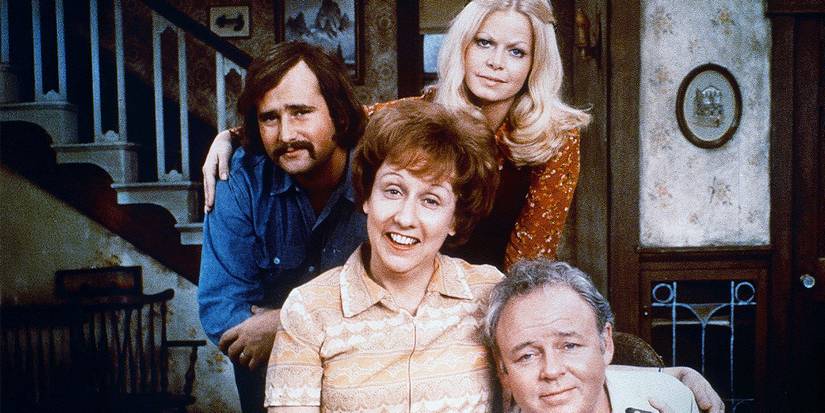 Image via CBS
For the same reason that All in the Family, as it was, cannot be remade today, that is exactly why it holds up still today. The parallels of differing generational beliefs are still a prominent conversation. Further, there are still many Archie Bunkers (Carroll O'Connor) out there today. They just might out themselves with a certain red hat. Created by Norman Lear, All in the Family centered around a working-class couple, Archie and Edith Bunker (Jean Stapleton), their daughter Gloria (Sally Struthers), and her husband Michael "Meathead" Stivich (Rob Reiner). The comedy arises from the generational gap in beliefs between the Greatest Generation and the Baby Boomers. All while living under the same roof. A comedy that occasionally made you uncomfortable, All in the Family remains referenced today.
Thanks to that vast cultural impact, All in the Family still resonates. By breaking the taboo barrier, subsequent programming found the freedom to push the themes they told as well. From racism to misogyny with the Vietnam War in between, spinning these topics through the lens of a flawed working-class family was accessible. Even if it was a uniquely '70s series, modern audiences may be experiencing similar themes with other topics substituted in. All in the Family may not have been your specific family, but you knew a family like them.
5 'Designing Women' (1986–1993)
 Image via CBS
Once The Golden Girls found success, the race to replicate the blueprint was on. In came Linda Bloodworth-Thomason and struck gold. Rather than women of a certain age, Designing Women brought the action to Georgia, where four independent, working women became the center of the action. Working together at Sugarbaker & Associates, Julia Sugarbaker (Dixie Carter), Suzanne Sugarbaker (Delta Burke), Mary Jo Shively (Annie Potts), and Charlene Frazier (Jean Smart) became the next generation of inspirational feminist figures on television. Sassy and fun, Designing Women was uniquely its own. The series was delightfully Southern, allowing it to challenge the nuanced stereotypes of the typical Southern belle. These women were complex, outspoken, and ambitious.
Though each character held their own position within the firm's hierarchy, it was not a dynamic in which they battled for supremacy. Instead, they were a tight unit who created the perfect puzzle. The feminist portrayal of work enabled discussions of career ambition, balancing work and home life, and the importance of intelligence in the field. From there, Designing Women dove headfirst into topical social issues, including misogyny, racism, and women's rights. Though they will always be compared together, Designing Women's ability to maintain its own identity to this day has allowed it to remain important.
6 'Frasier' (1993–2024)
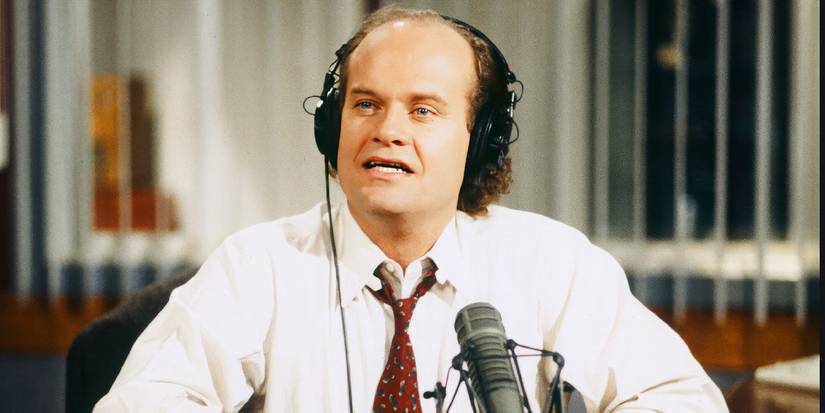 Image via NBC
There have been countless sitcom spin-offs that have bombed gloriously. Then, there were some that managed to succeed and eventually grow into their own identity. One of the most prominent to do so was Frasier. The second spin-off of Cheers, following the failed The Tortellis, Frasier took one of its unique characters, Frasier Crane (Kelsey Grammer), and brought him home to Seattle to begin a career as a radio host. Rather than focusing on the found family, Frasier centered on blood as he reconnected with his brother, Niles (David Hyde Pierce), and his retired police officer father, Martin (John Mahoney). With a completely different energy and tone, making the Crane brothers' hoity-toity vibes the butt of the joke, Frasier extended the life of a character into something even better.
The original run of Frasier was equally well received and, at times, better than its predecessor. Throughout its run, except for Rebecca Howe (Kirstie Alley), the series welcomed many of the surviving original cast to Seattle to further establish the tie-in of the two series. One of the most fun parts of the series was the celebrities who voiced the callers during Frasier's radio show. Frasier was the definition of a perfect spin-off. But it didn't end in 2004. Though not nearly as successful as the original run, the revival series brought back nostalgia twenty years later, airing for two seasons on Paramount+. A third act for the titular character, Frasier returned to Boston to develop a stronger relationship with his son, Fredrick (Jack Cutmore-Scott), a character born during Cheers. Frasier is an example of how strong characters can defy time. Grammer's ability to portray a fully realized character over four decades is incomparable.
7 'The Nanny' (1993–1999)
 Image via CBS
When you see an image of Fran Drescher from The Nanny, you can almost hear it saying, "Oh, Mr. Sheffield." For six seasons, The Nanny was a beloved CBS sitcom that delighted viewers with its simple premise. The series followed Fran Fine (Drescher) as she took on a new job as the nanny for British Broadway producer Maxwell Sheffield's (Charles Shaughnessy) three kids. Building a beautiful relationship with the kids, The Nanny does the inevitable: unites Fran and Maxwell in holy matrimony. It gave us all hope that circumstances would allow us to magically fall in love with our dream partner. A series that was filled with running gags and over-the-top humor, The Nanny has remained a timeless character.
The Nanny established comic tropes that honored classic sitcoms through a new lens. Everything was character-driven, which allowed The Nanny to allow you to genuinely adore the characters. Even if C.C. Babcock (Lauren Lane) was the antagonist to Fran's story, she was someone you adored watching lose out to our heroine. The relationships Fran had with her mother, Sylvia (Renée Taylor), and Granda Yetta (Ann Morgan Guilbert) may have fallen into Jewish mother stereotypes, but we still laughed along. Though the iconic fashion of Fran toed the line of camp and period, it was part of the charm and the draw to see what she would wear next. And today, still in syndication, The Nanny continues to reach new audiences among younger generations. Because it was simple and clean, avoiding specific period topics, The Nanny can be watched today and still feel incredibly relevant.
8 'The Fresh Prince of Bel-Air' (1990–1996)
 Image via NBC
Rather than tell you the story of The Fresh Prince of Bel-Air, it was all spelled out to you in iconic theme song fashion. Starring Will Smith in his breakthrough performance, The Fresh Prince of Bel-Air helped to define the '90s sitcom while exploring the Black experience in a new light. Perfectly balancing humor with emotion through groundbreaking storylines regarding class, race, and family, the series wasn't about the classy setting that Will found himself in; it was about a teenager finding his own way in a new, unfamiliar environment. Through this universal theme, The Fresh Prince of Bel-Air was extremely relevant.
Of course, The Fresh Prince of Bel-Air was anchored by a standout performance by Smith. His charismatic demeanor allowed for enduring appeal. Unlike any other show at the time, the series popularized the cultural significance of hip-hop in a more mainstream light. By inviting the sound into suburban living rooms, a revolution was born. The series' legacy was established through the modern reboot. Using the same fundamental storyline in a more dramatic tone, Bel-Air welcomed a new generation to connect with the classic themes for which it was best known.
9 'Will & Grace' (1998–2020)
 Image via NBC
Up until Will & Grace, the depiction of gay characters on television was often littered with stereotypes for comedic purposes. Instead of making a gay character a sidekick, Will & Grace made him one of the leads. Still filled with stereotypes, Will & Grace allowed them to inform the story rather than simply be a part of it. The series focused on best friends, Will Truman (Eric McCormack), a gay lawyer, and Grace Adler (Debra Messing), a straight interior designer. Along with their other pals, Karen Walker (Megan Mullally), Grace's assistant, and Jack McFarland (Sean Hayes), Will and Grace's flamboyant gay neighbor, the series was comedy joy. Oh, and it also happened to be a groundbreaking series that changed the trajectory of television.
Being the first primetime sitcom to feature an openly gay lead character, Will & Grace normalized LGBTQ+ representation in mainstream media. By changing public perception through comedy, Will & Grace reduced prejudice, while portraying queer characters as more nuanced individuals who are crucial to the story rather than supporting characters. The series received a revival that proved these characters are still timeless. We're still holding out for a Jack and Karen spinoff!
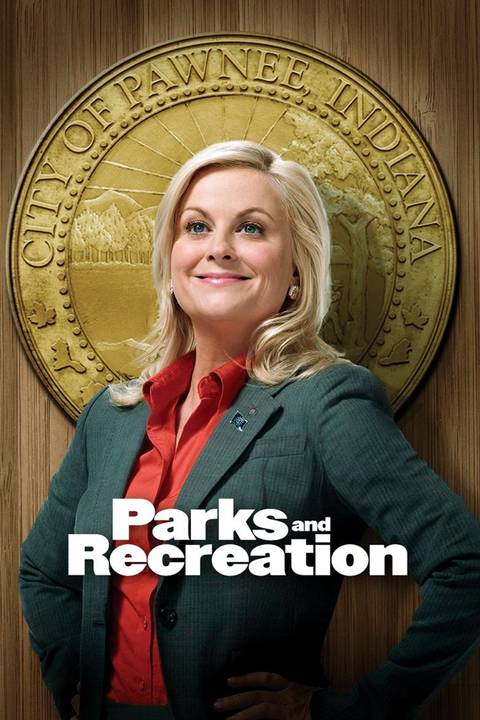
10 'Parks and Recreation' (2009–2015)
You might think it odd to include a show that's only been off our screens for a decade. There are many beloved 21st-century sitcoms that still hold a major place in our hearts, but the universal themes in Parks and Recreation are not only timeless but also a beacon for how we should live our lives. The series may have depicted a niche governmental branch in a fictional small town, but the characters we watched for seven seasons represented a small part of us. Leslie Knope (Amy Poehler) was the leader you wished you could be. Ann Perkins (Rashida Jones) was the best friend you wished you had, while Ron Swanson (Nick Offerman) was a mentor you could have had. And then, whether you saw it in Leslie and Ben Wyatt (Adam Scott) or April Ludgate (Aubrey Plaza) and Andy Dwyer (Chris Pratt), they were the romance you hoped you would experience. Parks and Recreation was a feel-good series that brought you hope and a smile.
In these dark times, Parks and Recreation was the epitome of optimism. Through championing friendship, civic duty, and kindness, the heartwarming series remains a comfort watch. Through a rich, character-driven approach, Parks and Recreation focused on people over story. Even when Parks and Recreation veered into the goofy and impractical, it was all to enhance the characters. There was absurdity for a necessary reason. We can only hope that wherever Leslie Knope is today, she's instilling that warm heart in the people she touches.
Parks and Recreation
Release Date 2009 - 2015




![20 Years Later, One of the Best Sitcoms of the 21st Century Returns With Hilarious First Look [Exclusive]](https://static0.colliderimages.com/wordpress/wp-content/uploads/2026/02/malcolm-in-the-middle-life-s-still-unfair-feature.jpg?w=1600&h=900&fit=crop)
 English (US) ·