
 1 week ago
23
1 week ago
23
Winter in Japan doesn’t always roar. Sometimes, it whispers. High in the mountains of Nagano, steam rises gently from natural hot springs, snowflakes drift like slow thoughts, and a group of red-faced monkeys slip into warm water as if they’ve mastered the art of doing absolutely nothing. This is Jigokudani Snow Monkey Park—a place where chaos pauses and calm takes over.

Tapan Sheth – Wildlife & Nature Photographer
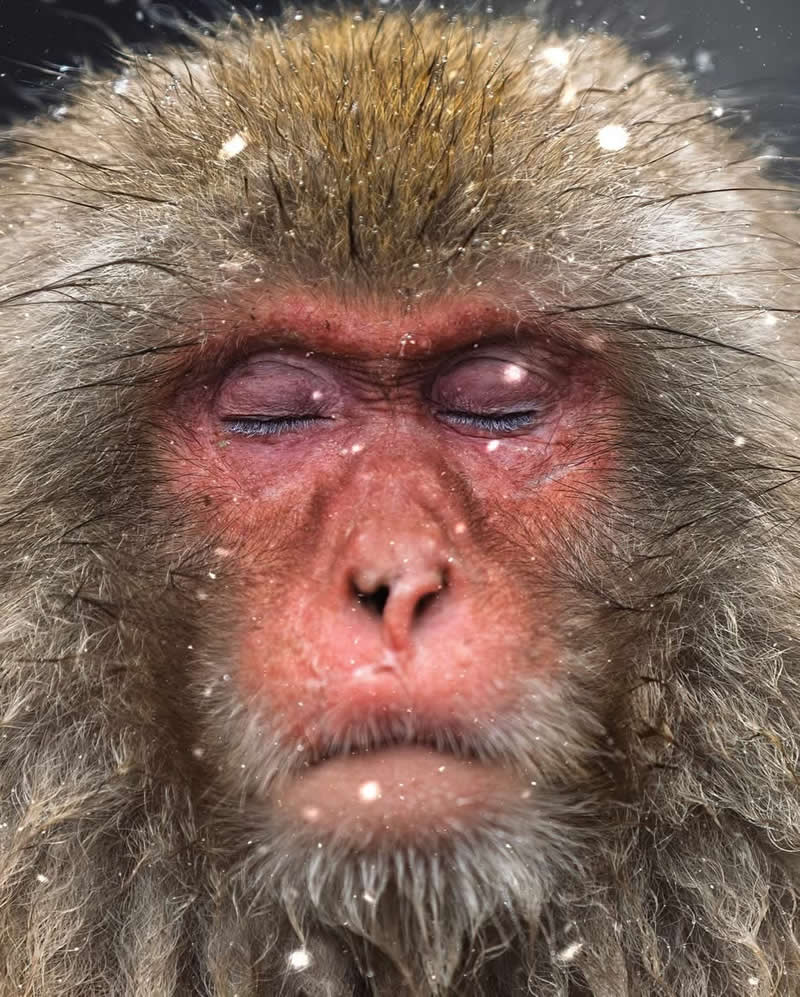
Through the soulful lens of Tapan Sheth, this iconic winter ritual turns into something deeper than wildlife photography. His images don’t just show monkeys bathing in hot springs—they feel like visual haikus. Eyes half-closed, fully closed, or suddenly wide open. Snow clinging to fur like powdered sugar. Faces that look less animal, more monk. It’s meditation mode, but make it wild.
Tapan’s work here isn’t about chasing action or drama. It’s about waiting. Waiting for the snowfall to soften the scene, for steam to frame a face just right, for a single expression to tell a bigger story. Shot using Canon cameras and lenses, these frames lean into natural light, subtle tones, and raw emotion—proof that wherever there is light, there is a photograph waiting to be born.
What makes these images hit hard is their honesty. No forced moments. No noise. Just nature being itself. In a world obsessed with speed, Tapan Sheth’s Jigokudani series invites you to slow down, breathe deep, and soak it all in—just like the monkeys do.
You can find Tapan Sheth on the web:
#1

#2

#3

Jigokudani: Where Snowfall, Steam, and Silence Collide
Jigokudani literally translates to “Hell’s Valley,” but don’t let the name fool you. In winter, this place feels more like a frozen sanctuary. Tucked into Japan’s rugged mountains, the hot springs cut through thick snow, releasing clouds of steam that blur reality and soften everything in sight. This extreme contrast—icy air meeting boiling water—is what makes the location visually addictive.
The stars of this valley are Japanese macaques, famously known as snow monkeys. They descend from the forest during heavy snowfall, dipping into the hot springs to survive the brutal cold. It’s raw adaptation meets quiet elegance. Snow piles onto their heads, eyelashes frost over, and still they sit—calm, unbothered, present.
For a photographer, Jigokudani is both a gift and a challenge. Light shifts constantly. Steam hides and reveals. Snowfall can erase details in seconds. But that unpredictability is the magic. The environment doesn’t just frame the subject—it becomes part of the story, shaping every expression and every moment captured.
#4

#5

#6

Capturing the Soul: How Tapan Sheth Photographed the “Zen” Moments
Tapan Sheth’s approach here is all about patience and respect. No rushing. No interference. Just observing until the scene speaks for itself. Using Canon cameras and lenses, he lets natural light do the heavy lifting—soft winter tones, muted contrasts, and gentle highlights created by steam and snow.
What stands out most is how he locks onto expressions. One monkey sits with eyes fully closed, snow resting on its head like a crown. Another peers straight into the lens, water rippling around its face. Some look deep in thought, others look blissfully blank. Together, they form a visual rhythm that feels almost spiritual.
Tapan doesn’t photograph animals as subjects—he photographs them as storytellers. Each frame feels intentional yet effortless, as if the monkey and the moment agreed to meet halfway. The result? Images that don’t scream for attention but quietly pull you in, asking you to stay a little longer.
#7
#8

#9

The Photographer’s Vision: Aesthetic, Purpose, and Wild Storytelling
For over a decade, Tapan Sheth has been documenting the raw beauty of wildlife, driven by a belief that every creature carries a story worth telling. His journey began with curiosity and grew into a lifelong dedication to conservation and visual storytelling, with a deep focus on India’s wildlife—especially the majestic Asiatic lions of Gir.
That same philosophy flows into his Japan series. His aesthetic is clean, emotional, and deeply human. He looks for stillness, resilience, and quiet power—the kind that doesn’t need drama to be felt. To him, photography is more than an image; it’s a bridge between people and the natural world.
Through these snow monkey portraits, Tapan reminds us why wildlife photography matters. It builds empathy. It slows us down. It makes us care. In a single frame, he preserves not just a moment, but a feeling—one that lingers long after you’ve looked away.
#10

In Summary
Where is Jigokudani Snow Monkey Park located?
It’s located in Nagano Prefecture, Japan, famous for natural hot springs and snow-dwelling Japanese macaques.
Why do snow monkeys sit in hot springs?
They use the hot springs to survive extreme winter cold during heavy snowfall.
Who is Tapan Sheth?
Tapan Sheth is a wildlife and nature photographer known for soulful storytelling and conservation-focused imagery.
What makes these snow monkey photos unique?
The calm expressions, meditative moods, snowfall-covered fur, and natural light create a Zen-like visual experience.
What camera gear was used for this series?
The photographs were captured using Canon cameras and lenses, relying heavily on natural winter light.






![20 Years Later, One of the Best Sitcoms of the 21st Century Returns With Hilarious First Look [Exclusive]](https://static0.colliderimages.com/wordpress/wp-content/uploads/2026/02/malcolm-in-the-middle-life-s-still-unfair-feature.jpg?w=1600&h=900&fit=crop)

 English (US) ·