
 3 weeks ago
14
3 weeks ago
14

Published Feb 19, 2026, 9:13 AM EST
Anya Taylor-Joy's breakout movie shows how far she and A24 have both come
 Image: A24
It’s a familiar story in the horror world: A small studio makes its name on genre films, then expands its reach with a more ambitious slate of movies, often courting year-end awards rather than the Fangoria crowd. Think of the 20-year journey between New Line Cinema releasing the first Nightmare on Elm Street movie in 1984 and winning Best Picture for its trilogy-capping Lord of the Rings: The Return of the King.
Similarly, the hip indie studio A24 is currently an awards darling and sometime box-office force with recent successes, like Josh Safdie’s Marty Supreme and Celine Song’s Materialists, that have little to do with genre. (Even if Marty Supreme was almost a vampire movie.) Only two of A24’s top 10 highest-grossing titles are horror movies like the breakout Hereditary. But just 10 years ago, Robert Eggers’ The Witch was making a play to become A24’s biggest movie ever.
On the old A24 box-office charts, Eggers’ debut feature wound up just barely behind Alex Garland’s sci-fi horror movie Ex Machina in the U.S., but inched ahead of it internationally. The Witch also established A24 as a destination for a certain type of quieter, artier, less programmatic horror. OK, fine, we’ll say it: A lot of people referred to it as “elevated horror,” a loaded term given the number of horror masterpieces that predate the mid-2010s. Then again, given where it leaves its lead character, there is something elevated about The Witch.
By now, Eggers’ deal is clear. His films take place no later than the early 20th century, and often centuries before. They are meticulously researched and immersive in their dialogue style, production design, and hushed tones. And even when they have fantastical subject matter or spill over into gruesome violence, they will show off his obsession with intensive research and period authenticity.
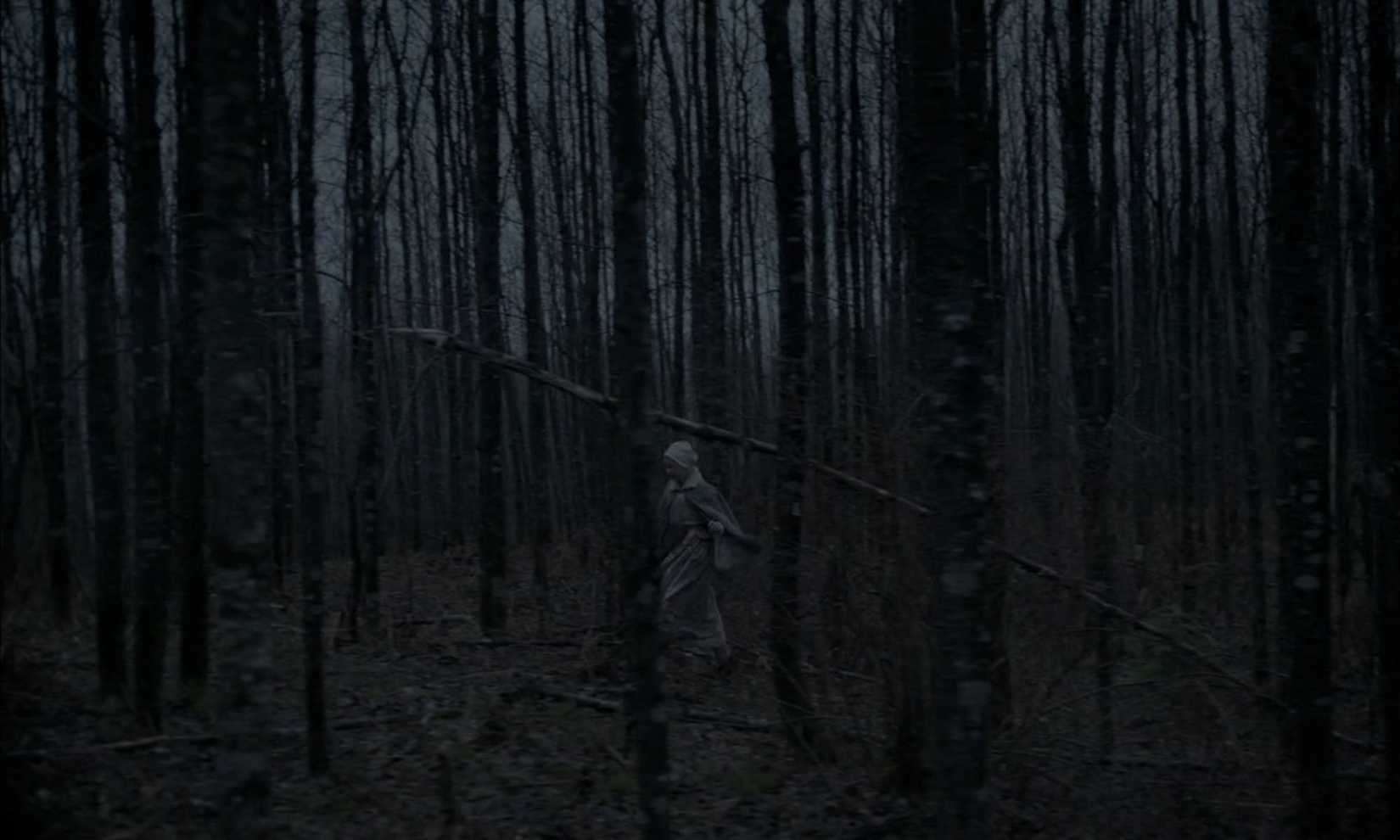 Image: A24
But a decade ago, The Witch was particularly striking in its overcast 17th-century New England spareness. The film opens with William (Ralph Ineson) and his family in the process of being banished from a Puritan settlement, on the seeming basis that William is too severe and forbidding even for the Puritans. The family relocates to the isolated outskirts of a forest, and quickly gets to work having more babies and building a pitiable wreck of a farm. Then things really start to go wrong, as infant Samuel disappears while eldest child Thomasin (Anya Taylor-Joy) is playing peek-a-boo with him in the yard.
For much of its trim run time, The Witch focuses the audience’s fears on what remains off-screen. This isn’t an unusual strategy in horror, but rather than simply hiding his monster, Eggers often uses that off-screen action to bend time in uncanny ways. Samuel disappears in the literal blink of an eye: Thomasin closes her eyes for a second, opens them, and her brother has vanished without a trace. There are no sounds of distress, no figures racing away in the distance. This isn’t framed as a mystery; moments later, we see that a shadowy witch has the baby back in her forest lair.
But Eggers continues to elide important developments. He shows the witch preparing the baby for something, and then cuts to a gruesome aftermath, as she slathers herself in a bloody ointment. The baby’s vanishing and death are inarguable, yet unseen, apart from their aftermath. It’s a potent combination of knowing exactly what has happened, and not seeing how.
 Image: A24
Those unseen evils also make it easier for the family to blame Thomasin — to wonder whether she is the forest witch, especially after she vengefully pretends to be enchanted in order to scare her unruly siblings, twins Mercy (Ellie Grainger) and Jonas (Lucas Dawson). This was Taylor-Joy’s first real film role (she supposedly has an uncredited but appropriate background part in Vampire Academy) and Eggers uses her expressive eyes as part of a visual motif. He repeatedly captures Taylor-Joy looking upward beseechingly, engaged in something that feels more desperate and graver than mere prayer. As the movie goes on, Thomasin doesn’t just have to worry about the wrath of God, but also the anger and suspicion brewing in her family members, who want an explanation for the tragedies befalling them.
As terrific and memorable as Taylor-Joy is here, and as prescient as Eggers seems in where he takes her, Ineson’s performance seems just as crucial upon revisiting the film. His wife Katherine (Kate Dickie) seems more prone to believing that their daughter has struck a deal with the devil, but in spite of William’s purer-than-Puritan stance, he doesn’t seem to wholly believe that Thomasin is corrupted. (In part, at least, that’s because he knows Thomasin has been blamed for stealing Katie’s cherished silver cup, which William has secretly traded for supplies.) Ineson shows an anguished weakness in his performance, as William faces his inability to protect Thomasin from these suspicions, or to protect the rest of his family from whatever else is happening. His stubbornness has cost them their security. He’s unable to claw back a sense of stability. And when the family goat, Black Phillip, gores him, he almost seems relieved, as he throws down a weapon and allows it to happen a second time.
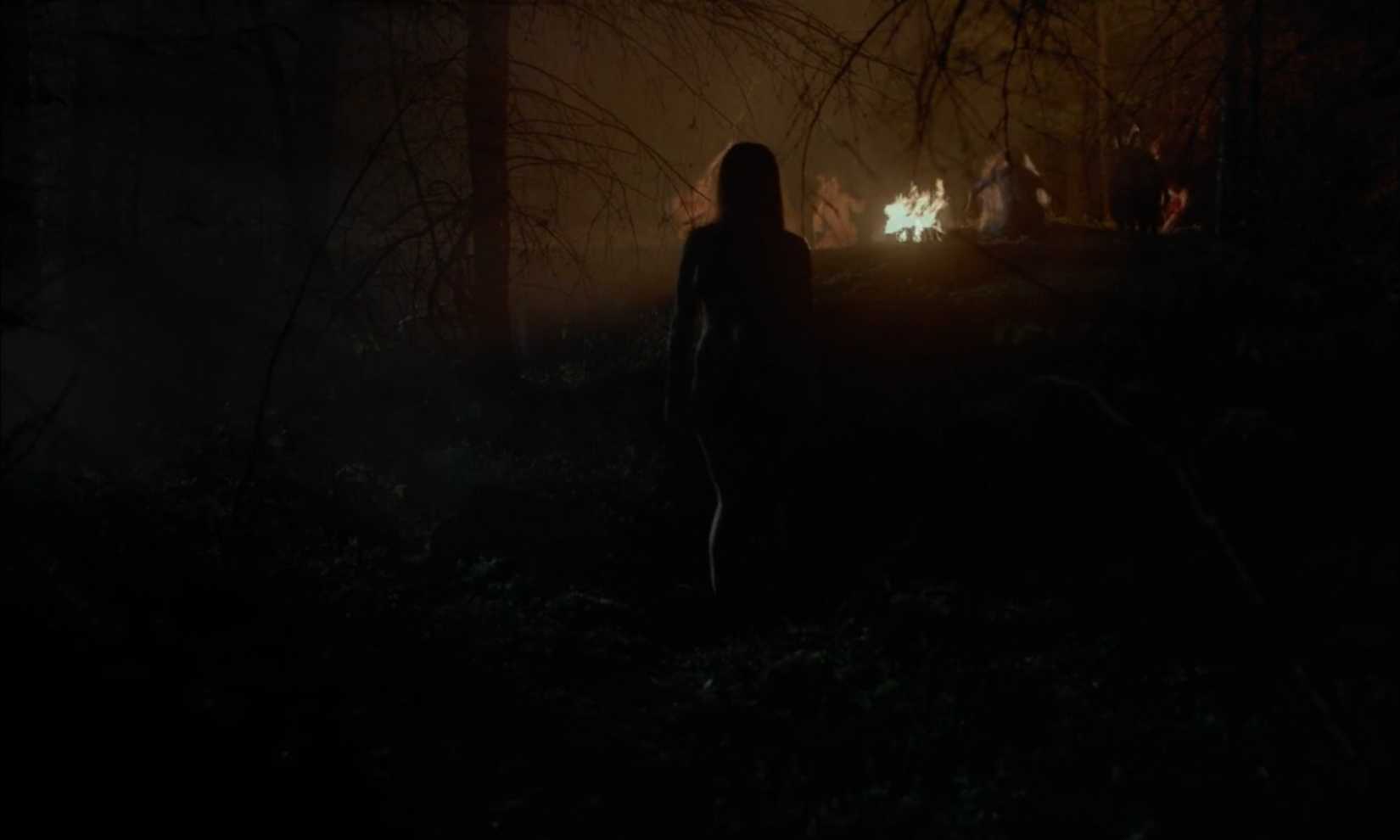 Image: A24
Thomasin’s version of surrender, by comparison, feels glorious. With her family destroyed, she communicates with the Satanic emissary Black Phillip, and accepts his proposal to “live deliciously” in witchhood. Hence the literally uplifting ending; when Thomasin levitates with her fellow witches for the first time, it’s spooky, but also satisfying. Somehow, an incredibly bleak and desolate movie ends on a note of triumph.
A24 movies have replicated The Witch’s hushed folk-horror tone over the years, as “A24 horror” has become a broader go-to aesthetic sensibility — now to the point where A24 itself only dabbles in it, while other distributors attempt to specialize in it. Eggers isn’t even an A24 guy anymore; his last two movies and his next one all belong to Universal’s subsidiary Focus Features. Even as he’s stayed true to his sensibility, Eggers is on to bigger business than The Witch. Both Eggers and A24 moving on to superficially bigger things feels fitting for such a modestly scaled movie. The Witch works best as a smaller, sneakier project — one you follow into the woods, only to realize it’s unexpectedly lifted you skyward.
The Witch is streaming on HBO Max.






 English (US) ·