
 1 hour ago
6
1 hour ago
6
An extremely intelligent man facing an insurmountable challenge somehow defies the odds and achieves success. Then he pays a terrible price for it while the rippling aftereffects alter time, space, and society as we know it. That's the plot of Christopher Nolan’s Oppenheimer, his Dark Knight trilogy, his space epic Interstellar, and now, The Odyssey.
But while The Odyssey fits neatly into Nolan's filmography with its overarching themes of fate and consequences, its epic visual scale, and its reliance on IMAX technology, his adaptation of a 2,800-year-old poem also diverges from what we've come to expect in surprising ways. Nolan doesn’t play with looping timelines and contradicting narratives anymore than the story's original credited author, Homer, ever did. This isn't the type of movie you need to rewatch two or three times to understand. There's no ambiguous ending for Reddit theorists to endlessly analyze and debate. This is The Odyssey, translated yet again.
Yes, it’s straightforward — but it’s also Nolan, at the height of his power, using every skill, trick, technique, and ounce of Hollywood cred at his disposal to tell a story that's both awe-inspiring and shockingly unambiguous. With a sprawling cast of stars, jaw-dropping special effects, inexplicable visuals, and a masterful score from Ludwig Göransson, The Odyssey is Nolan's purest picture ever. It's his Lord of the Rings trilogy boiled down to one three-hour saga, a meticulous tribute to a beloved story told with just the right mix of fealty and creative liberty to forge something timely and timeless all at once.
If Oppenheimer was Nolan shedding the trappings of genre to reach new heights with a science-heavy biopic, then in The Odyssey, Nolan puts away his trusty tools to shape cinematic history with his bare hands.
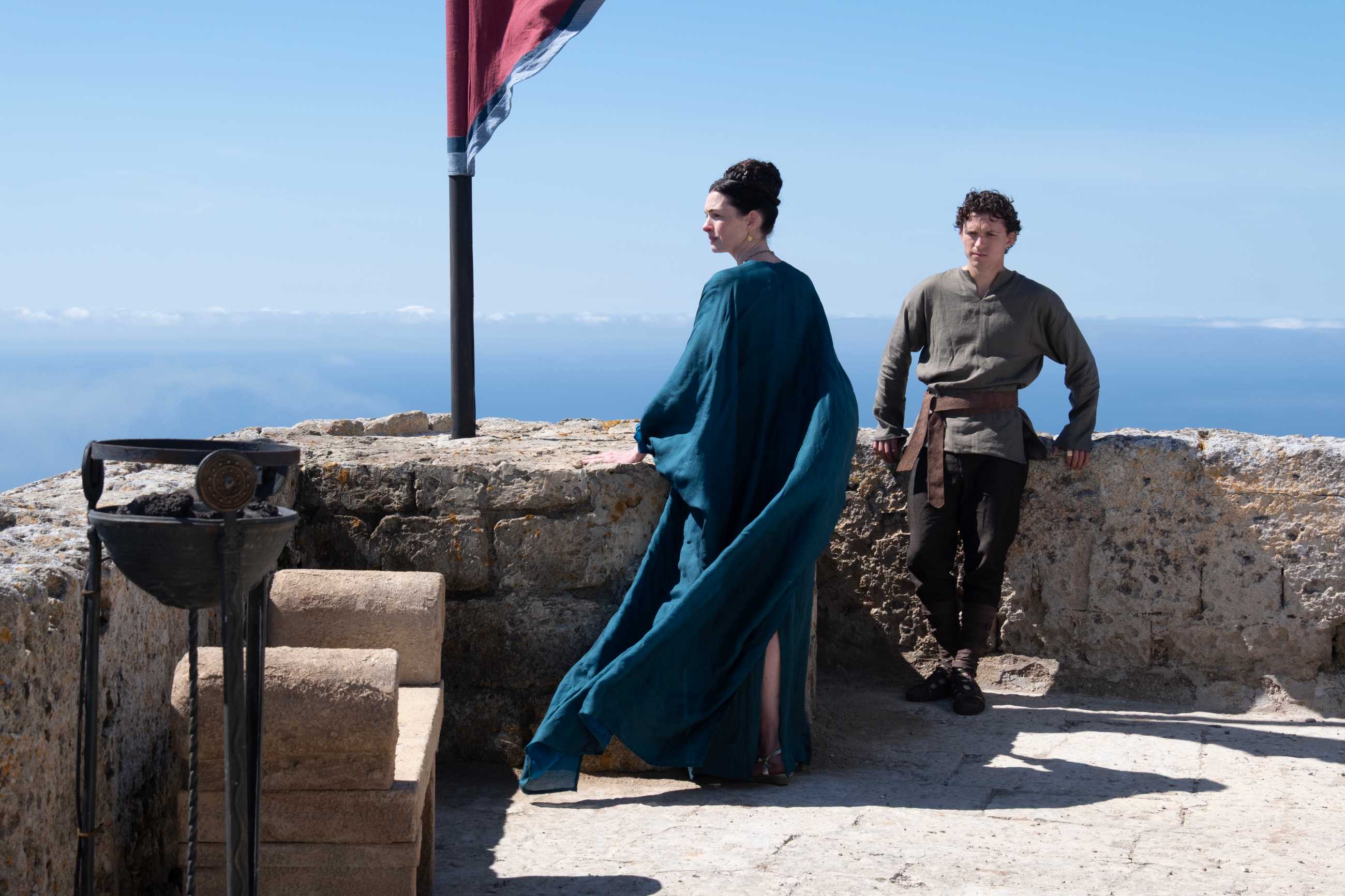 Image: Universal Pictures
The Odyssey opens with a gentle warning: "A time of apparent magic," a gentle prod at audiences to both accept and question what they're about to see. Yet Ithaca, and the Palace of Odysseus, is all too devoid of magic. His wife Penelope (Anne Hathaway) has spent the last 20 years waiting for her husband (Matt Damon) to return home from the Trojan War, while a small army of suitors vies to replace him. Running out of time before lead suitor Antinous (Robert Pattinson) can seal the deal, Odysseus' son Telemachus (Tom Holland) sets out on a journey to either find his dad or prove he's dead and claim the crown (either option seems fine for the young lad).
The first small stretch of The Odyssey is told out of order as Telemachus reconstructs the story of a father he never knew. Bits and pieces of the Trojan War and the immediate aftermath are recounted by multiple characters, including the Greek kings Menelaus (Jon Bernthal) and Agamemnon (Benny Safdie), along with Odysseus himself, who's marooned on an island with the goddess Calypso (Charlize Theron) and recovering from amnesia. This might seem like classic Nolan, but he's mostly following Homer's lead; the original story also begins near the end before jumping backward in time.
Nolan takes some Nolan-esque liberties early on, turning the events that directly precede Homer's Odyssey into a narrative kaleidoscope where the plot is chopped up and then reassembled out of order. But there's no Memento-style trickery. No unreliable narrators or rug-pull twists. Each piece simply fits neatly into the larger puzzle. And once the backstory is completed and all the boxes are checked (cyclops, sirens, etc.), the bulk of the movie unfolds in neat, linear fashion. The only tricks left are the ones Odysseus and Penelope play, both on the suitors and on each other as a final test of fidelity.
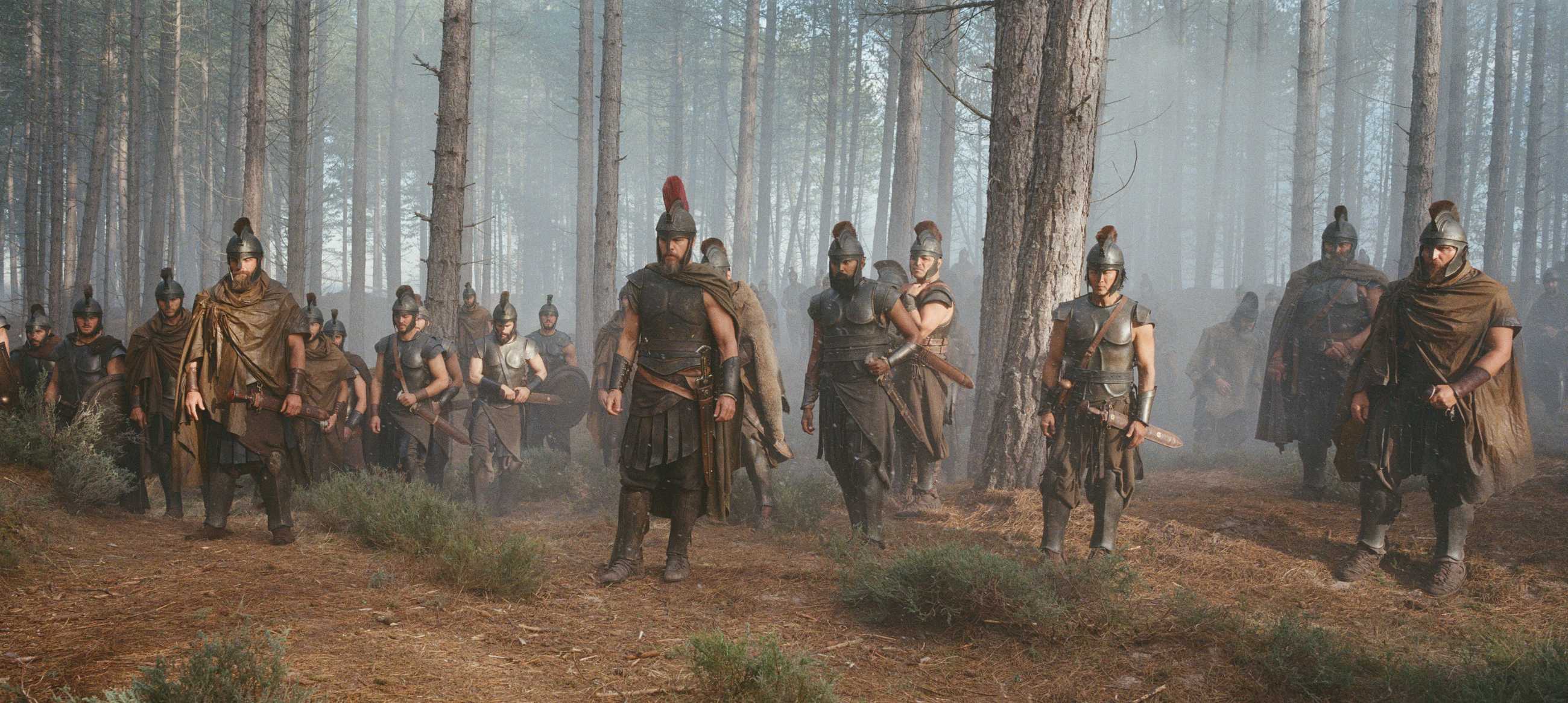 Image: Universal Pictures
The Odyssey's biggest draw is its sheer visual scale, which feels on par with what Peter Jackson achieved for Lord of the Rings (minus the elves and orcs). Nolan and his team show in real-life locations across the globe, and the result is glorious to behold. Read any interview with a member of the cast, and they'll start complaining about being forced to climb up some mountain in Greece in full armor just to reach a filming location, or get soaked while filming out at sea. Then in the same breadth, they'll praise Nolan not just for committing to the most realistic shoot possible, but for suffering right alongside his actors.
That suffering was worth it. The entire Cyclops sequence, shot in Nestor's cave, a historic site with traces of activity dating back to 5,000 BCE, can feel unreal to behold, like staring into the face of some Lovecraftian monster. (The unique Cyclops design itself, which relies on a mix of a 60-foot-tall puppet and actor Bill Irwin in a nude bodysuit, is also disturbing in a way that seems like Nolan channeling his inner Guillermo del Toro.) The sacking of Troy, shot in an 11th century Moroccan village with moody lighting from flickering torches and pulse-pounding tension, makes the 2004 movie Troy look like straight-to-Netflix slop.
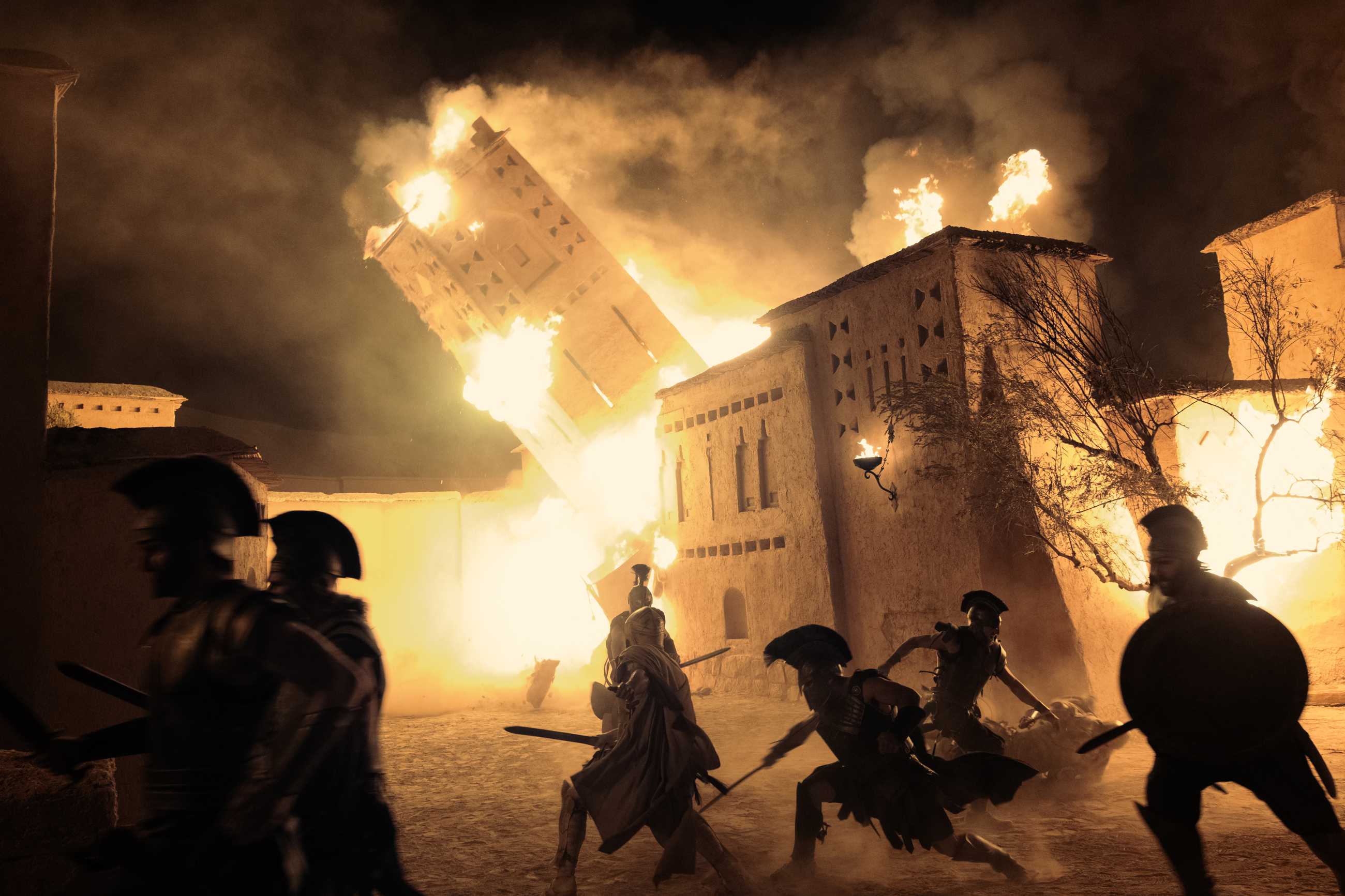 Image: Universal Pictures
And yet, it's the smaller, quieter moments that really stick with me and show how Nolan and his longtime cinematographer Hoyte van Hoytema have mastered the art of filming in IMAX. In one scene, Odysseus and his frequent adviser Athena (Zendaya) walk side by side in conversation, the focus shifting quickly between their faces like your iPhone's portrait mode on steroids. When Odysseus and Penelope finally reunite, their first conversation is spoken through a woven screen used by the queen of Ithaca to keep her suitors at bay; illuminated by candlelight, that screen comes to life, a shifting portal reminiscent of Matthew McConaughey's fourth-dimensional bookshelf in Interstellar. Nolan and van Hoytema use these subtle tricks to illustrate Odysseus' connection to the women in his life: his effortless bond with the goddess of wisdom and warfare, and his strained marriage to Penelope.
One small visual critique: While The Odyssey is full of breathtaking action and scenery, when the movie reaches its climax, Nolan struggles to do it justice. A final battle between Odysseus and his wife's many suitors devolves into hard-to-follow action, shot in a poorly lit castle with sometimes stuttery cinematography. While you never lose track of what's happening, that final fight feels anticlimactic, and suffers from the same flaw as Nolan's Batman movies where the hero faces a small army of enemies who foolishly attack him one at a time instead of simply swarming their enemy to overwhelm him.
(Oh, and Nolan also does indulge in one extremely ugly CGI sea monster, a first for the Oscar-winning director.)
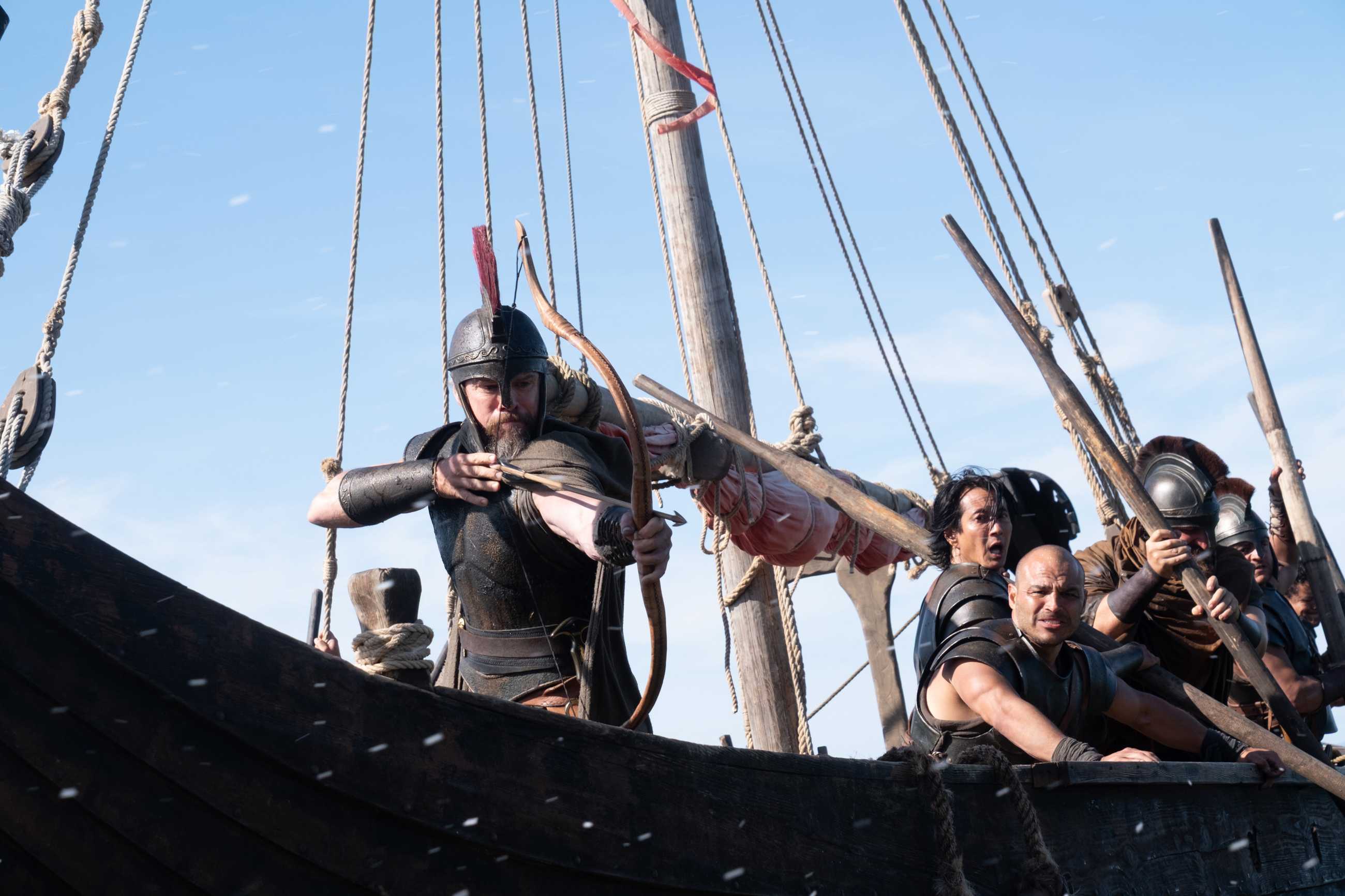 Image: Universal Pictures
As for the acting, it's unsurprisingly excellent. Nolan clearly knows how to cast a movie, relying on both his usual suspects and a handful of newcomers to fill out this sweeping pantheon. Damon carries the weight of The Odyssey on his back as a man burdened with the guilt not just of war but of breaking the very foundations of civil society by turning his enemies' hospitality against them. Holland rises to the challenge of making a "real" movie, while Pattinson gleefully plays the sneering villain.
The true star of The Odyssey, however, is Nolan newcomer John Leguizamo, who plays Eumaeus, a loyal slave and swineherd to Odysseus who watches over the palace waiting for his master to return. As a blind old man, Leguizamo brings incredible pathos to a character that could easily feel like just another background player. Eumaeus may represent a key moment in the original story, but Nolan elevates him to the heart of the film, and Leguizamo is more than up for the challenge.
The other undeniable talent onscreen is Hathaway, who pours all her fury, love, and sadness into a complex role that could feel two-dimensional in another actor's hands. Penelope might just be Odysseus' wife, grieving her missing husband and beset by unworthy suitors, but Hathaway brings agency and humanity to the character, along with a streak of irrational rage that's both totally fitting for the circumstance and clashes with Odysseus' thoughtful, always-cool demeanor. Samantha Morton also makes a lasting impression as Circe, the enchantress who poses one of the biggest threats in The Odyssey and drags Nolan's film briefly into full-blown horror genre territory. Morton plays the role with surprising warmth, giving depth to a witchy villain who might otherwise play like just another monster encountered on that long journey home.
Meanwhile, Lupita Nyong'o and Elliot Page, two casting choices that stoked endless debate and controversy online, both play minor but impactful roles. Helen famously isn't a major character in The Odyssey at all, but in a few short scenes Nyong'o conveys a deep well of grief and regret over the death and destruction her affair inspired. Page isn't Achilles, as so many Twitter trolls speculated wildly, instead playing the smaller tragic role of Sinon, the Greek soldier left behind to deliver the Trojan Horse, never even aware he was sacrificing his life to spur in the name of Odysseus' victory. (For all the hand-wringing, Achilles isn't even in Nolan's movie.)
But The Odyssey isn't concerned with the culture war debates of the early 2020s. Nolan's message here is far bigger. He's crafted a movie about the dangers of getting what you want and the inevitable blowback that comes with any major, world-shifting victory. Like J. Robert Oppenheimer and Bruce Wayne before him, Odysseus struggles due to his success, not his failure. And with The Odyssey, Nolan has finally laid bare that one brutal truth, while creating one of the most epic and beautiful films of all time.
The Odyssey releases in theaters on July 17.




 English (US) ·