The Forgotten Oscars Category Gave Us an Award That Couldn’t Exist Today
6 hours ago
4
Published Mar 12, 2026, 8:12 PM EDT
In addition to being a contributor for Collider, Rance Collins has also written for Variety, IndieWire, Los Angeles Magazine, Turner Classic Movies and The Huffington Post. His news coverage has earned him multiple honors from the California News Publishers Association, while his film and theater criticism made him a two-time Southern California Journalism Award winner. He also was recognized with 2024’s Excellence in Journalism Award by the California 51st Assembly District.
Before committing to journalism as a career, the Texas native lived many lives in Los Angeles – including as a Warner Bros. and Universal Studios tour guide, a political organizer, a marketing writer and producer, a leasing consultant, an occasional indie filmmaker, a Postmates driver and the personal assistant to TCM host Ben Mankiewicz. He holds a BFA in mass communications from Ouachita University and an MFA in screenwriting from Emerson College.
Other interests include ‘90s sitcoms, Hollywood backlots, true crime, record stores, Linda Ronstadt, two cats named Charlotte and Flynn, game nights, advocating for an expanded “Hacks” universe, his AMC A List entourage (aka Jorge), the daily NYT Connections, his Barbra Strikesand bowling team, and making his educator mom and author dad proud.
If cinephiles think about title writing in the year 2026, they would probably assume one was thinking about the closing credits of a major blockbuster. Titles mean little more today than simply a list of the people who worked on a production. The credits, now typically after the feature though for decades typically positioned before, were made into fine art by the likes of designers such as Saul Bass. But while the visual motifs that launch Psycho and Casino are certainly eye-catching… that’s not what title writing meant 100 years ago.
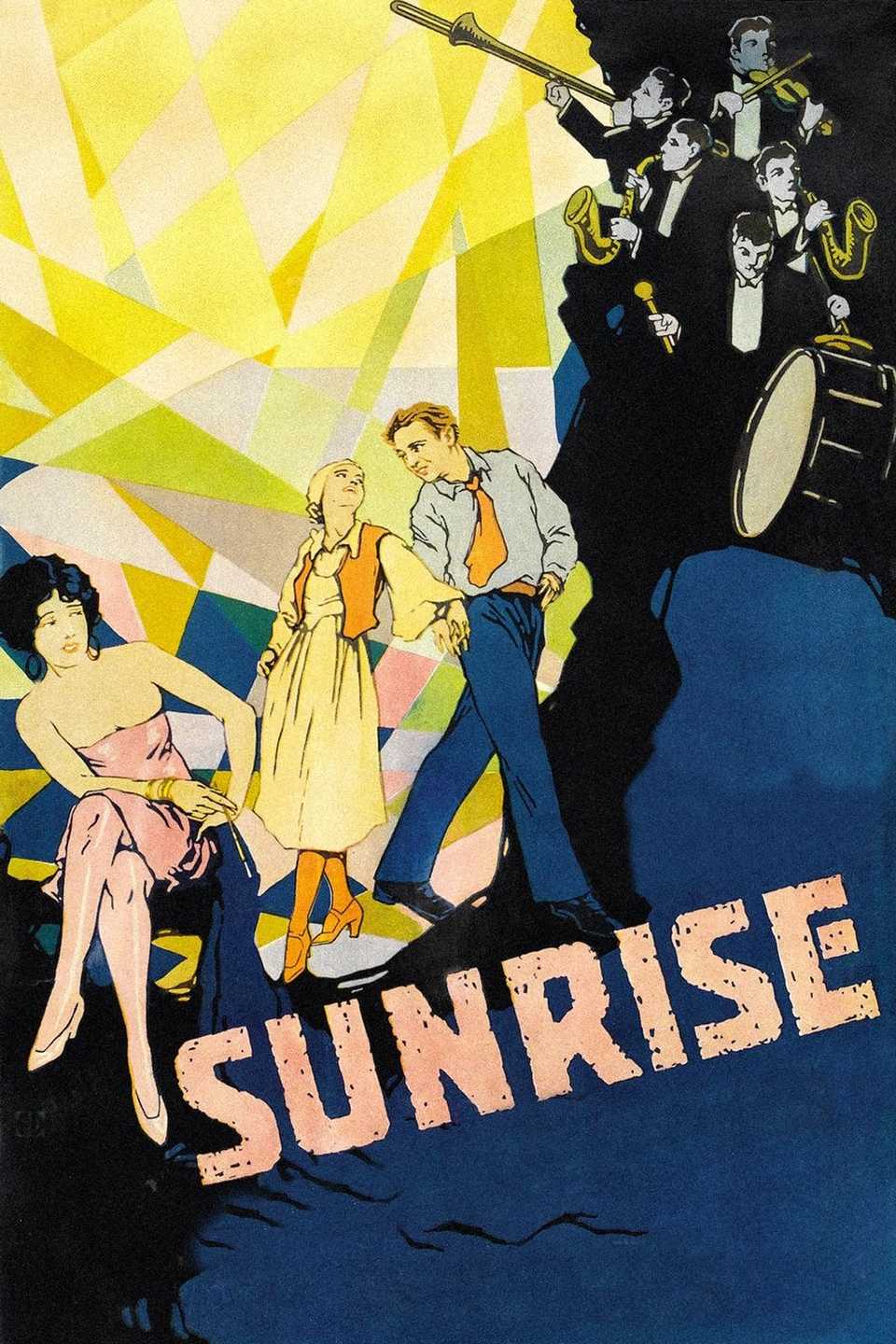
In the silent era, titles meant more than credits. Without dialogue, the pantomime of the actors could only go so far to communicate the action. Stitched in between emotive shots, quotes of dialogue or exposition helped to keep the audience up on the story’s progression. While this on its own may not seem like much of an art, by the time sound came around title design had developed into a pivotal part of the process. Consider the intertitles for 1927’s Sunrise: A Song of Two Humans. The titles have a personality all their own. And befitting their importance to moviemaking, the Academy of Motion Picture Arts and Sciencessaw fit to bestow an award for the title designers… at least for one year.
The First Years of the Oscars Looked Completely Different
In the infancy of the Academy Awards, there was a decided lack of pomp and circumstance in comparison to what would become of the ceremony within a few years. First off, the Academy decided to play “catch up” with movies released back to 1927, even though the first Oscars was held two years later. The awards also highlighted movies released in both 1927 and 1928… and the next ceremony would cover the rest of 1928 and 1929, etc. until finally it featured just one calendar year in 1934.
Also, the first ceremony didn’t have a clear Best Picture winner… at least not until Wings’ award for “Outstanding Picture” was determined to be superior to Sunrise’s “Best Unique and Artist Picture." And the actors? Well, the supporting categories were still several years off from existing and the leading actor and actresses were rewarded for their entire body of work during the eligibility period, which might have just given Janet Gaynor and Emil Jannings a leg up on their competition.
Related
Directing was also split up into two categories – one for drama and one for comedy, something the Golden Globes — which awards separate Best Picture winners for Comedy/Musical and Drama — still doesn’t even do. Some of the other awards would evolve. For instance, “Best Engineering Effects” would eventually become “Best Visual Effects.”
The ceremony itself was an intimate banquet at the Hollywood Roosevelt Hotel of 270 invited guests. The awards presentation only lasted 15 minutes, and the winners knew months in advance. By the second year, things would get a little bit more like we think of the Oscars now. And the name of the Oscars would come around in a few years, too, although the origin of that name is a whole other story.
Title Writing Was a Unique... But Quickly Extinct Craft
The “Best Writing (Title Writing)” category was awarded the only year that silent film dominated the ceremony. By the time the awards were handed out, silent pictures were already obsolete. The major studios had halted silent production by this point, and within a year virtually no films would be released without sound. Almost overnight, the industry was a whole new animal. While titles would continue to be written, they would no longer permeate throughout the entirety of a film. Instead, the titles would be limited to credits and occasional intertitles. But they were no longer essential, nor were they enough of a trade to be featured on an awards list.
“There was no script. Mr. [D.W.] Griffith told you the plot and as there was no money in those days, and film was expensive, we rehearsed and rehearsed and rehearsed before we ever rolled camera. The card writers were there from the beginning to observe, take notes and ‘feel’ the film. Out of rehearsals the actors would make up the dialogue that matched the situation and/or action of the scene and from that the writers would take notes that evolved into the final cards.”
So, title designer Joseph Farnham won an Oscar — the only ever in the Title Writing category — for a career that was nearly dead by the time he won the award. It had become Farnham’s life’s work. Farnham had over 100 credits dating back to 1918. His career was so prolific, he wasn’t even nominated for a single film — but rather for his collective body of work during 1927 and 1928.
Farnham was one of the preeminent men in the trade. His final credits would come on sound pictures, albeit in the same position, but Farnham would not have the opportunity to transition into another line of work. At only 46 years of age, Farnham had a heart attack in 1931, his life ending as title card writing went gone with the wind.
Sunrise: A Song of Two Humans is available to stream on Tubi in the U.S.







 English (US) ·