
 3 weeks ago
41
3 weeks ago
41
Maisie Williams has dabbled in witchcraft exactly once. The actor was getting ready to audition for a part in a film. “I wanted it so badly that I went on to Etsy, and I paid a witch to manifest me the role,” she says, poker-faced.
“It didn’t work, and that was where my days of witchcraft ended,” she adds, breaking into an infectious cackle.
The spell may not have worked that time, but Williams will soon try her own hand at witchcraft on screen in Practical Magic 2. The sequel to the beloved 1998 romcom, about two supernatural sisters played by Sandra Bullock and Nicole Kidman, it features Williams as Antonia, the youngest daughter of Bullock’s Sally Owens. She never did get her money back from her Etsy witch. “It was maybe, like, £16.50? Which is not going to break the bank, but good for her. Good for her, to be making money doing nothing!” Williams laughs again.
We meet on a sweltering afternoon at a posh pub in Belgravia in London where women in expensive-looking sundresses are drinking Aperol spritzes on the terrace. Williams arrives from a busy day of appointments. She removes a pair of oversized grey headphones and sets them down on the table (she was listening to the US singer-songwriter Slayyyter on the walk over). “I’m in my business outfit because I’ve had business meetings,” she explains. (It’s arguably a very gen Z take on corporate dressing: long, dark hair worn in a practical ponytail, white T-shirt, smart grey trousers with a matching grey miniskirt attached, chunky, don’t‑mess-with-me Prada boots.)
Today’s agenda has included two jewellery fittings for a red carpet event, an “important producing meeting, with me as the producer” and lunch with her former Game of Thrones co-star Hannah Murray. The pair were catching up and discussing Murray’s recent memoir, The Make-Believe, about her devastating experience with a wellness cult. The group promised spiritual healing through expensive, elaborate rituals; Murray experienced a psychotic episode and was later diagnosed with bipolar disorder. “I knew something was going on, but I didn’t know it was that,” Williams says. “I felt really upset with myself for not asking sooner.”
Williams says she hasn’t always been a sceptic regarding magic. “I used to indulge in the whimsy of the patterns of the universe and think, ‘Oh, it’s a sign that everything’s going to work out.’” She says, taking a sip of Diet Coke. But after reading Murray’s book, Williams decided that searching for symbols in daily life might not be so wholesome after all. “I realised it leaves your mind slightly malleable to seeing a sign because you think it’s a divine intervention, and not just a good, fun coincidence.”
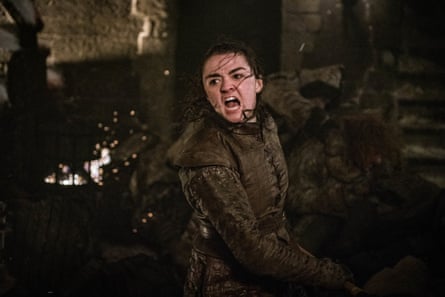
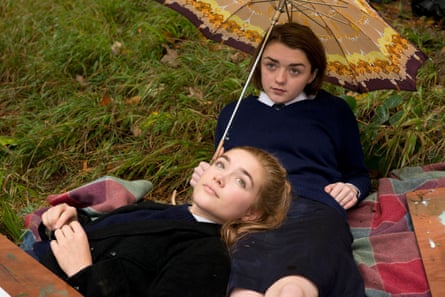
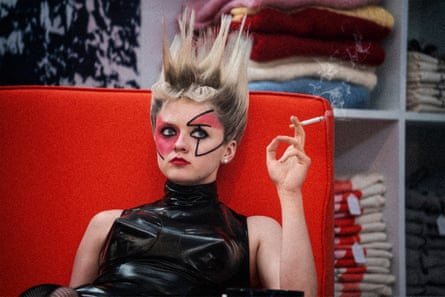
The 29-year-old actor is probably still best known as Arya Stark from Game of Thrones, the baby-faced assassin who shot her to stratospheric levels of fame at age 12. I remember first seeing her in Carol Morley’s The Falling, in which she stood out as a prickly, stiff‑backed schoolgirl opposite a then unknown Florence Pugh. In the seven years since Game of Thrones ended, Williams has landed roles in Marvel spin-off The New Mutants, in Danny Boyle’s miniseries Pistol as punk icon Jordan, and in Apple TV’s The New Look, a glossy drama about Christian Dior and Coco Chanel in Nazi-occupied Paris. She has started her own production company, and co-hosts the Frank Film Club podcast with two of her friends. It has been a period of trying different things, of searching for light relief, after a long stretch dealing with some much darker stuff. Last year, she even got a new agent. “He was bringing me fun things and was calling me every day,” she says. One of those fun, unexpected things was Practical Magic 2.
Williams had seen the original once or twice, but rewatched it before her audition. “The first movie has a lot of different beats to it,” she says diplomatically. That’s one way to put it: tonally, the film is all over the place. Based on an Alice Hoffman novel, it tells the story of the Owens sisters, two witches doomed by an ancestral curse: any man who falls in love with an Owens woman is destined to die. It is a cult classic, with fabulous 90s costumes, Bullock and Kidman drunkenly dancing around their kitchen to Harry Nilsson’s Coconut and a jarringly dark domestic violence subplot. The sequel is much slicker. Directed by Susanne Bier, it sends Sally’s more rebellious eldest daughter Kylie (Joey King) to England as she tries to break the family curse. Bullock and Kidman go after her, bickering the whole way, while Williams’s character, a trainee neurosurgeon, holds the fort at home.
“Sandra Bullock and Nicole Kidman are real movie stars – from a time in cinema that is escaping us,” says Williams matter-of-factly. “I went into this film seeing them as otherworldly.” She recalls meeting the actors for the first time at the read-through. Later that day she was heading to Glastonbury festival. “I got back in my car, and I wound the windows up, and I was just like … ” Williams claps both French-manicured hands to her face and lets out a high-pitched shriek. “I had my dog in the car. He was probably thinking, ‘What is going on?!’ And then I drove to Glastonbury.” On set, in between takes, the veteran Hollywood actors imparted important wisdom to their younger co-stars. But it wasn’t about the industry. “We spoke about how being friends with your ex is a fallacy,” she says. Who said that? Was it Kidman, who is recently divorced? “We all said that!” Williams demurs.
In the film, Williams and King are an inseparable sister duo, snuggled under the covers at their mum’s house and whispering as if they’re at a sleepover. In real life, Williams has three siblings, including one sister who is five years her senior. “When we’re together it’s like no time has passed but we’re not … ” She pauses. “We don’t call every day,” she says. “We’ve had waves in our life when we’re a lot closer, but a lot of our connection now comes through the kids.” Williams takes her niece and nephew on camping trips. “We never went out partying together,” she says. And, anyway, when she would have been the right age, Williams was busy filming Game of Thrones. “I was away most of the time, and I’d moved out as well.”
Williams’s route to child stardom came via a curiously X Factor-themed school nativity play. “I played Sharon Osbourne, and had done such a good job that my friend’s mum felt compelled to tell my mum, ‘You should put her into classes.’ That was when I started taking it seriously, because they were taking me seriously.” Then things got very serious, with Williams barely in secondary school when she landed a role on Game of Thrones. The speed at which her career took off shaped her expectations of the film industry, she says. “I thought, oh! Whatever you want, you can get. Like that,” she says, snapping her fingers. “That was how I thought the industry was.” Her naivety, she reckons, was a good thing. “It informed the way I see life, and the way I threw myself into what turned out to be a huge responsibility.”
Those early positive experiences, she says, gave her the confidence to pursue her dreams. “I wasn’t knocked down as a child. I wasn’t knocked down by my mum. I wasn’t knocked down by teachers at drama school, and I wasn’t knocked down by the industry when I did start auditioning.” Williams wonders if she would have still been resilient if she hadn’t enjoyed early success. “I think that a lot of people have a gift, but they just don’t get cast in a huge TV show when they’re 12.”
Williams claims not to know about an Arya Stark spin-off movie that is reportedly in development with HBO. “I saw that, too! I was like, huh?” Would she be interested in returning to that character? “I don’t know, really. She would have to be developed in some way because I feel like I’ve changed so much, and I feel like what people loved about Arya is that she was always a child doing things that were quite grownup.”
In person, Williams is warm but somewhat guarded; she sits next to me on the leather banquette but maintains a cautious distance. She is good company, with a beaming smile and a glorious, trilling laugh, but several times in our conversation I sense her weighing up her words. When asked about her early life growing up between Bristol and Somerset she becomes visibly uncomfortable. She settles on an honest, abridged answer. “My mum and my siblings and I spent a lot of time with my auntie,” she says, adding that she was mostly raised by the two women. “My auntie was a childminder with loads of other kids, so my life was vibrant and silly and fun and playful.”
Williams describes herself as “not coming from a hugely privileged background”. I wonder how, on the brink of 30, she reflects on growing up with less. “When I reflect on myself as a child, I wish I could just tell her it’s going to be fine. It’s going to work out. I think the fear that I felt at that time was so defining for many years of my childhood. I didn’t know. I was so ambitious as a small child, and I think maybe that did come from wanting my life to be different.”
In 2022, Williams spoke about the difficulties she faced back then on the Diary of a CEO podcast. Her parents split up when she was a baby, and her father is no longer in her life. “I had a traumatic relationship with my dad, and ever since I can remember I have struggled sleeping,” she told host Steven Bartlett. She described a teacher noticing her struggling at school and asking if she ate breakfast in the mornings. Williams said she didn’t. She was eight. The teacher called her mum. “I would look around at other kids and be, like, ‘Why don’t they seem to understand this pain or dread or fear? Joy – when does that come for me?” she said on the podcast.
after newsletter promotion
“I have very close friends that I had not told,” Williams says today. “What I said on that podcast was all I’ve said about it to a lot of people, other than my family and my therapist. I even had boyfriends who didn’t know. So my reluctance to want to talk about it again is because my relationship to fame, and my relationship to success, was hugely defined by my childhood experience, and so that being explored in such a public setting now feels a little bit … terrifying?” She winces.
“I think it reached a lot of people who were in the same position, and I’m really happy that it did.” I’m curious to know why she chose that moment to finally speak about what had happened to her. “I always wanted to,” she says. “I think part of the reason why I was so good at playing Arya was because of how I’d grown up.”
She says journalists would often ask her how she was able to access such difficult emotions as a younger, less experienced actor. “I always felt like it was something I couldn’t say. I could access these emotions because I felt them myself, every one of them, for really extended periods of time.” What emotions? “Anger and fear.” She lets out a bitter laugh. “Stonewalling. I know that feeling of shutting down. These things that you don’t really start to understand about yourself until a lot later.” Being a teenager, she says, is already so fraught with emotion.
By the time she recorded that podcast, “I had done a lot of therapy,” she says, “and so was feeling a lot clearer about a lot of things.” It was Bartlett’s initial question that cracked them open for her. “He said, ‘What happened to you as a child that defines how you are?’ or something. It’s literally the only question that someone would have to ask me for me to answer honestly.” I was struck by her candour and vulnerability in that interview, I tell her. “I just thought that by releasing it, it was the last step in being free from it. Which kind of turned out to be true,” she says.
I wonder what she makes of Bartlett now. “Mmm,” she says, eyebrows raising, her mouth tightening into a horizontal line. In recent years, Bartlett has become a controversial figure, who has been criticised for amplifying medical misinformation and platforming manosphere-adjacent guests such as fellow podcaster Chris Williamson, who blamed declining birthrates on “women’s socioeconomic emancipation into the workforce”. Bartlett has aired the views of “experts” who claimed that Covid vaccines were “a net negative for society” and that cancer could be treated by a keto diet. It’s not a show that seems particularly aligned with liberal values.
“At the time, it felt like he had a podcast that felt fresh and different,” Williams says. “After, I felt slightly like I had been part of a podcast that gets a lot of views based on uprooting trauma. When I saw the trailer to the episode, I felt slightly icked out by how he had clipped it. But ultimately I can’t control that. Now I just feel like it’s quite dangerous, some of these conversations that are being had and taken out of context.”
Still, speaking about her experiences publicly was “a huge, defining moment of change” for Williams. “The first half of my 20s was just hell, but I think maybe it is for a lot of people,” she says. “I think that has more to do with the fact that Game of Thrones was ending, and I didn’t know what I was going to do next, and I just needed a break, to be honest with you. And then it also has to do with delayed teenage awkward years, and figuring a lot of things out that I felt like maybe I couldn’t do much earlier than that. And also Covid, and also an industry strike,” she adds with a shrug. The pub is getting noisy, filling up with finance bros who have just finished work.
“But post-2023, every day has been getting better,” she says. What happened in 2023? “I started seeing my friends again. I moved out of London. I was living alone. I was back with my dog. Everything was different,” she says. Williams is too discreet to confirm whether this change was sparked by the breakup of her long‑term relationship with fashion designer Reuben Selby. “At that point, it was time to … ” She smiles as if she’s got a secret. “Just choose myself,” she says. “What always comes into my mind is Kim Cattrall,” she adds, paraphrasing a quote the actor gave to the Guardian that became a popular meme. “‘I don’t want to be anywhere, not even for an hour, where I’m not enjoying myself.’ That’s truly how I’ve been the last three years.”
For Williams, choosing herself means “a lot of quiet, a lot of reading, and writing, and yoga, and running, and exercise, and swimming, and cycling, and walking the dog. Walking the dog for, like, hours a day.” In other words, being in her body. “Exactly, because then I know what I want. And that can be going out with my friends all weekend, or it can be a fun dinner in London where you miss your last train home, or it can be going to the cinema alone.” This summer, it has meant going to Primavera Sound and seeing singer Ethel Cain play, having barbecues with her friends and watching the World Cup in her local pub.
When I ask Williams what her career ambitions are now, a misty, faraway look comes over her. She does say her dreams out loud, but she’d rather not say them in print, she says. “My ambition is to work with people who have proven themselves to be really talented,” she says. “I’ve worked in the industry for quite a long time, and even though I love working with debut directors, there’s a stark difference in our experience now, which is noticeable. Working with people who are more experienced brings a different atmosphere on set.” She’s also been pouring her time into her production company, Rapt. It has meant reading a lot of scripts. “I cannot tell you the amount of postpartum horrors that people are making,” she says. “Whenever there’s one great movie, you’ll get seven scripts like that on your desk.” She and her co-founder, Lowri Roberts, are having fun writing their own feature film, too. “It’s a dark comedy. It’s a satire about the end of the world,” she says.
Williams has frequently been cast in dark, dramatic roles: “But I don’t really think that’s how I am most of the time,” she says. “I think when I’m in bad situations, I’d be more likely to laugh than to cry. I don’t know if I’m really in the camp of ‘plan for the worst’. I’ve had periods of my life where I’ve been so overcome by the fear of what could go wrong that, particularly now, I’m more in a phase of ‘anything can be fixed’.”
Not that there’s much that needs fixing. She is dating and “so happy” about it, though she is coy when pressed about the details. Has she been enjoying playing the field? “No! I’m in love,” she says, smirking. “That’s all I’ll say.” Does it feel different from other times she’s been in love? “Yes, which is good. There’s lots of laughter,” she says, giggling. The vibe this summer, she says, has been “hot, in all senses of the word”. She grins. “I got myself a fan. I am a late adopter of the fan.” Before that, she says, she was “just sweating”. These days, she’s too busy enjoying herself a la Kim Cattrall to be constantly bracing for the worst. “Life is actually quite fun, but we all torture ourselves over the agony of what could be.”





 English (US) ·