
 4 weeks ago
46
4 weeks ago
46
A constant f/2.0 aperture across a full zoom range used to sound like a fantasy. Sony now offers it in a body smaller than the Canon equivalent, and the results push the limits of what a standard zoom can do.
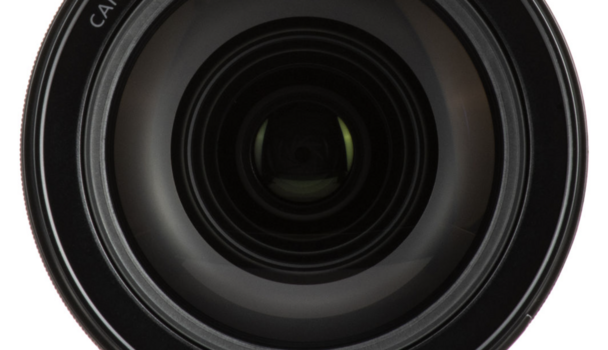
The mathphotographer channel puts the Sony FE 28-70mm f/2.0 GM through a full workout, mounting it on both the Sony a1 II and the newer Sony a7R V. The lens carries 20 elements in 14 groups, including six aspherical elements, one ED element, and three super ED elements. It focuses down to 0.38 m for a 0.23x magnification, and the 11-blade aperture keeps background highlights round when you open up. Constant aperture means you shoot wide open at f/2.0 whether you're at 28mm or 70mm, with no automatic stop-down as you zoom. The optical construction has to grow to make that happen, which explains why this lens is larger and heavier than the Sony FE 24-70mm f/2.8 GM II sitting next to it in the comparison.
The mechanical controls get real attention here. There's an aperture ring with clicks, an A position for automatic control, and an iris lock switch that pins you into either automatic or manual so you can't slip into f/22 by accident. A zoom tension switch flips between "smooth" and "tight," and the tight setting stops the barrel from creeping when you point the camera down. Add a focus mode switch, a buttery manual focus ring, and two customizable buttons, and the handling covers both stills and video shooters. The autofocus runs on linear motors that lock on so fast you barely register the half-press, and in continuous tracking with subject recognition set to humans, it stays glued to the closer eye through motion.
The sample images split into two batches. A portrait session in Switzerland, shot mostly wide open at f/2.0, shows sharp eyes, smooth foreground-to-background transitions, and clean skin texture even at 70mm on a swing at 1/2,000 second. The second batch comes from Greece on the a7R V, covering close-ups, beaches, harbor scenes, and sunsets down to ISO 8,000. Across 28mm wide shots and cropped-in details alike, the review finds no chromatic aberration wide open and consistent microcontrast. Shooting portraits at f/2.0 gets described as almost mandatory for the subject separation it hands you.
The 28mm versus 24mm question sits at the center of any decision here. When Leica launched the first Leica Q with a fixed 28mm lens, it made a case that 28mm is plenty wide for a walkaround focal length, and a lot of shooters came around to it. If your compositions live between a mild wide angle and a short telephoto, the 28-70mm range covers the working span most people actually use. Still, those extra 4mm at the wide end change your framing more than the numbers suggest, so knowing whether you reach for 24mm regularly is the honest test. If you rarely go that wide, the f/2.0 constant aperture buys you a full stop of light and a shallower depth of field that a 24-70mm f/2.8 can't match at any focal length.
Price and weight are the tradeoffs. This lens costs significantly more than the 24-70mm f/2.8 GM II and far more than a Sigma 28-105mm Art, and it weighs 912 g. The 86mm filter thread means polarizers and neutral density filters run expensive. Against the Canon RF 28-70mm f/2.0 L, Sony fits the same focal range and aperture into a less bulky, lighter body, which is a genuine point in its favor.
Watch the full breakdown and sample galleries in the video above to judge the image quality for yourself.




 English (US) ·