
 3 weeks ago
35
3 weeks ago
35
January opens the year with CES and closes before the spring photography-focused trade shows like CP+ and NAB. It is often treated as a transitional month, but 2026 proved anything but routine. Between major gear launches, regulatory crackdowns on AI tools, a prestigious engineering award for the inventor behind every camera sensor on the planet, and the continued evolution of what photographers and audiences consider "authentic," the first month of 2026 delivered stories that will shape the industry for the rest of the year. Here are the ten developments that mattered most.
1. Ricoh Launches the GR IV Monochrome
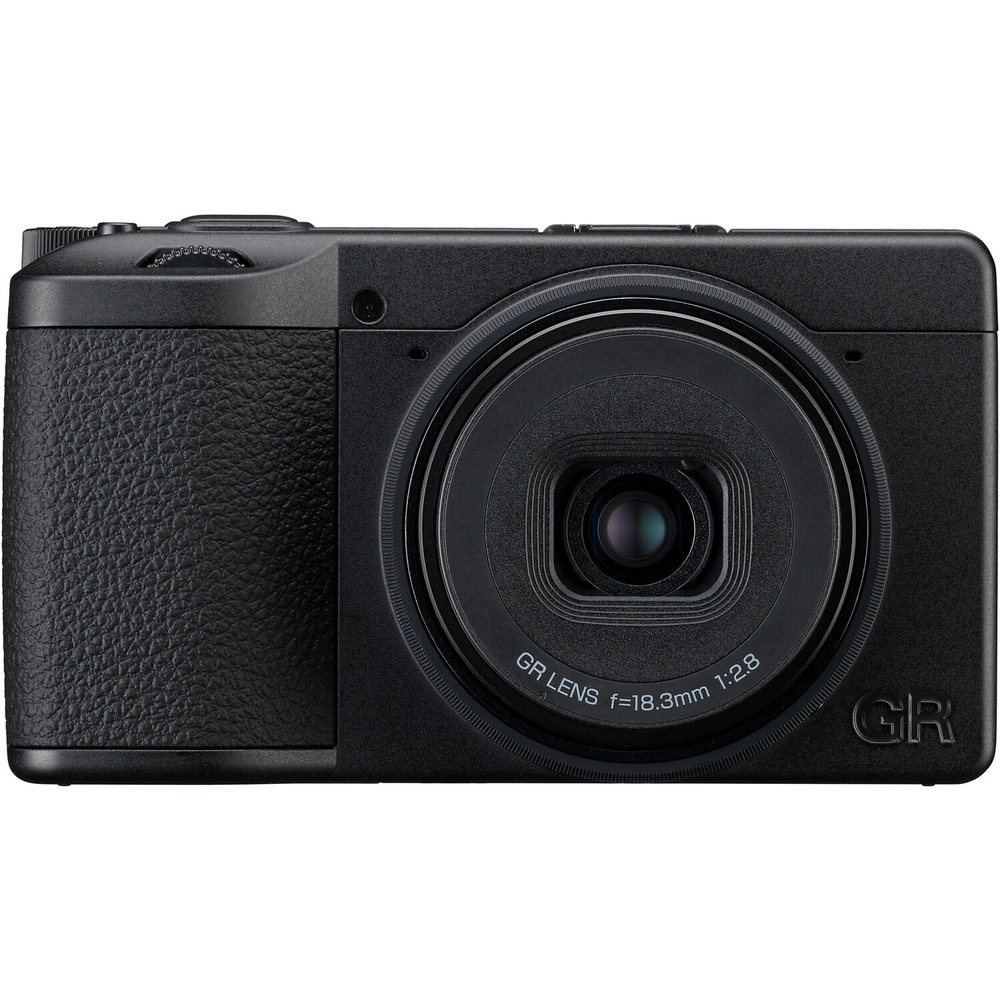
Ricoh officially unveiled the GR IV Monochrome on January 14, positioning it as the most affordable dedicated black and white digital camera ever released by a major manufacturer. Priced at $2,199, the camera carries a $700 premium over the standard GR IV, which launched in September 2025. The release coincides with the 30th anniversary of the GR series, which traces its lineage back to the original Ricoh GR1 film camera in 1996. Ricoh emphasized that removing the color filter allows each pixel to capture brightness information directly without interpolation, resulting in sharper detail and richer tonal gradation than converting color files to black and white in post.
Key specifications of the Ricoh GR IV Monochrome include:
- 25.7 MP APS-C sensor with no color filter array
- Built-in switchable red filter for contrast control
- Electronic shutter speeds up to 1/16,000 second
- Six monochrome-specific Image Control profiles
Our Take: The pricing debate has been predictable. Paying $700 more for what appears to be "less camera" strikes some photographers as backwards, and comparisons to Leica's Q3 Monochrom at $7,790 only go so far since you are comparing very different ecosystems. The more interesting question is whether the GR IV Monochrome signals a broader market appetite for dedicated, single-purpose creative tools. In an era where every camera tries to do everything, and where smartphone photography dominates casual shooting, the argument for niche hardware designed to do one thing exceptionally well starts to make sense. The monochrome compact is never going to be a volume product, but Ricoh has carved out a space for shooters who think in black and white first and do not want the friction of conversion workflows.
2. Sony a7 V Dominates Japanese Sales Charts
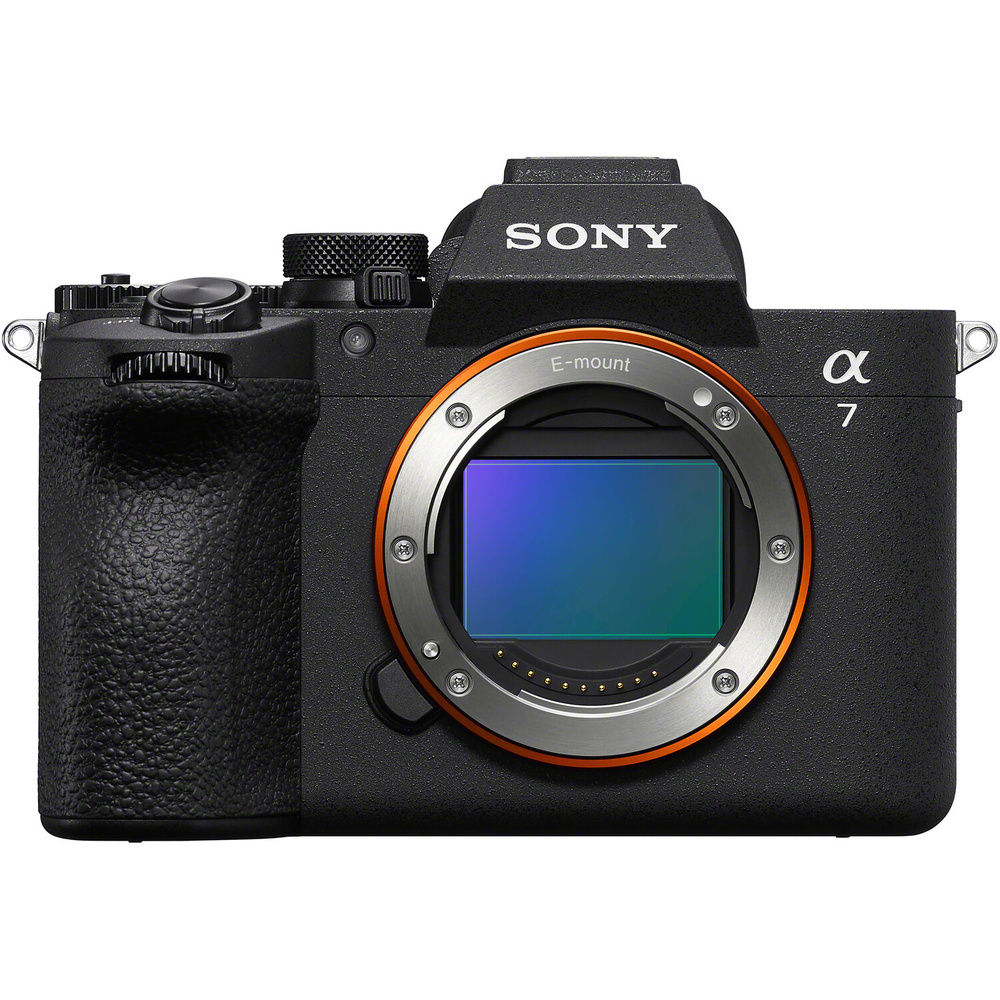 The Sony a7 V, which began shipping in Japan on December 19, proved to be one of the most successful camera launches in recent memory. Data from Map Camera showed the a7 V outselling the next four cameras combined during December, and the camera topped Yodobashi Camera's sales rankings for the second half of the month. According to BCN+R's aggregated retail data, the a7 V debuted in seventh place overall for December, which sounds modest until you consider that BCN's rankings are skewed heavily toward consumer electronics broadly rather than photography specifically. For a full frame mirrorless camera to crack the top ten at all is remarkable.
Key specifications of the Sony a7 V include:
- 33 MP partially stacked sensor
- 30 fps blackout-free shooting
- BIONZ XR2 processor with integrated AI for subject recognition
- 4K 120p video recording (APS-C crop)
- 7.5-stop in-body stabilization
Our Take: The a7 V is Sony's clearest attempt in years to produce a "no compromises" hybrid camera at a price point below flagship territory. The partially stacked sensor architecture, which sits between traditional BSI sensors and the fully stacked designs in cameras like the a9 III, represents a deliberate engineering choice to prioritize speed and readout performance without pushing the body into five-figure pricing. What the sales numbers reveal is pent-up demand. The a7 IV, released in late 2021, was showing its age, and photographers who shoot both stills and video were ready to upgrade. Whether the a7 V maintains this momentum through 2026 will depend on how Canon, Nikon, and Fujifilm respond in the same segment.
3. CES 2026 Brings Sensors, Storage, and Surprises
CES has not been a primary venue for camera announcements in years, but CES 2026 still delivered stories worth tracking. Canon demonstrated a prototype SPAD sensor capable of 26 stops of dynamic range, using single-photon avalanche diode architecture to measure light with unprecedented precision. Canon emphasized this is a technology concept, not a product announcement. Elsewhere, Birdbuddy announced the 2 Mini, a bird feeder camera that can now identify birds by song. Hohem unveiled the iSteady MT3 Pro gimbal. OWC debuted the ThunderBlade X12, a Thunderbolt RAID array that scales to 192 TB. And robotic vacuum manufacturer Dreame surprised the industry by announcing an action camera.
Our Take: Canon's SPAD sensor demonstration is the headline here. Canon has already commercialized SPAD technology in the MS-500 industrial camera, but CES showed the company pushing the architecture toward higher dynamic range and broader applications. The technology differs fundamentally from the CMOS sensors that dominate consumer digital imaging today, offering potential breakthroughs in low-light performance and high-contrast scenes. That Canon chose CES to demonstrate this suggests the company sees imaging applications beyond traditional cameras, including automotive sensing, security, and industrial machine vision. For photographers, the message is that sensor development has not stalled, and the gains we have seen over the past decade are not the end of the line.
4. Leica Reveals Plans to Develop Its Own Sensor Again
In a podcast appearance that circulated widely in early January, Dr. Andreas Kaufmann, Chairman of the Supervisory Board at Leica Camera AG, confirmed that the company is developing a proprietary image sensor. According to Kaufmann, Leica has been working on this project for approximately five years, roughly since the M11 switched from European-sourced sensors to Sony-manufactured chips. Kaufmann explained that until the M10, Leica used sensors developed by AMS Osram in Austria and manufactured at a French foundry in Grenoble. The M11's transition to Sony sensors was driven by practical considerations, but Leica simultaneously began work on what Kaufmann described as a "more advanced" in-house design. The most likely destination for this sensor is the anticipated Leica M12, though Kaufmann declined to provide specifics.
Our Take: Leica developing its own sensor is significant not because of technical superiority claims but because of differentiation. In a market where multiple camera brands share Sony-manufactured sensors, color science and image processing become the primary ways to stand out. If Leica can control the silicon itself, the company gains leverage over fundamental image characteristics that competitors cannot easily replicate. The timeline suggests an announcement sometime in 2026 or 2027 for whatever camera incorporates this sensor. Whether Leica can recapture the distinct rendering qualities that older M-series cameras were known for remains to be seen, but the intent is clear.
5. C2PA and Content Credentials Move Beyond Flagships
The expansion of C2PA (Coalition for Content Provenance and Authenticity) signing capabilities beyond flagship camera bodies has been building quietly, but 2026 appears to be the year it crosses into mainstream adoption. Nikon and Leica adopted signing early, and Sony has since joined through its participation in Content Credentials. The technology allows cameras to cryptographically sign images at the moment of capture, creating a verifiable chain of provenance that can follow an image through editing and publication. While implementation costs and workflow integration challenges have kept signing limited to professional-tier bodies, those barriers are falling. Fstoppers covered this trajectory in detail earlier this month in "11 Predictions for the Photography Industry in 2026," noting that photojournalism, regulated industries, and high-liability advertising are leading the push for contract language requiring signed images.
Our Take: The word "authenticity" has been marketing language for years, but it is becoming a liability clause. News organizations, stock agencies, and brands are increasingly asking for provenance documentation not because they want to police their photographers but because they are trying to protect themselves from AI-generated fakes entering their supply chains. For working photographers, this creates both burden and opportunity. The burden is workflow complexity. The opportunity is that verifiable authenticity becomes a sellable skill. Photographers who can deliver signed, documented images with intact metadata chains will have a competitive advantage in markets where that verification matters.
6. Fixed-Lens Camera Sales Continue Their Surprising Surge
CIPA data published in January confirmed what the market has been hinting at for months: fixed-lens camera shipments are spiking while interchangeable-lens camera sales hold relatively steady. The Ricoh GR IV, the Fujifilm X100VI (which remains backordered more than a year after launch), and a broader retro compact trend are driving this growth. The data has prompted speculation about whether manufacturers like Panasonic might revive discontinued lines such as the LX100. Compact cameras with large sensors, fixed prime lenses, and distinctive shooting experiences have found an audience that smartphone photography has not fully captured.
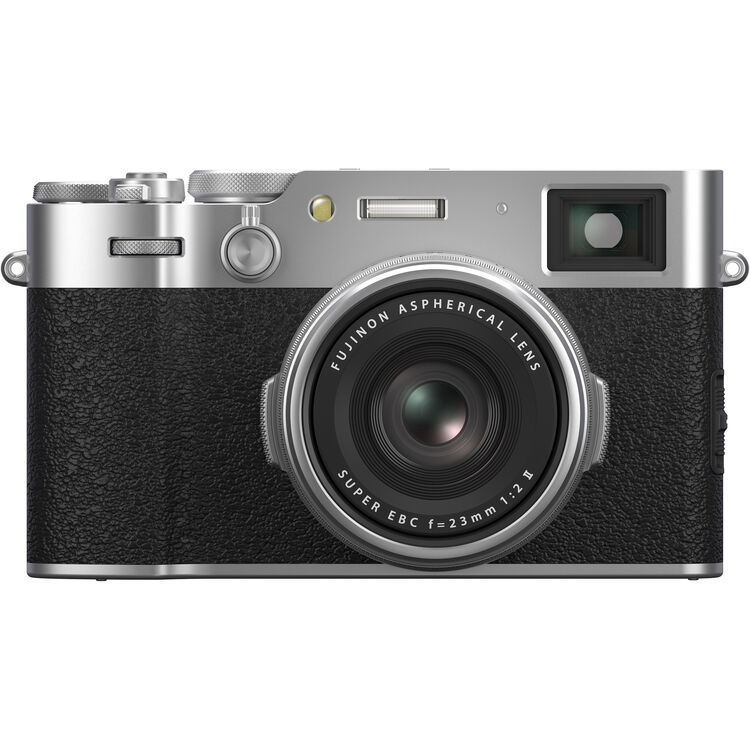 Our Take: The fixed-lens compact revival is partly about aesthetics, partly about workflow, and partly about reaction to smartphone ubiquity. These cameras offer something phones cannot replicate easily: a larger sensor behind a dedicated optic in a pocketable form factor. The shooting experience is also fundamentally different from a phone. You raise a camera to your eye, you engage with physical controls, and you commit to the creative limitations of a single focal length. That constraint, which would have been seen as a drawback a decade ago, is now a feature for photographers looking to disconnect from the infinite flexibility and constant connectivity of smartphone shooting.
7. Fujifilm's GFX Eterna 55 Joins IMAX Approved Camera List
Fujifilm's medium format cinema camera, the GFX Eterna 55, received IMAX certification on January 20, clearing it for theatrical productions shot under the Filmed for IMAX program. That puts the Eterna 55 in rare company alongside systems like the ARRI ALEXA 65. IMAX Chief Content Officer Jonathan Fischer called the certification "a win for filmmakers and fans alike." Fujifilm's Yuji Igarashi noted that the Eterna 55 provides "an accessible pathway for filmmakers to craft stories with an epic cinematic perspective."
Our Take: The certification itself matters less than what it signals: Fujifilm is positioning large-sensor aesthetics as a mainstream filmmaking toolchain rather than a niche curiosity. The Eterna 55, with its 43.8 x 32.9 mm sensor offering open-gate 4:3 workflows, aspect-ratio flexibility, and Fujifilm's Film Simulation color profiles, represents a philosophy that the qualities still photographers have valued in medium format can translate meaningfully to motion pictures. At $16,500, the camera is expensive for independent productions but dramatically cheaper than ALEXA 65 rentals. If directors and cinematographers start choosing it for theatrical work, the feedback loop into Fujifilm's still photography ecosystem could accelerate medium format adoption across the board. For photographers looking to explore the intersection of stills and motion, Fstoppers offers Introduction to Video: A Photographer's Guide to Filmmaking, which covers the fundamentals of transitioning between disciplines.
8. AI Image Generation Platforms Face Regulatory Crackdown
January brought significant policy developments around AI-generated imagery, driven primarily by the Grok controversy on Elon Musk's X platform. After users discovered they could prompt Grok to generate inappropriate images of real people without consent, the backlash was immediate and global. The European Commission issued a document preservation order to X covering all Grok-related internal communications through 2026. India's communications ministry demanded immediate changes. The UK's data regulator requested compliance explanations. By January 9, xAI had restricted Grok's image generation to paying subscribers on X. In the United States, the Take It Down Act, signed into law in May 2025, requires platforms to implement notice-and-removal processes for non-consensual intimate imagery with a 48-hour takedown requirement; platforms must comply by May 2026.
Our Take: The AI image generation gold rush is hitting regulatory walls. For working photographers, this is not an abstract policy debate. Restrictions on what AI tools can generate, how generated images must be labeled, and what platforms allow directly affect workflows that incorporate AI. Adobe has positioned Firefly as the "safe" option by training exclusively on licensed content. Getty and Shutterstock have launched generators constrained to their own libraries. The Grok debacle is accelerating a market segmentation where mainstream tools become more conservative while less regulated alternatives persist in legal gray zones. Photographers need to understand not just which tools produce good results but which tools expose them to liability.
9. AI Photo Editing Matures From Gimmick to Workflow Standard
The conversation around AI in photo editing has shifted decisively. Where previous years featured debates about whether photographers should use AI at all, 2026 has moved to which AI tools best understand individual editing styles. Products like Imagen, which learns personal editing profiles from uploaded images, and Adobe Lightroom's AI-powered masking and noise reduction have become baseline expectations for high-volume shooters. Luminar Neo continues to lead in consumer-oriented AI features. The culling phase of wedding and event workflows, traditionally the most tedious part of post-production, is now routinely handled by AI systems that identify blinks, misfires, and duplicates automatically. The distinction between "AI-assisted" and "AI-generated" editing is becoming critical, with the former widely accepted and the latter still contested.
Our Take: The productivity gains are real. Photographers who process hundreds or thousands of images per job are seeing meaningful time savings by delegating repetitive tasks to AI systems trained on their own work. The question is no longer capability but fidelity. Does the AI understand your look well enough that you are correcting occasional mistakes rather than redoing its work from scratch? The tools that win in 2026 will be the ones that reduce friction without imposing their own aesthetic. For photographers building businesses around efficiency, AI editing competence is now as fundamental as Lightroom proficiency was a decade ago. If you are looking to sharpen your editing foundation, Mastering Adobe Lightroom offers a comprehensive approach to building efficient workflows that pair well with AI-assisted tools.
10. The Authenticity Backlash Becomes a Declared 2026 Trend
Across trend forecasts, editorial discussions, and client briefs, a consistent theme emerged in January: audiences and commissioners want photography that feels human, imperfect, and documentary-adjacent rather than polished to synthetic perfection. Searches for "unfiltered" imagery increased 11% on stock platforms like Envato, while video searches for the same term jumped 110%. Wedding photographers report rising demand for documentary-style coverage with minimal retouching. Commercial briefs increasingly request "real moments" over staged setups. The aesthetic favors grain, slight motion blur, natural light, unposed expressions, and the kinds of happy accidents that AI systems are trained to eliminate.
Our Take: This is not merely a stylistic preference cycle. It is a direct reaction to the AI-era reality that perfection is now cheap and abundant. When anyone can generate a flawless image with a text prompt, flawlessness stops signaling quality and starts signaling artificiality. The imperfections that used to mark amateur work now mark human work, and that distinction carries value. For photographers, this creates interesting creative space. The skills that matter are observation, timing, and presence rather than technical execution that software can replicate. The challenge is distinguishing intentional rawness from sloppy work. The photographers succeeding with this aesthetic know exactly what they are doing; they are just choosing to leave more evidence of the process in the final image. For those looking to develop a versatile foundation across multiple styles, The Well-Rounded Photographer covers eight genres with eight different instructors.
Conclusion
January set the terms for a consequential year in photography. Hardware is getting more specialized and more expensive. AI is simultaneously enabling efficiencies and triggering restrictions. Authenticity is being redefined in response to technological abundance. The tools change, but the fundamental act of photography remains what it has always been: pointing a camera at something that matters and pressing the button at the right moment.





![20 Years Later, One of the Best Sitcoms of the 21st Century Returns With Hilarious First Look [Exclusive]](https://static0.colliderimages.com/wordpress/wp-content/uploads/2026/02/malcolm-in-the-middle-life-s-still-unfair-feature.jpg?w=1600&h=900&fit=crop)

 English (US) ·