
 Image via AMC

Published May 2, 2026, 5:18 AM EDT
Sign in to your Collider account
The 2000s were a transitional decade for TV. On one hand, traditional procedural formats were thriving because audiences loved the familiarity of self-contained stories that wrapped up neatly by the end of an episode. However, some shows were starting to push against those boundaries and experimenting with more complex narratives. This tension between the old and the new could have been messy. Instead, it gave the world some of the best, most engaging TV ever made.
Showrunners found ways to innovate without completely alienating viewers, and the result was a decade where thrillers began to evolve while still holding onto the elements that made the genre such a hit in the first place. Here is a list of the best thriller shows from every year of the 2000s that defined this balance and set the benchmark for everything that came after.
10 'CSI: Crime Scene Investigation' (2000–2015)
 Image via CBS
CSI: Crime Scene Investigation practically defined what modern procedural TV would become in the 2000s. The series, set in Las Vegas, follows a team of forensic investigators, originally led by Gil Grissom (William Petersen), who solve murders through science. They analyze fingerprints, blood samples, and reconstruct crime scenes piece by piece, which makes the show all the more fascinating than predictable interrogations or chases. This level of forensic detail and realism is the main source of tension in the show. The horror comes from how the team traces every little piece of evidence to prove that there really is no such thing as an impossible crime.
Each episode builds its mystery backward and makes the audience feel like they are solving these mysteries alongside the investigators. CSI is procedural storytelling at its peak and manages to make something extremely clinical feel almost addictive. The show leans heavily into the scientific process of solving a crime, but presents it all in a way that feels accessible. Despite dealing with disturbing subject matter, the series avoids excessive melodrama, and that tonal balance gives CSI its defining identity. Of course, the show has spawned several spin-offs, but there’s a reason why the original Las Vegas iteration remains the benchmark for the crime thriller genre.
9 '24' (2001–2010)
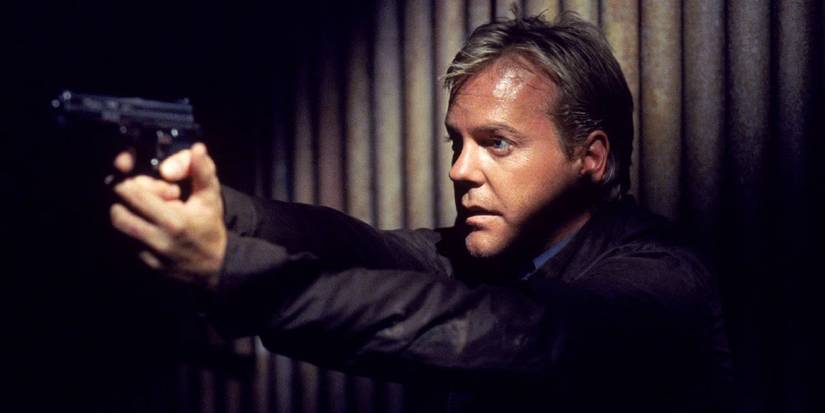 Image via FOX
24 is another show that completely redefined the stakes for TV thrillers. The show follows a ticking clock format and follows counter-terrorism agent Jack Bauer (Kiefer Sutherland) as he navigates a single catastrophic day, with each episode unfolding in real time. Every season of the show spans 24 consecutive hours and tracks multiple storylines simultaneously. The concept seems pretty simple, but soon enough, the audience realizes that the show offers absolutely no breathing space. Jack is in a relentless race against time where every action carries immediate consequences. The show commits to this sense of anxiety and uses cliffhangers to ensure that the momentum never dips.
This practically forces the viewer to keep watching until the very end as they absorb one twist after the other. Safe to say if adrenaline were a TV show, it would be 24. That’s not to say that the narrative doesn’t carry any emotional weight. Beneath all the action, Jack is a man constantly forced to choose between morality and duty. His willingness to cross lines and bend the law to achieve the greater good never feels easy, and that tension is just as gripping as the threats he is up against. Overall, 24 changed how TV handled and manufactured suspense. No other show has come quite close to replicating that feeling of exhilaration ever again.
8 'The Wire' (2002–2008)
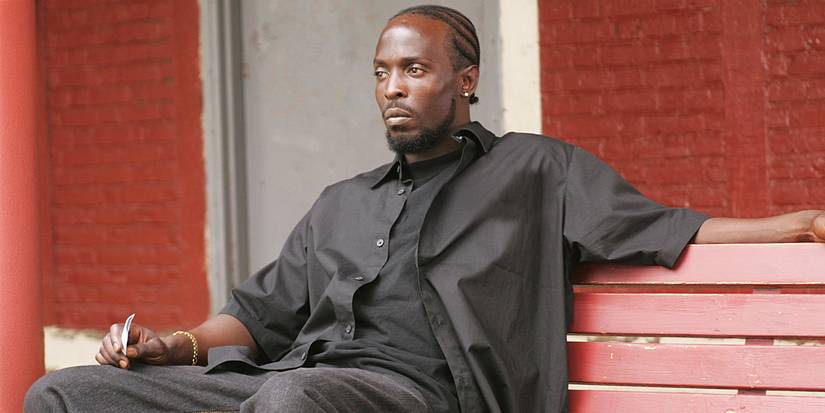 Image via HBO
The Wire is a slow, intentional, and layered exploration of crime, and in doing so, it became the defining show of the 2000s. The HBO series, created by David Simon, follows a familiar setup. It shows a police unit in Baltimore building cases against a drug organization. However, the premise expands beyond that to explore the systemic failures that shape crime and the institutions meant to control it. The story begins with detectives Jimmy McNulty (Dominic West) and Lester Freamon (Clarke Peters) tracking down drug dealer Avon Barksdale (Wood Harris) and kingpin Stringer Bell (Idris Elba), but the show slowly pulls back to reveal the much larger ecosystem at play.
Each season follows a different institution, including the port of Baltimore, the city’s public schools, and even the media, to show how every system is interconnected and broken in its own way. The thriller series breaks away from the genre’s usual sense of payoff and offers almost no easy wins or clear answers. Its tension lies in the slow pace of the paperwork and the long hours of surveillance that an investigation requires, and that frustration mirrors how bureaucracy actually works. The Wire is gritty, complex, and demanding, but that’s exactly what makes its world feel so complete.
7 'Cold Case' (2003–2010)
 Image via CBS
Cold Case begins like a familiar procedural, but it takes a very different approach to solving crime by focusing on long-forgotten cases that finally get a second chance at justice. The series is set in Philadelphia and follows Detective Lilly Rush (Kathryn Morris), who leads a specialized unit dedicated to reopening unsolved murders. Each episode begins with a new lead as Lily pieces together crimes that span decades. However, what follows is less about chasing suspects and more about exploring the fallout from the questions left unanswered in the wake of these heinous acts.
The show does so by alternating between present-day investigations and flashbacks to get to the bottom of the mystery. These flashbacks place the audience directly inside the emotional reality of the crime, and the result is a story that automatically feels more personal. Cold Case takes its sweet time to explore who the victims were and how their absence is felt years later. That emotional focus gives the audience a reason to stay invested till the very end. In theory, Cold Case strips the thriller genre away from all its shock value and brings the focus back to the humanity of it all, and that’s what makes it such a compelling watch even today.
6 'Lost' (2004–2010)
 Image via ABC
Lost changed the game for network TV. The show arrived at a time when shows leaned heavily on episodic storytelling and decided to break that mold forever. The series opens with the survivors of Oceanic Flight 815 stranded on a mysterious island after a plane crash. What starts as a survival story quickly evolves into something far more complex as characters, including Jack Shephard (Matthew Fox), Kate Austen (Evangeline Lilly), John Locke (Terry O’Quinn), and more, are forced to understand this island before they can escape it. What’s special about Lost is the spotlight it gives to each survivor. The show constantly raises questions about the island, the people, and all the unseen forces at play here.
The story unfolds through flashbacks and flash-forwards that reveal the emotional baggage each character carries. At the same time, Lost is a fantasy-thriller that thrives on unpredictability, and the minute the narrative introduces the presence of the “Others,” along with the Dharma initiative, the audience is forced to let go of everything they thought they once knew. Lost combines elements of a traditional survival drama with science fiction, philosophy, and even spirituality to tell a truly unique story. However, for all its high-concept ideas, the show remains grounded in its characters and the relationships they form with each other. The show balances ambition with emotion, and that genuinely redefined serialized storytelling for years to come.
Collider Exclusive · Sci-Fi Survival Quiz Which Sci-Fi World Would You Survive? The Matrix · Mad Max · Blade Runner · Dune · Star Wars
Five universes. Five completely different ways the future went wrong — or sideways, or up in flames. Only one of them is the world your instincts were built for. Eight questions will figure out which dystopia, galaxy, or desert wasteland you'd actually make it out of alive.
💊The Matrix
🔥Mad Max
🌧️Blade Runner
🏜️Dune
🚀Star Wars
TEST YOUR SURVIVAL →
01
You sense something is deeply wrong with the world around you. What do you do? The first instinct is often the truest one.
APull on every thread until I understand the system — then figure out how to break it. BStop asking questions and start stockpiling — food, fuel, weapons. Questions don't keep you alive. CKeep my head down, observe carefully, and trust no one until I know who's pulling the strings. DStudy the patterns. Every system has a rhythm — learn it, and you learn how to survive it. EFind the people fighting back and join them. You can't fix a broken galaxy alone.
NEXT QUESTION →
02
In a world of scarcity, what resource do you guard most fiercely? What we protect reveals what we believe survival actually requires.
AKnowledge. If you understand the system, you don't need resources — you can generate them. BFuel. Everything else — movement, power, escape — runs on it. CTrust. In a world of fakes and informants, a truly reliable ally is rarer than any commodity. DWater. And after water, information — the two things empires are truly built on. EShips and credits. The galaxy is big — you survive it by being able to move through it freely.
NEXT QUESTION →
03
What kind of threat keeps you up at night? Fear is useful data — if you're honest about what you're actually afraid of.
AThat reality itself is a lie — that everything I experience has been constructed to keep me compliant. BA raid. No warning, no mercy — just the roar of engines and then nothing left. CBeing identified. Once someone with power decides you're a problem, you're already out of time. DBeing outmanoeuvred — losing a political game I didn't even know I was playing. EThe Empire tightening its grip until there's nowhere left to run.
NEXT QUESTION →
04
How do you deal with authority you don't trust? Every dystopia has a power structure. Your approach to it determines everything.
ASubvert it from the inside — learn its rules well enough to weaponise them against it. BIgnore it and stay out of its reach. The further from any power structure, the better. CAppear to comply while doing exactly what I need to do. Visibility is the enemy. DManoeuvre within it carefully. You can't beat a system you refuse to understand. EResist openly when I have to. Some things are worth the risk of being seen.
NEXT QUESTION →
05
Which environment could you actually endure long-term? Survival isn't just tactical — it's physical, psychological, and very much about where you are.
AUnderground bunkers and server rooms — cramped, artificial, but with access to everything that matters. BOpen wasteland — brutal sun, no shelter, constant movement. At least the threat is honest. CA dense, rain-soaked city where you can disappear into the crowd and nobody asks questions. DMerciless desert — extreme heat, no water, and something enormous living beneath the sand. EThe fringe — backwater planets and busy spaceports where the Empire's attention rarely reaches.
NEXT QUESTION →
06
Who do you want in your corner when things fall apart? The company you keep is the clearest signal of who you actually are.
AA tight crew of believers who've seen behind the curtain and have nothing left to lose. BOne or two people I'd trust with my life. Any more than that and someone talks. CNobody, ideally. Alliances are liabilities. I work alone unless I have no choice. DA community bound by shared hardship and mutual survival — people who need each other to last. EA ragtag team with wildly different skills and total commitment when it counts.
NEXT QUESTION →
07
Where do you draw the line — if you draw one at all? Every survivor eventually faces a moment that tests what they're actually made of.
AI won't harm the innocent — even the ones who'd report me without hesitation. BI do what I have to to protect the people I've chosen. Everything else is negotiable. CThe line shifts depending on who's asking and what's at stake. DI draw a long-term line — nothing that compromises my people's future, even if it'd help now. ESome lines, once crossed, can't be uncrossed. I know which ones they are.
NEXT QUESTION →
08
What would actually make survival worth it? Staying alive is one thing. Having a reason to is another.
AWaking others up — dismantling the illusion so no one else has to live inside it. BFinding somewhere — or someone — worth protecting. A reason to keep moving. CAnswers. Understanding what I am, what any of this means, before time runs out. DLegacy — shaping the future in a way that outlasts me by generations. EFreedom — for myself, for others, for every world still living under someone else's boot.
REVEAL MY WORLD →
Your Fate Has Been Calculated You'd Survive In…
Your answers point to the world your instincts were built for. This is the universe your temperament, your survival instincts, and your particular brand of stubbornness were made for.
The Matrix
You took the red pill a long time ago — probably before anyone offered it to you. You're a systems thinker who can't help but notice the seams in things.
- You're drawn to understanding how the system works before figuring out how to break it.
- You'd find the Resistance, or it would find you — your instinct for spotting constructed realities is the machines' worst nightmare.
- You function best when you have access to information and the freedom to act on it.
- The Matrix built an airtight prison. You'd be the one probing the walls for the door.
Mad Max
The wasteland doesn't reward the clever or the well-connected — it rewards those who are hard to kill and harder to break. That's you.
- You don't need comfort, community, or a cause larger than the next horizon.
- You need a vehicle, a clear threat, and enough fuel to outrun it — and you're good at all three.
- You are unsentimental enough to survive that world, and decent enough — just barely — to be something more than another raider.
- In the wasteland, that distinction is everything.
Blade Runner
You'd survive here because you know how to exist in moral grey areas without losing yourself completely.
- You read people accurately, keep your circle small, and ask the questions others prefer not to answer.
- In a city where humanity is a legal designation rather than a feeling, you hold onto something that keeps you functional.
- You're not a hero. But you're not lost, either.
- In Blade Runner's world, that distinction is everything.
Dune
Arrakis is the most hostile environment in the known universe — and you are precisely the kind of person it rewards.
- Patience, discipline, and political awareness are your core strengths — and on Arrakis, they're survival tools.
- You understand that the long game matters more than any single victory.
- Others come to Dune and are consumed by it. You'd learn its logic and earn its respect.
- In time, you wouldn't just survive Arrakis — you'd begin to reshape it.
Star Wars
The galaxy far, far away is vast, loud, and in a constant state of violent political upheaval — and you wouldn't have it any other way.
- You find meaning in being part of something larger than yourself — a cause, a crew, a rebellion.
- You'd gravitate toward the Rebellion, or the fringes, or whatever pocket of the galaxy still believes the Empire's grip can be broken.
- You fight — not because you have to, but because standing aside isn't something you're capable of.
- In Star Wars, that willingness is what makes all the difference.
↻ RETAKE THE QUIZ
5 'Prison Break' (2005–2017)
 Image via FOX
Prison Break hooks the audience in with a premise that is impossible to ignore. The series follows Lincoln Burrows (Dominic Purcell), who is on death row for a murder he did not commit. His younger brother, Michael Scofield (Wentworth Miller), a brilliant structural engineer, deliberately gets himself sent to prison so he can break Lincoln out and clear his name. The stakes are already impossibly high, but the show became an overnight phenomenon because it expanded into something even more intense than just that. Prison Break Season 1 is a masterclass in storytelling, with every episode throwing a new wrench into Michael’s plan.
The brothers’ heartwarming dynamic is the highlight of the series and gives the story an emotional depth that compels the viewers to keep watching. However, the show’s greatest trick is that it keeps evolving without losing its sense of momentum. Once the prison escape is executed, the series shifts into a fugitive thriller, then into a greater conspiracy story outside the prison walls. The narrative remains sharp and fast-paced even as the plot gets bigger. That’s because the writers knew not to let the audience get too comfortable. Very few shows from the 2000s embraced this kind of relentless confidence, but it’s exactly what made Prison Break such a groundbreaking hit.
4 'Dexter' (2006–2013)
 Image via Showtime
Dexter is one of the most exhilarating crime thrillers of the 2000s. The series is set in Miami and follows Dexter Morgan (Michael C. Hall), a bloodstain pattern analyst for Miami Metro who secretly lives a second life as a vigilante serial killer. He specifically targets murderers who escaped justice through corruption or legal loopholes, so the audience never knows whether to be on his side or against him. The concept sounds almost too controversial to work, but the show manages to do absolute justice to it. The most interesting part of the show is the tension between who Dexter is and who he is trying to appear to be. On the surface, he is awkward and polite, but underneath that, he is constantly in a battle against what the show calls his dark side.
The show isn’t a simple procedural about catching killers. Instead, it places the audience directly inside the mind of an extremely self-aware one. Dexter’s kills don’t feel shallow, and the show actually leaves a lot of room for character evolution without trying to glorify him. The reason the series can operate in this grey area is Hall’s impeccable performance. The actor makes Dexter’s darkest moments feel human, which is a big reason why the show is so easy to get invested in. Dexter knows exactly when to lean into suspense, when to let its humor land, and when to slow down. That balance keeps the story from ever feeling repetitive and makes the show feel genuinely original even today.
3 'Damages' (2007–2012)
 Image via FX
Damages follows powerhouse attorney Patty Hewes (Glenn Close) and her ambitious protégé Ellen Parsons (Rose Byrne), as they take on sprawling, high-stakes legal battles that quickly spiral into something far more dangerous and personal. The show is a standard legal drama by definition, but it plays out like a brutal psychological thriller in its execution. The story unfolds through a non-linear narrative and constantly shifts between the past and future to reveal consequences before causes. Every season of the show is a puzzle that forces the characters to constantly rethink everything.
Damages isn’t meant for passive viewing because the show demands the audience’s complete attention. The show throws away all the traditional conventions of the genre and doesn’t focus on courtroom victories or clear resolutions. Instead, it thrives in the space between power and manipulation. Patty and Ellen’s unpredictable dynamic is the center of it all, thanks to the constant push and pull of trust between the two. The same ambiguity expands to the rest of the narrative and makes the audience almost complicit in the character’s morally questionable choices. Damages is a viewing experience like no other, simply because it refuses to cater to any expectations.
2 'Breaking Bad' (2008–2013)
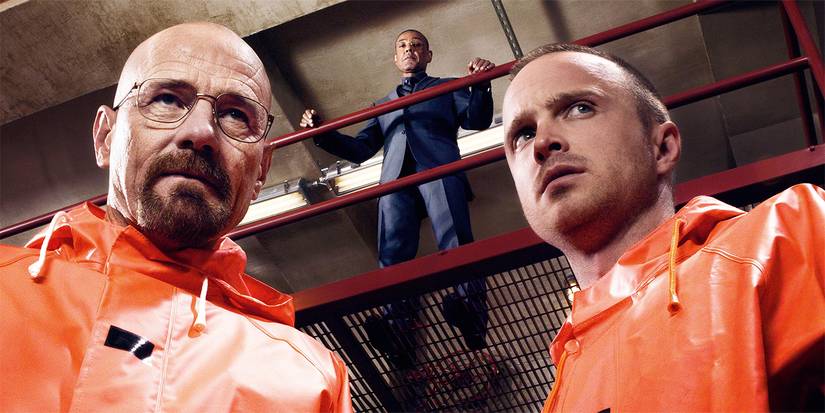 Image via AMC
Breaking Bad is one of the most gripping crime thrillers TV has ever seen. The show is a compelling character study built on a premise that feels both intimate and explosive. The story follows high school chemistry teacher Walter White (Bryan Cranston), who starts manufacturing methamphetamine to secure his family’s future after he is diagnosed with terminal cancer. To do so, he joins forces with his former student Jesse Pinkman (Aaron Paul). That pulls Walter into a world he is completely unprepared for. However, the seemingly naive teacher’s transformation into a ruthless criminal quickly becomes the center of the story.
The show doesn’t rush that character arc and slowly builds toward it until the line between Walter’s justifications and his ego completely disappears. The narrative never slows down, and the fact that the protagonist knows his time is limited adds another layer of recklessness to his actions. Breaking Bad manages to be both thrilling and deeply character-driven at the same time. That show maintains that level of control until its decade-defining finale. Every little arc of the show comes full circle in a way that fully acknowledges Walter’s complex journey and the damage he leaves behind.
1 'White Collar' (2009–2014)
 Image via USA Network
White Collar is proof that a thriller doesn’t always need to be dark or heavy to be entertaining. The series follows con artist Neal Caffrey (Matt Bomer), who strikes a deal with FBI agent Peter Burke (Tim DeKay) to help catch high-level white-collar criminals in exchange for his freedom. The premise leans into the classic cat-and-mouse dynamic, but the relationship between Caffrey and Burke softens over time and turns into a genuine partnership.
The show tackles cases that involve fraud, art theft, and so much more while always maintaining a light energy that makes it incredibly easy to binge. That doesn’t mean White Collar lacks substance, though, because the heart of the show is Neal’s constant battle between the life he has always lived versus the one he is trying to build. The show approaches the thriller genre from a different angle. It’s playful, character-driven, and delivers high-stakes storytelling that keeps the audience coming back for more.








 English (US) ·