
 Image via FOX

Published May 3, 2026, 8:03 PM EDT
Diego Pineda has been a devout storyteller his whole life. He has self-published a fantasy novel and a book of short stories, and is actively working on publishing his second novel.
A lifelong fan of watching movies and talking about them endlessly, he writes reviews and analyses on his Instagram page dedicated to cinema, and occasionally on his blog. His favorite filmmakers are Andrei Tarkovsky and Charlie Chaplin. He loves modern Mexican cinema and thinks it's tragically underappreciated.
Other interests of Diego's include reading, gaming, roller coasters, writing reviews on his Letterboxd account (username: DPP_reviews), and going down rabbit holes of whatever topic he's interested in at any given point.
Sign in to your Collider account
What has been the best decade for science fiction television in history? Some may point to the nostalgic '80s, the episodic and idea-driven days of sci-fi television, where the genre's conceptual foundations were brilliantly set. Others may say that it was the 2010s, which saw the rise of prestige sci-fi television and showed just how ambitious the genre could get on the small screen. But the consensus is clear: Most people tend to agree that the '90s were the Golden Age of science fiction television.
As the episodic nature of '80s sci-fi television started to transition into more serialized stories, the language of modern sci-fi television started to form. Without '90s sci-fi, even the best of today's sci-fi show masterpieces would likely not even exist. But despite the abundance of great shows that the genre provided over the course of the decade, every year of the '90s had one show that stood tall above all the others of that year.
10 'The Flash' (1990–1991)
 Image via CBS
There weren't very many sci-fi shows produced anywhere in the world in 1990, but thankfully, out of the ones that did get made, there's one that's among the coolest and most underrated of the decade: The Flash, which brought the titular superhero to the small screen decades before The CW did. Before he reprised his role (and also took on the mantles of Henry Allen and Jay Garrick) in The CW's show, John Wesley Shipp played Barry Allen in this '90s classic.
Since we live in a market oversaturated with superhero movies and TV shows that have all started to feel very "samey," it's a delight to look back at a classic superhero show that has tons of heart and a strongly '90s-y tone. For people who still love the occasional cheesiness that older superhero content used to have, The Flash is a must-see. Fun, action-packed, and delectably nostalgic, it's a gem that was bounced around so much in the CBS schedule that it inevitably got canceled after only one season. Nevertheless, it has aged excellently.
9 'Æon Flux' (1991–1995)
 Image via MTV
Back in the '90s, MTV threw its hat into the animation ring with Liquid Television, an animation showcase that launched several high-profile cartoons like Beavis and Butt-Head and—of course—Æon Flux. This experimental, avant-garde sci-fi adventure series is one of the most underrated animated shows for adults, a delightfully odd cult classic that's still very much worth watching today.
Eerie, Indiana was another excellent sci-fi show that first aired in 1991, but there's simply no beating this erotic, philosophically profound, flawlessly surreal masterpiece. Mature, sexy, hugely imaginative, and even more than a bit disturbing, it's the kind of animated sci-fi show that makes people say "they don't make 'em like they used to."
8 'Batman: The Animated Series' (1992–1995)
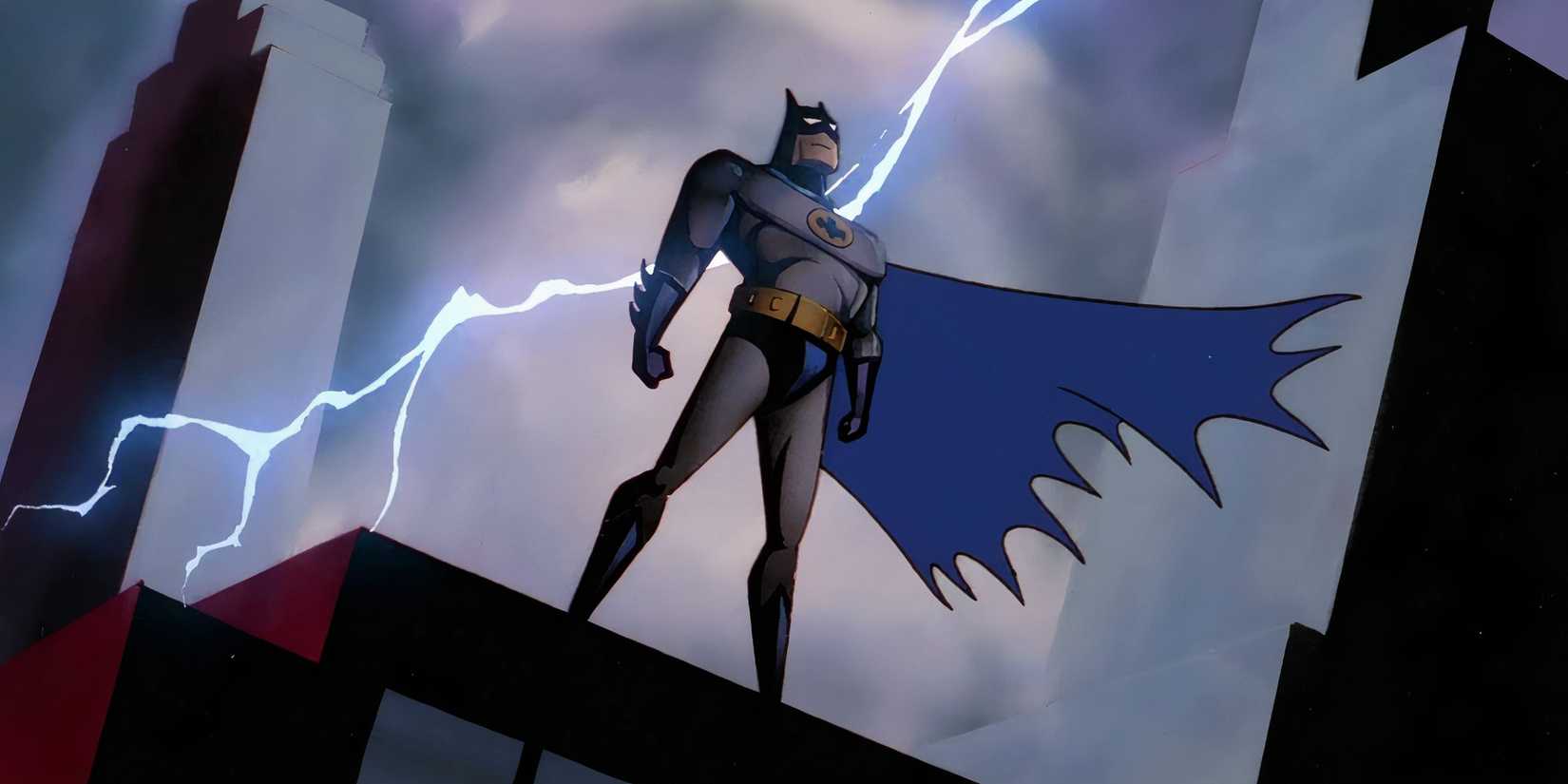 Image via Warner Bros. Animation
For those who love superheroes, Batman: The Animated Series should require no introduction. It's the best adaptation of the Caped Crusader's adventures that the small screen has ever seen, one of those classic animated shows that are still worth binge-watching today. For fans of the character and DC novices alike, it should be considered essential viewing.
X-Men: The Animated Series was another game-changing superhero show that started in 1992, but Batman: TAS is the gold standard of the genre. Atmospheric, visually impressive, full of exceptional voice performances, and with some interesting twists on the Batman lore—including the creation of Harley Quinn and the expansion of Mr. Freeze's tragic backstory—, it's superhero science fiction at its very best.
7 'The X-Files' (1993–2018)
 Image via FOX
In the history of American science fiction television, there's a "before The X-Files" period and an "after The X-Files" period. This cult classic truly did revolutionize the way the genre looked on the small screen, and its impact is not just the best sci-fi show of 1993, but perhaps of the '90s as a whole, cannot be overestimated. It's not an exaggeration to say it's a masterpiece without equal.
From seaQuest DSV to Star Trek: Deep Space Nine, 1993 had no shortage of great sci-fi shows, but The X-Files has no real competition. It's a classic sci-fi show that has aged like fine wine, whose passionate fandom pioneered the online fandom space. From Supernatural to Buffy the Vampire Slayer, its monster-of-the-week format has inspired many a genre show over the years, with plenty of serialized elements to keep people glued to their couches even today.
6 'Babylon 5' (1994–1998)
 Image via TNT
It's no exaggeration to say that Babylon 5 revolutionized television. Very unusually for American broadcast television at the time of its airing, the series was designed from the get-go as a sort of novel for television, where each season of a pre-planned five-part story arc would serve as a chapter. American sci-fi shows had had elements of serialization before, but never had they been this anti-episodic.
In virtually every sense imaginable, Babylon 5 has aged beautifully—even in the areas where it starts to show its age and feel a little cheesy. Its visuals are phenomenal, its cast does a fantastic job throughout the whole show, and every single episode feels like it contributes something essential to the enthralling story, and that's why it's the most groundbreaking sci-fi show ever.
Collider Exclusive · Sci-Fi Survival Quiz Which Sci-Fi World Would You Survive? The Matrix · Mad Max · Blade Runner · Dune · Star Wars
Five universes. Five completely different ways the future went wrong — or sideways, or up in flames. Only one of them is the world your instincts were built for. Eight questions will figure out which dystopia, galaxy, or desert wasteland you'd actually make it out of alive.
💊The Matrix
🔥Mad Max
🌧️Blade Runner
🏜️Dune
🚀Star Wars
TEST YOUR SURVIVAL →
01
You sense something is deeply wrong with the world around you. What do you do? The first instinct is often the truest one.
APull on every thread until I understand the system — then figure out how to break it. BStop asking questions and start stockpiling — food, fuel, weapons. Questions don't keep you alive. CKeep my head down, observe carefully, and trust no one until I know who's pulling the strings. DStudy the patterns. Every system has a rhythm — learn it, and you learn how to survive it. EFind the people fighting back and join them. You can't fix a broken galaxy alone.
NEXT QUESTION →
02
In a world of scarcity, what resource do you guard most fiercely? What we protect reveals what we believe survival actually requires.
AKnowledge. If you understand the system, you don't need resources — you can generate them. BFuel. Everything else — movement, power, escape — runs on it. CTrust. In a world of fakes and informants, a truly reliable ally is rarer than any commodity. DWater. And after water, information — the two things empires are truly built on. EShips and credits. The galaxy is big — you survive it by being able to move through it freely.
NEXT QUESTION →
03
What kind of threat keeps you up at night? Fear is useful data — if you're honest about what you're actually afraid of.
AThat reality itself is a lie — that everything I experience has been constructed to keep me compliant. BA raid. No warning, no mercy — just the roar of engines and then nothing left. CBeing identified. Once someone with power decides you're a problem, you're already out of time. DBeing outmanoeuvred — losing a political game I didn't even know I was playing. EThe Empire tightening its grip until there's nowhere left to run.
NEXT QUESTION →
04
How do you deal with authority you don't trust? Every dystopia has a power structure. Your approach to it determines everything.
ASubvert it from the inside — learn its rules well enough to weaponise them against it. BIgnore it and stay out of its reach. The further from any power structure, the better. CAppear to comply while doing exactly what I need to do. Visibility is the enemy. DManoeuvre within it carefully. You can't beat a system you refuse to understand. EResist openly when I have to. Some things are worth the risk of being seen.
NEXT QUESTION →
05
Which environment could you actually endure long-term? Survival isn't just tactical — it's physical, psychological, and very much about where you are.
AUnderground bunkers and server rooms — cramped, artificial, but with access to everything that matters. BOpen wasteland — brutal sun, no shelter, constant movement. At least the threat is honest. CA dense, rain-soaked city where you can disappear into the crowd and nobody asks questions. DMerciless desert — extreme heat, no water, and something enormous living beneath the sand. EThe fringe — backwater planets and busy spaceports where the Empire's attention rarely reaches.
NEXT QUESTION →
06
Who do you want in your corner when things fall apart? The company you keep is the clearest signal of who you actually are.
AA tight crew of believers who've seen behind the curtain and have nothing left to lose. BOne or two people I'd trust with my life. Any more than that and someone talks. CNobody, ideally. Alliances are liabilities. I work alone unless I have no choice. DA community bound by shared hardship and mutual survival — people who need each other to last. EA ragtag team with wildly different skills and total commitment when it counts.
NEXT QUESTION →
07
Where do you draw the line — if you draw one at all? Every survivor eventually faces a moment that tests what they're actually made of.
AI won't harm the innocent — even the ones who'd report me without hesitation. BI do what I have to to protect the people I've chosen. Everything else is negotiable. CThe line shifts depending on who's asking and what's at stake. DI draw a long-term line — nothing that compromises my people's future, even if it'd help now. ESome lines, once crossed, can't be uncrossed. I know which ones they are.
NEXT QUESTION →
08
What would actually make survival worth it? Staying alive is one thing. Having a reason to is another.
AWaking others up — dismantling the illusion so no one else has to live inside it. BFinding somewhere — or someone — worth protecting. A reason to keep moving. CAnswers. Understanding what I am, what any of this means, before time runs out. DLegacy — shaping the future in a way that outlasts me by generations. EFreedom — for myself, for others, for every world still living under someone else's boot.
REVEAL MY WORLD →
Your Fate Has Been Calculated You'd Survive In…
Your answers point to the world your instincts were built for. This is the universe your temperament, your survival instincts, and your particular brand of stubbornness were made for.
The Matrix
You took the red pill a long time ago — probably before anyone offered it to you. You're a systems thinker who can't help but notice the seams in things.
- You're drawn to understanding how the system works before figuring out how to break it.
- You'd find the Resistance, or it would find you — your instinct for spotting constructed realities is the machines' worst nightmare.
- You function best when you have access to information and the freedom to act on it.
- The Matrix built an airtight prison. You'd be the one probing the walls for the door.
Mad Max
The wasteland doesn't reward the clever or the well-connected — it rewards those who are hard to kill and harder to break. That's you.
- You don't need comfort, community, or a cause larger than the next horizon.
- You need a vehicle, a clear threat, and enough fuel to outrun it — and you're good at all three.
- You are unsentimental enough to survive that world, and decent enough — just barely — to be something more than another raider.
- In the wasteland, that distinction is everything.
Blade Runner
You'd survive here because you know how to exist in moral grey areas without losing yourself completely.
- You read people accurately, keep your circle small, and ask the questions others prefer not to answer.
- In a city where humanity is a legal designation rather than a feeling, you hold onto something that keeps you functional.
- You're not a hero. But you're not lost, either.
- In Blade Runner's world, that distinction is everything.
Dune
Arrakis is the most hostile environment in the known universe — and you are precisely the kind of person it rewards.
- Patience, discipline, and political awareness are your core strengths — and on Arrakis, they're survival tools.
- You understand that the long game matters more than any single victory.
- Others come to Dune and are consumed by it. You'd learn its logic and earn its respect.
- In time, you wouldn't just survive Arrakis — you'd begin to reshape it.
Star Wars
The galaxy far, far away is vast, loud, and in a constant state of violent political upheaval — and you wouldn't have it any other way.
- You find meaning in being part of something larger than yourself — a cause, a crew, a rebellion.
- You'd gravitate toward the Rebellion, or the fringes, or whatever pocket of the galaxy still believes the Empire's grip can be broken.
- You fight — not because you have to, but because standing aside isn't something you're capable of.
- In Star Wars, that willingness is what makes all the difference.
↻ RETAKE THE QUIZ
5 'Neon Genesis Evangelion' (1995–1996)
 Image via TV Tokyo
Before it became one of the most notorious auteur-driven anime properties of modern times, Hideaki Anno started off his Evangelion franchise with Neon Genesis Evangelion, one of the greatest sci-fi anime show masterpieces ever. With an animation style, ensemble of characters, and gripping story that have all aged flawlessly, it may not be an easy watch, but it's a must-see for people who love anime.
Philosophically profound and often more than a bit mind-bending, Neon Genesis Evangelion is a brilliant deconstruction of the mecha genre that's still worth endlessly re-watching over thirty years after it first aired. Though Space: Above and Beyond and the '90s version of The Outer Limits are other banger classics from 1995, there's no beating the depth, complexity, and groundbreaking impact of Neon Genesis Evangelion.
4 'Detective Conan' (1996–Present)
 Image via TMS Entertainment
Also known as Case Closed, Detective Conan is another show that proves that the '90s and sci-fi anime go together like peanut butter and jelly. Based on Gosho Aoyama's manga series, it's one of the most immensely popular anime shows from the '90s, and for good reason. Thirty years later, it's still one of the most popular sci-fi anime series on television.
One look at shows like Millennium and 3rd Rock from the Sun shows that 1996 was a great year for fans of sci-fi wanting to enjoy the genre at home, but neither of those classics compares to this long-running gem. Entertaining, funny, cozy, and full of genuinely very effective mysteries, it's a masterpiece that has been on the air for as long as it has for good reason.
3 'Stargate SG-1' (1997–2007)
 Image via Showtime
After Roland Emmerich's 1994 sci-fi film, MGM saw the opportunity for a franchise—and thus, Stargate was born. But as good as Emmerich's original movie is, the franchise has never seen an installment more popular or highly acclaimed than Stargate SG-1, one of those sci-fi shows that somehow get better with every rewatch.
The pilot isn't the best, but everything that comes after that is peak '90s science fiction. As a whole, 1997 was less stellar for televisual sci-fi than past years of the decade—but even if it hadn't been, it would have taken something titanic to beat Stargate SG-1. It's pure sci-fi bliss with one of the biggest fandoms the genre has ever produced. Creative, nostalgic, full of great characters, and absolutely timeless in every way.
2 'Cowboy Bebop' (1998–1999)
 Image via Sunrise
Sci-fi anime from the '90s went out with a bang with Cowboy Bebop, a massively acclaimed neo-noir space Western that has often been credited with helping to introduce anime to a new wave of Western viewers in the late '90s and early 2000s. Stylish, atmospheric, and perfectly written, it's the best that sci-fi anime has to offer.
It's one of those classic anime shows that have aged beautifully, with a delightful animation style and a stellar voice cast (in both the English dub and the original Japanese). Brilliantly genre-bending and without a single episode that's anything less than a masterpiece, Cowboy Bebop effortlessly beats out every other sci-fi show that started airing in 1998.
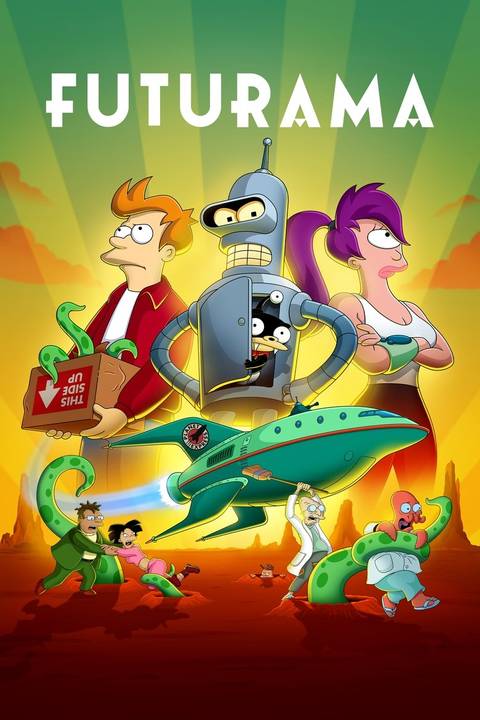
1 'Futurama' (1999–Present)
 Image via Hulu
They're not the most common type of sci-fi show, but when a sci-fi sitcom is truly great, it's impossible not to fall in love with it. And as far as sci-fi sitcoms go, it doesn't get much more influential or iconic than Futurama, whose exceptional first season was the perfect way for '90s science fiction to go out with a bang. The show is still highly regarded nowadays (particularly by long-running animated sitcom standards), but there's no denying that its brief '90s days were peak Futurama.
Where many classic animated shows start jumping the shark as they go deeper into their runs, Futurama has never ceased to be one of the funniest, most refreshingly original, and most passionately made animated shows on television. With a huge love for the sci-fi genre, a legendary voice cast, and a team of writers that hasn't lost its spark, this classic is '90s sci-fi television at its best. As great as shows like Farscape and Invader ZIM are, there's only one Futurama.
Futurama
Release Date March 28, 1999
Network FOX, Comedy Central, Hulu
Directors Peter Avanzino, Brian Sheesley, Crystal Chesney, Frank Marino, Edmund Fong, Stephen Sandoval, Bret Haaland, Rich Moore, Ron Hughart, Dwayne Carey-Hill, Raymie Muzquiz, Mark Ervin, Susie Dietter, Gregg Vanzo, Swinton O. Scott III, Ira Sherak, James Purdum, Corey Barnes, Lance Kramer, Ray Claffey, Chris Sauve, Jeffrey Lynch, Pat Shinagawa, Wes Archer
-

Billy West
Fry / Professor Farnsworth / Zoidberg / Zapp Brannigan (voice)
-






 English (US) ·