
 4 weeks ago
32
4 weeks ago
32
A youthful Steve Jobs unveiled the original Apple Macintosh 42 years ago. Far more than just yet-another-PC launch, Jobs’ unveiling was a pivot point in the way that humans would interact with computers for work and play. It popularized the intuitive windows, icons, menus, and pointers (WIMP) model of computer interactivity. We’re still wedded to this paradigm, despite the best efforts of 3D, AR, XR, VR, voice interaction, gesture controls, and even brain computer interface designers.
The Apple co-founder started his presentation with an inauspicious looking rectangular bag on a desk. It looked a lot like one of the now-familiar insulated takeaway delivery bags, used by delivery app riders.
Jobs lifted the Apple Macintosh out of its cover, placed it on the desk, plugged in a power cable and mouse. The screen briskly came to life with the on-screen disk icon prompting to be fed. Then the Apple exec coolly pulled a 3.5-inch floppy from his blazer pocket, inserted it, and the audience watched a killer computer demonstration - all generated by the computer.
The original Mac demo began with a large ‘MACINTOSH’ scrolling banner, to rapturous applause. However, the key to the popularity and success of WIMP model computing since that time to today came along next. The audience saw a slideshow with a series of GUI-based apps that would introduce intuitive creative workflows to computing. What You See Is What You Get (WYSIWYG) painting, DTP, and a multitude of fonts were all demonstrated 42 years ago, and these capabilities would ship from that momentous day onwards.
We note that the lush Vangelis Chariots of Fire soundtrack you hear was not played by the Mac. The event managers simply cued up and played this music in the auditorium, as an inspiring audioscape for the unveiling.
This first Mac became known as the Macintosh 128K, as it launched with this memory quota. It was available straight away from dealers throughout the U.S. for $2,495, which is over $7,500 when inflation adjusted to 2026 prices.
So, Apple may have popularized GUI-based computing in 1984, though everyone now talks about how derivative Mac OS was of prior work from Xerox PARC.
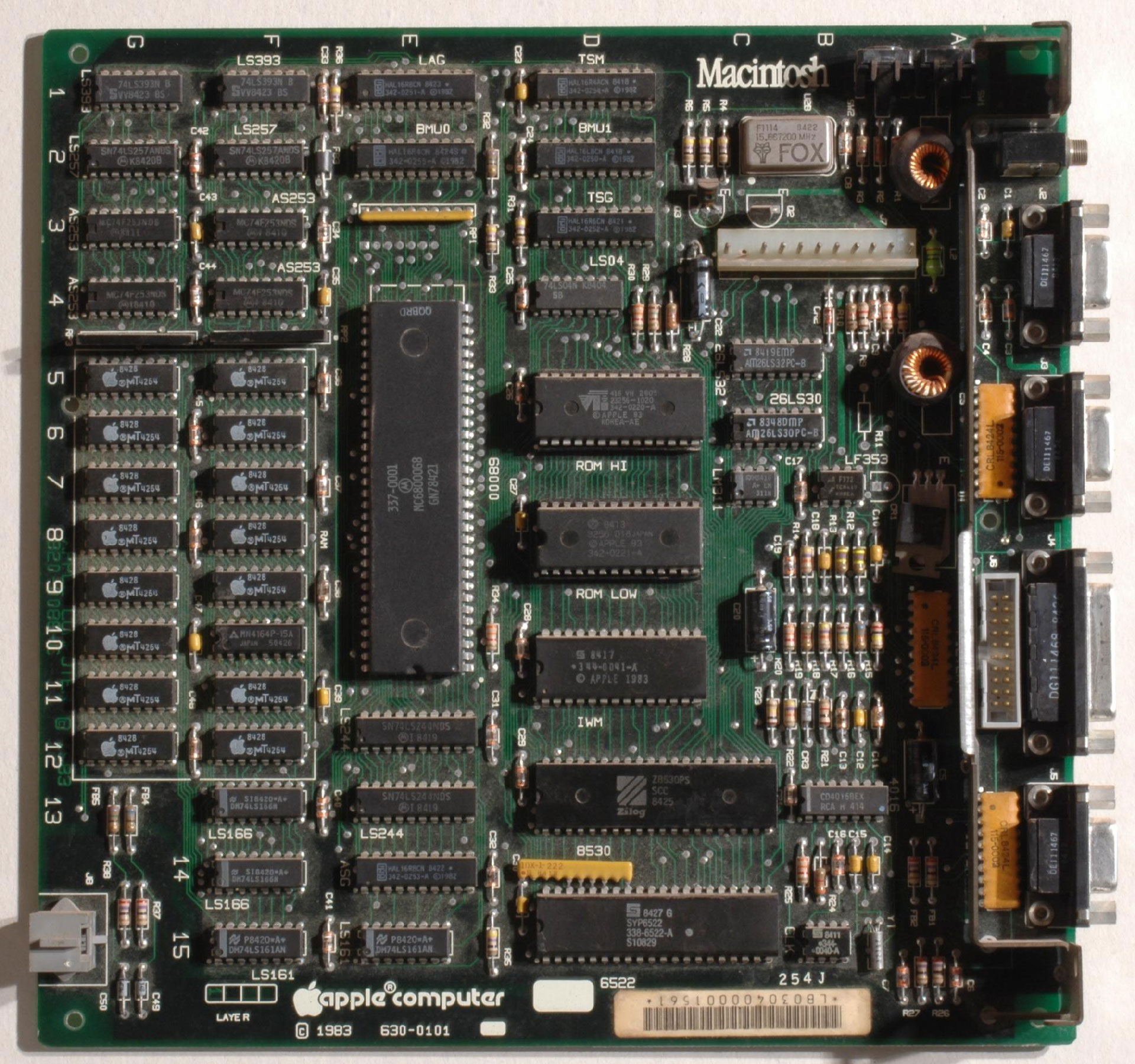
It didn’t take very long for other GUI, mouse and keyboard rivals to appear. Both the Atari ST and Commodore Amiga would launch their (also) Motorola 68000 CPU powered computers in mid 1985. The CPU may have been the same, but the GUI OSes of these three MC68000 were so varied, as were the supporting chipsets. Then, in November 1985, Microsoft and IBM would introduce Windows 1.0 computers. Microsoft’s move to go all-in with GUI-based computing wouldn’t be seen for a full decade, with Windows 95, of course.
In 2026, modern PC and Mac users can easily replicate those classic computers we’ve mentioned above. For classic Mac specific fun, we recommend the Infinite Mac site. And, yes, it does include Apple Macintosh System 1.0, which came on a floppy with the computer you saw Steve Jobs demo on stage 42 years ago.

Follow Tom's Hardware on Google News, or add us as a preferred source, to get our latest news, analysis, & reviews in your feeds.







 English (US) ·