
 Image via Marvel Studios
Published Sep 14, 2026, 5:53 PM EDT
Sign in to your Collider account
The 2000s were extremely good at movies you could fall into halfway through on cable and somehow lose the rest of your evening to. That’s also partially because our brains were not cooked with short-term content back then. This is why we were hooked to them. We already knew the jokes. You knew the song coming next. You knew exactly which character was about to make the terrible decision. None of that reduced the pleasure. Familiarity was part of it.
A truly fun movie, therefore, does not need to be disposable or lightweight. It can have sharp writing, real stakes, memorable characters, even a little emotional damage. It just has to make spending two hours inside its world feel ridiculously easy. The 2000s gave us high-school warfare, disastrous teenage parties, rock bands, superheroes, heists, superfamilies, and one pirate who somehow made walking in a straight line look boring. Here’s an ode to an era before gooning and brain rot. Let’s get started.
8 'Mean Girls' (2004)
 Image via Paramount Pictures
Cady Heron (Lindsay Lohan) has been homeschooled in Africa her entire life, so American high school initially looks like another ecosystem she can study. Then Regina George (Rachel McAdams) invites her into the Plastics, and suddenly lunch tables, shopping trips, crushes, and one innocent-looking Burn Book carry the political weight of international diplomacy. Mean Girls understands teenage social rules with almost frightening accuracy because everyone involved thinks the smallest humiliation could permanently destroy their life.
The fun comes from how completely the movie commits to that world. Karen Smith (Amanda Seyfried) asks whether someone wants to do something fun like go to Taco Bell. Gretchen Wieners (Lacey Chabert) keeps trying to make “fetch” happen. Regina eats Kalteen bars while believing they will help her lose weight. Damian Leigh (Daniel Franzese) screams that Janis Ian (Lizzy Caplan) is Lebanese during the final reconciliation because even sincerity has to survive one last joke. The lines became part of everyday language for a reason. You can quote Mean Girls endlessly, but underneath all of it is a very recognizable truth about teenagers trying on identities and occasionally becoming awful while figuring out which one actually belongs to them. The film was so good that it even got a remake in 2024.
7 'Superbad' (2007)
 Image via Sony Pictures Releasing
You can’t know what Superbad is without watching this first. Seth (Jonah Hill) and Evan (Michael Cera) have one basic goal before graduation. Get alcohol for a party, impress the girls they like, and somehow convert years of awkward friendship into one legendary night. Almost immediately, their plan expands to include a fake ID belonging to a twenty-five-year-old Hawaiian organ donor named McLovin.
That should tell you the operating level of Superbad. The movie understands that being seventeen can make buying alcohol feel like a military operation and talking to someone you like feel significantly harder. Fogell (Christopher Mintz-Plasse) ends up riding around with two wildly irresponsible cops, Seth gets period blood on his pants without realizing it, and Evan spends much of the night trying to prevent every situation from becoming worse. The filthy jokes land because the friendship underneath them is so specific. Seth and Evan are about to move into separate futures, and neither knows how to say that losing everyday access to the other person scares him. Somehow a movie with this many sex jokes ends up being weirdly sweet about male friendship.
6 'Hot Fuzz' (2007)
 Image via Rogue Pictures
Nicholas Angel (Simon Pegg) is such an effective London police officer that his colleagues solve the problem by transferring him somewhere else. Sanford looks absurdly peaceful. Crime is almost nonexistent, the village keeps winning awards, and everybody seems far more interested in the upcoming fête than anything requiring actual police work.
Then people start dying in increasingly elaborate “accidents,” and Hot Fuzz begins revealing just how much insanity has been hiding behind all those flower baskets. Angel’s new partner Danny Butterman (Nick Frost) has learned almost everything he knows about policing from action movies, so his questions about firing guns while jumping through the air eventually stop sounding hypothetical. The movie plants jokes and visual details early, then brings them back later with almost obsessive precision. A model village becomes a battleground. The local supermarket turns into an action set. Even an escaped swan becomes relevant. The final stretch is hilarious because Sanford has spent so long feeling harmless that watching Angel finally treat it like the action movie Danny always wanted is ridiculously satisfying.
5 'School of Rock' (2003)
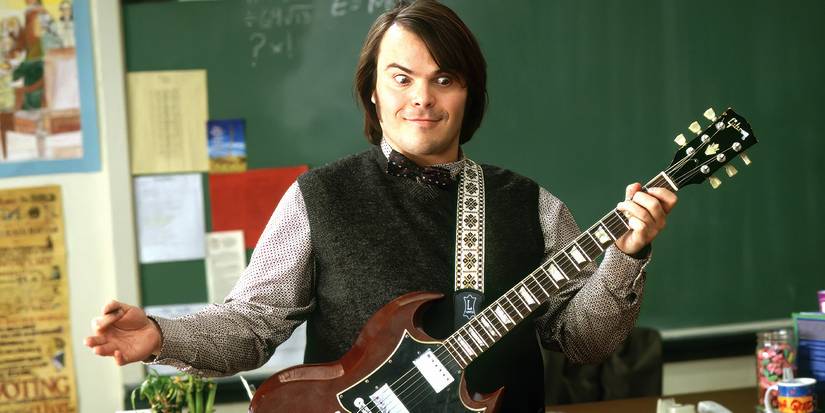 Image via Paramount Pictures
Dewey Finn (Jack Black) gets kicked out of his band and desperately needs rent money. When a private school calls looking for his roommate, he simply becomes “Mr. Schneebly” and walks into a classroom with no qualifications, no lesson plan, and no intention of teaching anything useful. Then he hears the kids play music. School of Rock takes off from there. Dewey’s selfish scam slowly becomes something genuinely good for the students.
Zack Mooneyham (Joey Gaydos Jr.) gets to write songs instead of having every creative instinct corrected. Tomika (Maryam Hassan) finally sings in front of people. Billy (Brian Falduto) becomes the band’s stylist with absolute authority. Lawrence (Robert Tsai) learns that being a keyboard player can, in fact, be cool. Dewey still behaves like a giant child, which keeps the movie funny whenever it threatens to become inspirational in a tidy way. The Battle of the Bands delivers exactly the payoff you want. The kids do not suddenly become rebellious caricatures. They simply get one glorious afternoon where being loud is encouraged.
Collider Exclusive · Oscar Best Picture Quiz
Which Oscar Best Picture
Is Your Perfect Movie?
Parasite · Everything Everywhere · Oppenheimer · Birdman · No Country
Five Oscar Best Picture winners. Five completely different visions of what cinema can be — and what it can do to you. One of them is the film that was made for the way your mind works. Ten questions will figure out which one.
🪜Parasite
🌀Everything Everywhere
☢️Oppenheimer
🐦Birdman
🪙No Country for Old Men
FIND YOUR FILM →
01
What kind of film experience do you actually want? The best movies don't just entertain — they leave something behind.
ASomething that pulls the rug out — that makes me think I'm watching one kind of film and then reveals I'm watching another entirely. BSomething overwhelming — funny, sad, absurd, and genuinely moving, all at once. CSomething grand and weighty — a film that makes me feel the full scale of what I'm watching. DSomething formally daring — a film that pushes what cinema can even do. ESomething lean and relentless — pure tension with no wasted frame.
NEXT QUESTION →
02
Which idea grabs you most in a film? Great films are driven by a central obsession. What's yours?
AClass, inequality, and what people are willing to do when desperation meets opportunity. BIdentity, family, and the chaos of trying to hold your life together when everything is falling apart. CGenius, moral responsibility, and the catastrophic weight of a decision you can never take back. DEgo, legacy, and the terror of becoming irrelevant while you're still alive to watch it happen. EEvil, chance, and whether moral order actually exists or if we just tell ourselves it does.
NEXT QUESTION →
03
How do you like your story told? Form is content. The way a story is shaped changes what it means.
AGenre-twisting — I want it to start in one lane and migrate into something completely different. BMaximalist and genre-blending — comedy, action, drama, sci-fi, all in one ride. CEpic and non-linear — cutting between timelines, building a mosaic of cause and consequence. DA single unbroken flow — I want to feel like I'm living it in real time, no cuts to safety. ESpare and precise — every scene doing exactly what it needs to do and nothing more.
NEXT QUESTION →
04
What makes a truly great antagonist? The opposition defines the protagonist. What kind of opposition fascinates you?
AA system — invisible, structural, and almost impossible to fight because it has no single face. BThe self — the ways we sabotage, abandon, and fail the people we love most. CHistory — the unstoppable momentum of events that no single person can stop or redirect. DThe industry — the machinery of culture that chews up talent and spits out irrelevance. EPure, implacable evil — a force so certain of itself it becomes almost philosophical.
NEXT QUESTION →
05
What do you want from a film's ending? The final note is the one that lingers. What do you want it to sound like?
AShock and inevitability — a conclusion that recontextualises everything that came before it. BEarned emotion — I want to cry, laugh, and feel genuinely hopeful, even if the world is a mess. CDevastation and grandeur — an ending that makes me sit in silence for a few minutes after. DAmbiguity — something that leaves enough open that I'm still thinking about it days later. EBleakness — an honest refusal to pretend the world is tidier than it actually is.
NEXT QUESTION →
06
Which setting pulls you in most? Where a film takes place shapes everything — mood, stakes, what's even possible.
AA gleaming modern city with a hidden underside — beauty masking rot, wealth masking desperation. BA collapsing suburban life that opens onto something infinite — the multiverse of a single ordinary person. CThe corridors of power and science at a world-historical turning point — where decisions echo for decades. DThe grimy, alive chaos of New York and Hollywood — fame as both destination and trap. EVast, indifferent landscape — desert and highway where violence arrives without warning or reason.
NEXT QUESTION →
07
What cinematic craft impresses you most? Every great film has a signature — a technical or artistic element that makes it unmistakable.
AProduction design and mise-en-scène — every frame composed to carry meaning beneath the surface. BEditing and tonal control — the ability to move between registers without losing the audience. CScore and sound design — music that becomes inseparable from the dread and awe of what you're watching. DCinematography as performance — the camera not recording events but participating in them. ESilence and restraint — what's left unsaid and unshown doing more work than any dialogue could.
NEXT QUESTION →
08
What kind of main character do you root for? The protagonist is the lens. Who you choose to follow says something about you.
ASomeone smart and resourceful who makes increasingly dangerous decisions under pressure. BSomeone overwhelmed and ordinary who turns out to be capable of something extraordinary. CA brilliant, tortured figure whose gifts and flaws are inseparable from each other. DA self-destructive artist whose ego is both their superpower and their undoing. EA quiet, principled person trying to make sense of a world that has stopped making sense.
NEXT QUESTION →
09
How do you feel about a film that takes its time? Pace is a choice. Some films sprint; others let tension accumulate slowly, deliberately.
AI love a slow build when I know the payoff is going to be seismic — patience for a devastating reveal. BGive me relentless momentum — I want to feel breathless and emotionally spent by the end. CEpic runtime doesn't scare me — if the material demands three hours, give me three hours. DI want it to feel propulsive even when nothing is technically happening — restless energy throughout. EDeliberate and unhurried — I want dread to accumulate in the spaces between the action.
NEXT QUESTION →
10
What do you want to feel walking out of the cinema? The best films leave a mark. What kind of mark do you want?
AUnsettled — like I've just seen something I can't fully explain but can't stop thinking about. BMoved and energised — like the film reminded me what actually matters and gave me something to hold onto. CHumbled — like I've been in the presence of something genuinely important and overwhelming. DExhilarated — like I've just seen cinema doing something it's never quite done before. EHaunted — like a cold, quiet dread that stays with me for days.
REVEAL MY FILM →
The Academy Has Decided Your Perfect Film Is…
Your answers have pointed to one Oscar Best Picture winner above all others. This is the film that was made for the way your mind works.
Parasite
You are drawn to films that operate on multiple levels simultaneously — that begin in one genre and quietly, brilliantly migrate into another. Bong Joon-ho's Parasite is a film about class, desire, and the architecture of inequality that manages to be darkly funny, deeply suspenseful, and genuinely shocking across a single extraordinary running time. Your instinct is for cinema that hides its true intentions until the moment it's ready to reveal them. Parasite is exactly that — a film that rewards close attention and punishes assumptions, right up to its devastating final image.
Everything Everywhere All at Once
You want it all — and this film gives you all of it. The Daniels' Everything Everywhere All at Once is one of the most maximalist films ever made: action comedy, multiverse sci-fi, family drama, existential crisis, and a genuinely earned emotional core that sneaks up on you amid the chaos. You are someone who responds to ambition, who doesn't want cinema to choose between being entertaining and being meaningful. This film refuses that choice entirely. It is overwhelming by design, and its overwhelming nature is precisely the point — because the feeling of being crushed by infinite possibility is exactly what it's about.
Oppenheimer
You are drawn to cinema on a grand scale — films that understand history not as a backdrop but as a force, and that place their characters inside that force and watch what happens. Christopher Nolan's Oppenheimer is a film about the terrifying gap between what we can do and what we should do, told with the full weight of one of the most consequential moments in human history behind it. You want your films to feel important without feeling self-important — to earn their ambition through sheer craft and the gravity of their subject. Oppenheimer does exactly that. It is enormous, complicated, and refuses easy comfort.
Birdman
You are drawn to films that foreground their own construction — that make the how of the filmmaking part of the what it's about. Alejandro González Iñárritu's Birdman, shot to appear as a single continuous take, is cinema examining itself through the cracked mirror of a fading actor's ego. You respond to formal daring, to the feeling that a film is doing something that probably shouldn't be possible. Michael Keaton's performance and Emmanuel Lubezki's restless camera create something genuinely unlike anything else — a film that is simultaneously about creativity, relevance, self-destruction, and the impossibility of ever truly knowing if your work means anything at all.
No Country for Old Men
You are drawn to cinema that trusts silence, that refuses to explain itself, and that treats dread as a form of meaning. The Coen Brothers' No Country for Old Men is a film about the arrival of a new kind of evil — implacable, arbitrary, and utterly indifferent to the moral frameworks we use to make sense of the world. It is one of the most formally controlled films ever made, and its controlled restraint is what makes it so terrifying. You want your films to haunt you, not comfort you. You are not interested in resolution if resolution would be dishonest. No Country for Old Men is honest in a way that most cinema never dares to be.
↻ RETAKE THE QUIZ
4 'Iron Man' (2008)
 Image via Marvel Studios
This is about the Batman of MCU so don’t take my words lightly. Before the armored suits, alien invasions, Infinity Stones, and endless arguments about the Marvel Cinematic Universe, Tony Stark (Robert Downey Jr.) was trapped in a cave building something huge out of scrap metal. Iron Man still feels refreshing partly because the whole universe around it had not become homework yet. It is just one arrogant weapons manufacturer discovering that his inventions have consequences and deciding, in the most Tony Stark way possible, to solve the problem by building himself a flying tank.
The process is half the fun and exactly what gives Tony’s character such a fundamental character arc in MCU. It’s all justified. His way of building it in a cave, makes it justified. Tony tests the repulsors and launches himself into the ceiling. Dum-E keeps trying to hose him down with a fire extinguisher. The Mark II freezes at high altitude because apparently superhero engineering still has bugs. And once the red-and-gold armor arrives, the movie has already made us enjoy watching this thing get built piece by piece. Tony’s personality carries the rest. He is funny because he is brilliant, impatient, vain, and fully aware that most rooms are waiting for him to start talking. Then he ends the movie by ignoring the prepared cover story and saying, “I am Iron Man.” Of course he does.
3 'Ocean's Eleven' (2001)
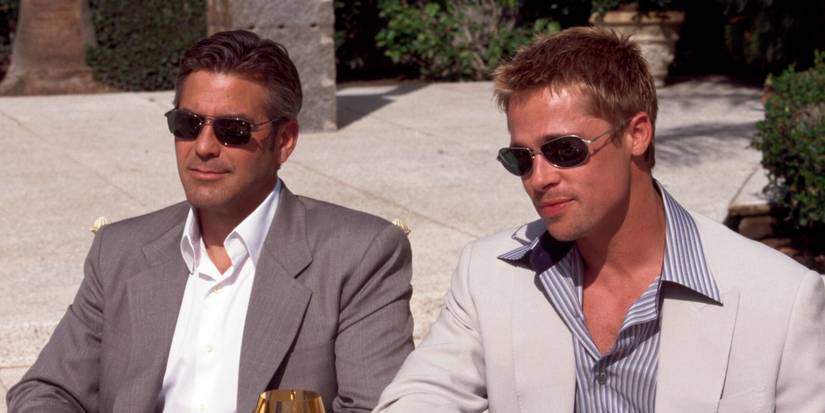 Image via Warner Bros. Pictures
Most heist movies want you worried that the plan will fail. Ocean's Eleven makes planning the robbery look so enjoyable that you would almost understand joining even before anyone mentions the money. Danny Ocean (George Clooney) gets out of prison, reunites with Rusty Ryan (Brad Pitt), and starts assembling a crew to rob three Las Vegas casinos at once. Everybody has one specialized job, and everybody seems mildly amused that something this complicated is apparently their evening plan. The whole thing is like if the crew in Now You See Me weren’t magicians but had to still prove they were. They characters in Ocean’s Eleven are all that synced.
Livingston Dell (Eddie Jemison) is nervous around technology despite being the technology guy. Basher Tarr (Don Cheadle) keeps waiting for somebody to understand his explosive vocabulary. The Malloy brothers can turn surveillance into an argument. Then there is Rusty constantly eating, which may be the most realistic recurring detail in any heist movie. The pleasure comes from watching smart people solve problems without announcing how smart they are every five minutes. Vegas glows, the suits are immaculate, and even the setbacks feel cool. It is the cinematic equivalent of walking into a room already knowing you have the best story there.
2 'The Incredibles' (2004)
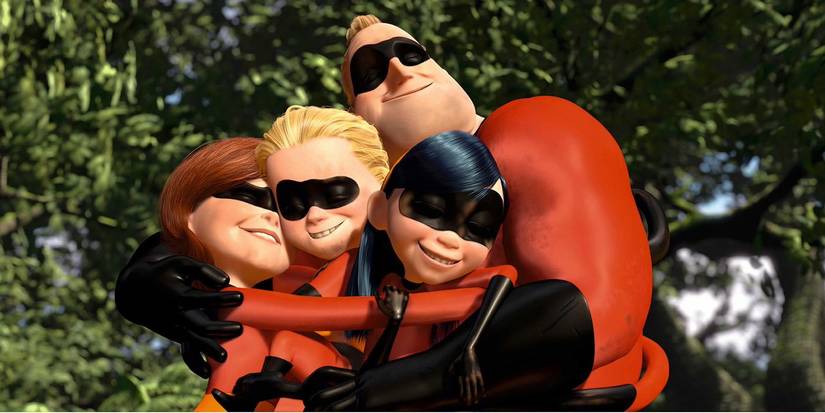 Image via Pixar Animation Studios
The family dynamic is why The Incredibles remains such a joy. The Parr family is trying to have dinner. Bob Parr (Craig T. Nelson) is frustrated. Helen Parr (Holly Hunter) is exhausted. Violet Parr (Sarah Vowell) wants everyone to leave her alone. Dash Parr (Spencer Fox) cannot stop bothering his sister. Jack-Jack Parr (Eli Fucile) is throwing food. The only unusual part is that one child can turn invisible, another can run faster than traffic, and their father could probably lift the table with one hand.
Superpowers rarely solve the emotional problem directly. Bob’s midlife crisis pushes him toward secret hero work because he misses feeling useful. Violet has to become comfortable being seen. Dash desperately wants permission to use the thing that makes him special. Helen spends half the movie literally stretching herself between everybody else’s needs. Syndrome (Jason Lee) brings enough danger to keep the adventure exciting, while Edna Mode (Brad Bird) appears for a few minutes and somehow takes permanent ownership of the phrase “no capes.” Then Frozone (Samuel L. Jackson) asks where his super suit is during an actual emergency, and married people everywhere understand that Honey has her own priorities.
1 'Pirates of the Caribbean: The Curse of the Black Pearl' (2003)
 Image via Walt Disney Pictures
Captain Jack Sparrow (Johnny Depp) sails into Port Royal standing proudly on the mast of his ship. Slowly, the camera reveals that the ship is sinking. He steps onto the dock exactly as it disappears beneath the water, bribes the harbormaster, steals his money back, and continues walking as though the entrance went completely according to plan.
That first scene captures almost everything irresistible about Pirates of the Caribbean: The Curse of the Black Pearl. Jack looks chaotic until you realize he is constantly calculating. Elizabeth Swann (Keira Knightley) begins inside the proper world expected of a governor’s daughter and spends the movie proving she can negotiate with pirates perfectly well herself. Will Turner (Orlando Bloom) takes everything seriously enough to make Jack even funnier. Barbossa (Geoffrey Rush) gets the cursed crew, moonlit skeletons, and the kind of delighted villainy that makes biting into an apple feel theatrical. Sword fights become slapstick without losing danger. Pirate mythology feels spooky without becoming heavy. And somehow a movie inspired by a theme-park ride produced one of the most instantly recognizable characters of the decade. Put it on for five minutes and there goes the evening.




 English (US) ·