
 44 minutes ago
11
44 minutes ago
11

Published Oct 17, 2026, 12:01 PM EDT
First-in-class vampire slaying
 Image: Konami
Sign in to your Polygon.com account
Castlevania is one of the most beloved franchises in video game history, despite a period of 13 years when we didn’t see a new installment until the launch of Castlevania: Belmont’s Curse earlier this week.
Over the years, the games have provided a variety of experiences, mixed with rich lore built on the vampire myth. With so many games available to choose from, it can be difficult to know where to begin if you haven’t touched the series in a while. Accordingly, here is our ranked list of the 8 best Castlevania games. It should make an excellent starting point.
8 Super Castlevania 4
 Image: Konami
Released: Oct. 31, 1991
When Castlevania came to the Super Nintendo, it needed to impress players who were still deciding whether they wanted to spend money on a new generation of Nintendo hardware. Fortunately for everyone involved, the team at Konami was up to the task. Super Castlevania 4 features beautiful environments, as well as a hero who can now whip in eight directions, even while jumping. It’s also possible to grapple to distant points, or to wield the whip as a shield. Early use of Mode 7 rotation provided some visual showpieces to go along with parallax depth that brought static environments to life. The adventure starts outside the castle, allowing Simon to explore its harsh exterior before venturing inside for a final showdown with the lord of the manor. If you’re looking for a starting point, you could do much worse, and it’s conveniently available as part of the Castlevania Anniversary Collection on Switch, PlayStation 4, PC, and Xbox One.
7 Castlevania: Bloodlines
 Konami
Released: Mar. 17, 1994
The Super Nintendo wasn’t the only hardware to feature a high-quality Castlevania game during the 16-bit era. Castlevania: Bloodlines took a unique approach, introducing a hero who strikes with a spear. He can use it to access alternate routes that the other character (who fights with a more traditional whip) cannot. The pacing was fast and furious, in keeping with many Genesis games of that time. The setting was also more modern than the other classic titles, taking place during the first World War. Stages are inspired by locations around the globe, including a visit to the Leaning Tower of Pisa, among other attractions. Throw in some stunning visual tricks that made full use of the Genesis hardware, along with a beautiful score from composer Michiru Yamane (who would go on to compose for Symphony of the Night) and you have a truly special entry in the franchise.
6 Castlevania Chronicles
Released: July 23, 1993
Originally developed for the Sharp X68000 and released on that hardware as Akumajo Dracula, Castlevania Chronicles was one of the final Castlevania games built in the classical style. It actually is a remake of 1986’s first entry in the series. 1993’s version offered greatly improved visuals and sound, while providing generally fair but challenging gameplay that is some of the most difficult the series ever offered. Some new twists maintain the element of surprise, even as players retread familiar ground, but there’s no better way to experience the original adventure, as its developers intended. When I checked earlier this year, the digital version of the prettied up PlayStation port was still available to purchase through the PlayStation Store on a PlayStation 3 console, if you add the funds to your wallet on newer hardware. Or you can hunt down a physical copy of that port, which should play just fine on your PlayStation 3.
5 Castlevania: Rondo of Blood
 Image: Konami
Released: Oct. 29, 1993
If more people had easily been able to play the game as its developers intended, Castlevania: Rondo of Blood might be remembered today as the premier Castlevania experience. Sadly, the game remained exclusive to the PC Engine CD hardware for a long time. It didn’t head to North America and Europe until it arrived on PSP as part of 2007’s Castlevania: The Dracula X Chronicles collection, and as a Virtual Console selection in 2010, almost a decade and a half after its initial release. The closest we got in the meantime was Dracula X on the Super Nintendo. That title was a mostly unsuccessful attempt to compress Rondo of Blood’s essence to fit on a cartridge — and to reach hardware that hadn’t bombed outside of Japan. The same plot and characters returned, as did many enemy sprites. Both games began in a town on fire. However, the branching stages were absent, replaced by abbreviated challenges that players found frustrating. Some characters from the original version weren’t even playable, and the sound quality suffered immensely. Rondo of Blood is an important game in Castlevania’s timeline, and concludes with the events that serve as a prologue to Symphony of the Night. If you haven’t yet done so, you should play through it soon.
4 Castlevania: Aria of Sorrow
 Image: Konami
Released: May 6, 2003
Castlevania: Aria of Sorrow followed one year after Harmony of Dissonance, which in some respects was the more spectacular of the pair. But despite its inferior visuals, Aria of Sorrow offered the richer experience on a mechanical level. Players control Soma Cruz, who blacks out during the first solar eclipse of the century and awakens in Dracula’s castle. There, he finds he can absorb the essence of the monsters he vanquishes, a useful way to gain the strength he’ll need to reach Dracula’s throne room and rescue his classmate. The adventure is surprisingly complex, given the tiny hardware that houses it, and still a lot of fun to play. You can most easily experience it and other games of that era as part of Castlevania Advance Collection on Switch, PlayStation 4, PC, and Xbox One.
 Free sign-up
Get Polygon’s Wishlister newsletter
A weekly cheat sheet to what you’ll eventually love to play. No buying, no commitment — just saving for later.
Sign up freeFree. Unsubscribe anytime.
3 Castlevania 3: Dracula’s Curse
 Image: Konami
Released: Dec. 22, 1989
The 8-bit era established Castlevania as a force to be reckoned with, ensuring it survived long enough to continue breaking new ground over the decades. But those early titles aren’t always a lot of fun to play today. The original game sometimes felt cheap and rather bland, even near release. Its sequel had an interesting plot and ambitious new mechanics, but it confounded many players with unclear, non-linear objectives. Then Castlevania 3: Dracula’s Curse came around and perfected the formula, providing multiple heroes with lore (which Netflix later explored with an animated series) and unique play styles, along with diverging paths through gorgeous stages that pushed the NES hardware harder than ever before. It’s the finest single example of what Castlevania could be during that era, and well worth revisiting today.
2 Castlevania: Belmont’s Curse
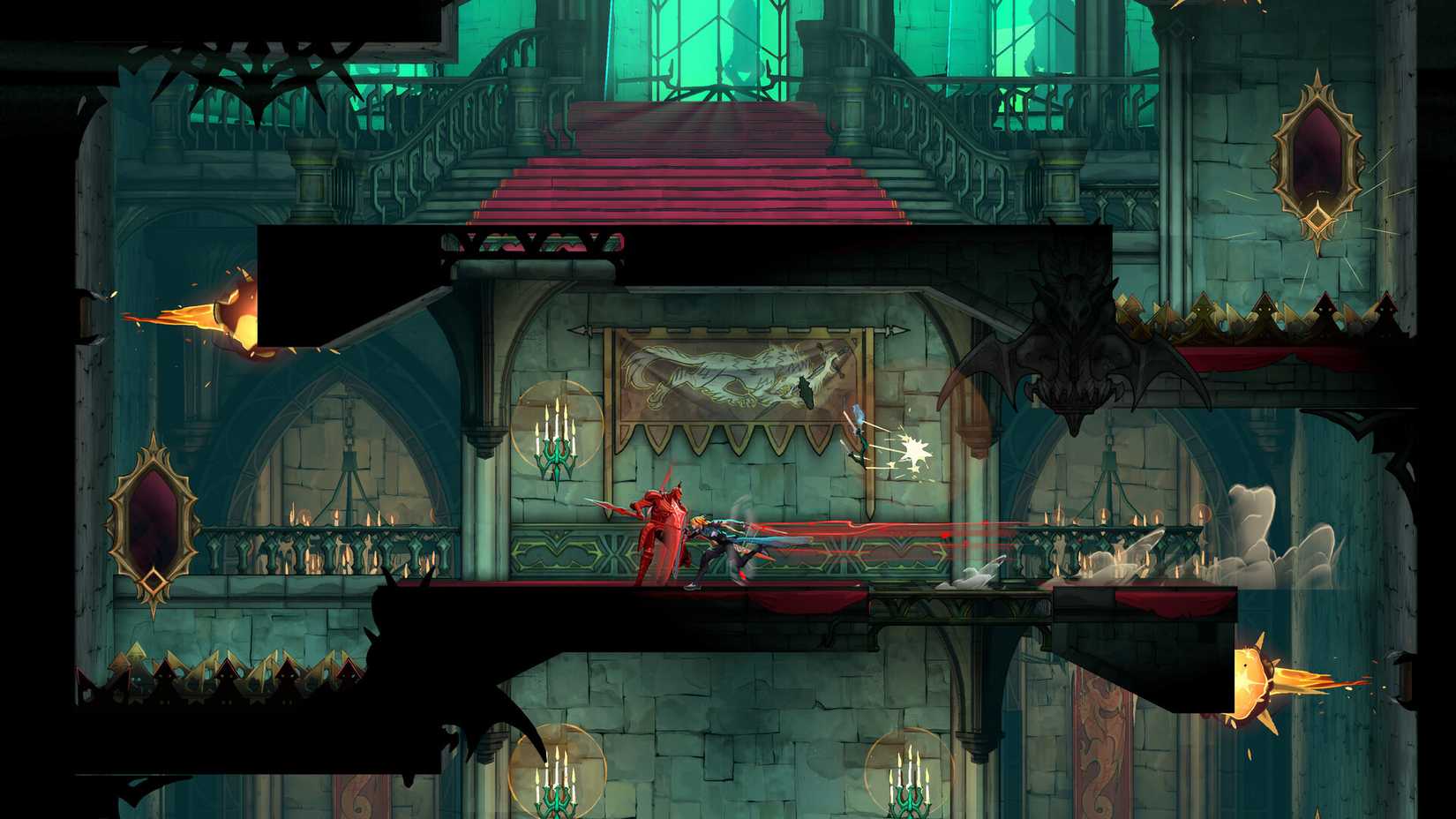 Image: Evil Empire/Konami
Released: Oct. 15, 2026
Check our full Castlevania: Belmont’s Curse review for all the details, but the short version is this: you need to play the game. It respects the series’ history while mapping out a potential future we hope the developers will one day realize with follow-up titles. The 2.5D visuals give each area a new sense of depth, while enabling the satisfying Metroidvania mechanics players have enjoyed since Symphony of the Night changed the franchise forever. Fluid movement during combat, a killer soundtrack to match the moonlit ambience of the visuals, and a brave new hero all add up to one of the very finest entries the series has ever seen.
1 Castlevania: Symphony of the Night
 Konami Computer Entertainment Tokyo/Konami
Released: Oct. 2, 1997
Nearly 30 years after its release, there’s still no topping Castlevania: Symphony of the Night. It’s the game credited with taking Metroid’s design and fusing it with the gothic adventuring players associate with the Castlevania series. The sprawling castle was populated by nightmarish creatures, many of them familiar and many of them not. Stripped of his powerful weapons, Alucard explores the castle and seeks to put down his fearsome father once and for all. But as players learned, there’s much more to the adventure than the simple castle they glimpse beneath the moonlight. One of the happiest surprises in video games came when players looked at things through a new perspective, thanks to some holy spectacles. The shift in focus opened up an unfamiliar pathway, revealing that they weren’t even halfway done with their adventure. It was the game that kept on giving, and it still hasn’t stopped.

 English (US) ·